 Act by June 15th to protect the CCT!
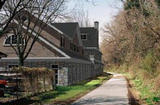
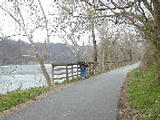
After concept pic ——– Before pic
The popular Capital Crescent Trail, which was recently recognized by the Project for Public Spaces as one of “21 great places that show how transportation can enliven a community”, is under threat from the construction of a boathouse for Georgetown University.
The National Park Service recently released an Environmental Assessment on a proposal to construct a large boathouse for Georgetown University along the popular Capital Crescent Trail. The proposed location for the boathouse would be on land upstream (west) of the Washington Canoe Club near the CCT trailhead in Georgetown. Access to the site would require construction equipment, boat trailers and delivery vehicles to share the use the Capital Crescent Trail for a distance of 800 feet hundred feet.
Read more to take action!
Take action https://parkplanning.nps.gov/commentForm.cfm?projectID=15645&documentId=14911
This is a comment
submitted to the park service by a concerned skater and cyclist
who just remembered that tomorow is the deadline for
comments:
The Environmental Analysis is a very well written document, and
appears to do a reasonable job of explaining the primary impacts of
the proposed facility. The pictures and diagrams were particularly helpful.
Unfortunately, the EA does not reflect an evaluation of the
full-range of alternatives. Two obvious alternatives would be (a) a
boathouse comparable to the size of the existing boathouses and (b) a
boathouse that is only a boathouse–rather than an integrated
training facility.
The most serious flaw of the EA is the failure to consider the
boathouse-only option. A general principal in the permitting of
facilities along tidal shores is that “waterfront dependent”
facilities are granted more leeway than facilities that are not
waterfront-dependent. Thus, the Corps of Engineers will give a
wetlands permit to a marina while denying a permit to a restaurant,
because the marina **must** be next to the water; but the restaurant
need not be next to the water–even though doing so may provide a
nicer view. Combining a restaurant with a marina will not generally
get the permit to which the marina, but not the restaurant, is entitled.
Clearly, a boathouse must be next to the water. But it is no more
important for the practice facility to be next to the water than for
a restaurant to be next to the water. There is at least some basis
for expecting that the Corps might deny a permit for a practice
facility to be built on wetlands. That leaves us with a question:
Should the Park Service be more liberal regarding what it allows on
public waterfront lands, than the Corps is regarding what it allows
on wetlands? Even if its okay for the Park Service to allow
non-waterfront-dependent uses on waterfront park lands, we have a
different question now: Isn’t the Park Service at least obligated to
**consider** the option of only allowing waterfront-dependent uses on
the park land? For this reason, a reasonable person would conclude
that the current EA does not reflect a reasonable range of alternatives.
My impression is that at one time, a much smaller boathouse was
considered, and that much of the momentum for the land swap was based
on more modest plans changed later in the process. Again, it may be
reasonable for the Park Service to allow larger facilities as greater
needs become evident–but it is not reasonable for an alternatives
analysis to exclude from consideration the option that brought
everyone to the table to begin with.
Therefore, I recommend that the EA be redone–perhaps as a complete
EIS–with an evaluation of (a) the original proposal for a modest
boat house and (b) a large boathouse with the same storage as the
current proposal but without training facilities and other facilities
available on campus. A particular focus ought to be on whether the
more modest facilities could be built without a 1-2 year construction
detour for the Capital Crescent Trail.
In closing, I would like to offer for your consideration an example
of how the State of Maryland Department of Transportation handled a
similar issue–a story that saddens cyclists but that still reflects
a stronger commitment to environmental management than the Park
Service seems to show here. The planned intercounty connector from
Beltsville to Shady Grove once included plans for a complete bike
trail. The need to squeeze the footprint as much as possible led
MDOT to remove the bike trail from the crossings of various stream
valley parks–at the encouragement of both state and federal
environmental officials. That decision disappointed cyclists but at
least the logic was clear. The current proposal shows no similar
effort to shrink the footprint to its minimum necessary size–in fact
the option is not even considered.
It’s a sad day when the National Park Service shows less
environmental sensitivity than a state highway department.
Take action https://parkplanning.nps.gov/commentForm.cfm?projectID=15645&documentId=14911
More info https://www.cctrail.org/Action_Page.htm#defend
oldId.2006061411325348