
With more bikes on the road, drivers are frustrated — and cyclists are at risk. Now’s the time for changes.
By Christie Aschwanden – Los Angeles Times
Mandeville Canyon Road is a two-lane, dead-end road that twists and climbs for six miles through a quiet Brentwood neighborhood. "It’s perfect for bicycling — like honey to bears," says Jeffrey Courion, former public policy director for Velo Club La Grange, a bicycle touring and racing club.
But with just one lane in each direction and limited visibility in some places, the road has also become a flash point for conflicts between motorists and cyclists. "It’s a problem of people competing for space," Courion says.
That competition turned ugly in July 2008. Brentwood doctor Christopher Thomas Thompson is currently facing trial in the L.A. County Superior Court, charged with four felony counts related to a collision with two bicyclists in Mandeville Canyon. The injured cyclists allege that Thompson deliberately pulled in front of them, then slammed on his brakes, intending to hurt them. Thompson’s attorney argues that the cyclists had yelled profanities at Thompson and were to blame for the accident.
The number of people riding bicycles has exploded in recent years. U.S. census statistics released in September show a 43% increase in bike commuting nationwide between 2000 and 2008, and Courion’s bike club, which often rides in Mandeville Canyon, has seen its numbers nearly double to nearly 500 in the last several years.
This surge of new bicycles on the road frustrates some motorists, leading to antagonism and altercations of which the Mandeville Canyon incident is an extreme example. And though data suggest that cycling fatalities have actually fallen nationwide, one new study suggests that the injuries cyclists suffer in traffic accidents are becoming more severe.
The city of Los Angeles is currently updating its own bicycle infrastructure plan. Even as it does so, cycling experts and enthusiasts can’t agree on how to make the roads more bicycle-safe. Some advocate for more dedicated infrastructure, such as bike lanes. Others believe that people riding bicycles belong on the roads just as surely as do cars — and that the key to greater safety is people cycling in a manner that reflects that right.
Continue reading “Bikes and cars: Can we share the road?”
Celebrate a Milestone with the Gwynns Falls Trail Council Nov. 5

Dear Friends,
Thank you for your interest in and support of the Gwynns Falls Trail, Baltimore’s 15 mile linear recreational trail that runs from the I-70 Park & Ride to the Middle Branch of the Patapsco and the Inner Harbor. We call the trail Baltimore’s Greenway to the Chesapeake Bay.
The Gwynns Falls Trail Council is an all volunteer organization that works to promote the use of the Trail and plans and implements environmental restoration projects and special events along the Trail. Like many organizations, the Gwynns Falls Trail Council has been affected by the current economic slowdown and our corporate and foundation contributions are less than they have been in past years. Yet, despite a decrease in funding, the Gwynns Falls Trail Council completed some truly exciting projects in 2008-2009. Our Art on the Trail exhibit, which ran from September through early November 2008, was very successful and attracted both more artists and more visitors. We had over 400 people volunteer this year providing more than 2,000 hours helping maintain and improve the Trail. In 2009 we completed design and fabrication of the 11 kiosk panels and have contracted to have all sign frames repaired and painted to brighten them
up.
For 2010, a new Partnership for Parks grant will help us install mileage markers to improve our ability to report site specific problems to the City and improve Trail directional signage. Also, a recent National Parks Service Chesapeake Bay Gateway grant will assist us to fabricate and install two new kiosk signs at locations where there are alternative trail routes to chose, thus causing confusion for trail users.
The City of Baltimore’s financial problems also have affected the Gwynns Falls Trail. Earlier in 2009, the City combined the oversight of both the Gwynns Falls Trail and Jones Falls Trail under one manager. Subsequent budget cuts have reduced the staff resources dedicated to both trails, making our work and your support more important than ever. These trails are important recreation facilities and economic engines for Baltimore, as evidenced by the articles in the New York Times promoting both trails as unique and great places to go when visiting Baltimore.
Despite the challenges presented by the current economic conditions, the Trail Council is committed to making sure that high standards are maintained for both trails.
We ask that you demonstrate your support for the Gwynns Falls Trail by becoming a member of the Council for the 2010 calendar year . Your membership will support fun and engaging activities like Art on the Trail and volunteer environmental restoration projects along the Trail.
Membership levels for the Gwynns Falls Trails Council range from $20 – $500. We hope you will consider a contribution of at least $50 to support this important work.
Contributions can be made easily online at www.gwynnsfallstrail.org or mailed to:
Gwynns Falls Trail Council
c/o Parks & People Foundation
800 Wyman Park Drive, Suite 010
Baltimore, MD 21211
The Gwynns Falls Trail Council invites you to come to the Parks & People Foundation office at 800 Wyman Park Drive, Suite 010, on Thursday, November 5, between 4:30 and 6:30 PM to see eleven new kiosk panels sized 4 by 5 feet that will soon be installed along the 15-mile Gwynns Falls Trail. This is a great opportunity for you to see all the panels that are truly works of art representing the rich history and unique environment that will enhance the trail experience for trail users.
Thank you for your support.
Best regards,

William F. Eberhart, Jr.
Chair
CYCLOVIA.
From NORTH BALTIMORE BIKE BRIGADE:

Now we’re getting somewhere! Baltimore had it’s first (?) Cyclovia event last Sunday on Roland Avenue between Northern Parkway and Cold Spring Lane. The southbound roadway was closed to vehicular traffic, but open to cyclists, pedestrians, families, dogwalkers, skateboarders and anyone else who wanted to use the road without a motor.
The road closed at 8am, but few ventured out that early. The bewildered passers-by would ask what was happening and were amazed at the answer. “Really? We can just walk down the middle of the street?” As the sun climbed, so did participation. By 9:30, the “traffic” was evident. While most were riding bikes, more families emerged with strollers, bike trailers, scooters, tricycles and wagons. Plenty of sidewalk chalk was on-hand and was well used.
One goal of all Cyclovias worldwide is to enhance the sense of community. This goal was achieved early on and blossomed as the event continued. Neighbors who hadn’t seen each other in years were catching up, of all places, in the middle of Roland Avenue.
Not only did the residents come out, but so did their ideas. I repeatedly heard requests to build a cycletrack on Roland Avenue. A cycletrack is a bi-directional bikeway separated from travel lanes by a barrier or buffer zone. This concept was well received by Councilwoman Mary Pat Clarke, who was instrumental in making this event possible. The Roland Park Cyclovia would not have been possible without the vision and leadership from Phil Spevak and Mike McQuestion from the Roland Park Civic League.
Now that Baltimore proved it can do a Cyclovia, let’s get some more going on!
Maryland State Police Respond to Cyclist’s Concerns in St Mary’s Fatality
Thank you for your correspondence expressing your concern with the comments of Corporal Derek B. Peck, of our Leonardtown Barrack, following the fatal accident involving Mr. Curtis A. Leymeister. The Superintendent has received your correspondence and has asked that I respond on his behalf.
A copy of your correspondence was forwarded to Lieutenant Michael W. Thompson, Commander of the Leonardtown Barrack. He has informed me that he has personally spoken with Corporal Peck regarding the release of any information that may seem prejudicial to a fair and unbiased investigation. Corporal Peck’s comments were an unfortunate choice of statements and this fact has been addressed with him to ensure the use of better judgment on his part in the future.
Our Department’s policy requires a detailed crash investigation to be completed following most fatal collisions. The resulting report encompasses many areas, to include detailed diagrams of the scene, photographs, driver statements, toxicology reports and a detailed account of any other factors that may have contributed to the collision. On October, 20, 2009, preliminary findings regarding this investigation were presented to the St. Mary’s County State’s Attorney’s Office. It was determined that Ms. Kathy Lee, the operator of the vehicle involved, would be charged with negligent driving. Later that same evening, Ms. Lee was formally charged with that offense.
Thank you for taking the time to bring this matter to my attention. Citizen input is extremely important and contributes to the effectiveness of a law enforcement agency
Sincerely,
G. Robert Turando – Lt. Colonel
Chief
Field Operation Bureau
Continue reading “Maryland State Police Respond to Cyclist’s Concerns in St Mary’s Fatality”
Save the Planet: Drive a Porsche
How a classic car can be greener than your Prius.
…
In spring 2007, my wife and I sold our Volvo and committed to public transportation. Since then, it’s been no traffic jams, no mechanics, no gasoline, and no insurance bills. With the money we saved, I started a "hot rod" bank account dedicated to making driving fun. Public transportation is paying for my Porsche.
I log 20,000 miles a year commuting from my home in Baltimore to my job in Washington, D.C. I travel by train and subway. Fares (plus vacation rental cars, bus tickets, bicycle tires, and the occasional taxi) set me back around $3,100 a year—$6,000 less than Camry man. I stash the savings in my Porsche fund.
Like many Americans, I love to get out and drive. But in and around major cities, "driving" usually means idling in traffic while trapped in cars as utilitarian and uninspiring as washing machines. It’s soul-sucking and dirty. It’s also expensive. According to AAA, if I were to commute 20,000 miles in a Toyota Camry, I would burn through $9,100 a year in fuel and ownership costs that include insurance, maintenance, and depreciation. If a dash gauge measured money per mile, the needle would be pegged at 45.5 cents. And, according to Department of Transportation statistics, that much commuting would release more than 15,000 pounds of carbon dioxide into the atmosphere. A Prius cuts that almost in half—a green boost for sure, but nothing compared with pairing public transportation with weekend joy rides in a classic car.
Continue reading “Save the Planet: Drive a Porsche”
Bike tour planned for visit by mayor of Columbia, Mo.
Article below is on visit of Columbia, MO Mayor Darwin Hindman on 4 November to Columbia, MD being sponsored by Columbia Tomorrow as part of their effort to make the revitalization of downtown pedestrian and bicyclists friendly. Columbia, MO is one of the League of American Bicyclists (LAB) Bicycle Friendly Communities (NOTE: NO municipality in Maryland has achieved this status). BAHC has discussed with Howard County Government setting a goal of achieving this status for our area.
If you are available on 4 November please consider supporting the 9:30-11:30am bike ride (route is similar to Columbia Association annual Bike About Columbia path rides) and/or the 6:30pm dessert and/or the Howard Community College Bike Project ‘I bike because …’ presentation. Both of these events are open to general public.
Continue reading “Bike tour planned for visit by mayor of Columbia, Mo.”
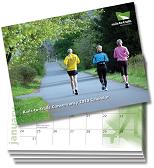
2010 Rail-Trail Calendar: Order Now While Supplies Last!

|
The Rails-to-Trails Conservancy full 12-month calendar is back by popular demand, and we only have a limited supply. Act now and reserve your copy today! With stunning photos from some of the best rail-trails across the country, this calendar will make you want to be outside on a trail no matter what the season. As of today, there are more than 15,000 miles of rail-trail across the country in all 50 states. These trails exist only because of incredible support from our members and donors. And although our progress has been great since our founding in 1986, we have an even more ambitious goal for the future: By the year 2020, we are aiming to have 90 percent of Americans living within three miles of a local trail system. If you’re like me, you’ll put the calendar up on the wall as soon as it arrives in the mail. It’s a constant reminder of how rail-trails inspire people and improve communities everywhere. Happy Trails,
Keith Laughlin
|


Utilities Lagging On Efficiency Goals
As millions of Marylanders face sticker-shock every time they open their utility bill, Maryland PIRG is working to hold our state’s utility companies accountable to lower bills.
None of our state’s utilities are on track to meet the Maryland PIRG-backed statewide energy efficiency goal that could lower bills nearly $4 billion by 2020.
Slow Progress
BGE was the first utility to have its initial slate of programs approved by the Public Service Commission (PSC), but even once all those programs are implemented, the company will fall dramatically short of the statewide goal. The state’s other utilities just got their initial programs approved in August, more than two years after the law was passed.
High Cost Of Delay
Every month the utility companies delay has consequences. Another family will have to choose between paying for groceries and keeping the lights on. Our power grid becomes less reliable and more vulnerable to brownouts and blackouts, and money that could be used to help boost our local economy instead ends up going into the pocket of energy company executives.
Holding Utilities Accountable
This fall, Maryland PIRG staff will meet with the regulators and urge them to crack down on the utility companies. And in January we’ll hold a series of news conferences throughout the state to release a scorecard that assesses how well each of the utility companies is complying with the law.
We’ll bring that research along with citizen support to decision-makers at the Public Service Commission and the Maryland General Assembly to urge them to hold BGE and PepCo’s feet to the fire and require them to put their money where their mouth is on energy efficiency
Continue reading “Utilities Lagging On Efficiency Goals”
Tree/Bike Baltimore
Next Saturday, November 7th, will be a combined Tree Baltimore/Bike Baltimore Event. Trees will be distributed to communities via BIKE (bike trailer, cargo bikes, etc)
We’ll meet at DeWees Park at 8:30 am with Mayor Dixon and then take some trees for a spin! Anyone with a bike trailer is encouraged to participate!
Please contact Nate Evans nate.evans@baltimorecity.gov or Anne Draddy anne.draddy@baltimorecity.gov for details.
Transportation reform IS health care reform!

October 2009
|
|||||||||||||||||||||||||||||||
 |
|||||||||||||||||||||||||||||||


 |
||||
|
|
|
||
|
FAST FACTS
Each year air pollution triggers over a million asthma attacks, more than 47,000 cases of chronic bronchitis in adults and 540,000 cases of acute bronchitis in children and kills 70,000 people. Source: Transportation For America Health Fly-In Statistics 2009. |
|
||
|
|
|
||
 |
||||
|
||||
Continue reading “Transportation reform IS health care reform!”