
by Thomas Krag (just highlights)
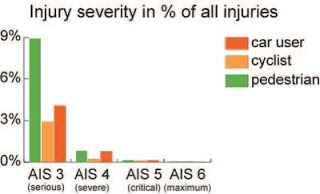
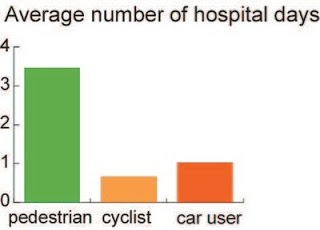
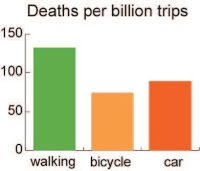
Thomas’ Cycling, Safety and Health article discusses risk perception and how we (often wrongly) measure risk and goes on to highlight how safe cycling is as well as showing the health benefits of having high numbers of bicycle users/Citizen Cyclists in a city or country.
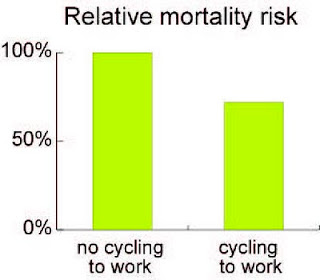
PDF https://www.ecf.com/files/2/26/60/050207_Cycling_safety_ecf_Thomas_Krag_1.pdf
https://www.copenhagenize.com/2011/04/cycling-safety-health-by-thomas-krag.htmloldId.2011040410120284
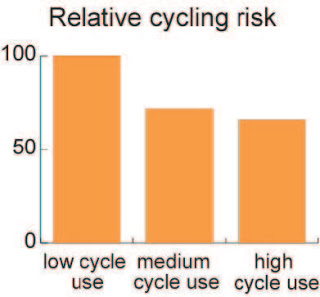
bottom two graphs are misleading, in a fairly hilarious way; small amounts of cycling corresponds with a 100% risk?? 100% of people who don’t cycle to work will die, whereas only 70% of people who cycle to work will die?!
It’s RELATIVE risk, given that behavior has a risk of 1 (100%) other behaviors have a risk lower then 1.
Similarly, If gas is $4 a gallon now (1 or 100%) when it was $2 a gallon it was 50% of what it is now. This does not imply gas will never go higher or lower it’s just a comparison or what the prises are RELATIVE to each other.
I hope this helps.
still looks pretty risky…especially when they define something as 100% risk…
Agreed it should be a risk of 1 and .7, not 100% and 70%