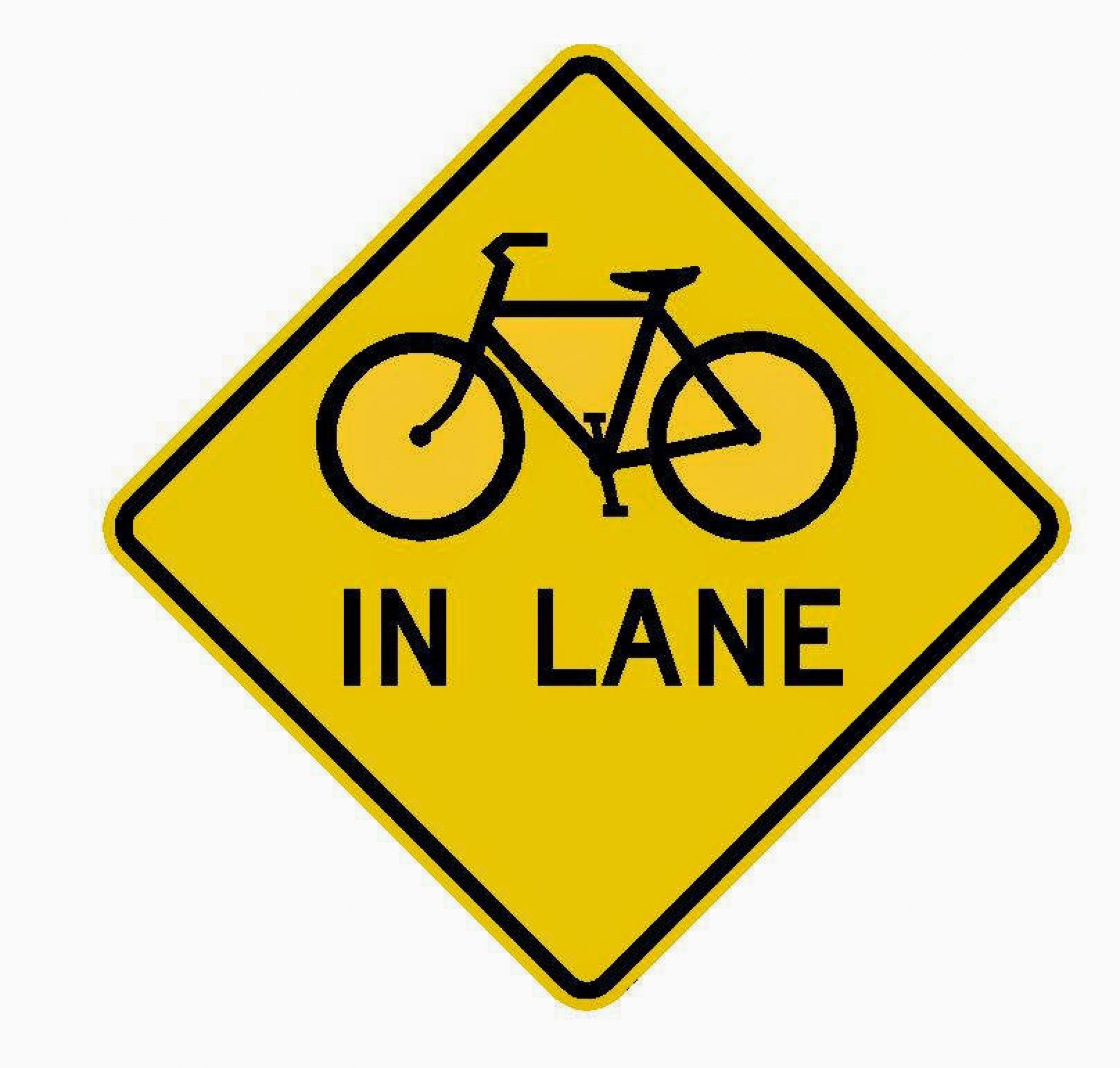
For many, rules were never taught in driver’s ed
By Michael Dresser, The Baltimore Sun
A bicyclist is riding in a designated bike lane on the right side of a city street. You are in a car traveling in the same direction in the adjacent travel lane. You want to make a right turn into a driveway or at an intersection where you don’t have a stop signal. What to do?
A: Come to a stop in your current lane, wait for the bicyclist to clear the driveway or street and then turn.
B: Accelerate enough to just get past the bicycle, flash a signal and make a right turn in front of it.
C: After signaling, merge into the bike lane behind the bicycle, slow down and make the turn from the bike lane.
D: Honk to alert the bicyclist to your intentions, then signal and turn from current lane.
E: "I didn’t see that bicyclist, Officer. I swear he came out of nowhere."
For the record, the best choice is C. Choosing A probably won’t hurt anyone but still involves crossing the bike lane (a serious mistake if there’s a second bicycle trailing). B and D could have catastrophic results for the bicyclist. E is the story behind many a fatality.
Chances are, you never saw a question like this on your driver’s license exam. Most likely, the subject of interacting with bicycles got short shrift in your driver’s ed class. Back in the last Ice Age, when I was learning to drive, we saw plenty of gory Ohio Highway Patrol films, but none of them involved what happens to a bicyclist when a driver gets the answer above wrong in a real-world test.
Few of us would stand for being forced to take a refresher course in the rules of the road. Such a proposal would be hooted out of the General Assembly.
But the truth is, many of us could use such a bit of midlife education in the things our driving instructors failed to mention. And nowhere is that more apparent than in the devastating consequences of clumsy interactions between motor vehicles and bicycles.
The dangers were brought home to Baltimore again last month when Nathan Krasnopoler, a 20-year-old Johns Hopkins University student, collided with a car making a right turn in front of him on University Parkway. It’s a type of crash known to bicyclists as a "right hook" — and it can have deadly consequences.
Krasnopoler’s case has been about as close to a fatality you can get and still have a breathing person. He sustained grievous injuries and remained in a coma last week. The crash remains under police investigation, but it has prompted a lawsuit against the 83-year-old driver, alleging that she broke multiple traffic rules while turning into a driveway.
Whether that driver was negligent or not, there is a right way and several wrong ways of making a right turn alongside an occupied bike lane. It can be confusing, though, since the rules differ from state to state.
Peter Moe, bicycle coordinator in the Office of Highway Safety of the State Highway Administration, said the most important step for drivers to avoid a right hook is to be constantly aware of nearby bicycles.
Moe said that while bike lanes are not for motor vehicle travel or parking, they aren’t sacrosanct. In Maryland, it’s OK for a driver to use them as part of an imminent turning maneuver. But if there’s a bike in the lane, it’s up to the driver to make absolutely sure there’s enough space to merge into it safely.
"If there’s any doubt if there’s enough room, wait and let the bicyclist pass," he said. "Whenever you cross a bike lane, either to move over or initiate the right turn, you have to yield to the cyclist."
Generally, cutting across a bicycle lane to turn is a bad idea. Moe said it’s easy for drivers to misjudge how fast bicycles are traveling. They’re often moving at 20 mph-25 mph — or as fast as a car in city traffic.
Honking is bad driving in most cases, but especially around bicyclists. It’s dangerous to startle anyone on the road, but it’s especially hazardous for people on bikes.
The best way to communicate with bicyclists is with signals. Moe is adamant on that point:
"Drivers MUST MUST MUST MUST (a thousand times) USE THEIR SIGNALS," he wrote. "Drivers have to communicate their intention so that bicyclists can adjust accordingly. Bicyclists need to do the same thing. It’s all a part of riding/driving predictably, communicating and negotiating with everyone else on the road."
Some bicyclists, by the way, might erroneously think of the entire bike lane as theirs. When they come upon a car in the bike lane in front of them, waiting to turn right, the worst thing they can do when going straight ahead is to pull alongside the car even farther to the right. The correct move is to pull up behind the car and wait for it to proceed.
Moe said some progress is being made in driver’s education as far as covering interactions with bicycles. He said the Motor Vehicle Administration is including bike-related questions on its licensing test and covering bicycle rules in its manual.
Sometimes, it’s those of us who learned how to drive decades ago who are more of a menace than young people.
I see it all the time in my mail: rants from obviously middle-aged or older drivers who are convinced bicyclists have no place on the road.
But the law says differently. And until that changes, the least drivers of any vintage can do is learn how to make a safe right turn when a bicycle is present.
Pay attention. Signal. Yield. Avoid turning across a bike lane.
And Moe points out something else to keep in mind:
"Bicyclists are people. They’re not objects."
Remember that, and the rest is easy.
https://www.baltimoresun.com/features/commuting/bs-md-dresser-getting-there-0328-20110324,0,4739125,full.storyoldId.20110328081733182
2 Replies to “Getting There: Right turns and bikes mean danger”
Leave a Reply
You must be logged in to post a comment.
The almost worst case scenario happened to me last week riding down a two lane road with a SUV coming up behind as I approached an intersection. There was a right only lane for the SUV to use, but instead he decides to overtake me on my left and then quickly turn in front of me, traveling about 20 mph, he of course slowing to make the turn. I missed his bumper by 3 feet. It would of been simple for him to slow and stay behind me (as I got to the intersection the same time he did, so that wouldn’t of cost him but a second or two), use the right turn only lane, and I would of had a more pleasant riding experience knowing that I was a second away from a trip to the hospital.
During this I even hand signaled that I would be traveling straight and sped up to stay ahead of him, and, filled the lane with my bike to make it harder for him to pass on the left (showing my intention to go straight) and also easier for him to make a right turn. I had my AirZound horn and used it. Don’t think he was expecting that.
Thank you for the simple descriptions of how to proceed in right turn situations. In riding in Baltimore year round I find that 95% of the time people are looking out for each other, communicating with eye contact and body language. A few years back I was right hooked at St Paul by the Washington Monument. I was wearing bright yellow, riding as far to the right as practicable. I am convinced that the driver did not see me – perhaps was distracted by conversation with the passenger, or made a last minute decision to turn right while in conversation with the passenger. My following the rules will not save me from the drivers that drive into me because they are not paying attention. It will be great when those who live here (and who pay attention when driving) learn how to do right turns with cyclists. For the rest of the drivers, I cycle now such that I will not be hit . Perhaps we need a course which pairs distracted driving education with guidelines for driving around cyclists and pedestrians.