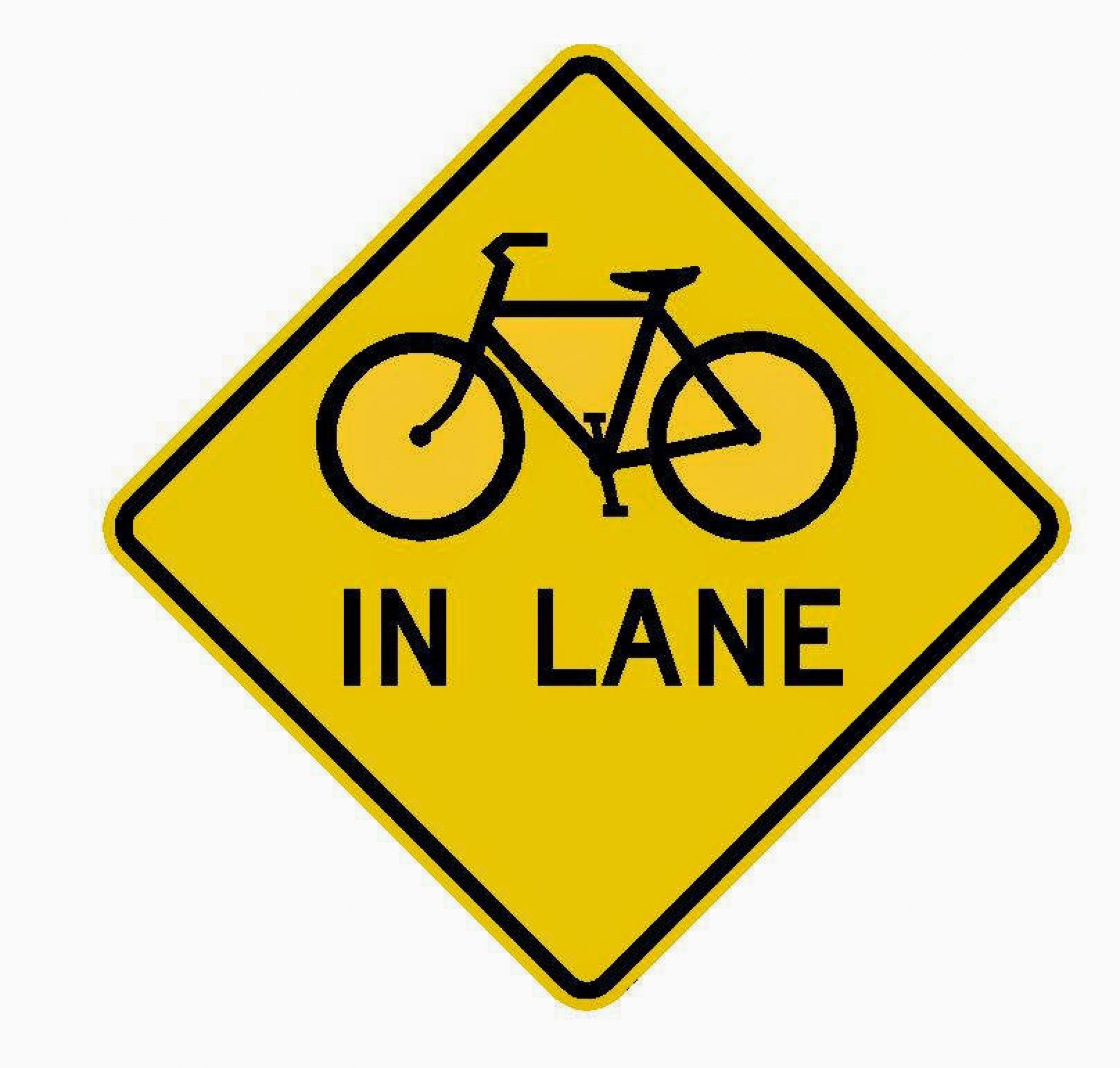
Our view: Maryland’s aging driving population poses a serious safety risk that lawmakers in Annapolis appear reluctant to recognize
Via the Baltimore Sun
If there is some good to arise from the tragic death of Nathan Krasnopoler — the 20-year-old Johns Hopkins University student killed while riding his bicycle on University Parkway by an 83-year-old driver who didn’t notice him in the bike lane — it may be to call greater attention to the dangers of Maryland’s aging driver population.
Today, Mr. Krasnopoler’s parents were in Annapolis to brief the House Environmental Matters Committee on the latest data provided by the Maryland Motor Vehicle Administration documenting the threat. The number of Maryland drivers over age 70 is expected to double in just seven years and triple in 15 as baby boomers reach their geriatric years.
Turning 70 doesn’t necessarily make a person a bad driver, but as a group, older drivers are more prone to cause car crashes — even as they drive less. Declining skills and vision, slower reaction time and potentially reduced mental acuity are all factors.
One of the MVA statistics that leaps out is that while younger drivers are involved in more crashes — peaking at age 25-34 — the proportion of drivers who are at fault in crashes turns sharply upward after age 55. Indeed, licensed drivers age 80 or over are as likely as teens to be at fault in accidents.
…
Showing up at the MVA to renew a driver’s license every two years may sound like a hassle, but it can also be a lifesaver. Just ask Susan Cohen and Mitchell Krasnopoler, who lost their son two years ago this month. Some "accidents" are potentially avoidable.
https://www.baltimoresun.com/news/opinion/editorial/bs-ed-older-drivers-20130219,0,2705502.story
October 2012 Subcommittee Reports Highlights
[B’ Spokes: In keeping with my endeavors to add more transparency to MBPAC here are the subcommittee reports for the October 2012 MBPAC meeting (link at the end for the whole thing.) The Open Meeting Act requires meeting minutes as well as public notice of when and where these meetings take place. I guess these reports could satisfy the minutes requirement and we (the public) are still waiting to have some advance notice of these meetings but till then here is a glance of what they are up to.
I’ll note that while these reports were originally emailed so the text could be scanned and searchable, they were converted to a picture PDF so I had to painstakingly retype what you see bellow. I don’t have anything positive to say about this processes of obfuscating information other then something is better then nothing I guess.]
…
Over the last three months, Prince Georges has seen many news articles complaining about the lack of "crosswalks" on state highways. Elected officials from Edmonston and Seat Pleasant have both stated that there are few crosswalks on the state highways going through their towns and called on SHA to do something. In reality, these towns have unmarked crosswalks, and police forces that could enforce the law; but rather then do what is within their power, they ask SHA to paint white lines. Perhaps some crosswalk education is needed. Are crosswalk violations the "broken windows" of traffic enforcement?
…
[B’ Spokes: Nice comment, too bad I get the impression that it dead ends there. It would be nice if someone somewhere would do something about Maryland’s high pedestrian fatality rate.]
Law Enforcement Training
* A meeting regarding the draft Law Enforcement Bicycle Safety Training Video will take place October 11, just before the October MBPAC meeting the following day. I’ll be able to provide an update there.
…
[B’ Spokes: Good news that this is still being worked on. Though I can’t help but think wouldn’t it be nice if a notice went out saying the public is invited to attend the Educational and Awareness subcommittee meeting discussing the topic of the draft Law Enforcement Bicycle Safety Training Video. Instead all we get is the topic was discussed.]
5. Letter to MDOT Secretary regarding MDOT/MBPAC legislative coordinating procedures
It is recommended that a motion to reconsider be introduced by an appropriate MBPAC member based on comments from Martin Harris and Michael Jackson. The main reason expressed by Martian and Michael against the motion is related to how MDOT operates legislatively. Currently MDOT is open to discussing legislative issues with MBPAC prior to the legislative session. At any time during the legislative session communication between MDOT and MBPAC may be positively or negatively impact proposed legislation due to any number of reasons some of which may not be under Michael’s control. For example recently MDOT’s position on the 3 foot bill may have surprised the bicycle community even though MBPAC indicated positive support to MDOT for this proposed law and had expected MDOT to concur. Under the proposed resolution MBPAC would likely get the same response from MDOT’s Secretary on a given piece of legislation but the process for obtaining the Secretary’s response would involve many more staff persons then Michael and Martin thus not being the best use of staff time and resources.
…
[B’ Spokes: Does anyone remember MDOT’s opposing our bicycle has the right-of-way in a bike lane bill because of the problem of flying unicorns? My bad, that should be because of the problem of striping a bike lane through an uncontrolled intersection but both are mythical so it really makes no difference. My point is better communication/debate is needed especially when the debate comes down to old assumptions that started in the 60’s vs new and improved ways of looking at complete streets and how to accommodate people, not just cars, that have proven studies that show that they work. Or the whole point of the committee is to challenge car centric ideas.]
7 Attorney General Letter Regarding Passing in Double Yellow Centerline Item was deferred to another date due to lack of time.
…
[B’ Spokes: I wounder what that was about? Sounds interesting as I support allowing motorist to pass cyclists over the double yellow (when safe to do so) instead of MDOT saying (in effect) you can legally pass a cyclist as close as you want if there is a double yellow.]
By coincidence Michael received a phone call from Delegate Miller the morning following the subcommittee meeting on another matter. During the conversation he mentioned discussion of her planned sidewalk legislation and she was surprised to hear of opposition. Michael suggested she might want to hear directly from the persons voicing their opposition. Delegate Miller in the future regarding this topic. Michael suggested a subsequent L&GA subcommittee meeting be set up for this purpose.
…
[B’ Spokes: That’s good the pros and cons of sidewalk riding are being discussed. Though I would be interested in the points that were raised.]
Continue reading “October 2012 Subcommittee Reports Highlights”
A Public Service Announcement.

For more information, see the CyclingSavvy FAQ: Why Do You Ride Like That?
https://cyclingsavvy.org/hows-my-driving/
Continue reading “A Public Service Announcement.”
Bicycles are revolutionary machines

Via Alliance for Biking & Walking
“Bicycles are revolutionary machines: they construct equality. … While cars are a means of social differentiation and exclusion, bicycles integrate people as equals. When two people on bicycles meet, they meet as human beings.”
– Dr. Enrique Peñalosa, former mayor of Bogotá, Colombia in a keynote address at the Recycle-A-Bicycle Youth Summit last weekend.
For more Peñalosa wisdom, visit: https://bit.ly/XmZp7I
Continue reading “Bicycles are revolutionary machines”
I’m not a mind reader

If Maggie McIntosh is so concerned about our safety maybe she make a law requiring turn signals. Just saying, that it’s not right to go lax on car drivers while getting tough on cyclists.
Continue reading “I’m not a mind reader”
Loop detectors
By Keri, Commute Orlando
"In my travels around the country, I’ve listened to a lot of advocates complain that their city and county engineers keep giving them reasons why they can’t make loops sensitive enough to pick up bicyclists. It always makes me feel grateful for what we have, not just in Orlando, but metro-wide. Not only are the cities and counties receptive to ensuring we are detected, we have a great asset with Metroplan. We don’t have to know whose jurisdiction a signal is in, all we have to do is put the intersection on the form and Mighk delivers the request to the right people."
https://commuteorlando.com/wordpress/2013/02/15/who-ya-gonna-call/
*********************************************************************************
[B’ Spokes: No doubt there are traffic engineers in Maryland who think loop detectors simply cannot detect a bicycle or they can’t adjust the sensitivity because of the dreaded "false positive" and that must be avoided at all costs.
You have to love traffic engineers in the way they can obfuscate an issue with techno babble, so what does "false positive" mean anyway? Well it means the detector *might* just think there is a vehicle there waiting for a light to change when there is none. Oh the horrors! So you can see why it would be better to adopt a procedure that would yield more "false negatives" then "false positives."
Wait, what? It’s better to ignore motorcyclists and cyclists and have them run red lights then to have a light that *might* occasionally go off when there is no one there? To further explain, when traffic volume are high and the light is constantly going though it’s cycles, there is no problem but when traffic is light then then there is a big problem with a light that *might* change??? I don’t get it.
The point here is that loop detectors CAN and SHOULD BE adjusted to detect bikes, if they can do it in Orlando, we can do it here.
P.S. Where to place the wheels for optimum detection
There are two basic types of loop detectors that you can generally see from the saw cuts in the roadway to put them in. One is just a basic rectangle and the other is a rectangle with a seam down the center. With the one with the seam down the center it is best to have the wheels directly over the seam (yes they do detect aluminum rims but not carbon fiber rims.) With the ones that are basic rectangles it’s best to have your rims just to the inside of one of the outer cuts (left or right.) If they are adjusted right, you well be detected.]
Total and Pedalcyclist Traffic Fatalities and Fatality Rates by State, 2010
Just to show biking in Maryland is safer then average.
| State | Total Traffic Fatalities | Resident Population | Pedalcyclist Fatalities | Percent of Total | Pedalcyclist Fatalities per Million Population |
|---|---|---|---|---|---|
| Florida | 2,445 | 18,843 | 83 | 3.4 | 4.4 |
| Puerto Rico | 340 | 3,722 | 15 | 4.4 | 4.03 |
| New Mexico | 346 | 2,066 | 8 | 2.3 | 3.87 |
| Delaware | 101 | 900 | 3 | 3 | 3.33 |
| District of Columbia | 24 | 604 | 2 | 8.3 | 3.31 |
| South Carolina | 810 | 4,636 | 14 | 1.7 | 3.02 |
| Arizona | 762 | 6,414 | 19 | 2.5 | 2.96 |
| Michigan | 942 | 9,878 | 29 | 3.1 | 2.94 |
| California | 2,715 | 37,349 | 99 | 3.6 | 2.65 |
| Iowa | 390 | 3,050 | 8 | 2.1 | 2.62 |
| Idaho | 209 | 1,571 | 4 | 1.9 | 2.55 |
| Utah | 236 | 2,776 | 7 | 3 | 2.52 |
| South Dakota | 140 | 816 | 2 | 1.4 | 2.45 |
| North Carolina | 1,319 | 9,562 | 23 | 1.7 | 2.41 |
| Oklahoma | 668 | 3,762 | 9 | 1.3 | 2.39 |
| Nevada | 257 | 2,705 | 6 | 2.3 | 2.22 |
| Louisiana | 710 | 4,544 | 10 | 1.4 | 2.2 |
| Hawaii | 113 | 1,364 | 3 | 2.7 | 2.2 |
| U.S. Total/Average | 32,885 | 309,350 | 618 | 1.9 | 2 |
| Indiana | 754 | 6,491 | 13 | 1.7 | 2 |
| Connecticut | 319 | 3,577 | 7 | 2.2 | 1.96 |
| Rhode Island | 66 | 1,053 | 2 | 3 | 1.9 |
| Illinois | 927 | 12,843 | 24 | 2.6 | 1.87 |
| New York | 1,200 | 19,392 | 36 | 3 | 1.86 |
| Georgia | 1,244 | 9,713 | 18 | 1.4 | 1.85 |
| Oregon | 317 | 3,839 | 7 | 2.2 | 1.82 |
| Minnesota | 411 | 5,311 | 9 | 2.2 | 1.69 |
| Texas | 2,998 | 25,257 | 42 | 1.4 | 1.66 |
| Pennsylvania | 1,324 | 12,710 | 21 | 1.6 | 1.65 |
| West Virginia | 315 | 1,854 | 3 | 1 | 1.62 |
| Kentucky | 760 | 4,346 | 7 | 0.9 | 1.61 |
| Vermont | 71 | 626 | 1 | 1.4 | 1.6 |
| Wisconsin | 572 | 5,691 | 9 | 1.6 | 1.58 |
| Colorado | 448 | 5,049 | 8 | 1.8 | 1.58 |
| Virginia | 740 | 8,025 | 12 | 1.6 | 1.5 |
| North Dakota | 105 | 674 | 1 | 1 | 1.48 |
| Maryland | 493 | 5,786 | 8 | 1.6 | 1.38 |
| New Jersey | 556 | 8,802 | 12 | 2.2 | 1.36 |
| Mississippi | 641 | 2,970 | 4 | 0.6 | 1.35 |
| Alabama | 862 | 4,785 | 6 | 0.7 | 1.25 |
| Missouri | 819 | 5,996 | 7 | 0.9 | 1.17 |
| Nebraska | 190 | 1,830 | 2 | 1.1 | 1.09 |
| Ohio | 1,080 | 11,536 | 11 | 1 | 0.95 |
| Massachusetts | 314 | 6,557 | 6 | 1.9 | 0.92 |
| Washington | 458 | 6,744 | 6 | 1.3 | 0.89 |
| Maine | 161 | 1,328 | 1 | 0.6 | 0.75 |
| Tennessee | 1,031 | 6,357 | 4 | 0.4 | 0.63 |
| Kansas | 431 | 2,859 | 1 | 0.2 | 0.35 |
| Arkansas | 563 | 2,922 | 1 | 0.2 | 0.34 |
| Wyoming | 155 | 564 | 0 | 0 | 0 |
| New Hampshire | 128 | 1,317 | 0 | 0 | 0 |
| Montana | 189 | 991 | 0 | 0 | 0 |
| Alaska | 56 | 714 | 0 | 0 | 0 |
Continue reading “Total and Pedalcyclist Traffic Fatalities and Fatality Rates by State, 2010”
Comparative risks
So I took this:

and made this from the relative odds compared to driving:

Points:
- There is a very good reason why motorcyclists should wear a helmet
- All cycling is way safer then driving
- All cycling is very close to walking (though with Maryland being the 8th highest in pedestrian fatalities cycling maybe even safer then walking here.) If we are not considering a mandatory helmet law for pedestrians, then let’s not consider one for cyclists.
- Cycling with a helmet may be biased toward bike club rides, where people drive to ride someplace nice and there is a safety-in-numbers effect when riding with a group.
- That is to say the helmet alone may not be the major factor here, bike clubs promote safe cycling practices among other things.
If You Build Bike Share, Riders Will Come [but not so much is you have mandatory helmet law.]
ERIC JAFFE, The Atlantic Cities
The health benefits of riding a bike are obvious, and they seem to outweigh the risks of other city hazards — collisions, pollution, biased newspaper editorials, etc. Recent data models on cycling in the Netherlands and Barcelona concluded that the upside of physical activity was much larger than the combined downsides of traffic accidents and inhaling toxins. So in addition to improving a city transportation system, bike riding might elevate public health.
…
https://www.theatlanticcities.com/commute/2013/02/if-you-build-bike-share-riders-will-come/4673/
Bike sharing goes big — but can it get over its little helmet problem?
By Daniel Penner, Grist
…
the [required helmet bike share] “program’s 600-bicycle fleet averages 70 trips per day, 10 percent the usage of comparable programs in London and Dublin, not accounting for differences in density and land use.”
…
https://grist.org/cities/bike-sharing-goes-bigtime-but-can-it-get-over-its-little-helmet-problem/