The wrong answer
The right answer
Jump off from Ad Nauseam Double Feature: Safe Subaru vs. Deadly Dodge which makes another good point.
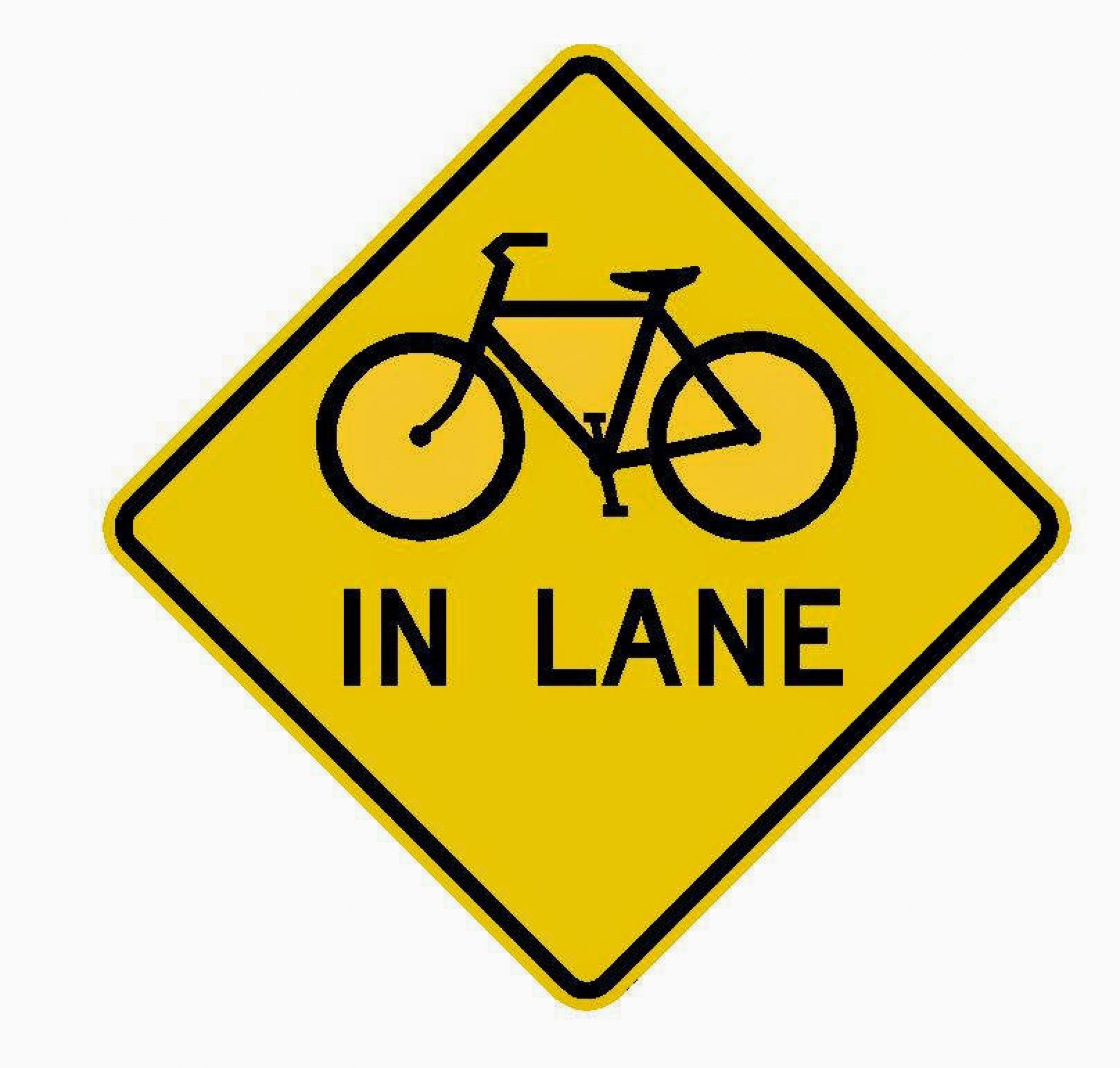
Biking in Baltimore
The wrong answer
The right answer
Jump off from Ad Nauseam Double Feature: Safe Subaru vs. Deadly Dodge which makes another good point.
From Adiva Sotzsky, member of the Bike Maryland Task Force
We are now ready for the next stage of our efforts to enact
Manslaughter by Vehicle or Vessel – Criminal Negligence
The Bill has passed the House — today– Thursday March 24,
2011 vote was 137-0
We will now address the Senate. I have 2 action items below.
A) Please begin your contact ‘trees’ to have people
call/email their State Senators.
As we all know– they only need to say that they want
Manslaughter by Vehicle or Vessel – Criminal Negligence —
supported. It is HB363 and has passed the House
If they are unsure of their Senator, they can find this
either —https://mdelect.net/electedofficials/
or by name, or county or district at https://www.msa.md.gov/msa/mdmanual/05sen/html/sen.html
B) Well also want to focus on members of the Judicial
Proceedings Committee
By all means, if they are your Senator – contact them
If you want to set up a meeting to talk with them about
the bill — go for it!
Continue reading “Moving right along– Legislation”
from Streetsblog New York City by Angie Schmitt (highlight)
We’ve engineered our entire transportation system around an activity which requires increasing amounts of unproductive time, unless you are distracted. – Keri at Commute Orlando
Continue reading “Car Companies Vie for Supremacy in Distracted Driving Arms Race”
From The City That Breads
Well that settles it, Bill’s Lighthouse Inn had its transfer of license approved the other day and new owner Marla Streb (the Strebinator, as I call her) will be occupying the space for South Baltimore’s second attempt at a Bicycle themed restaurant – hehehehe get it?
At any rate, seems like the establishment will now be named Cafe Velocity and will feature some sort of cycling theme, as the owner is a professional mountain biker and probably a triathlete and/or Parkour expert or something. Whether or not the joint will be bicycle themed “in name only” much like The Bicycle, the failed defunct wine bar / restaurant where Centro Tapas now resides, remains to be seen. Beyond that, the neighborhood where Bill’s sits is a bit rough around the edges, to the point where prior ownership often times had to bolt the doors shut to keep drunkards out. Yeesh. Beer Baron Steve Fogleman noted “She’s a tough woman. I mean really tough,” so it’ll be interesting to see how this whole thing flies – er, pedals.
And being that I am personally an expert on all things restaurant, here are my suggestions for the upcoming Cafe Velocity that will enhance the experience, the cycling ambiance, the essence of biking:
Am I missing anything? Who’s got some other suggestions?
Continue reading “Say hello to your new bicycle themed restaurant”
From the Baltimore Sun – Second Opinion
The story of Nathan Krasnopoler, a Johns Hopkins student who has been in a coma since being struck by a motorist while riding his bicycle in a designated bike lane, has sparked a significant reaction from other Baltimore bicyclists who are upset that the driver was not charged or fed up in general with rude and dangerous behavior by motorists. (The latest is that his parents are suing the driver, Jeanette Marie Walke, alleging that she violated multiple traffic laws.)
Del. Jon Cardin wrote in last week to protest the lack of charges against the driver, saying it goes against the intent of the General Assembly.
Katharine W. Rylaarsdam disagreed, saying the accident was a mistake but not a crime.
Jeffrey H. Marks says the problem is a failure of city officials to educate cyclists and drivers alike about how to make safe right turns.
And yesterday, Julie Gabrielli wrote an open letter to Baltimore drivers, setting out the code of conduct she will adhere to on her bike — and what she expects of motorists in return. (Hint: It doesn’t involve honking your horn.)
Continue reading “The Talk: A Baltimore bicyclist’s manifesto”
An 83-year old woman who lived alone in the town of Ishinomaki, Japan, escaped the tsunami by fleeing on her bicycle.
When she heard about the tsunami warning, she did the first thing that came to mind and jumped on her bicycle. She prides herself on her health and fitness, she said.
…
Continue reading “83-Year-Old Japanese Woman Escapes Tsunami — By Bike”
From Change.org
 For seven years, accident victim and cycling/walking advocates have been trying to close a flagrant loophole in Maryland’s law to make the road safer for bikers, pedestrians and all who use the road. And for six years running, the bill would get stuck in the same committee. Over and over again.
Now, for the first time ever, the State House Judiciary committee plans to finally vote on the bill. Approval would set the stage for passage by the House by April, a gigantic leap forward towards passing this law.
Almost 5,000 people have already signed a Change.org petition urging the House to pass the bill. The petition was started by Kenniss Henry, whose only child, 30-year-old Natasha Pettigrew, was killed by a hit-and-run motorist on her bicycle last Fall. As Maryland’s law stands now, no matter how reckless the behavior, short of drunkenness, the driver is likely to get off with merely a traffic violation and minimal fine. The new law would close this loophole, introducing jail time for criminally reckless drivers who kill others with their behavior.
As Bike Maryland states: “There have been far too many fatalities on Maryland roads. Motorists are not penalized adequately and get off with a minor traffic court slap on the hand.”
If you live in Maryland, there is an urgent action still to be taken. Call your Delegate today to clearly register your last minute support for the bill.
Here’s how: Enter your home address HERE to identify your Delegate – your Delegate will be listed on the left side of the screen. Click on your Delegate’s name for contact information. Pick up the phone and make a 2 minute phone call. Let them know you are a constituent and you support House Bill 363. It is not necessary to discuss the bill in more detail.
The bill could come up for a vote any day this week. Please call immediately to register your support. And if you haven’t yet—please sign the petition.
Photo credit: Woodleywonderworks via Flickr
Continue reading “After 7 Years, Finally a Vote for Maryland’s Vehicular Manslaughter Bill”
A great article from the Grist, the highlight:
…
It’s a huge and
incredibly wonky document. But one part of it jumps right out. In it, Litman
takes on people who object to paying higher gas taxes, tolls, or parking fees (emphasis mine):
Critics are wrong to claim that raising
road tolls, parking fees or fuel taxes is unfair. Does charging admission at movie theatres constitute a “war
on film viewers”? Does charging for bread constitute a “war on eaters?” Motor
vehicle user fees only finance about half of roadway costs and a much smaller
portion of parking facility costs; the rest is financed indirectly through
general taxes (for local roads), higher retail prices (for business parking),
lower wages (for employee parking), and higher housing costs (for residential
parking) (Litman 2009; Subsidy Scope 2009). This funding structure forces
people who drive less than average to subsidize their neighbors who drive more
than average. Automobile travel also imposes other external costs, including
congestion delays, accident risk, pollution emissions, and various economic and
environmental costs from fuel consumption. North American fuel taxes are among
the lowest among developed countries and have not been raised to account for
inflation during the last two decades. These low user fees exacerbate traffic
and parking congestions. The pricing reforms that critics call “anti-car” are
often the most effective way to address the problems motorists face.
The truth is, as Litman points out, that
no one is calling for an obliteration of cars from the American landscape. Reform
advocates instead want policies that give more people more choice — which
might be nice, considering the way gas prices are going.
…
Continue reading “The latest battle in the nonexistent ‘War on Cars’”
From Baltimore Velo

In light of the recent Krasnopoler tragedy and the frustrating situation over at Loch Raven, it has become obvious that despite the strides we’ve made as a cycling community in Baltimore, we still have a long way to go. So where do we go from here?
Penny Troutner, owner of Light Street Cycles, has an idea of where we can start. Penny has put together her thoughts about cycling advocacy in Baltimore in a guest post for Baltimore Velo. It’s definitely worth the read,….
Bicycle advocacy is a tough sell also. Most government administrators don’t know what it is like to use a bicycle for commuting, rigorous exercise, competition, socializing, exploration, or escape (from life’s frustrations – not the other kind, …although, there’s that).
Anyway, just when it seemed as though Baltimore City was poised to make real progress in our direction, we have been dealt blow after blow of disappointments. A very obvious and tragic case of a car not yielding the right of way to a bicyclist in a bike lane is still not resolved by the police. Loch Raven Reservoir, long loved, long ridden, and consistently maintained by mountain bikers is being yanked away – every proposal and partnership offer from the mountain bike community being immediately dismissed. A resolution by the Baltimore City Council for Complete Streets design is rejected by the City Administration. Pretty lousy, right? So, we could whine about it… or we could do something.
Let’s say we should do something – it has to be the right thing. The bicycle advocacy movement needs operate in the same manner as any good lobbying effort. The group needs to be organized, focused, positive, and relentless to break through the noise and earn respect outside it’s domain.
It’s not there yet. There are significant hiccups. Here are some of our common, negative actions:
So how do we know what to say? Face time with someone who has many pressing issues to deal with is precious. When speaking to government officials or the press, are we making the best use of the time?
Those in charge must direct the group to be exactly this – organized, focused, positive, and relentless. As they lead, the rest of us need to offer our support and participation. However, any of the previously mentioned negative actions will demonstrate a lack of solidarity, innate organizational weakness, and a lack of resolve on the part of the advocates. If I were on the other side and witnessed such actions, I would not take us seriously, either. So, let’s start our journey with an important thought for all of us:
Primum Non Nocere – Do No Harm.
Continue reading “Guest Post: Penny Troutner on Cycling Advocacy in Baltimore”
from Baltimore Brew by Fern Shen
The lawyer for the family of a comatose Johns Hopkins University student, critically injured while riding his bicycle last month in north Baltimore, said the family’s $10 million lawsuit against the driver whose car struck him is meant to send a strong message to motorists.
“I don’t think she’ll be (criminally) charged and I’m not sure she should be,” said Andrew G. Slutkin, the lawyer who filed the suit Monday against Jeanette Marie Walke in Baltimore City Circuit Court.
“I don’t think she intentionally did this, I think she made a mistake,” Slutkin said, referring to the 83-year-old Walke, whose car allegedly struck 20-year-old Nathan Krasnopoler on Feb. 26.
But Slutkin argued that judgments like the one Krasnopoler’s family is seeking against Walke are the only way to make Baltimore-area roads safer and prevent similar tragedies.
“The moral of the story is, we need to better educate motorists about the law and about co-existing on the roads with motorcyclists and pedestrians and bicyclists and everyone else,” he said, in a telephone interview. The suit alleges that Walke violated multiple traffic laws in the late Saturday morning collision.
Messages left for Walke today were not returned.
No charges have been filed against Walke. Police have not completed their investigation into the crash, according to Shonte Drake, deputy communications director for the Baltimore City State’s Attorney, who said that media reports that police met to discuss the case today with prosecutors are “a misquote.”
Baltimore city police have backed away from earlier statements that the driver would not be charged and that the cyclist was at fault.
Until other accounts surface, though, the six-page complaint offers the most detailed scenario yet of what may have happened in the crash that has roiled the cycling community and set off a passionate — sometimes ugly – debate among motorists and cyclists about whose behavior most needs to be curbed.
A University Parkway U-turn?
According to the Krasnopoler family’s complaint, Nathan was riding his bike northbound on University that day and Walke was driving southbound on University when she “made a U-turn, and drove past Nathan as both Nathan and Defendant were now traveling northbound on University Parkway approaching 39th St.”
Walke turned right into the driveway of her apartment building, the Broadview, and cut off Krasnopoler’s right of way, the suit alleges. The suit also claims that Walke “failed to properly signal” before making the turn into the Broadview driveway.
The suit says Krasnopoler was unable to stop his bike and was thrown over Walke’s vehicle, which then ran over him, pinning him on his back underneath. Krasnpoler was severely burned because the driver left the car running when it was on top of him, the suit alleges.
His other injuries include eye damage, facial fractures, broken ribs and collarbone, two collapsed lungs and traumatic brain injury, the suits says. The Johns Hopkins engineering student has remained in a coma since the crash.
In the phone interview, Slutkin reiterated the suit’s claim that Walke broke several laws, including failure to yield the right of way in a bike lane.
“I mean, how much clearer could it be when there is a bike lane and there’s a law that just went into effect three months earlier that protects them?” Slutkin said.
(He may be referring to a new law that requires motorists to yield the right of way to cyclists when they are in a designated bike lane or to the so-called “three-foot law,” which says motorists overtaking bicycles “must pass safely at a distance of not less than 3 feet.”)
Slutkin’s firm, Silverman, Thompson, Slutkin & White, also handled the case of the family of another cyclist, John R. “Jack” Yates, who was killed by a truck turning right off Guilford Avenue in 2009. “It echoes this case,” Slutkin said.
The defendants (Potts & Callahan Inc. and the driver of the truck) settled the Yates family’s civil lawsuit for an undisclosed sum. In the Yates case, police also made statements early on that the driver was not at fault. “We found video and other evidence to prove that was not the case,” Slutkin said.
He said the firm has spoken with about a dozen people, “some were at the scene, some were there shortly thearefter,” and “people tell us (Krasnopoler) wasn’t flying, he wasn’t doing anything unusual, he was in the bike lane going maybe 15 miles an hour. She had passed him right before and must have forgotten about it. She turned, cutting him off and causing him to go flying over the car.”
Slutkin said even though he knows some cyclists are reckless, most are not and that he finds some peoples’ hostility toward cyclists “especially in the Sun comments section . . . really annoying.”
“There are a lot of people with this terrible animosity toward cyclists,” Slutkin said. “And the police have their bias against cyclists too.”
Continue reading “$10 million suit says driver pulled a U-turn before colliding with bicyclist”