5 Economic Myths About Bicycling

We’re all rich, and poor, and freeloaders

By Elly Blue, Bicycling

y new book, Bikenomics: How Bicycling Can Save the Economy came out this week! During my research on the book, I ran up against a bunch of myths about people who ride bicycles. Like all good myths, these contained a kernel of truth. Likewise, they all miss the boat while trying to describe the reality of the pedal-powered economic revolution that’s quietly spreading across the US of A.

Myth 1: We’re rich

Myth 2: We’re poor

Myth 3: We’re cheapskates

Myth 4: We’re freeloaders

Myth 5: We just help ourselves

https://blogs.bicycling.com/blogs/everyday-rider/2013/12/06/5-economic-myths-about-bicycling/

This is much more important than any political talk.

Amsterdam children fighting cars in 1972, Via BICYCLE DUTCH


amsterdam1972

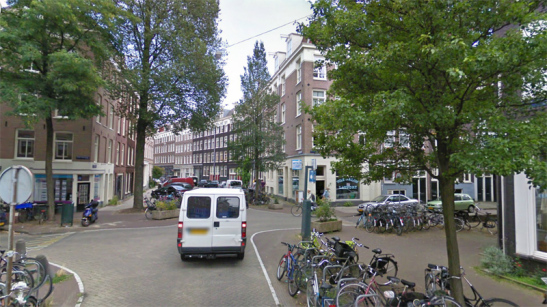
Image from the documentary from 1972. The streets are dominated by cars and there is not a tree in sight.

amsterdam2012

The same street as seen in Google Streetview is very different. The carriage way was narrowed. The homes renovated and the trees and bicycles make the area a lot friendlier.

Excerpt from a 1972 TV-documentary about the traffic situation for the children in an old Amsterdam neighbourhood.

https://bicycledutch.wordpress.com/2013/12/12/amsterdam-children-fighting-cars-in-1972/

Secret city designs that prohibit desired social behavior

[B’ Spokes: Did you hear about the kindergarten teacher that became a bike/ped planer? Single file sidewalks, single file bike lanes, single file bike trails and no talking! And it goes beyond that, place designs get approved with conceptual drawings showing lots of people then when they build it lots of no loitering signs and things mentioned in the following article so the place ends up looking sterile and void of life… and we call that nice pleasant design? What’s next to the road is as important as the road its self, we need to put an end to false idea that accommodating people is a bad thing.]
*****************************************************************************************
https://www.bbc.com/future/story/20131202-dirty-tricks-of-city-design/1

MARC Train Edge Cities-They Don’t Exist, Yet

Via Comeback City


What is surprising is there is nary a sprout of an urban cosmopolitan edge city that is oriented around a MARC train station between Penn and Union Stations. Arlington, Rockville, Bethesda, and Silver Spring are small cities that have grown up around Washington Metro Stations. Kaid Benfield has covered the Arlington success story and Chris Leinberger has described the growth of what he calls “walk up” development that is becoming so prevalent in the Washington Metro Area. By contrast, all seven MARC Penn Line stations between Penn and Union or “stations in the middle” (SIM), lie in a desert of surface parking lots (there is a garage at BWI). It is difficult to even get a cup of coffee at most of these outposts.

https://comebackcity.us/2013/11/12/marc-train-edge-cities-they-dont-exist-yet/

Working from home, bicycle commuting on the rise in Baltimore

By Ryan McDonald, Baltimore Business Journal

Fewer workers are commuting by car in Maryland’s urban areas, including Baltimore, according to a report by the Maryland PIRG Foundation.
Between 2006 and 2011, there was a 1.8 percent decrease in vehicle miles traveled per capita in Baltimore.

The steepest reduction in driving belongs to the younger workers. Americans between the ages of 16 and 34 reduced their average driving miles by more than 20 percent between 2001 and 2009.

https://www.bizjournals.com/baltimore/blog/morning-edition/2013/12/working-at-home-bicycle-commuting-on.html

Lower the speed limit in pedestrian crash corridors

[B’ Spokes: Rather than focus on speeding in on a street with an already high speed limit, consider lowering the speed limit.]
**************************************************************************************************************************
Literature Review on Vehicle Travel Speeds and Pedestrian Injuries Among Selected Racial/Ethnic Groups

Abstract
The relationship between vehicle travel speeds and resulting pedestrian injury was reviewed in the literature and in existing data sets. Results indicated that higher vehicle speeds are strongly associated with both a greater likelihood of pedestrian crash occurrence and more serious resulting pedestrian injury. It was estimated that only 5 percent of pedestrians would die when struck by a vehicle traveling at 20 miles per hour or less. This compares with fatality rates of 40, 80, and nearly 100 percent for striking speeds of 30, 40, and 50 miles per hour or more respectively. Reductions in vehicle travel speeds can be achieved through lowered speed limits, police enforcement of speed limits, and associated public information. More long-lasting speed reductions in neighborhoods where vehicles and pedestrians commonly share the roadway can be achieved through engineering approaches generally known as traffic calming. Countermeasures include road humps, roundabouts, other horizontal traffic deflections (e.g., chicanes), and increased use of stop signs. Comprehensive community-based speed reduction programs, combining public information and education, enforcement, and roadway engineering, are recommended.

https://www.nhtsa.gov/people/injury/research/pub/HS809012.html
Decline in children’s fitness due to lack of bike, walk infrastructure called "shocking"

By Dennis Thompson, HealthDay

"We all live in an environment that’s toxic for exercise, and our children are paying the price," Tomkinson said.
Children today are about 15 percent less aerobically fit than their parents were as youngsters, Tomkinson and his colleagues discovered. In the United States it’s even worse — kids’ heart endurance fell an average 6 percent in each of the three decades from 1970 to 2000.
These levels of fitness in childhood will more than likely result in worse health in adulthood, Tomkinson said. Kids will have weaker hearts and thinner bones, and an overall lower quality of life.

Schools that have either rid themselves of physical education or replaced it with a less strenuous version of the class. These days, only 4 percent of elementary schools, 8 percent of middle schools and 2 percent of high schools offer a daily physical education class, Kass said.

So what’s the solution? To Tomkinson, it’s simple — kids need to be exposed to prolonged exercise that leaves them exhausted.

https://www.kfvs12.com/story/24012770/kids-worldwide-getting-less-heart-fit-research-shows