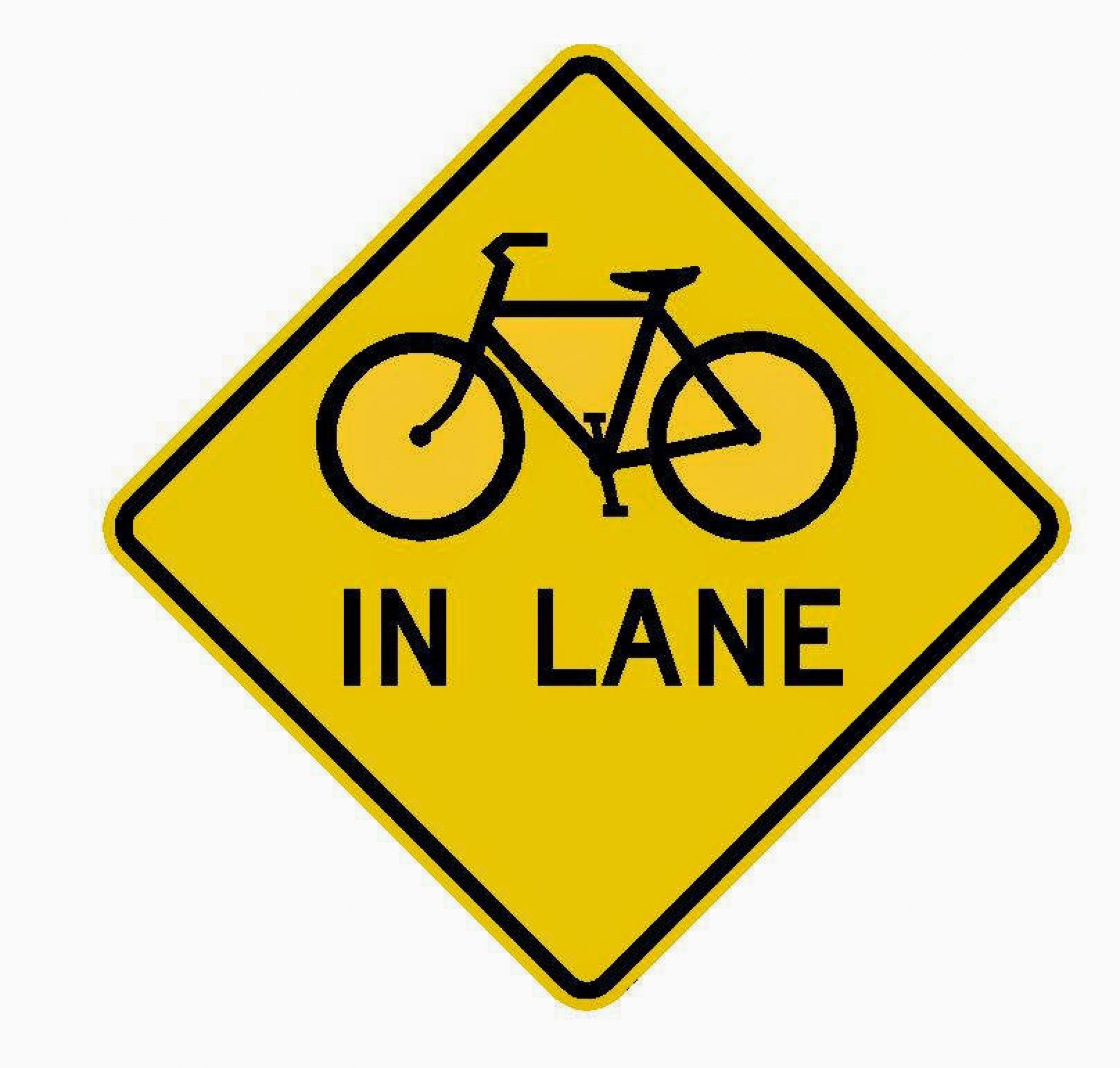
Seriously, What the heck?
https://stopthemud.org/2010/10/volvo-there-is-more-to-life-than-playing-it-safe/
Portion of income tax that goes toward highways
There is also property tax and sales tax so it’s not just car “specialty” taxes that are paying for roads.

Continue reading “Portion of income tax that goes toward highways”
UPDATE: Fatal Pedestrian Accident
[B’ Spokes: Looking at Google maps, no crosswalks no pedestrian signals … yup the pedestrian must be at fault as roads are dangerous by design.]
***************************************************
OFFICIAL PRESS RELEASE
On Sept. 27, at approximately 7:43 p.m., Calvert County Detective Traas called out with a personal injury accident involving a pedestrian that was struck northbound on Maryland Route 4 at the intersection of Fox Run Boulevard in Prince Frederick.
Members of the Calvert County Sheriff’s Office Crash Reconstruction Unit responded to the scene and assessed the situation. Preliminary investigation revealed that a Calvert County Sheriff’s Office unmarked Chevrolet Impala was traveling north along Maryland Route 4 approaching the intersection of Fox Run Boulevard when a pedestrian wearing dark, non reflective clothing entered the roadway from Fox Run Shopping Center.
The pedestrian was struck by the detective’s vehicle, causing the pedestrian to be vaulted into the southbound turn lane of Route 4. The pedestrian was transported to Calvert Memorial Hospital where he was pronounced deceased.
Three witnesses were interviewed and gave written statements as to what they observed during the incident. The Calvert County Sheriff’s Office requested the Maryland State Police Crash Team handle the investigation of the fatal crash because it involved a fatality with an agency vehicle. It was raining and visibility was reduced at the time of the crash.
The name of the deceased is not being released at this time due to the fact the family has not been notified. The pedestrian is believed to have been under the influence of alcohol at the time of the crash.
Maryland State Police Prince Frederick barrack are investigating a fatal pedestrian accident in Prince Frederick.
Rescue crews responded to report of a pedestrian struck on Route 4 near the Fox Run Shopping Center around 7:45 p.m. on Monday, Sept. 27.
Upon arrival, it was discovered that a pedestrian had been struck by a Sheriff’s deputy driving an unmarked vehicle. The pedestrian was transported to Calvert Memorial Hospital where the patient later died as a result of injuries received.
Authorities continue to investigate.
Continue reading “UPDATE: Fatal Pedestrian Accident”
Md.’s new bicycling laws now in effect
By Kate Ryan, wtop.com
WASHINGTON – Rules of the road are changing in Maryland, and it’s not just a texting ban or the fact that drivers have to go hands free on cell phones. There are some other new rules of the road that will affect drivers and bicyclists.
Peter Moe is the Maryland State Highway Administration’s Bicycle Safety Coordinator. WTOP talked to Moe about Maryland’s new rules of the road regarding cyclists. These are rules drivers need to be aware of and cyclists need to keep in mind as they travel the roadways.
One law welcomed by cyclists is the "three foot rule." Moe explains what that means for drivers.
"What you need to do now in the state of Maryland is give bicyclists at least three feet of space when overtaking them."
Another change repeals the law that basically forced cyclists to stick to the shoulder of roadways. Why shouldn’t cyclists be required to stay on the shoulder?
"Because sometimes on that shoulder, there may be debris or obstacles that a cyclist has to avoid in order to travel safely," says Moe.
Moe says the repeal of the law means that cyclists now have some discretion. They can stay on the shoulder if they feel safest there, but can now "take the lane" on the road if they prefer.
Isn’t that having it both ways?
Many drivers feel bikes should not be on state roads – like Route 355 or Route 202 – in the first place. Moe says the law is on the side of the cyclist.
"You can and should expect to see bicyclists on any roadway, apart from our interstates. Bikes are considered a legal vehicle, and they have a right to the roadway."
But Moe adds, cyclists have responsibilities that come along with those rights: they are required to obey all traffic laws. And yes, that means stopping at red lights and at stop signs.
"That’s really for everyone’s benefit. For the bicyclist and for the motorist."
Moe says it’s the predictability, the understanding that you can expect the other guy to do the expected thing, that helps keep everyone safer.
The new laws took effect Friday.
Rescissions hit bike programs hard
The League of American Bicyclists (LAB) has a article about rescissions which I will highlight:
"For example, after the last round of rescission, Washington Area Bicycle Association (WABA) members sent almost 700 emails to the DOT director to express displeasure with bike/ped rescissions. This time DC was among those that rescinded nothing for TE."
Writing works, getting involved works. Be apart of the change.
While Maryland was not specifically mentioned but LAB notes "you can send an alert to your governor asking that TE (MD’s issue is CMAQ) is spent quickly and not unfairly rescinded in the future."
Does that mean the problem is basically Maryland doesn’t spend the money and doesn’t plan to spend the money so the Feds ask for it back? Yep, that’s the basic problem. I will also note that there is nothing faster then bike/ped projects going from planning to being on the ground.
Continue reading “Rescissions hit bike programs hard”
SHARING THE ROAD TAKES ON NEW MEANING FOR BICYCLISTS AND DRIVERS
SHA News Release: New Bicycle Laws Take Effect Today
SHARING THE ROAD TAKES ON NEW MEANING FOR BICYCLISTS AND DRIVERS
New Bicycle Laws Take Effect Today
(October 1, 2010) — Have you ever driven along a road and encountered a bicyclist? Did you know what to do? Did you know how to pass safely? Did you know what the law requires?
Several new Maryland laws are taking effect today to help clear up any confusion and make sure everyone shares the road safely. Bicycles are considered vehicles in Maryland, but bicyclists typically travel at much lower speeds than automobiles.
“People often bike as an alternative to driving, which is better for their health, traffic congestion and the environment,” said SHA Administrator Neil J. Pedersen. “By respecting each other, following traffic laws and using common sense, we can all share the road safely.”
Sharing the road takes on new meaning as laws go into effect October 1 that define road space for bicyclists. The new law, passed during the 2010 Legislative Session and signed into law by Governor Martin O’Malley, requires motorists to pass bicyclists at a safe distance of at least three feet, except in certain circumstances. Additionally, bicyclists are allowed to use crosswalks in areas where bicycling on sidewalks is permitted. A previous law that required bicyclists to travel on roadway shoulders was repealed.
“These bills modernize Maryland law,” said Senator Brian Frosh, who sponsored one of the measures. “They’ll increase bicycle safety and help all of us by encouraging people to leave their cars at home.”
On average, from 2005 through 2008, seven bicyclists were killed and more than 650 were injured in traffic crashes annually in Maryland. According to preliminary data from the Maryland State Police, 10 bicyclists died in traffic collisions in 2009.
Information on all of the Maryland laws pertaining to bicycling, as well as tips for bicyclists and drivers are available at www.choosesafetyforlife.com.
Continue reading “SHARING THE ROAD TAKES ON NEW MEANING FOR BICYCLISTS AND DRIVERS”
New York as the greatest, greenest big city [video]
Found via Greater Greater Washington
How Flawed Formulas Lead Down the Road to Sprawl
To help understand the issue in the linked article I will give the following analogy: Let’s us say you own a restaurant where the air quality is a problem due to smokers. Well the solution should be obvious… put in more tables for smokers and hire more staff to service smokers to get them in and out of the restaurant a lot faster and make the non-smokers wait as they don’t cause any problems hanging around.
Sounds absurd right? But this is exactly the kind of thinking that drives the bulk of our transportation dollars. See the the link after the fold.
Continue reading “How Flawed Formulas Lead Down the Road to Sprawl”
Response to Rescission of Unobligated Balances
On the positive side Transportation Enhancements and Recreational Trail funding wasn’t hit as hard as they could have been. And these two funding sources are what the State uses for bike/ped programs so not too bad on that account. (Everyone has to make some sacrifices.)
But Congestion Management and Air Quality a funding source that could be used for bike/ped but currently is not, had $4,235,975.00 rescinded. That’s more then years worth of trails. Ouch!
Keep in mind rescissions come about because States are slow to utilize all their funding. Or more to the point, because of MD’s draconian policies of not allowing the full range of bicycle accommodations to qualify for these funds and by requiring the highest match in the nation an obscene amount of money (at least for bike/ped but way to small to accommodate more cars) has been left to rot.
Continue reading “Response to Rescission of Unobligated Balances”
Hit and Run
By Bob Mionske
Like many New Yorkers, Bobby Bowen had re-discovered the joy of cycling in the city. As Bobby had explained riding everywhere made him feel happy and helped him stay fit and feel alive. It’s a feeling we all know. The simple act of traveling somewhere is transformed into a moving celebration of life.
For Bowen, that celebration came crashing to a sudden and tragic end on August 26. Sometime around 11 p.m., as he was riding to a friend’s house, a truck hauling a flatbed trailer struck Bowen, injuring him so badly that doctors couldn’t even perform surgery. Still, Bowen hung on, clinging to life throughout the weekend. Despite his valiant struggle to live, his fight ended just before midnight on August 30.
An accomplished jazz bassist and music professor at Hofstra University, Bowen left behind a devastated family, and stunned friends, students and colleagues.
The driver never even stopped, and although there were cameras at the scene of the crash, there was nothing conclusive in the footage that would allow the police to identify the truck.
I wish I could say that a driver hitting another human being and leaving the scene is an aberration. I wish I could say that drivers are careful and conscientious, and that when there’s an accident and somebody is injured, they always stop and render assistance. I wish I could say those things, but I can’t, because they’re not true. When apologists for negligent drivers assure us that we don’t need penalties for vehicular homicide, because the remorse that drivers feel is punishment enough, I wonder what planet these apologists live on. Certainly not this one, where drivers can apparently hit, injure and perhaps even kill another human being, and keep on driving, as if they had just driven over nothing more consequential than a stick in the road. If you think that’s too harsh an indictment, consider just two of the many incidents of hit and run we have seen in the news:
…
On September 20, 2010, Natasha Pettigrew , a law student at the University of Miami, and the Green Party candidate for the US Senate seat currently held by Senator Barbara Mikulski of Maryland, was training for a triathlon on an early Sunday morning. At 5:30 a.m., she was struck and critically injured by an SUV; the driver was reported to have momentarily slowed after impact, but did not stop, reportedly driving nearly three miles with a flat tire and sparks flying from under her SUV. Pettigrew was rushed to the hospital, and while police were investigating the scene, the driver called police, reporting that she had thought she had hit a dog, or a deer, but after arriving at home, had found a bicycle lodged under her vehicle. The next day, Pettigrew succumbed to her injuries. The driver was not charged.
In most crashes, I think there is no question that the driver is absolutely aware that there has been a collision, even if the driver is unsure of exactly what has happened. We all know how berserk drivers can get when a cyclist slaps the side of their car to let the driver know that the cyclist is about to be crushed. There is simply no way that a driver can be completely unaware that there has been an impact to the vehicle when the driver hits a cyclist with enough force to kill. It might be true that the driver didn’t see the cyclist, and thus, didn’t know that it was a cyclist that had been hit, but a person on a bike is big; and a bike contains lots of hard metal that will make noise. Even if you mistakenly run over a small animal, like ground hog, or something larger, like a dog, it’s an event. Hitting a person is a far bigger, louder collision, one that can cause serious damage to the car, too.
Applying Ockham’s razor—the theory that the simplest explanation is usually the correct one—the explanation is that these drivers did feel the impact, but kept on driving. And again applying Ockham’s razor, the reason is that the driver didn’t want to face the consequences of hitting another human being.
And that’s understandable. After all, the consequences are serious, and in that split second after the sickening thud that we all know that they feel, the driver must decide what to do. Some drivers stop and render assistance. Some panic and keep driving.
And I think the reality is that all too often, hit and run drivers do know what happened, but in that split moment after impact, they panic, because they are driving drunk, or without a license, and they realize the seriousness of the consequences if they stop. After all, if the driver hasn’t done anything wrong, there’s no reason to flee, and risk the felony charges that apply. I think that what we are often witnessing is the driver making a split-second calculation, weighing the risks of facing a DUI with homicide charge, against the risks involved in fleeing the scene, and as long as the risks of stopping are greater than the risks of fleeing, some drivers will choose the lesser risk and flee.
Did the driver who hit and killed Natasha Pettigrew know the awful truth of what happened when she felt the impact? Did she see the unfolding horror of Pettigrew disappearing under her SUV too late to react and save her? Did she give in to a moment of panic, only to be confronted later with the grim reality of Pettigrew’s bike wedged firmly under her SUV?
Or did she truly believe that she had only hit a dog or a deer, and continue driving home ? All we know at this point is that after hitting Pettigrew, the driver of the SUV went home and contacted police. But even if we take what the driver had to say at face value—that she didn’t see a cyclist who was directly in front of her and equipped with lights, on a lighted road, and that she thought that her flat tire and the shower of sparks coming from under her vehicle were caused by a collision with a dog, or perhaps a deer—we should be asking some very serious questions about whether this driver exhibits the basic level of competence that should be expected of motor vehicle operators.
…
Continue reading “Hit and Run”