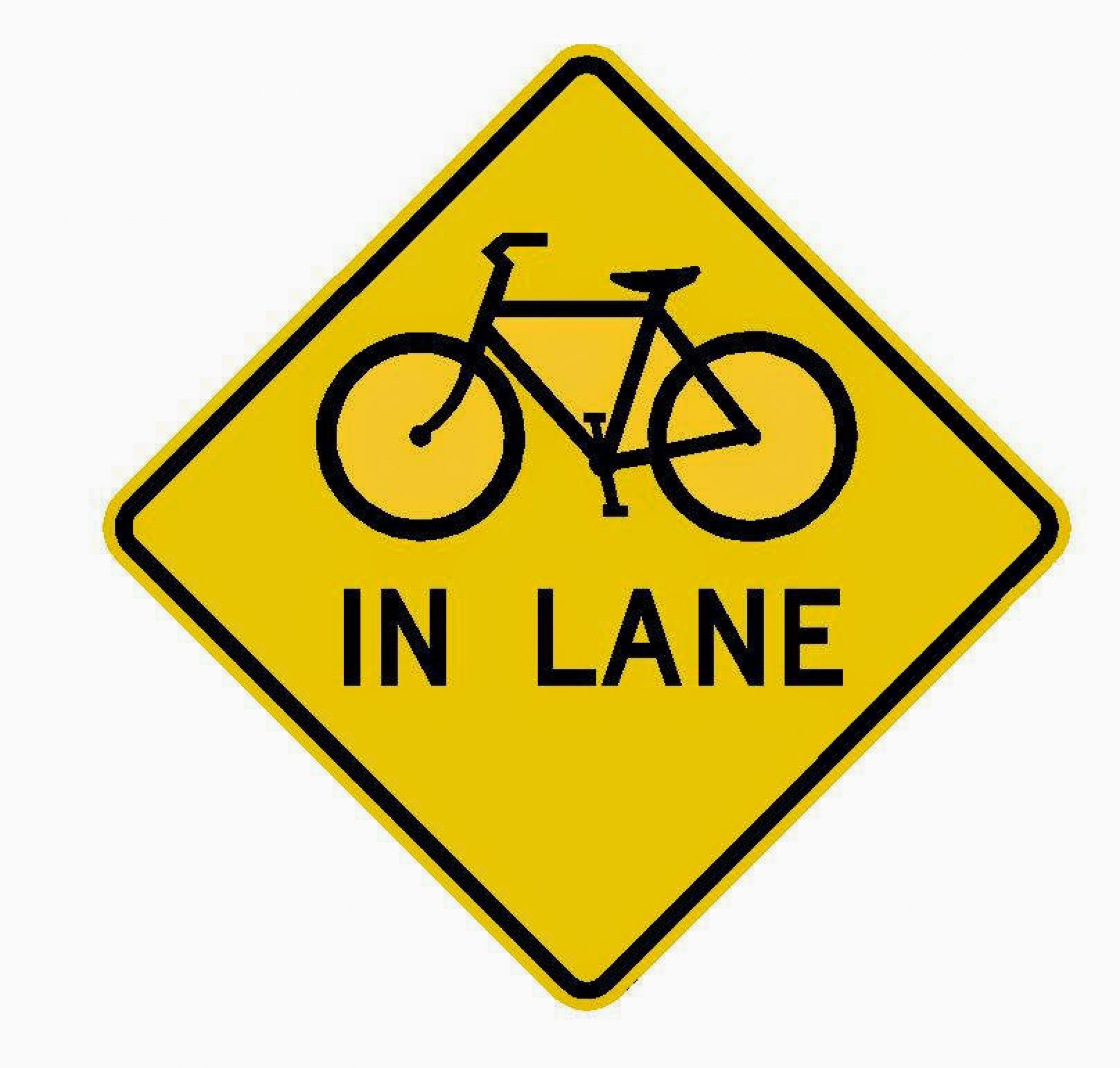
Improvement to Maryland Three-Foot Law Defeated in Committee

By Jim Titus, The WashCycle

The Environmental Matters Committee gave an unfavorable report yesterday to House Bill 445, which would have removed the “narrow highway” exception to Maryland’s three-foot safe passing statute.  The Committee also rejected HB 160, which would have legalized riding bikes on sidewalks in localities with no local laws on the subject (Baltimore, Montgomery, Prince Georges, and Howard have local laws.)

As we’ve discussed before on the Washcycle, Maryland’s three-foot law has four confusing exceptions.  One of those exceptions allows drivers to pass with less than three feet of clearance if the highway is too narrow for a driver to pass with three feet of clearance.  No one knows precisely what that exception means:  Bike Maryland thinks that this exception refers to virtually every two-lane road with a double yellow line, while I think that, regardless of what was in the mind of Delegate Malone when he inserted the provision, the rules of statutory construction mean that the exception only applies to narrow highways (e.g. country roads or one-lane bridges).  But if the cycling advocates can’t agree on what it means, clearly the statute needs clarification.  The best way to clarify the statute would have been to eliminate this exception, which this bill would have done.

Why did the bill fail?  We don’t know yet, though some of the contributing factors are obvious. Cycling advocates have focused more on HB 339, the mandatory helmet bill.  Two weeks ago, ten advocates showed up to a hearing at the Environmental Matters Committee, and passionately offered a wide array of arguments against the helmet bill. About 20 minutes later, Delegate Cardin presented the safe-passing bill to the same commitee, and only three of those advocates testified, along with Bike Maryland (which has taken no position on the helmet bill).  None of the advocates were as passionate about the three-foot bill as they were in opposing the helmet bill.

The truck drivers opposed the safe-passing bill, and interpret the existing law the same way Bike Maryland construes it.  They want to be able to pass cyclists more closely than three feet if the alternatives are to cross the double yellow line or wait.  Trucks are wider than cars:  It will often be possible for a car and a bike to share a lane with a three-foot clearance (if the cyclist hugs the edge).  But a 9-foot truck can only pass with 1-foot of clearance, and the truckers want to be able to continue doing so.  One representative added that they can’t really tell whether they are passing with 3′ feet or 2’6″ anyway.  None of the cycling advocates made a strong case for why a safety buffer is more important than giving truckers what they want.

Another contributing factor was that Delegate Cardin also seemed to be preoccupied with other matters.  His presentation starts at 1:25:00 in the video of the hearing.  There was a subsequent colloquy with Delegate Vitale in which it became clear that the committee and Delegate Cardin had different versions of the bill (1:35:00).  A few minutes later, (1:38:00) Delegate Cardin closed that colloquy by providing an explanation that seemed to more closely resemble last year’s bill than this year’s bill.

If these are the reasons the bill failed this year, I hope that Delegate Cardin and Bike Maryland will stick with this version of the bill and try again next year.  It was a step in the right direction, and the fact that we did not convince the Committee this year had more to do with the fact that our minds were elsewhere than the merits of the bill.

With a little more preparation, we can make the case for removing the narrow-highway exception.  The idea that trucks should be able to pass bikes with less clearance than cars, simply because trucks are wider, is absurd.

(Jim Titus is a cycling advocate from Prince George’s County.  The opinions expressed here do not represent the views of any organization with which he is affiliated.)

https://www.thewashcycle.com/2013/02/amendment-to-maryland-three-foot-law-defeated-in-committee.html

Surgeons in Scotland debate the helmet issue – do they increase cyclists’ safety or not?

[B’ Spokes: Note that our helmet bill is still in committee with no vote yet.]
*******************************************************************************
By Simon_MacMichael, Road.cc
Neurosurgeon argues for wearing them… trauma specialist (who chairs CTC Scotland) opposes compulsion

Instead, after outlining other things that can be done to improve cycle safety such as addressing traffic speed and improving road layout, she says: “Most of the head injuries I have seen in cyclists are the result of low velocity crashes or simple falls due to ice or wet roads.
“There is no doubt in my mind that a well-fitting cycle helmet will reduce the incidence of scalp laceration and open fracture and will help to reduce the energy transfer to the brain.”
Apart from in sports, where she believes the type of potential injuries justifies governing bodies making helmets mandatory, Ms Myles isn’t calling for helmets to be made compulsory; she does point out though, that “in my department all neurosurgeons, neurologists neurointensivists and neuroanaesthetists wear cycling helmets when cycling – we can’t all be mad!”
Mr Oliver, however, maintains that “there is no justification for helmet laws or promotional campaigns that portray cycling as a particularly ‘dangerous’ activity, or that make unfounded claims about the effectiveness of helmets.
“By reducing cycle use even slightly, helmet laws or promotion campaigns are likely to cause a significant net disbenefit to public health, regardless of the effectiveness or otherwise of helmets,” he adds.

https://road.cc/content/news/77035-surgeons-scotland-debate-helmet-issue-do-they-increase-cyclists-safety-or-not

Wooing Suburban Drivers With Cheap Parking: A Losing Strategy for Cities

[B’ Spokes: This bares highlighting:]
During the era of interstate highway construction, and the resulting demographic shift from city to suburb, municipalities worked to provide auto access to their downtowns, hoping this access would support economic growth. However, mounting evidence shows that greater automobile access came at the expense of the very economic vibrancy cities sought and does not help reduce roadway congestion. Costs associated with accommodating cars, particularly for parking, are outweighed by the long-term economic costs.
Recent research shows cities that focus on auto access experience a decline in economic activity and lack of vibrancy, suggesting a policy of prioritizing cars often fails as an economic development tool for urban areas. Municipalities with excess parking do increase driving into and within the city, but the increase in income disparity between urban core and suburban areas shows how this policy may pose equity issues.
Read the full article: https://streetsblog.net/2013/02/26/wooing-suburban-drivers-with-cheap-parking-a-losing-strategy-for-cities/

What If Your Street Belonged to Kids on Saturdays?

I’m a firm believer that we could cut the numbers of public streets available to traveling cars in half (or at least cut the width of most streets in half) and we’d all be happier with the added space for gardens, shade trees, dinners outdoors and playing.

Here in the U.S., Park(ing) Day is a step in the right direction. But what if we went a step further?

In the U.K., a group called Playing Out encourages neighborhoods to organize limited after-school closings of neighborhood streets to allow children to play. New York City has a similar program called Play Streets.

Could a program like this work in your community?


Playing Out from Playing Out on Vimeo.

Via The Green Miles Via The Atlantic Cities

U.S. DOT to Challenge AASHTO Supremacy on Bike/Ped Safety Standards

by Tanya Snyder, Streets Blog
For years, the federal government has adopted roadway guidelines that fall far short of what’s needed — and what’s possible — to protect cyclists and pedestrians. By “playing it safe” and sticking with old-school engineering, U.S. DOT allowed streets to be unsafe for these vulnerable road users.
But that could be changing. The bike-friendliest transportation secretary the country has ever seen told state transportation officials yesterday at AASHTO’s annual Washington conference that U.S. DOT was getting into the business of issuing its own design standards, instead of simply accepting the AASHTO guidelines.
Normally, the Federal Highway Administration points people to AASHTO’s Green Book, the organization’s design guide for highways and streets — and indeed, the agency is still directing people to the 2001 edition of the Green Book. Cycling advocates have long criticized the AASHTO guide, and the FHWA’s adherence to it, since even the most recent version doesn’t incorporate the latest thinking in bicycle and pedestrian safety treatments.
In FHWA’s new round of rule-making, DOT will set its own bicycle and pedestrian safety standards for the first time. The agency will “highlight bicycle and pedestrian safety as a priority,” LaHood said. (You can watch his entire speech on AASHTO’s online TV channel.)

https://dc.streetsblog.org/2013/02/28/u-s-dot-to-challenge-aashto-supremacy-on-bikeped-safety-standards/