
This is much more important than any political talk.
Amsterdam children fighting cars in 1972, Via BICYCLE DUTCH
…

Image from the documentary from 1972. The streets are dominated by cars and there is not a tree in sight.
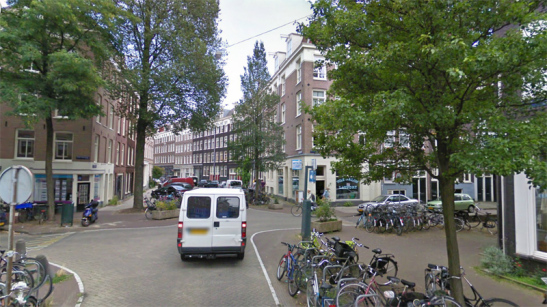
The same street as seen in Google Streetview is very different. The carriage way was narrowed. The homes renovated and the trees and bicycles make the area a lot friendlier.
…
Excerpt from a 1972 TV-documentary about the traffic situation for the children in an old Amsterdam neighbourhood.
…
https://bicycledutch.wordpress.com/2013/12/12/amsterdam-children-fighting-cars-in-1972/
A simple case of trying to everything fails to do anything well.

B’ Spokes: This post from Strong Towns makes an excelent point in graphs, local roads that try to be freeway like fail.

It always amazed me that road designers use the word artery after the way the body carries volumes of blood but never use the word/concept capillary where the thing we just carried great distances does the actual useful function.
Secret city designs that prohibit desired social behavior
[B’ Spokes: Did you hear about the kindergarten teacher that became a bike/ped planer? Single file sidewalks, single file bike lanes, single file bike trails and no talking! And it goes beyond that, place designs get approved with conceptual drawings showing lots of people then when they build it lots of no loitering signs and things mentioned in the following article so the place ends up looking sterile and void of life… and we call that nice pleasant design? What’s next to the road is as important as the road its self, we need to put an end to false idea that accommodating people is a bad thing.]
*****************************************************************************************
https://www.bbc.com/future/story/20131202-dirty-tricks-of-city-design/1
Lower the speed limit in pedestrian crash corridors
[B’ Spokes: Rather than focus on speeding in on a street with an already high speed limit, consider lowering the speed limit.]
**************************************************************************************************************************
Literature Review on Vehicle Travel Speeds and Pedestrian Injuries Among Selected Racial/Ethnic Groups
…
Abstract
The relationship between vehicle travel speeds and resulting pedestrian injury was reviewed in the literature and in existing data sets. Results indicated that higher vehicle speeds are strongly associated with both a greater likelihood of pedestrian crash occurrence and more serious resulting pedestrian injury. It was estimated that only 5 percent of pedestrians would die when struck by a vehicle traveling at 20 miles per hour or less. This compares with fatality rates of 40, 80, and nearly 100 percent for striking speeds of 30, 40, and 50 miles per hour or more respectively. Reductions in vehicle travel speeds can be achieved through lowered speed limits, police enforcement of speed limits, and associated public information. More long-lasting speed reductions in neighborhoods where vehicles and pedestrians commonly share the roadway can be achieved through engineering approaches generally known as traffic calming. Countermeasures include road humps, roundabouts, other horizontal traffic deflections (e.g., chicanes), and increased use of stop signs. Comprehensive community-based speed reduction programs, combining public information and education, enforcement, and roadway engineering, are recommended.
…
https://www.nhtsa.gov/people/injury/research/pub/HS809012.html
Decline in children’s fitness due to lack of bike, walk infrastructure called "shocking"
By Dennis Thompson, HealthDay
…
"We all live in an environment that’s toxic for exercise, and our children are paying the price," Tomkinson said.
Children today are about 15 percent less aerobically fit than their parents were as youngsters, Tomkinson and his colleagues discovered. In the United States it’s even worse — kids’ heart endurance fell an average 6 percent in each of the three decades from 1970 to 2000.
These levels of fitness in childhood will more than likely result in worse health in adulthood, Tomkinson said. Kids will have weaker hearts and thinner bones, and an overall lower quality of life.
…
Schools that have either rid themselves of physical education or replaced it with a less strenuous version of the class. These days, only 4 percent of elementary schools, 8 percent of middle schools and 2 percent of high schools offer a daily physical education class, Kass said.
…
So what’s the solution? To Tomkinson, it’s simple — kids need to be exposed to prolonged exercise that leaves them exhausted.
…
https://www.kfvs12.com/story/24012770/kids-worldwide-getting-less-heart-fit-research-shows
Top 10 Reasons to Exercise Regularly (Besides Losing Weight)
[B’ Spokes: Just the headings.]
***************************************
10. You’ll Improve Your Memory
9. You’ll Have Better Postur
8. You’ll Boost Your Confidence
7. You’ll De-Stress
6. You’ll Sleep Better
5. You’ll Have More Energy
4. You’ll Have Better Sex
3. You’ll Get Sick Less Often
2. You’ll Live Longer
1. You’ll Just Be Happier
https://lifehacker.com/top-10-reasons-to-exercise-regularly-besides-losing-we-1473616982
An American tribute to British drivers
[B’ Spokes: To make more of point I included (in the read more) a table of road fatality rates per population sorted by the lowest to highest stopping when I came to the U.S.. Or straight to my point, better education makes better drivers.]
I have newfound respect for all the motorists I encounter on British roads. A UK license is basically a PhD in driving
By Judd Birdsall, The Guardian
The United States and the United Kingdom have many important similarities, but a rigorous driving test is not one of them.
…
To get my American license when I was 16 years old, I had to take a very short multiple choice theory test. Having not studied and never driven, I passed easily. Then I took a practical test that consisted of a 15-minute amble through a flat rural area. I performed poorly, and at the end of my test the examiner turned to me and said, “You really don’t know what you’re doin’, do ya?” And he passed me.
I initially assumed the UK test was comparable to the one across the pond. But then I read that the large majority of UK motorists fail their first driving exam. And I heard horror stories of Americans and other foreigners failing multiple times. I began to study (or “revise” as you Brits say) in earnest.
I’m a doctoral student at Cambridge, and I’m quite sure I prepared much more for my driving tests than I will for my PhD viva next year.
A UK license is basically a PhD in driving.
…
https://www.theguardian.com/commentisfree/2013/dec/02/uk-driving-law-versus-us
Continue reading “An American tribute to British drivers”
Sign of the Times
By Bob Mionske, Bicycling
“It is better to run over a bicyclest [sic] than to get in a head on accedent [sic] because they don’t share the road.” This was the message that somebody posted on a sign along a rural road in San Diego County in California. Within days, news of the sign had gone viral. Naturally, cyclists were outraged. Had it ever occurred to the sign maker that there was another option available to motorists—to make a legal pass when it is safe to do so? Apparently not. Never mind that the better option was also the only legal option, when there were seconds to save and cyclists to kill.
…
First, let’s get something straight. Drivers who complain about cyclists aren’t angry just because cyclists break the law. No, drivers are angry because traffic is frustrating and cyclists are an easy target. Drivers are just as angry at the cars that are “in their way,” but they can’t bully other drivers as easily. They might actually face some consequences if they run another car off the road, or ram another vehicle hard enough to kill the driver. But when they do those things to a cyclist, no consequences.
…
So when the op-ed made the obligatory mention of “scofflaw cyclists,” and advised cyclists to “obey the letter of the law … to help drivers (and police officers) view cyclists as predictable users of the road who deserve respect,” it missed the mark. Yes, cyclists should obey the law. But what about drivers? They are operating lethal machinery, and nobody thinks to take drivers to task for the daily lawbreaking that virtually every driver engages in. Nobody ever suggests that drivers won’t be seen as “legitimate users of the road who deserve respect” until all drivers stop their lawless ways. Nobody would ever dare to post a sign calling for the murder of random motorists because they are “in the way,” and nobody would ever stop to tell a news crew that they agree with the sign because drivers “break the law.”
And let’s face facts here: The majority of bike-car collisions are caused by drivers. And yet, following every collision, the “scofflaw cyclists” meme is trotted out, even when the collision is caused by a law-breaking motorist running down a law-abiding cyclist. Time and time again, most of the national “bikes vs. cars” controversies have nothing to do with scofflaw cycling, and everything to do with scofflaw driving. In short, cyclist lawbreaking is not the root of the problem, and suggesting that cyclists ride lawfully is not the solution to the real problem.
…
https://blogs.bicycling.com/blogs/roadrights/2013/11/25/sign-of-the-times/
10 Things I Want My Daughter to Know About Working Out
[B’ Spokes: This should apply to just about anyone. Enjoy life!]
by brynnharrington, wellfesto
…
- The bike is the new golf course. Being fit may help you get a seat at the table. Networking is no longer restricted to the golf course, and the stronger you are – and the more people you can hang with on the road and trail – the more people you’ll meet.
- Exercise is a lifestyle, not an event. Being an active person isn’t about taking a class three times a week at the gym. It’s about things like biking to the grocery store and parking your car in the back of the lot and walking instead of taking a cab and catching up with friends on a hiking trail instead of a bar stool.
- Health begets health. Healthy behavior inspires healthy behavior. Exercise. Healthy eating. Solid sleep. Positive relationships. These things are all related.
- Endorphins help you cope. A good sweat session can clear the slate. You will have days when nothing seems to go right…when you’re dizzy with frustration or crying in despair. A workout can often turn things around.
- Working out signals hard-working. The discipline required to work out on a regular basis signals success. Someone recently told me they are way more likely to hire marathon runners and mountain climbers because of the level of commitment that goes into those pursuits.
- If you feel beautiful, you look beautiful. Looking beautiful starts on the inside. And being fit and strong feels beautiful.
- Nature rules. And if you’re able to hike/run/bike/swim/ski/snowshoe, you can see more of it.
- Little eyes are always watching. We learn from each other. You may have a daughter—or a niece or a neighbor or a friend – one day. And that little girl will be watching and listening to everything she you say and do. What messages do you want her to hear?
…
https://wellfesto.com/2013/11/19/10-things-i-want-my-daughter-to-know-about-working-out/