Jail time for hitting cyclists?

You probably heard about the cyclists hit in Chicago by drunk drivers — for fun.

Now, Adam Voiland of the DC Bicycle Transportation Examiner has brought up the crime-and-punishment point: Should motorists get jail time for hitting cyclists? If this is an issue you care about, Voiland shared the text of the original action letter provided by the Active Transportation Alliance of Chicago.

One of Voiland’s points got me thinking:

Regardless of whether the assailants spend significant amounts of
time in jail (and, given the precedent not publishing them sets, they
ought to get a minimum of six months of the two to five years that are
possible), I do hope the state has the sense to ban the men from driving
again any time soon.

(Emphasis added). While this advocacy action expresses the general outrage against the ruling (and you gotta admit, hitting cyclists for fun is pretty low on the acceptable-societal-behavior totem pole), I want to know, can they still drive? Making sure it’s known that hitting a cyclist makes you lose your license for some amount of time would certainly incentivize people to be more careful on the road.

Continue reading “Jail time for hitting cyclists?”

Tuesday Bouillabaisse

from Cycle Jerk

Blog post Bouillabaisse! When I see something cool that I think might be blog worthy I drop the link in a folder fro safe keeping or until I have nothing to say then need to post about something. for some reason I just need to post sometimes. So here are a few items and thoughts that I have been sitting on over the past week. 
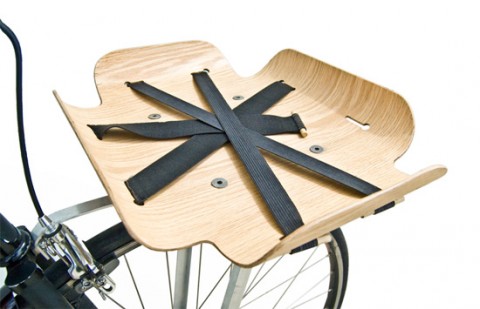
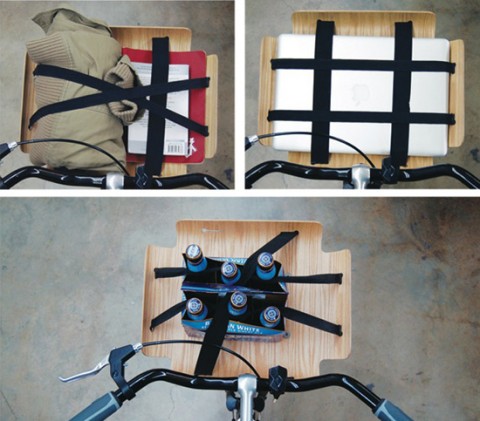
I’ll start with a piece of gear I thought was worth passing on. The BrentBasket by Faris Elmasu. At first glance it looks like another piece of Swedish mod garbage but then I saw how well it held a six pack. It seems pretty versatile and stylish, but those are two things that probably don’t add up to longevity, but who knows.
imageimage

Continue reading “Tuesday Bouillabaisse”

Livability

DOT Secretary Ray LaHood defined “livability”, as “Being able to take your kids to school, go to work, see a doctor, drop by the grocery or post office, go out to dinner and a movie, and play with your kids in a park, all without having to get in your car."
Continue reading “Livability”

Consider the crash tax

Another in a long series of jibes against the myth that cars pay their own way. So the question has come up who pays for the police and fire response to a car crash? And the answer is; all local residents whether they drive or not or if they do drive, the good drivers pay the same as the bad drivers, sort of a subsidy for poor driving I guess.
So Denver in attempt to balance the budget is considering charging at fault non-residents a fee for crashes they cause in attempt to balance the budget. The fee is estimated to raise $1.13 million annually and is expected to be in the $300 to $400 range just for the fire departments response.
Continue reading “Consider the crash tax”

Baltimore Bicycle Accident Update: Safety Equipment for Bikes could Help Save Lives

[B’ Spokes: I’m sorry but I’ve about had it with in the name of safety lets put the minor things first and not mention major things. So with my usual sarcastic flair lets flip things around….
"In order to improve driving safety lets do away with drivers ed classes and as long as people drive with a functioning car horn, have a rear view mirror, head lights and wear seat belts lives will be saved."
Come on now, no one thinks like this for driving a car so why then is it valid for riding a bike? Too many people think that it is cyclists duty to behave like a Jack-in-the-Box, that is stay hidden from car traffic as much as possible and then suddenly pop out at intersections. Too many people think that riding head first into oncoming traffic is safer. And I’m sorry but wearing a helmet, having a bell, rear view mirror and lights is not really going to help if you insist on riding like that.
We need to bring back bicycle safety education to the elementary schools, we need to inform motorists that cyclists are safer being apart of traffic and should not weave in and out of parked cars or on and off sidewalks but maintain a proper position in the travel lane. Cyclist are less of an inconvenience to faster traffic then mass transit vehicles and deliver trucks. I’m sorry but preventing accidents by cyclists riding safe really does help to limit everyone’s inconvenience both for cyclists and car drivers.
So if you are a cyclists and want to learn more on how to ride safely we have collected a few links here to get you started:
https://www.baltimorespokes.org/links/index.php?category=Must+read+for+bike+safety
My comments on the articles points:
1) Audible signaling device: Personally I find my voice as effective and a lot easier to activate in a crises situation. If you have time to activate a horn, you have time to avoid an accident but if you feel differently look into "Air Zound." But this is totally inappropriate for use on trails where use of a bell is much preferred over horns and voice by other trail users.
2) A rear-view mirror: With proper lane position when going straight there is no use for a mirror, when changing lanes or road positions a glance over your shoulder is not only more effective in seeing what’s coming up on your rear it also acts a signal to drivers on what your intentions are. So a glancing over your shoulder improves your safety and reliance on mirrors is rather risky. (Though I’ll note I do ride with mirrors but I do not rely on them.)
3) A headlamp. If you ride at night in the city under street lights a flashing mode headlight is good, otherwise ask in our forums what’s a good light for riding as too many lights in the bike shops are junk.
4) A taillamp: If you ride at night at least a "Planet Bike Superflash" and again too many lights in the bike shops are junk.
5) A helmet. You are far more likely to live longer and be healthier if you ride then if you don’t ride. If wearing a helmet is going to keep you off the bike then leave the helmet at home.]
Continue reading “Baltimore Bicycle Accident Update: Safety Equipment for Bikes could Help Save Lives”

Charge dropped in 2005 vehicle death of Va. Tech student

By Shawna Morrison
CHRISTIANSBURG — More than four years after a Virginia Tech student died after being run over by an SUV, the case against the driver was dropped Monday.
Aaron Pierce, 23, of Roanoke was charged with involuntary manslaughter in connection with the death of Brian Joseph McCloskey, who died five days after being run over by a Ford Excursion the morning of Nov. 5, 2005.
The charge was dismissed Monday after Pierce had completed all the court’s requirements of him.
"This was a very tragic event that had the appearance of being more of an accident" rather than a criminal offense, said Pierce’s attorney, Tony Anderson.
McCloskey, 18, of Maryland was found Nov. 5 lying in a grassy area near a bicycle trail close to Pheasant Ridge Crossing in Blacksburg.
At first, police thought he had been beaten. It was later determined he had been struck by a vehicle.
McCloskey had gone to a party Nov. 4 and left about midnight, visibly intoxicated, his friends later said.
Pierce spent that night shuttling people to and from parties in the SUV he had borrowed from his roommate, at times taking a shortcut through the grassy area where McCloskey was found.
At a hearing in February 2007, Pierce entered an Alford plea to the involuntary manslaughter charge, allowing him to maintain his innocence while admitting there was enough evidence for a conviction.
In an unusual agreement, Pierce was essentially sentenced without a conviction at a hearing four months later.
Montgomery County Circuit Court Judge Bobby Turk agreed to withhold a finding for three years, but ordered Pierce to spend 30 days in jail, perform 300 hours of community service and attend Virginia Alcohol Safety Action Program classes. Pierce lost his driver’s license for 12 months and paid $12,800 to McCloskey’s family for his funeral expenses and gravestone.
"The victim’s family was very much involved" in how the case was handled at that time, Turk said Monday.
Montgomery County Commonwealth’s Attorney Brad Finch said McCloskey’s family members, though they weren’t at Monday’s hearing, were also involved in the final outcome of the case.
"They feel, judge, that the charge should be dismissed," he told Turk.
"I can report that he’s done extremely well on probation," Finch said of Pierce.
He said Pierce hasn’t had so much as a traffic violation in the past three years.
Continue reading “Charge dropped in 2005 vehicle death of Va. Tech student”

There’s No Such Thing as Free Parking

By Tom Vanderbilt

Another trend: ideas for improving urban parking. And in particular, for reforming (or even doing away with) municipal parking codes. Such proposals appeal to me for a few reasons. For one thing, parking is a huge, if typically overlooked, part of the traffic equation. Storage is a key part of our automobile networks, and cars are stored quite a bit: Cars spend, on average, 95 of their time simply parked. For another, such plans are counterintuitive: It’s odd for planners (one took pains to indicate he was not a libertarian) to advocate actually doing away with planning regulations. The third is that many cities have already begun to experiment with their parking codes, providing not tantalizing "what ifs" but useful case studies.

But to critics, minimum parking requirements warp markets and create a de facto subsidy in favor of driving. Donald Shoup, a professor of planning and author of The High Cost of Free Parking, is withering in his critique of parking minimums: "They distort transportation choices toward cars, and thus increase traffic congestion, air pollution, and energy consumption. They reduce land values and tax revenues. They damage the economy and degrade the environment. They debase architecture and urban design. They burden enterprise and prevent the reuse of older buildings. And they increase the prices for everything except parking."
Shoup argues that minimum parking requirements are based on a form of "circular logic," in which planners estimate parking need by looking at the highest levels of parking demand at suburban locations with free parking and no transit options. As a result, the space devoted to cars often exceeds the space devoted to humans (one study found mall parking lots were 20 percent bigger than the buildings they serviced), and the country is awash in a surplus of parking supply. In Tippecanoe County, Ind., for example, a group of Purdue University researchers noted, "[I]f all of the vehicles in the county were removed from garages, driveways, and all of the roads and residential streets and they were parked in parking lots at the same time, there would still be 83,000 unused spaces throughout the county." And as Shoup argues, there is nothing free about this parking—everyone, even those who don’t drive, pays for it in one form or another, whether the invisible parking surcharge is built into retail prices or the various costs associated with parking-lot storm-water runoff.

Continue reading “There’s No Such Thing as Free Parking”

Some bike to avoid gym fees, others to avoid tanning salons

…onto what happened yesterday. I’d taken a taxi to a place called Maryland and joined a gym (I encountered noe of the biggest ever mongs at reception but thats a different story). This gym is the size of Wales. I have a quick workout and a laugh at teh yankee gym psychos in there. Oh yes they are REALLY mad. One bloke opposite likes to talk to himself. I mean REALLY talk to himself. COME ON COME ON COME, ONE MORE YOU MTHRFKKER etc etc. He is really disconcerting and people just stay away from him. I saw 130lb dumbell, which is the most ridiculous thing I have ever seen. I mean no-one could lift it, its impossible. when I left I decided I would buy a bicycle. That way I can cycle the 4-5 miles to the gym and back when I go, keep fit and all that and get a tan in the bargain (get completely burned as it transpired)….
Continue reading “Some bike to avoid gym fees, others to avoid tanning salons”

We believe there is room here for everyone


As DC Mayor Adrian Fenty said, “”This country is finally catching up to our European and other neighbors in their commitment to bicycling.”

But don’t get me wrong: There will always be cars and trucks on America’s roadways–and DOT will always be committed to keeping America’s roadways the safest and most efficient in the world. Mayor Fenty made this point effectively, saying, “We believe there is room here for everyone–on four wheels, two wheels and on foot.”

Sidewalks and bike lanes are also relatively inexpensive to create. And, despite their visibility and positive impact, these projects are using a very small part of our nation’s transportation spending. They are simply part of a cleaner, greener future in American transportation.


In his remarks, Rep. Blumenauer made a terrific point, reminding motorists that, “A bike is really a driver’s best friend. Because every bike you see cruising down one of these lanes is one less car to compete with in traffic, one less bit of congestion, one less driver buying fuel.”

But it was Rep. Oberstar who may have had the best line of the day: “Bicyclists aren’t burning hydrocarbons; we’re burning carbohydrates!”
image
Continue reading “We believe there is room here for everyone”