
By Bob Mionske
One of the more common negative cycling stereotypes is that of a tuned-out rider blissfully unaware of his surroundings as he pedals along, lost in the music blaring from his headphones. The reasons cyclists ride with earbuds are as varied as the riders themselves. Music may motivate some to train harder, while others like the way it helps filter out wind noise. Also, moving to music is an ancient tradition dating back to the dawn of human culture. For some, listening to music while riding is just a perfect way to combine two beloved activities.
Although detractors say it’s unsafe, that’s not necessarily true. Most headsets for portable devices are designed in a way that does not inhibit outside sounds from reaching the ear. And in most states, it is not illegal to wear earbuds or a headset while riding. Of course, if you’re listening to music at ear-damaging volumes, outside sounds may be drowned out, but no law requires vehicle operators to be able to hear. If the law did require that, motorists would not be allowed to crank their stereos up and deaf people would be prohibited from operating vehicles. The fact is, when riding we rely less on our ability to hear other vehicles–an imprecise source of information regardless of how fine-tuned our ears are–than we do on sight, along with our balance and our body’s sense of itself in space and time. Thus, even if headphones did impair hearing–and generally they don’t if you’re listening at a reasonable volume out of a single earbud–it’s still possible to safely operate a bicycle.
However, if wearing headphones while riding is against the law in your state (see box), you face potential penalties for doing so. Although the most common one is a traffic ticket, there are potentially more serious ramifications: If you are involved in a collision and you were wearing headphones in violation of the law, you may be found to be liable for negligence even if the other person was also negligent.
The Law: Riding with Tunes
Only five states regulate the use of headphones by cyclists, and generally the limitations are directed at all vehicle operators. Two of those states–Florida and Rhode Island–prohibit any use of headsets. The intent is to ensure that vehicle operators won’t inhibit their ability to hear sirens and vehicle horns.
The other three states that regulate the use of headsets–California, Delaware and Maryland–prohibit their use in both ears; in these states, one ear must be left uncovered. Maryland makes an exception to this law for riders on bike paths.
Some states make a distinction between headsets used for playing music or other recorded material and those used for cell phones. For example, Florida lifts its ban on earphones when they’re used with a cell phone. In fact, as more states begin to regulate mobile-phone use, vehicle operators are increasingly being required to use hands-free devices.
…
Continue reading “Can you legally wear headphones while riding?”
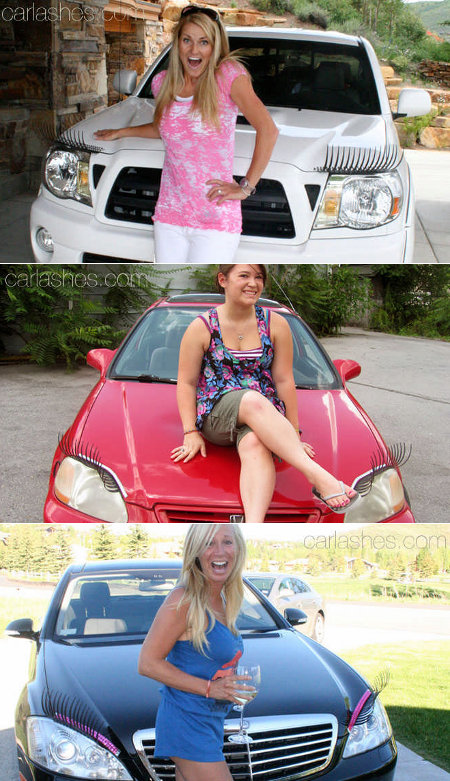
Yes For Real: Fake Eyelashes For Your Car
I guess as these things demand more of our money some effort to make them seem more human is needed.
Continue reading “Yes For Real: Fake Eyelashes For Your Car”
Don’t forget why we promote cycling
"Savage also told of how a group of people in New York were trying to get bicycle lanes created and how they had to get through an obstacle, a committee. The turning point that turned the meeting around was a 14 year old boy saying he wants his friends to be able to ride their bikes with him but their parents won’t let them because it is dangerous. "
Continue reading “Don’t forget why we promote cycling”
Phys Ed: Does Music Make You Exercise Harder?
By GRETCHEN REYNOLDS
For a study published last year, British researchers asked 12 healthy male college students to ride stationary bicycles while listening to music that, as the researchers primly wrote, “reflected current popular taste among the undergraduate population.” Each of the six songs chosen differed somewhat in tempo from the others.
The volunteers were told to ride the bicycles at a pace that they comfortably could maintain for 30 minutes. Then each rode in three separate trials, wearing headphones tuned to their preferred volume. Each had his heart rate, power output, pedal cadence, enjoyment of the music and feelings of how hard the riding felt monitored throughout each session. During one of the rides, the six songs ran at their normal tempos. During the other rides, the tempo of the tracks was slowed by 10 percent or increased by 10 percent. The riders were not informed about the tempo manipulations.
But their riding changed significantly in response. When the tempo slowed, so did their pedaling and their entire affect. Their heart rates fell. Their mileage dropped. They reported that they didn’t like the music much. On the other hand, when the tempo of the songs was upped 10 percent, the men covered more miles in the same period of time, produced more power with each pedal stroke and increased their pedal cadences. Their heart rates rose. They reported enjoying the music — the same music — about 36 percent more than when it was slowed. But, paradoxically, they did not find the workout easier. Their sense of how hard they were working rose 2.4 percent. The up-tempo music didn’t mask the discomfort of the exercise. But it seemed to motivate them to push themselves. As the researchers wrote, when “the music was played faster, the participants chose to accept, and even prefer, a greater degree of effort.”
…
[but there is more]
Continue reading “Phys Ed: Does Music Make You Exercise Harder?”
Washington’s first sidewalk cafe
Greater Greater Washington has a great article about the history of a piece of property near the corner of 14th Street and Pennsylvania Avenue NW. Which I’ll highlight a short bit around the protests of the sidewalk cafe (reminds me a bit of complaints about bike trails, bike lanes, or traffic calming)
As reported in the Post on March 17, 1961, an assortment of D.C. government witnesses outlined a litany of perils that would befall the hapless citizenry if sidewalk cafés were allowed in the District. These hazards included the following:
- Pedestrian traffic would be disrupted. People would be forced to walk in the streets and probably get run over.
- Food would be exposed to dust, dirt, and “windblown foreign matter,” creating a health hazard.
- Hungry birds, insects, and rodents—especially squirrels—would discomfit patrons, and the city’s rodent control problem would be “multiplied many times.”
- Chairs and tables would interfere with the laying of hoses during a fire.
- Street litter would be exacerbated.
- Street-spraying trucks might splash water over the curbs and on to customers.
- It would be harder to do utility work, which might require tearing up the sidewalks.
- The cafes would be a “potential source of disorder” because café patrons might brush against sidewalk pedestrians, possibly leading to fisticuffs, etc.
- Passersby might steal pocketbooks or other valuables from café patrons.
- And finally, according to Deputy Police Chief Howard V. Covell, “this type of operation would provide a favorable setting for ladies of easy virtue as they ply their trade up and down the street.”

Diabetes linked to obesity driving up hospital costs
Diabetes linked to obesity driving up hospital costs
By Arielle Levin Becker
People with diabetes make up less than 8 percent of the population, but they represented nearly 20 percent of U.S. hospitalizations in 2008, according to a new report by the federal Agency for Healthcare Research and Quality.
While the bulk of hospitalizations involving diabetics occurred for other conditions, the report noted that because diabetes increases the amount of time patients spend in the hospital, it increases the costs whether the patient is there because of diabetes or another condition.
The report says that the cost of caring for diabetics accounted for 23 percent of the money hospitals spent treating all conditions that year.
"The numbers, I think, tell the story," said Dr. Emmanuel Javier, medical director of the Diabetes Care Center at St. Francis Hospital and Medical Center in Hartford. "The problem is diabetes is just increasing in incidence here, and obviously we’re going to spend a lot more money on diabetes as a society."
An estimated 90 to 95 percent of diabetes cases are type 2 diabetes, a condition linked to obesity that can, in many cases, be delayed or prevented. It used to be known as adult-onset diabetes, but increasingly has been found in children and teenagers.
…
But better managing the disease in patients who already have it could make a significant dent in complications, deaths and health care costs, the report said. A 10 percent drop in the number of diabetic patients failing to meet goals in three key indicators – blood pressure, HDL cholesterol and hemoglobin A1C – could lead to 48,000 fewer diabetes-related complications, 9,700 fewer deaths, and more than $39 billion in savings in 2031.
A 50 percent drop in uncontrolled diabetes, meanwhile, could produce 239,000 fewer complications, 48,700 fewer deaths, and save $196.5 billion.
…
Continue reading “Diabetes linked to obesity driving up hospital costs”
New Evidence Links Sprawl to Parking Minimums
from Streetsblog Capitol Hill by Angie Schmitt
New evidence connecting minimum parking requirements and sprawl is bolstering the argument for an overhaul of government policies related to much space we devote to the storage of cars.
A team of economists from the University of Munich recently released a study examining the effects of mandatory parking minimums on development in urban and suburban Los Angeles. The team found that parking minimums "significantly increase" the amount of land devoted to parking, to the detriment of water quality, pedestrian safety and non-automotive modes of transportation.
…
Continue reading “New Evidence Links Sprawl to Parking Minimums”
Training videos for police and cyclists
Texas DOT (s/b) found Guilty of ‘Reckless rumble striping’
For me the whole issue of the Reed Bates case is the rumble strip. Rumble strips basically say "decide now and forever hold your peace about what side of the rumble strip you are going to ride on." Reed may have decided badly but that’s the whole problem, once you decide you are stuck with it. While I have never driven the road that Mr. Bates was arrested on but I can say that the presence of a rumble strip has caused me to abandon the shoulder I normally would have normally ridden on for the travel way even though 99% of the shoulder was rideable.
Rumble strips change the decision process to a lesser of two evils based on best guess on a wide verity of criteria over a long stretch of time and distance. No mater what option you decide, too often there will be a down side to that choice. Without the rumble strip you can react to conditions then present, with a rumble strip you have to guess about conditions down the road. So essentially Reed was convicted for having too few options over a long stretch of time and distance and a defective crystal ball that did not accurately foretell future conditions.
Rumble strips are so bad even LAB ( https://www.bikeleague.org ) has an alert out on their home page about them, and I quote:
"For example, has roadway safety been improved if cyclists are all but forced to ride in the travel lane of a high-speed rural roadway because the shoulder has been rendered useless by rumble strips?"
And here we have such a case yet Andy Clark calls this road with rumble strips a "perfectly rideable shoulder"
Unbelievable.
Please join with me in asking LAB to be consistent in supporting rumble strip free (or at least with gaps ) shoulders wherever cyclists are allowed. email: bikeleague@bikeleague.org
Clearly unhelpful – Response to LAB’s post
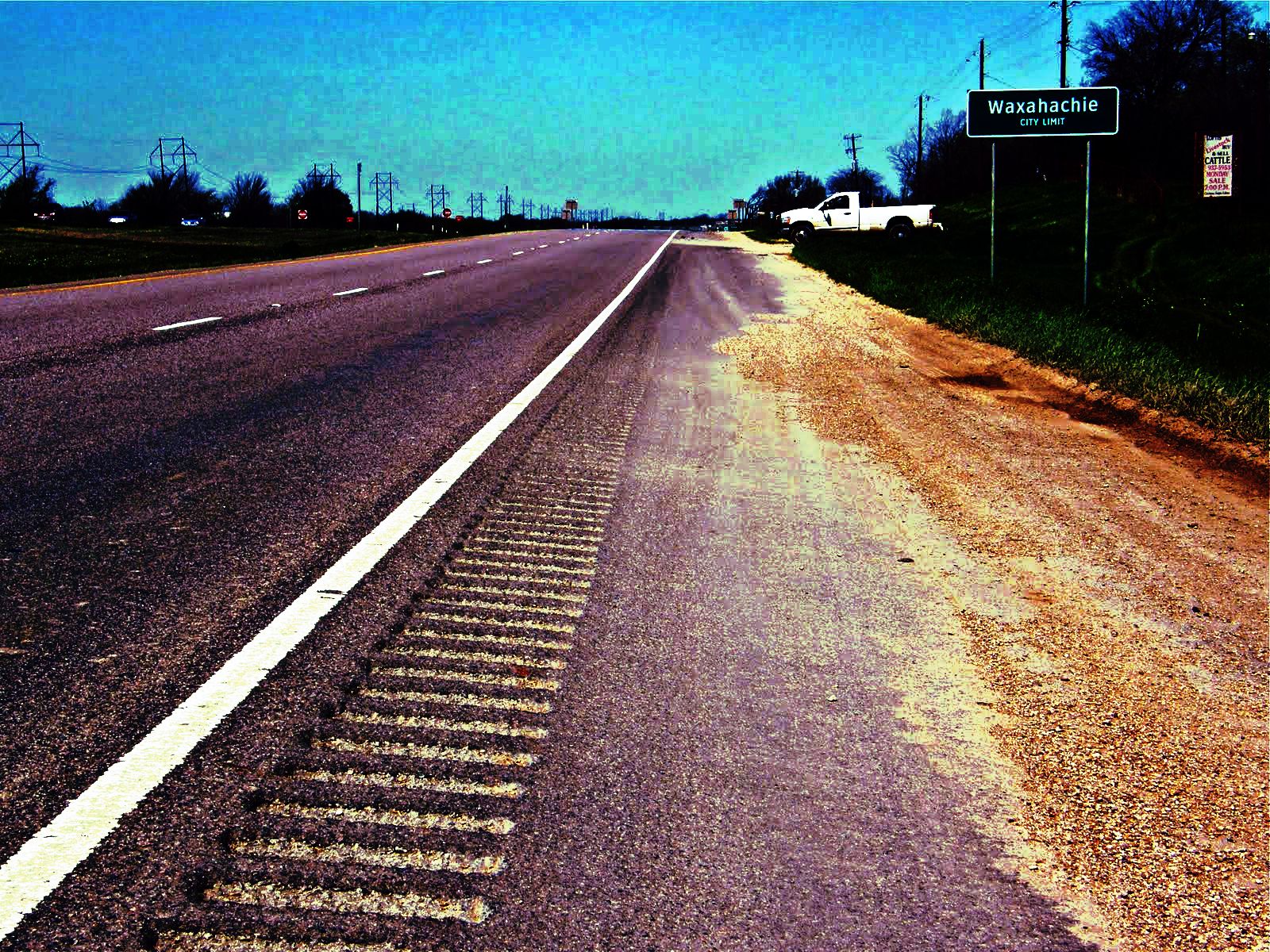
The shoulder of Texas Highway 287.
Reed Bates’ trials (and travails) got some wider coverage this week (Streetsblog, among others). People began asking why the League of American Bicyclists (LAB) wasn’t helping. Trying to get ahead of the issue, LAB President Andy Clarke widely posted a response, which I reproduce below with factual corrections.
Picking Your Battles: The League & The Reed Bates CaseWe have been following the Reed Bates’ case since pretty much the day the saga began. At the very outset, I called a couple of the people closely involved with Mr. Bates and offered the League’s help;
Neither Andy Clarke nor LAB ever spoke with Reed Bates. Reed at one point called Preston Tyree (LAB employee), but no offer of help was made. Clarke did speak with Rich Wharton ONCE, but never again, and no offers to help were forthcoming. Rich Wharton asked Tyree to serve as an expert witness, but Preston could only offer his personal, paid services, not LAB’s assistance.
I did see a single voice-mail from Andy Clarke on my Caller ID, but being as it was probably a robo appeal for money (like the letters and emails I get from Andy), I deleted it unheard. Perhaps he was calling me when he should have been calling Reed. No follow-up calls, emails or other attempts were made to me… and none to Reed Bates.
…it did appear that the charges were inappropriate, that Bates had a legal right to ride where he was riding, and that the jury that Bates chose to be heard by was incorrectly instructed by the first judge involved. On that basis, we would have been happy to help defend his right to ride on the road.
Bates did not choose a Jury Trial. The judge urged him to choose it, and then chose it for him. An unemployed man with no resources had few options. No offers of help came from LAB, no letters of support, calls to action, no Amicus Brief. Nada, only a behind the scenes campaign to discredit Reed Bates.
Our offer to assist was not accepted; instead, he and his advisers chose to assert that not only was Bates legally allowed to ride where he was riding, but that’s where he and everyone else should be riding, even in the presence of a perfectly rideable shoulder.
Again, to the best of my knowledge, there was never any offer from LAB to help Reed Bates. Period.
No one on Reed’s side has ever said “everyone should be riding (in the travel lane)”, not Reed, or his friends. That’s simply an anti-VC smear that says more about Clarke’s motivation than it does Bates’. Also, Reed does not have “advisors” or “managers” or “handlers” or “custodians”, he has friends. That’s another Clarke smoke-screen, to make Bates appear to be a puppet of others, as if he is somehow incompetent, irresponsible, and incapable of reason.
Please remember that Reed’s first citation was for riding in the travel lane of a 30 mph city roadway, 4 lanes with a center continuous left turn lane.
BTW: here’s that “perfectly rideable” shoulder Andy Clarke thinks Reed should ride on. Here too.
That approach took the issue beyond a strict legal argument as to where one is legally allowed to ride to where one should ride, and a rural Texas courtroom may not be the best place to have that call made on our behalf. As the situation has developed, Bates (and the people advising him) has unfortunately chosen to follow a strategy that our board and legal advisers did not think was in the best interests of all cyclists – from the initial trial by jury preference to a failure to show up for court dates and hearings
It’s hard to show up for a court appearance when neither you or your attorney receives a summons. Reed has admitted he was not aggressive enough in this instance, but this mail never got forwarded to him. Remember, being under virtual ‘house arrest’ in Ennis, Reed had to move out of town to find work (to the far more ‘bicycle friendly’ area of Dallas County).
…to the pursuit of a position that is simply not reasonable and could easily backfire. We have remained in touch with the issue with local Dallas-area advocates, Bike Texas and our board of directors.
It’s not reasonable to control your lane so trucks don’t pass within 2-3′ of you at 70 mph? Andy Clarke has actively warned people to not support Reed by describing him as an extremist, and by saying he was under the influence of “angry, discredited” cyclists. Clarke has consistently been obstructive. I would not have been surprised to see the prosecution enter a letter from LAB supporting the State’s case.
It is instructive that none of us have chosen to get involved. I think we all regret that the way the case has been played by Bates and his advisers has precluded us from constructively intervening to help him and defend our collective rights to the road.Andy Clarke
President, League of American BicyclistsJOIN today; help us promote and protect the rights of cyclists!
The irony of the tag line below Clarke’s name is very instructive as to LAB’s understanding of bicyclists’ rights. Send us money, and we will defend your right to ride on shoulders, bike paths, and in mandatory bike lanes. Try to assert your right to operate your bicycle as a legal vehicle in a safe manner, and we will launch a campaign of innuendo to discredit you among other cyclists.
Again, no offer of help from LAB was ever made to Reed Bates. He was never contacted by LAB. To the best of my knowledge, no offer of help was made to any of Reed’s friends, who do not act in loco parentis for Mr. Bates.
And yes, it is indeed VERY instructive that LAB and TBC have not gotten involved. Had Reed Bates been demanding a bike lane, perhaps they would have felt differently.
Continue reading “Clearly unhelpful – Response to LAB’s post”