Lessons For St. Louis From the UK’s “20’s Plenty” Campaign

[B’ Spokes: I wounder if Baltimore with 42% of traffic fatalities being pedestrains will take notice of this?]


from Streetsblog.net by Angie Schmitt

If you ever have the bad fortune to be involved in a collision as a pedestrian, your chances of survival hinge on one crucial factor: the speed the motorist was traveling.

If the driver was going 40 miles per hour, the victim has only a 15 percent chance of living. But at 20 miles per hour, the pedestrian’s odds jump to 95 percent, according to research by the United Kingdom Department for Transport.

Motorists are allowed to travel up to 35 miles per hour through St. Louis’ 4th Street, a popular pedestrian thoroughfare in downtown. Gateway Streets

We’ve reported before that communities across the UK have adopted a 20 mph speed limit in a campaign to protect pedestrians and cyclists called “20’s Plenty.” The concept could soon be tested in New York City.

Given the striking connection between driver speed and pedestrian safety, it’s surprising more cities haven’t followed suit. Network blog Gateway Streets examines how this concept might be applied in the city of St. Louis, where motorists are allowed to race through pedestrian-laden downtown streets at speeds as high as 35 miles per hour.

The speed limit on the majority of streets in the St. Louis CBD is 25 mph. Outside the CBD, but still within downtown, speed limits are commonly set at 30 mph. Some of the arterial roads through downtown, however, have 35 mph speed limits despite crossing major pedestrian corridors. Pedestrian safety, it seems, plays second fiddle to making sure vehicles get from one side of downtown to the other as quickly as possible.

Perhaps most baffling of all are 4th St and Memorial Drive. Thousands of tourist cross these two streets every year to access the Arch and Old Courthouse. Improved sidewalks to cross Memorial Drive and the I-70 trench were only just completed last year. Yet, the speed and volume of traffic on these streets still scream danger. The 35 mph speed limits on these streets are unacceptable. For comparison purposes, the 3-5 lane streets on either side of Fort Washington Way in downtown Cincinnati—very similar to I-70 and Memorial Drive, here—have 25 mph speed limits.

When 20 mile per hour speed limits were imposed in the UK, towns saw road fatalities drop by as much as 22 percent and safety was improved for both pedestrians and drivers. Their example provides a great framework for the city of St. Louis, as well as other cities.

Continue reading “Lessons For St. Louis From the UK’s “20’s Plenty” Campaign”

Road diet on Lawyers Road in Fairfax a big success

from TheWashCycle by washcycle

This is data from FABB on VDOT’s results after reconfiguring the road to remove a traffic lane and replace it with two bike lanes.

  • Average speed dropped by about 1 mph, from roughly 45 to 44 mph, but there was a more notable change in the fastest speeds. Before the road diet, 13% of vehicles were recorded at 50 mph or above. After, only 1% of vehicles were recorded at or over 50 mph. These speed results led VDOT to reduce the speed limit on Lawyers from 45 mph to 40 mph.
  • In the four years prior to the road diet, Lawyers averaged 15 crashes per year. In the first year after the road diet, we observed only 3 crashes in the same segment of Lawyers, for an 80 percent drop. It is too early to make any firm conclusions about the safety results, but the initial trend is very encouraging.

And from a survey

  • 69 percent of respondents said Lawyers seems safer after the road diet was implemented, compared with 15 percent who felt that it seems less safe.
  • 47 percent of respondents bicycled on Lawyers more often than before, indicating that the road diet encourages cycling as a travel mode.
  • 69 percent of respondents said auto travel times have not increased, even though 59 percent said speeds dropped.
  • 74 percent of respondents agreed that the project improved Lawyers Road.
  • 71 percent of respondents agreed that other road diets should be considered in Northern Virginia.

That is really encouraging, and kudos to VDOT for pursuing this project.

Continue reading “Road diet on Lawyers Road in Fairfax a big success”

Drivers must stop a school bus which is, er, stopped.

… a man who zipped past a school bus, while it was picking up children with its lights flashing and stop sign extended, was found not guilty recently by a Fairfax County Circuit Court judge.
"He can only be guilty if he failed to stop any school bus," Judge Marcus D. Williams said at the end of the brief trial of John G. Mendez, 45, of Woodbridge. "And there’s no evidence he did." …
Continue reading “Drivers must stop a school bus which is, er, stopped.”

Let’s Improve Infrastructure and Cut the Deficit

from Our Failing Infrastructure by adickert
The President’s National Commission on Fiscal Responsibility and Reform released its final report this week. Included in the list of recommendations is a 15 cent increase in the federal gas tax to begin in 2013. ASCE applauds this proposal as a fiscally responsible way to begin solving the nation’s infrastructure crisis.
ASCE has long been sounding the alarm about the failing state of the nation’s infrastructure and the need to invest as much as $2.2 trillion over the next five years. But over the past several years, the Highway Trust Fund has relied on transfers from the general fund, at a cost of $35 billion, just so that surface transportation projects authorized under SAFETEA-LU may continue to move forward.
The reliance on the general fund has been detrimental to the nation’s fiscal health and has created an unstable environment for state surface transportation programs. Inclusion of a 15 cent gas tax increase would help Congress to move ahead on passing a long-stalled multi-year surface transportation bill, and bring solvency back to the Highway Trust Fund.
Increased funding for infrastructure is an investment in our future. If we succeed now, we can rebuild old and unsafe infrastructure, put people back to work and lay a foundation for future growth.
If you want to help the economy and make infrastructure safer, contact your legislators and urge them to vote on the gas tax provision.
Continue reading “Let’s Improve Infrastructure and Cut the Deficit”

What good are crosswalks anyway?

At intersections, watch for cars, pedestrians AND bicycles
A Sterling Park Virginia bike accident results in the biker getting crushed and then getting a ticket, despite being waved on by at least one car driver. The local biker contacted Abrams Landau after being struck by a car in Sterling Virginia and being issued a Traffic Court Summons at the hospital. Member of the Landau Law Shop sports injury team had heard of other cyclists and pedestrians receiving their citations at the hospital, but it always strikes Herndon lawyer Doug landau as “adding insult to injury,” especially where permanent injuries and disability are likely. In this case, as the local biker was headed West on the W&OD Trail from Herndon toward Sterling Virginia, he came to Sterling Virginia and then two lanes of motor vehicles heading South toward Route 28 (Sully Road) in Loudoun County.
There was no traffic in the first two lanes, so the cyclist crossed safely to the center grass and paved strip. the car in the first Southbound lane stopped and waved him and another cyclist to proceed. The other cyclist proceeded safely to get back on the W&OD Trail, however the local biker was struck broadside in the 4th lane by a car that never saw the athlete or his bicycle. The local cyclist was taken to the emergency room after this “T-bone” crash with fractures, lacerations and permanent injuries and scarring. However, the police officer charged the biker. Citing the lack of certain reflectors; lights during the evening ride and failure to wait for both lanes of Southbound traffic to stop and signal that it was safe to proceed, the Virginia law enforcement authorities charged the bike rider after the crash.
The lesson to be learned is that a cyclist should make sure that ALL lanes are clear before leaving the island or safety of the median strip. If you are not waived through and making eye contact, then think twice about cycling across the road. Just because you are following the W&OD Trail, it does NOT mean you have the right of way or superior rights when crossing the lanes of motorized traffic. Your bicycle commuting time, training ride or recreational spin make take longer, but your odds of returning safely should be your primary focus. Be alert, be smart and cycle safely.
Continue reading “What good are crosswalks anyway?”

The Tough New Vancouver Drunk Driving Laws – An Attempt to Protect the Innocent, or a Self-Serving Money Grab?

by Average Joe Cyclist

If I had to pinpoint the one news story that has disturbed me the most this year, it would definitely be the trial of Carol Berner, the woman who apparently downed most of a bottle of wine before mowing down four-year-old Alexa Middelaer, while the little girl was feeding a horse at the edge of a quiet street in Delta. I do have some sympathy for Berner, who made a tragic mistake and will have to live with it forever.

But mainly, as a parent of three wonderful daughters, I just feel overwhelming sympathy for the parents of that beautiful little girl. Watching them talk on TV over the past few months, I have actually wept for them. And they are not the only parents to have suffered such a tragedy …
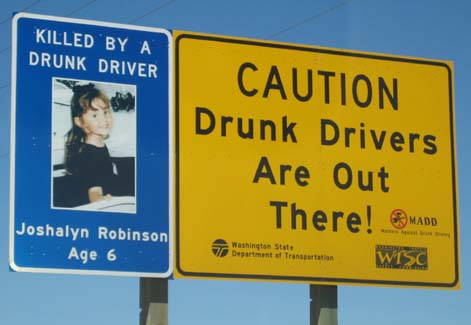
So of course I was happy on September 20th, when the BC Government changed the Motor Vehicle Act, announcing that it was introducing the toughest drinking and driving laws in Canada. Effectively, the limit for blood alcohol levels was decreased right down to 0.05, meaning that small people cannot risk even one glass of wine. Even though this means that Maggie and I will no longer be able to go out for dinner and a bottle of wine, if it saves one family from that kind of grief, who am I to complain about minor inconveniences?
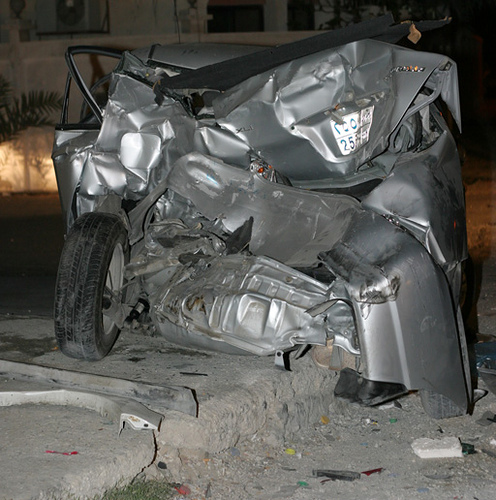
Drunk driving can cause devastating accidents. Photo by Hussein Isa

However, right back when it was introduced, the Times Colonist warned that “Critics of the new law say it will effectively `decriminalize’ drunk driving by having many cases dealt with roadside instead of in a courtroom”. I didn’t even notice that warning – I was too busy being happy that cyclists, pedestrians and innocent motorists would be in less danger from impaired drivers.

Has our DUI  Criminal Process been Turned into Nothing but an Administrative Process?

Two months in, lawyer Michael Shapray is saying that what has really happened is that the government has come up with a regime to turn the criminal process that used to handle drunk drivers into an administrative process. Shapray is upset because the number of DUI clients coming into his offices has plummeted. He believes the government’s real motive is to alleviate the pressure on the courts, which are hamstrung by a shortage of judges and prosecutors.
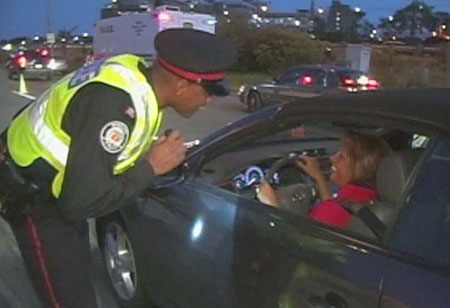
Apparently police used to send suspected DUI drivers in for breathalysers, which initiated criminal charges that often ended up in the courts (providing plenty of business for lawyers). Now, if drivers fail a roadside screening breath test, police just seize their cars and impose the new administrative penalties. This saves the police a lot of paperwork and the courts a lot of cases. It also nets a lot of money for government, as those who blow a “fail” end up paying about $4,000 in administrative penalties. (A heavy hit for those who may have had just two glasses of wine; a get-out-of-jail-almost-free ticket for the very drunk.)

When I read this, I began to think that a move that has been hailed as Canada’s toughest ever crackdown on drunk drivers was just a clever sleight of hand, designed to create the impression of cracking down, while secretly just helping balance the budget by taking pressure off the courts and bringing in revenue.

The Tragic Results of Impaired Driving
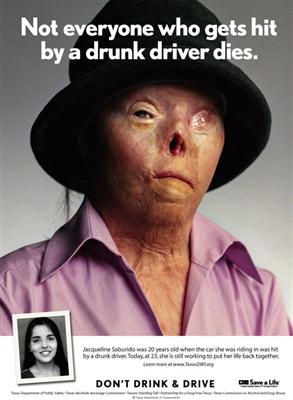
However, I changed my mind this morning, listening to an interview on CBC with an emergency room doctor. He spoke about dealing every day with the severely injured or dying victims of drunk drivers. He spoke of the horror of having to give parents the devastating news that their child has been killed by a drunk driver. As he said, these parents will never be the same again (and I know that from personal experience too). This doctor applauded the new laws, saying that the number of victims of drunk drivers coming into his emergency room has plummeted since the new legislation came in.

So now I think that whatever the motive for introducing the new tough laws, if they are saving lives and saving people from the agony of losing their loved ones, then I am 100% behind them.

Random Roadside Checks as Well?

Then the doctor added that the laws don’t go far enough:  what we also need is to introduce random roadside checks. He said that in all the countries that have introduced these, accidents caused by drunk drivers have declined dramatically. (These kinds of checks are however opposed by those who believe they invade privacy rights. Personally, I don’t think anyone has the right to be privately drunk on a public road.)

All of this is especially pertinent today, given that Carol Berner has just been released on bail pending her appeal. Despite accepting responsibility for her actions in court, Berner apparently doesn’t think she should actually be punished for them.

Finally, why is this relevant to a cycling blog? Well, the doctor interviewed on CBC noted that drunk driving has been growing steadily over the years, and that presently if you are driving at night, you should expect that at least one in 42 of the cars you see will be driven by impaired drivers. Well, given that I have noticed that drivers often have difficulty noticing cyclists even when they are sober, I find this pretty terrifying.
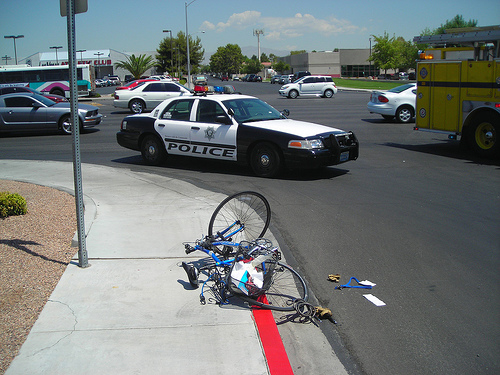
Remnants of a bicycle after being hit by a sober driver in broad daylight. Apparently, the motorist did not see the cyclist. The cyclist was seriously injured. Photo by Roadside Pictures

So I say, if even tougher laws will make all of us safer (and when I say all of us, I include motorists, pedestrians, cyclists, little children feeding horses and babies in strollers), then bring ’em on!

And I have to say I am finding it hard to care that fewer impaired drivers means lawyers have less work … almost as hard as I am finding it really hard to care that business in pubs and restaurants is down because patrons are drinking less before they get in their cars …

Continue reading “The Tough New Vancouver Drunk Driving Laws – An Attempt to Protect the Innocent, or a Self-Serving Money Grab?”

Long-Range Transportation Plan eyes next step

From Cleveland Daily Banner by DAVID DAVIS, Managing Editor

Most people chose enhancing and maintaining transportation choices as their main goal with a number of people identifying enhancements for bicycles/pedestrians, or enhancements to roadways and intersections as their top priority.
Promoting targeted growth and sustainability received the second highest number of priority votes. Under that category, developing traffic calming options and updating the downtown plan both received a significant number of votes.
A number of people in attendance considered development of green space, or a green corridor plan and establishing gateways as top objectives under the goal of preserving the existing rural character.

Doug Coulter, owner of Scott’s Bikes, who attended the Oct. 18 meeting said it was exciting that Cleveland was looking at transportation through the eyes of the public. His vision is for more bicycle friendliness.
Nothing worth doing is easy, he said, but adults ride bikes to work and children ride them to school in other communities. There is an up-front cost but he said a bicycle and pedestrian friendly infrastructure is cheaper in the long run.
“In Portland, Ore., the biking community is huge,” he said. “They were taking parking areas for cars and changing them into parking for bicycles. They added a lane to a bridge. Instead of adding a lane for cars, they added a lane for bicycles, the cost of that is minuscule compared to adding a lane for cars.”

More people work from a home office or have jobs allowing workers to live just about anywhere. Sprawl, congestion, and continuing growth in vehicle miles traveled continue to challenge efforts to have clean air, a risk to health and quality of life.

Continue reading “Long-Range Transportation Plan eyes next step”