What If We Required Mandatory Gun Insurance?

image
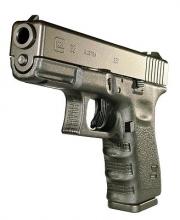
I was reading about this concept on Crooks and Liars and I though what if Gun Insurance worked as well as Car Insurance? (Please note the article that I used for a springboard has some very pragmatic points on responsible gun ownership but my thoughts went off on a tangent.)

So off on my little flight of fantasy: If Gun Insurance worked as well as Car Insurance: if someone got shot there would be no need to worry as the shooter has insurance; there would be “accident” forgiveness programs so if you accidentally shot someone your rates would not go up; If someone was showing off by twirling a six shooter around their finger and accidentally shot a few people, Michael Dresser would write how this should not have a extra penalty as there was no actual intent to cause harm.
Continue reading “What If We Required Mandatory Gun Insurance?”

AAA Oppose FDNY Crash Fees at Public Hearing

from Streetsblog New York City by Noah Kazis

At a public hearing held by the Fire Department this morning, every person who testified spoke against charging a fee for FDNY response to traffic crashes, calling it inappropriate to make drivers pay for what they said ought to be a basic government function.

The charges are part of the Bloomberg administration’s attempt to close a budget deficit. The Fire Department proposes to recover the cost of responding to a traffic crash by charging the motorists involved between $365 and $490, depending on the severity of the crash. They estimate the fees would raise $1 million a year.

The charges can also be seen as an attempt to make motorists bear some of the enormous cost of traffic crashes. According to the city Department of Transportation, traffic crashes cost $4.29 billion a year.

No one at this morning’s hearing saw it that way. Opposition focused on whether it was right to switch from using general taxation to fund fire services to a user fee model:

  • The charge would “radically alter the relationship between the city’s taxpayers and the services they receive,” said City Council Member Dan Garodnick in a statement read by an aide. Continuing down this path, he argued, would create “two forms of government – one for those who can pay and one for those who cannot.”
  • “Imposing crash taxes on individuals unfortunate enough to have accidents adds insult to injury,” said AAA New York’s John Corlett. “Public safety services are a core government function and therefore should be properly budgeted for.”
  • The flat charges would place “a disproportionate financial burden on poor and minority citizens,” said William McDonald of the NAACP’s Jamaica Branch, speaking for the branch’s president.

Council Speaker Christine Quinn also wrote in to the Fire Department in opposition to the fee. “The Fire Department doesn’t charge for its response to structural fires, and the Police Department doesn’t charge for patrolling a block. Charging for responding to the scene of an accident is a slippery slope,” she wrote. She also worried that drivers might choose not to call 911 if faced with an additional fee, leaving people on the road who shouldn’t be, like injured or drunk drivers.


[B’ Spokes: It is normal when paying a traffic fine to have court costs added on so why not structure emergency services charge the same way?

“Imposing crash taxes on individuals unfortunate enough to have *accidents* adds insult to injury. ” This is such a misleading framework, bad drivers are not unfortunate, they are a menace to society. A at fault driver did not have an “accident.” They CAUSED a crash, they did public harm.

Seriously, we want to prevent a disproportionate financial burden on poor drivers? Poor drivers and good drivers should all pay equally into the system.???

We look at the huge number of traffic injuries and fatalities as a “normal” part of life, we look at driving as boring and requiring so little attention that we talk on cell phones and we text. And then respond that we don’t want to be penalized for distracted driving or diving 15 miles an hour above the speed limit or any of the other things people generally do.

Police Department doesn’t charge for patrolling a block, heck they hardly ever patrol the block because they are out there responding to the huge number of traffic accidents. We are getting less public service for the general good under the current system. Crashes are taking away from what we would rather have people do. Besides if you want to have a big public event for the public’s enjoyment and need extra police services you need to pay for them while people creating public harm get the services for free.

We really need to stop looking at traffic crashes as unfortunate accidents, and loss of life or limb is not just an unfortunate consequence of being able to drive really fast with no thought about other interests but your own..
Continue reading “AAA Oppose FDNY Crash Fees at Public Hearing”

On Bike Lanes, Road Widths, and Traffic Safety

by Tom Vanderbilt

Even if the lanes were narrowed, as John LaPlante recently argued in the journal of the Institute for Transportation Engineers, “there is no significant crash difference between 10-, 11-, and 12-foot lanes on urban arterials where the speed limit is 45 mph (or less).” (a finding, he notes, that was unfortunately left out of AASHTO’s recent Highway Safety Manual). [Also note there is no difference in capacity for 10-12 lanes as well.]

But in non-highway environments, there’s all kind of evidence that reducing the number of lanes (a.k.a. the ‘road diet’) can have positive safety benefits. As the Federal Highway Administration has noted:
Road­ diets­ can­ offer­ benefits ­to­ both ­drivers ­and­ pedestrians… road diets may reduce vehicles speeds and vehicle interactions, which could potentially reduce the number and severity of vehicle-to-vehicle crashes. Road diets can also help pedestrians by creating fewer lanes of traffic to cross and by reducing vehicle speeds. A 2001 study found a reduction in pedestrian crashing risk when crossing two-and three-lane roads compared to roads with four or more lanes.
But what if one of those lanes your crossing is a bike lane? Surely that must make things less safe, no? More interactions in less space. In a forthcoming paper to be published in the Journal of Environmental Practice Norman Garrick and Wesley Marshall examined 24 California cities (12 with relatively low traffic fatality rates, 12 with relatively high rates). They found that the cities that had a higher bicycle usage had a better safety rate, not just for cyclists but all road users. They write:
"Our results consistently show that, in terms of street network design, high intersection density appears to be related to much lower crash severities. Our street design data also contains strong indications of these trends; for example, the high biking cities tend to have more bike lanes, fewer traffic lanes, and more on-street parking. At the same time, large numbers of bicycle users might also help shift the overall dynamics of the street environment – perhaps by lowering vehicle speeds but also by increasing driver awareness – toward a safer and more sustainable transportation system for all road users."
And as Eric Dumbaugh, of the University of Texas A&M, notes, “most recent research reports that wider lanes on urban streets have little or no safety benefit, at least to the extent that safety is measured in terms of empirical observations of crash incidence” (e.g., Potts, I.B., Harwood, D.F., & Richard, K.R. (2007). Relationship of Lane Width to Safety for Urban and Suburban Arterials. Transportation Research Board 2007 Annual Meeting; Milton, J., & Mannering, F. (1998). The relationship among highway geometries, traffic-related elements and motor-vehicle accident frequencies. Transportation 25, 395–413; and so on).

Continue reading “On Bike Lanes, Road Widths, and Traffic Safety”

The conclusion of the Swanson case in DC

"Swanson’s mother and aunts had pushed hard to have him charged criminally in DC after the accident. But a long Metropolitan Police Department investigation concluded Swanson most likely rode her bicycle into the truck. That conclusion is fiercely disputed by the promising young student’s family."
Outrageous! Get right hooked by a truck and the cyclist is at fault for not yielding. What ever happened to:
§ 21-303(c) Overtaking vehicles going in the same direction.- The driver of a vehicle overtaking another vehicle that is going in the same direction, until safely clear of the overtaken vehicle, may not drive any part of his vehicle directly in front of the overtaken vehicle.
Note that the DC police made the same wrong flop of logic of who did the "action" as in the Yates case: "The tanker truck that the cyclist struck was a large one. The cyclist struck it in the rear." https://www.baltimorespokes.org/article.php?story=20101202133743715
We really need to correct this kind of misunderstanding by the police and hopefully that is in the works.
Related: Cyclists ‘left unprotected by police and courts’ https://www.baltimorespokes.org/article.php?story=20110109095139244
Continue reading “The conclusion of the Swanson case in DC”

Who pays for our roads? We all do.

from Bikeleague.org Blog by Darren

We are often asked to address the dubious claim that bicyclists do not help pay for roads. We have long argued that since many of 57 million adult bicyclists in this country are also drivers, and that since much of the government’s transportation spending comes from property taxes, general fund allocations, bond issues, and fare boxes of transit systems, we’re all paying into the system. A new report is perhaps making our job a little easier.

The U.S. PIRG Education Fund recently released a report, called “Do Roads Pay for Themselves? Setting the Record Straight on Transportation Funding” that busts the myth that “user fees” paid by drivers pay for all road costs. The one-two punch of myth-busting boils down to these two points: 1. Gasoline taxes aren’t “user fees” in the way the phrase implies, and 2. highways don’t pay for themselves.

Do Roads Pay for Themselves

First, the user fee argument. A user fee implies a direct connection to the fee and the use, for example admission to a state park or a toll road. However, when you pay the gas tax, you may not ever use the highways or other transportation projects that the tax is helping to pay for.  When the gas tax was first implemented to pay down the deficit and since 1973 the gas tax has been used to pay for many useful transportation projects beyond highways. It’s not a user fee.

Second, the highways-pay-for-themselves argument. The report explains that since 1947, expenditures on highways, roads and streets have exceeded the amount generated through the gas tax and other fees by $600 billion. The subsidy for highways is as significant today as it has ever been. Current “user-fees” pay for only about half of the costs of highway and road building and maintenance.

Sources of Highway Spending

The report concludes that the misconception that roads pay for themselves through a direct user fee distorts our transportation planning, by making roads look cheaper than they are.

For cyclists, this is just another good reminder that all of us are paying into the road system, either as drivers or through general taxes. The roads belong to all of us.

Hat tip: DC Streets Blog

~Darren Flusche
League Policy Analyst

Continue reading “Who pays for our roads? We all do.”

The Good, the Bad, the Ugly: The Last of the Streetsies 2010

[B’ Spokes: Lots of good stuff here, try to read the full article (link is at the end.)]


from Streetsblog Capitol Hill by Tanya Snyder

Yeah, we're still not buying this Nissan Leaf ad.

Yeah, we’re still not buying this Nissan Leaf ad.

Least favorite panacea: There are a few magic pills out there that are supposed to cure all our ills, and we’re wary of them all. First and foremost, though, we’re just not buying all the hype around the electric car. The Obama administration has pledged billions for R&D, the auto industry is marketing them as polar-bear-friendly, and eco-minded folks everywhere are getting ready to trade in their hybrids for a plug-in.

But the negative consequences of driving aren’t exclusively measured in carbon molecules. When we advocate for transportation options, we’re also trying to keep our cities from being choked with traffic congestion. We’re finding a more efficient way to move people around than keeping each in her own two-ton bubble. We’re getting more exercise. We’re reducing automobile-related crashes. We’re finding better uses for our public spaces than making them parking lots. We’re designing human-scale cities.

The electric car might reduce carbon emissions by 30 percent over a standard car, but it doesn’t solve any of these other problems. Besides, we think we can do better than 30 percent. We’ll stick with our zero-emissions bicycles and our own two feet.

New Year’s Resolution for 2011: Let’s do this one in two parts: the personal and the political. (I know, I know, the personal is political.)

First, the political. There’s a lot we can resolve to do this year. Robert Puentes at Brookings has laid out a pretty good to-do list including everything from starting the shift to a VMT fee to reducing construction delays, from expanding public-private partnerships to cutting wasteful spending. We’re in favor of all of those.

But our 2011 resolution is to keep bike-ped spending in whatever version of a transportation reauthorization comes down the pike. As fiscally conservative Republicans look to cut spending, bike-ped programs are extremely vulnerable. We need to ramp up our efforts to reach across the aisle to make it clear that active transportation isn’t just for hippie liberals. There are serious conservative arguments to be made for keeping federal support for these programs. Let’s resolve to make them.

Now, the personal. I, myself, have two transportation-related resolutions. First, in service to the previous resolution, I’m going to revoke my AAA membership until they reverse their position on federal funding for bike-ped programs. (I don’t have a car, so it’s out of an overabundance of caution that I have a membership anyway.)

Second, I’m going to use my Zipcar membership more. It may sounds strange that I want to drive more in the new year. But it’s important to me that being car-free shouldn’t feel like a sacrifice. I want to make sure I can do everything I want without limitation.

Sometimes it’s psychologically hard to justify the cost per Zip-trip, even though I’m savings thousands a year by not having a car. I resolve to integrate car-sharing more fully into my repertoire of transportation options, to make sure I never feel like I’m missing out on anything by not having a car.

What’s your New Year’s resolution?

Continue reading “The Good, the Bad, the Ugly: The Last of the Streetsies 2010”

OR bill to make it illegal to carry a child of six years or younger on the back of a bike or in a trailer

In one of the comments:

And as many have already said, if you apply this ‘logic’ to children and cars, children should be banned from being in cars or near them until the age of like 25. We have just internalized that cost as collateral damage of how our society functions.
The OHSU study kind of showed the same illogical public response. You are more likely to be injured or killed in a car, but biking is somehow unsafe. The disconnect is something some of us see, but many people don’t. I think that is also largely because bicycling is still seen, by most Americans, as optional, extra, elitist, recreational and impractical on top of being unsafe.

Continue reading “OR bill to make it illegal to carry a child of six years or younger on the back of a bike or in a trailer”