
Interesting article on Strong Towns Blog by Charles Marohn – Highlights:
…
Today we ask the question: Have we overvalued mobility?
…
I’ll note that the slowing of economic growth also correlates to the end of the first life cycle of the new roads. This is the time that the long-term cost of maintenance started to kick in.
…
************************************************************************************
B’ Spokes: Long term maintenance of our aging infrastructure was never budgeted for, it simply was put off to let some other generation deal with it. So here it is and we are having to deal with it and not a "user fee" increase in sight for this or even to keep up with inflation. "We pay too much already." Ah, no. You are currently steeling money from schools, police departments and other things the general budget pays for.
Continue reading “Mobility’s Diminishing Returns”
Why People Don’t Bike
[B’ Spokes: I find it interesting to note that Maryland still stress trails over bike lanes.]
****************************************************************************************************
I found the results of a survey that was recently taken in Arlington County, Virginia which asked the question – “What cold Arlington County do to make it easier for you to ride a bike.” Although the survey was conducted in a single county, I believe that the results would apply to most other parts of the country. The survey include over 4000 people. The answers and percentage of survey responses are listed below.
Separate bicycle lane 15%
More bike trails 10%
Make it safer 6%
More bike racks/lockers 5%
Lighting on bike paths/lanes 3%
Road signs to alert drivers 3%
Provide bike share/rentals 3%
More connections to trails 3%
Other 16%
Don’t know 8%
Nothing would encourage me 38%
The positive result is that 54% of the people that responded had an idea of something that would encourage them to bike. Only the last category (Nothing would encourage me) which accounted for 38% of the results appeared adamantly opposed to biking. Perhaps higher gas prices would encourage them to bike.
Continue reading “Why People Don’t Bike”
AAA Exchange
|
|
|||||||||||||||||||||||||||||||||||||
Bicycles are a legitimate form of transportation and bicyclists are legal drivers of vehicles, with laws and regulations established for their use. Yet a major issue is that many bicyclists feel they are not respected by motorists and must fight for their place on the road. Like motorists, cyclists need space to safely operate in traffic. They need to anticipate the actions of drivers and other road users. This requires mutual respect, which can be promoted by public information, motorist education programs and legal measures. In 2009, 630 bicyclists were killed and an additional 51,000 were injured in motor vehicle traffic crashes. Bicyclist deaths accounted for 2 percent of all motor vehicle traffic fatalities, and made up 2 percent of all the people injured in traffic crashes during the year. |
|||||||||||||||||||||||||||||||||||||
|
The 630 bicyclist deaths in 2009 accounted for 2 percent of all traffic fatalities during the year. |
|||||||||||||||||||||||||||||||||||||
|
|||||||||||||||||||||||||||||||||||||
|
KNOW THE FACTS? In most states, a bicycle is considered a “vehicle” (like cars, trucks and motorcycles). All bike riders must follow and obey the same laws as the drivers of other vehicles.. Many pedestrian crossings are marked with a sign saying “Yield to Pedestrians,” reminding motorists that pedestrians have the right-of-way. However, motorists must yield to pedestrians in crosswalks even if they’re not signed. The biggest difference between motorists and bicyclists as road users is that bicyclists are less visible, quieter and don’t have a crumple zone to protect them.
|
|||||||||||||||||||||||||||||||||||||
|
Important Safety Reminders All bicyclists should wear properly fitted bicycle helmets every time they ride. A helmet is the single most effective way to prevent head injury resulting from a bicycle crash. [B’ Spokes: This is simply not true, the most effective way is not to get into an accident at all. Learn how to ride safe and avoid being in a crash. Wear a helmet but don’t let your safety end there.] Bicyclists are considered vehicle operators; they are required to obey the same rules of the road as other vehicle operators, including obeying traffic signs, signals, and lane markings. When cycling in the street, cyclists must ride in the same direction as traffic. Drivers of motor vehicles need to share the road with bicyclists. Be courteous-allow at least three feet clearance when passing a bicyclist on the road, look for cyclists before opening a car door or pulling out from a parking space, and yield to cyclists at intersections and as directed by signs and signals. Be especially watchful for cyclists when making turns, either left or right. Bicyclists should increase their visibility to drivers by wearing fluorescent or brightly colored clothing during the day, dawn, and dusk. To be noticed when riding at night, use a front light and a red reflector or flashing rear light, and use retro-reflective tape or markings on equipment or clothing.
|
|||||||||||||||||||||||||||||||||||||
 |
|||||||||||||||||||||||||||||||||||||
Motorists |
|||||||||||||||||||||||||||||||||||||
|
|||||||||||||||||||||||||||||||||||||
 |
|||||||||||||||||||||||||||||||||||||
Bicyclists |
|||||||||||||||||||||||||||||||||||||
|
|||||||||||||||||||||||||||||||||||||
|
In 2009, the average age of bicyclists killed in traffic crashes was 41. During the past 10 years, there has been a steady increase in the average age of both bicyclists killed and those injured
Average Age of Bicyclist Killed and Injured 2000-2009
|
|||||||||||||||||||||||||||||||||||||
|
Remember – Same Roads * Same Rules * Same Rights |
|||||||||||||||||||||||||||||||||||||

Cycling, Safety & Health
by Thomas Krag (just highlights)
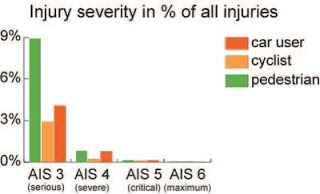
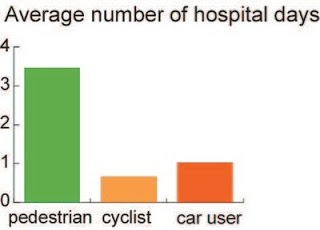
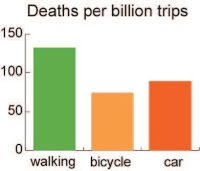
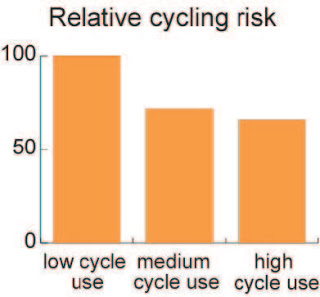
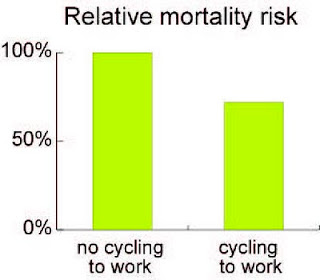
Thomas’ Cycling, Safety and Health article discusses risk perception and how we (often wrongly) measure risk and goes on to highlight how safe cycling is as well as showing the health benefits of having high numbers of bicycle users/Citizen Cyclists in a city or country.
Big Adventure. Small Wheels. – PathLessPedaled.com
We really should try harder to communicate with motorists
Yehuda Moon Language Barrier
https://yehudamoon.com/index.php?date=2011-04-01
National Public Health Week begins Monday, April 4th
Did You Know?
• More than 2.3 million adult drivers and passengers were treated in emergency departments as the result of being
injured in motor vehicle crashes in 2009.
1
• One pedestrian is killed in a traffic crash every 113 minutes and injured every eight minutes. Pedestrians are 1.5
times more likely than car passengers to be killed in a motor vehicle crash.
2
• Motor vehicle crashes are the leading cause of death for U.S. teens, accounting for more than one in three deaths in
this age group.
3
• Every day, more than 16 people are killed and more than 1,300 people are injured in car crashes involving a distracted
driver.
4
• Child safety seats reduce the risk of death in cars by 71% for infants and by 54% for toddlers’ ages one to four.
5
• Alcohol-impairment—either for the driver or for the pedestrian—was reported in 48% of the traffic crashes that
resulted in pedestrian death in 2008.
6
• Seatbelt use reduces serious injuries and deaths in car crashes by 50%.
7
• A speed limit of 40 mph or below reduces the risk of a crash by 4 times that of a crash on a road with a speed limit of
65 mph or greater.
8
• If every state had strong graduated drivers licensing (GDL) programs to help new drivers gain skills under low risk
conditions, 175 lives would be saved and about 350,000 injuries prevented each year.
9
Continue reading “National Public Health Week begins Monday, April 4th”
How women rode the bicycle into the future [SLIDESHOW]
By SARAH GOODYEAR – Grist
How important was the bicycle in changing the role of women
in the world? Consider these words from Munsey’s
Magazine in 1896:
To men, the bicycle in the
beginning was merely a new toy, another machine added to the long list of
devices they knew in their work and play.To women, it was a steed upon which
they rode into a new world.
You’ll find that quotation, along with tons of fascinating
tidbits about the early history of women and bicycling, in Sue Macy’s new book Wheels of Change: How Women Rode the Bicycle
to Freedom (With a Few Flat Tires Along the Way).
It’s a
freewheeling and fun tour of the surprisingly powerful effect bicycles had on a
women’s position in society in the late 19th and early 20th centuries. Take a look at a few of the images from the book.
Bike seat belts made compulsory
Another April Fools’ joke (just highlights):

“Far too many people are injured when they become separated from their bicycles. ”
Continue reading “Bike seat belts made compulsory”
Good News! Only 32,788 Americans died this year for no reason what so ever.
This is such great news, these people did not die from terrorism, they did not die from intentional actions just simply because someone goofed. What a relief, it was just by accident that so few died.
May we have many more successful years in preventing another 9/11 where 2,976 died.
Continue reading “Good News! Only 32,788 Americans died this year for no reason what so ever.”