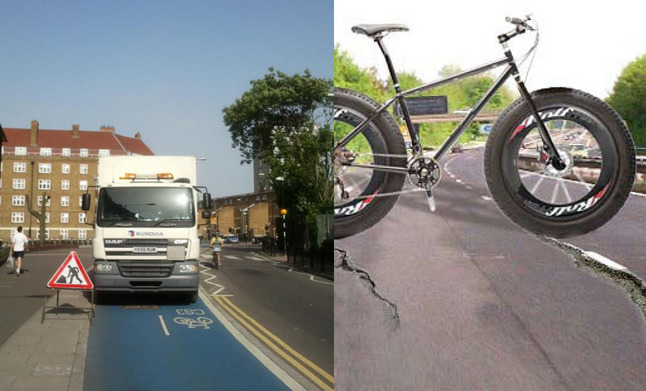
B’ Spokes: Excellent, excellent post by London Cycling Campaign
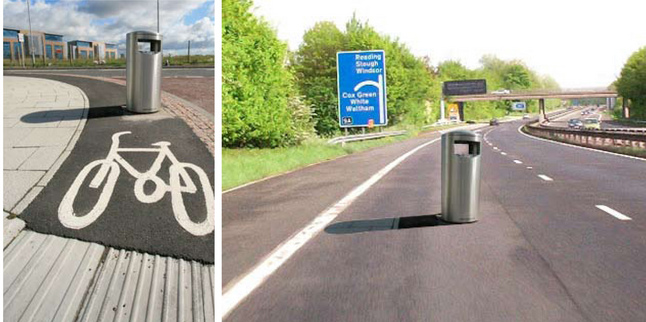
This could be a trail bollard as well.
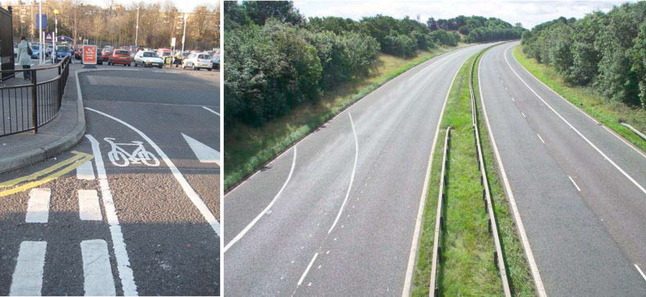
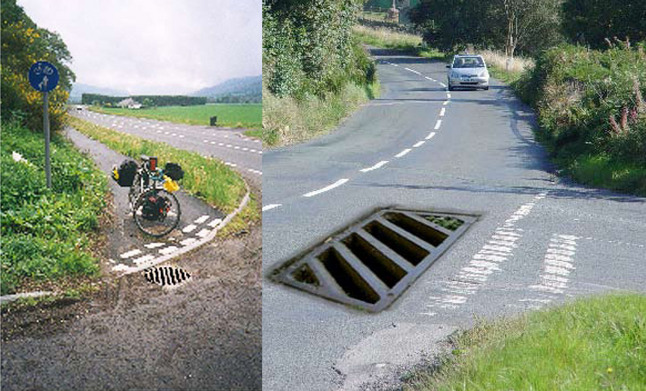
The full story: https://lcc.org.uk/articles/what-would-british-roads-look-like-if-we-treated-them-the-same-way-we-do-our-cycle-lanes

Biking in Baltimore
B’ Spokes: Excellent, excellent post by London Cycling Campaign
This could be a trail bollard as well.
The full story: https://lcc.org.uk/articles/what-would-british-roads-look-like-if-we-treated-them-the-same-way-we-do-our-cycle-lanes
-> According to a May 7th NPR story, "When it comes to walking, the easy part is understanding the benefits: Regular, brisk walks can strengthen our bones, help control blood sugar, help lower blood pressure and cholesterol, and the list goes on. The hard part is finding the time to fit it in. Engineering physical activity back into Americans’ daily lives is the goal of an educational campaign launched by Kaiser Permanente, an Oakland (CA)-based health plan. There are tons of tips and resources online, with the goal of creating a culture of walking. Kaiser Permanente even seems to be walking the walk with its own employees. ‘We actually do have walking meetings at Kaiser Permanente, believe it or not,’ says executive Ray Baxter. ‘My team is pretty productive, so it must be working.’ Baxter believes walking together — as opposed to sitting down at a table — can change the dynamics of interactions for the better (think consensus building and brainstorming)…"
Source: https://n.pr/JKzzno
From Planetizen
Sarah Goodyear chronicles the transition of streets in America from public space to the exclusive domain of autos. Professor Peter Norton, author of “Fighting Traffic: Dawn of the Motor Age” explains the ingenuous strategy of the auto industry.
Before Goodyear wrote about how Amsterdam and Copenhagen became so bicycle-friendly, she provided a short history of how the car, more precisely, the auto industry, did take over American streets. One of the more fascinating episodes took place in 1923 in Cincinnati when residents, outraged at all the children killed by autos, placed a ballot measure that “would have required all vehicles in the city to be fitted with speed governors limiting them to 25 miles per hour.”
“Peter Norton, an assistant professor at the University of Virginia and the author of Fighting Traffic: The Dawn of the Motor Age in the American City, has done extensive research into how our view of streets was systematically and deliberately shifted by the automobile industry, as was the law itself.”
Historically, “the principles of common law applied to crashes. In the case of a collision, the larger, heavier vehicle was deemed to be at fault. The responsibility for crashes always lay with the driver. Public opinion was on the side of the pedestrian. “There was a lot of anger in the early years,” says Norton. “A lot of resentment against cars for endangering streets.”
To respond to the Cincinnati referendum, the auto industry went into overdrive, sending letters to motorists, enlisting dealers and local auto clubs, and most of all, organizing the Detroit auto companies themselves. And they didn’t stop after defeating the referendum.
“The industry lobbied to change the law, promoting the adoption of traffic statutes to supplant common law. The statutes were designed to restrict pedestrian use of the street and give primacy to cars. The idea of “jaywalking” – a concept that had not really existed prior to 1920 – was enshrined in law.”
Continue reading “Traffic Fatalities: How Manslaughter Became "Accidents"”
[B’ Spokes: For those of you who take extra time for your exercise the following seems to be good advice. For those of you who engage in active living and exercise is just part of your daily life there is something you can get from this as well… there is a benefit in going outside your comfort zone. For example something I have been known to do, I push myself to ride a little harder going uphill on Roland Ave but I’ll stop at Starbucks in Roland Park for a "reward" and cool down period. Little things like this once and awhile can really boost your overall fitness level, at least from my unprofessional view point.]
******************************************************************************************************************************
Gretchen Reynolds, the Phys Ed columnist, on the science of high-intensity interval training, or H.I.T., which scientists are finding can be as effective as longer endurance training.
https://video.nytimes.com/video/2012/05/10/health/100000001515630/the-20-minute-workout.html
By Tanya Mohn, Forbs
New data highlight that bicyclists in the United States save at least $4.6 billion a year by riding instead of driving.
The analyses were released on Friday to coincide with National Bike to Work Day, part of National Bike Month, which occurs each May.
The average annual operating cost of a bicycle is $308, compared to $8,220 for the average car, and if American drivers replaced just one four-mile car trip with a bike each week for the entire year, it would save more than two billion gallons of gas, for a total savings of $7.3 billion a year, based on $4 a gallon for gas.
…
LaHood noted that walking and bicycling are options people want, citing a national poll released by Princeton Survey Research Associates International in March that indicated that “more than 80 percent of Americans support maintaining or increasing federal funding for biking and walking.” “The benefits of bicycling are real, and there’s no arguing with the impressive ridership data,” LaHood said. “Bicycling is an important part of the 21st century transportation mix.”
Click here for the full fact sheet: “Pedaling to Prosperity,” here for more about National Bike Month, and here to read: New Report Finds That More Biking and Walking Do Not Increase Crash Rate.
Continue reading “Pedaling to Prosperity: Biking Saves U.S. Riders Billions A Year”
Traffic fatalities are the No. 1 killer of young people
By: AOL Autos Staff
Every six seconds, someone is killed or seriously injured in a traffic accident. Every day, 3,500 people are killed in car crashes.
That means traffic fatalities are a global epidemic on par with malaria and tuberculosis, according to a new report issued by the Campaign for Global Road Safety.
"The epidemic has reached crisis proportions," wrote Kevin Watkins, a Brookings Institute researcher who authored the report, and the problem is "set to worse over the years ahead."
There are 1.3 million annual global road deaths, and they are the No. 1 global cause of deaths of young people ages 10 to 24. Approximately 260,000 children die in car accidents annually, according to the World Health Organization.
Air pollution also kills an estimated 1.3 million people each year, according to the report, and 70 to 90 percent of fatal pollutants, such as carbon monoxide and sulphur dioxide, originate from automotive traffic, the report says.
"There are no surprises or hidden magic bullets for tackling the road traffic injury crisis," Watkins writes. "Vehicles need to be separated from vulnerable road users, such as pedestrians and cyclists.
https://autos.aol.com/article/road-deaths-a-global-epidemic-on-par-with-diseases-says-new-r/
By David Alpert, Washington Post
I was recently bicycling down a D.C. street, and a driver honked at me. I was breaking no law and doing what bike safety advocates, such as those who teach the Washington Area Bicyclist Association’s Confident City Cycling classes, say is safest, but this driver apparently had some misconceptions about how people on bikes ought to ride.
Later, I was driving, and encountered a few people biking in ways that made me want to honk at them (though I did not). We’re all told to “share the road,” but we could all share better if we understand what is legal, and safe, to do.
Here are five things drivers need to know, and often don’t, about sharing the road. Dr. Gridlock has the flip side below.
●Cyclists might be on the left side of the road. If someone on a bike is turning left, the correct and legal thing for them to do is to move to the left, just as a driver would, and then turn left from there. If a cyclist is on the left side of the road, or a left lane of a multi-lane street, don’t honk or get angry; realize the cyclist is probably getting ready to turn left or making some other necessary maneuver.
●Riding outside a bike lane is often okay.
Bike lanes are great. They make many cyclists feel more comfortable on the road. They move many cyclists into a separate space so that drivers can pass without having to wait for the slower vehicle. However, a cyclist might be elsewhere on the road for many reasons, including the left turns mentioned above. In the District and Virginia, a cyclist can choose to ride outside the bike lane for any reason.
Cyclists also often ride in the left part of a bike lane to be farther from car doors that might suddenly open.
●If turning right across a bike lane, move into the bike lane first. Say you’re driving on a road with a bike lane on the right side. You want to make a right turn. What do you do? Many people just drive up to the corner in the “car” lane, then turn from there. That’s unsafe.
The right way to turn across a bike lane is to first merge into the bike lane a short distance before the corner. Signal to move right and look over your shoulder like you would changing lanes on a highway. If there are no cyclists coming, move over, then make the turn from there. Don’t move into the lane while stopped behind a line of cars at a light, because then a cyclist can’t get past, but do it when you’re ready to turn right and have the green.
●Bicycles are faster than you might think. A bike is slower than a car most of the time, but often not that much slower. If you’re driving and pass a cyclist, give some extra time before moving back into the lane, because that bike is also moving.
If you pass a cyclist and then plan to turn right, realize that the cyclist probably isn’t still back where you were when you passed, but has moved a lot farther. It’s generally safer for all to avoid passing a cyclist just before making a right turn, because the cyclist can end up in your blind spot.
Don’t honk. Some drivers think that it’s a courtesy to honk to tell a cyclist they’re coming. Trust me, they know. Cars make a fair amount of noise. Horns make an enormous amount of noise.
Join Lewis Black and thousands of cyclists across the country and get your wheels in motion to cure cystic fibrosis. Go to https://www.cff.org/GetInvolved/CycleForLife/ to sign up for a ride near you today.
| Maryland | ||
| Anne Arundel Frederick |
September 16, 2012 October 6, 2012 |
|
What would happen if texting while driving were part of the driving test? In this sharp PSA about just how stupid it is to text at the wheel, folks are required to prove they can do just that to pass the exam. In the ultimate challenge, drivers have to avoid road obstacles while texting such familiar phrases as "We’ll be a bit late tonight" and "I’ll get French fries." But although we chuckled as the striped cones went flying on impact, we also cringed when the instructor said, "Imagine that’s a child." Actually, we’d rather not.
https://now.msn.com/now/0502-texting-driving-psa.aspx
***************************************************************
[B’ Spokes: This is a great video and I think it shows the dichotomy of a lot of peoples thinking, texting while driving no problem tell you actually have to pass a test on how well you can do that. ]
