Bike with Hector Picard,a double arm amputee as he passes through Baltimore on his journey from Fort Lauderdale to NYC. Hector will bike from DC to Baltimore on June 7th, and from Baltimore to Philly June 8th. He would like some company along the way. Who’s in?
www.dontstopliving.org
Best practice in accommodating bicyclists during construction
B’ Spokes: You may be familiar that our State Law requires “best practices” in accommodating cyclists in all phases of construction yet I have seen too many trails closed with no alternate route given, construction crews who close off bike lanes unnecessarily so to show off best practices that MDOT and local DOTs need to adopt (as required by state law) I found the following from San Francisco:
Section 9: Bicycle Routes
Appropriate measures shall be taken to ensure the safety of bicyclists on ALL streets on which there is construction. Contractors should pay special attention to streets that are on the Bicycle Route Network (Map 5 in appendix C). There are three kinds of bicycle routes on the network and the Contractor is required to maintain the construction area according to the following rules:
9.1 Bike Paths (Class I)
Construction on off-street bike paths shall provide an alternate route for bicyclists either by use of an alternate paved path or a temporary bike lane on the street. Any temporary bike lane on the street requires a STP.
9.2 Bike Lanes (Class II)
Contractor shall maintain all existing bike lanes. During construction, temporary bike lanes may be delineated by cones but at no time shall the clear width of a bike lane be less than 5 feet. Any bike lane that is effectively narrowed below 5 feet is considered a bike lane closure.
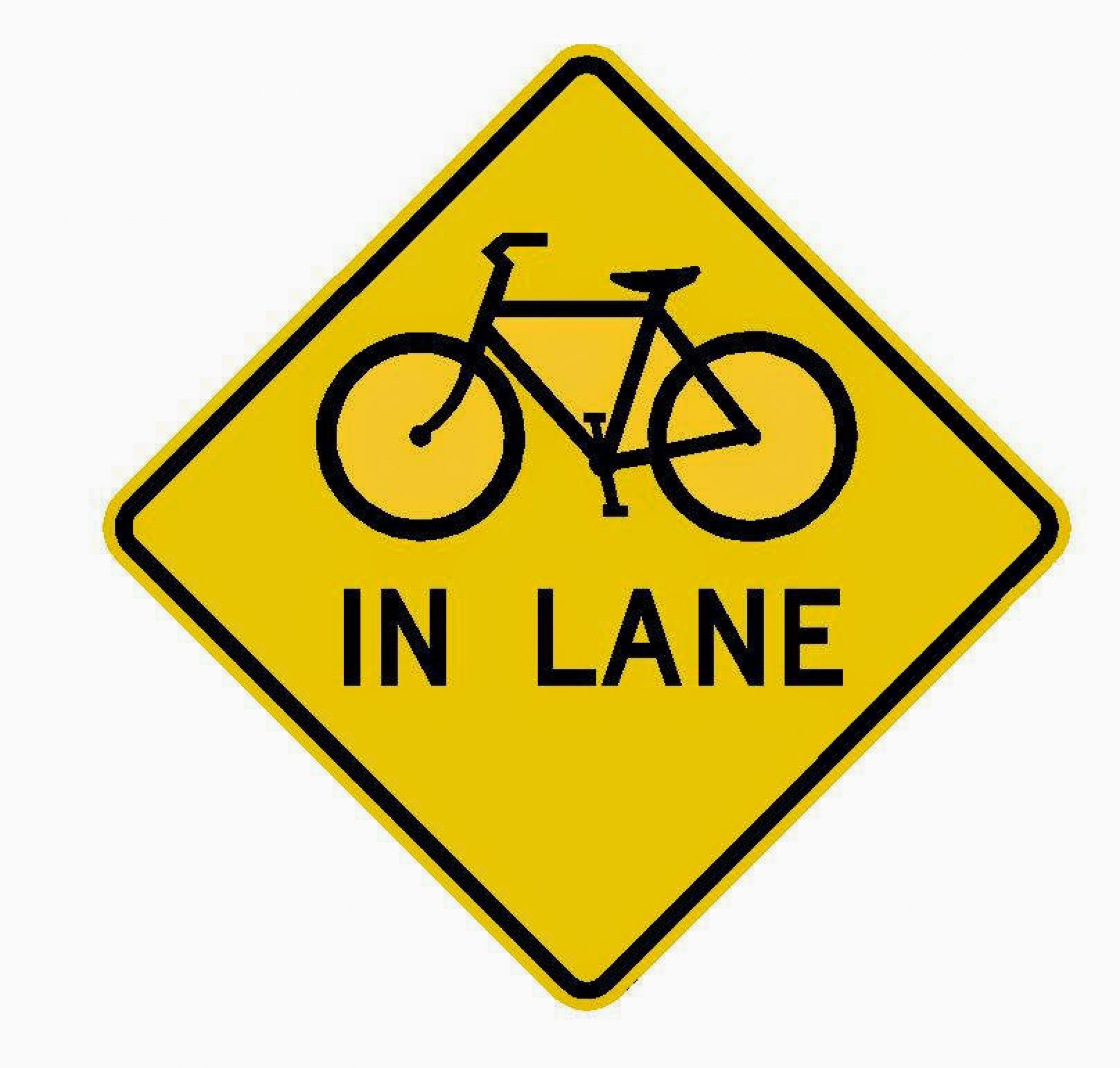
Bike lanes may be closed but only with an approved Special Traffic Permit or City Contract Specifications. An approved STP may require that additional bike signs such as “Bicyclists Allowed Use of Full Lane” or “Bicycle Route Detour” signs be posted as part of the conditions of the permit (see signs in Appendix D).
9.3 Bike Routes (Class III)
Certain streets on the bicycle route network may not have painted bicycle lanes but are nonetheless important because they provide connectivity to the rest of the network. In particular some bike routes allow bicycles to travel side-by-side with cars in the same lane. These streets are identified as having wide right-hand curb lanes. A curb lane is measured from the curb to the nearest lane line. Wide curb lanes are those that are 22 feet or more in width on streets with parking, or 14 feet or more on streets without parking. Contractor should maintain these widths wherever possible. If a wide curb lane will be affected during construction, the Contractor shall post a “Bicyclists Allowed Full Use of Lane” sign at the beginning of the block, and a “Bicycle Route Detour” sign with the legend “å BIKE LANE” at the point where the effective width of the curb lane drops below the aforementioned values (see signs in Appendix D).
9.4 Closure of Bike Routes
A Special Traffic Permit is required for any street closure or the closure of one direction of a street. The STP may require that a Bicycle Route Detour be provided and that additional bike signs such as “Bicyclists Allowed Use of Full Lane” or “Bicycle Route Detour” signs be posted as a permit condition (see signs in Appendix D).
Bicycle Signs
(Black and Reflective Orange)


…
Continue reading “Best practice in accommodating bicyclists during construction”
Institution of Mechanical Engineers calls for blind spot sensors to be made compulsory on HGVs and buses
[B’ Spokes: It amazes me that this is coming from the UK and not the US which is known for its “safety” requirements for motorized transport.Not to mention FARS reporting a higher percentage of bike/ped killed by the right side of trucks vs passenger car. (Links follow)]
by Simon_MacMichael, Road.cc
The Institution of Mechanical Engineers has called for all lorries and buses in the UK to be equipped by 2015 with technology to prevent cyclists from being killed or seriously injured as a result of their being in ‘blind spots’ alongside large vehicles. The appeal has been made in a report published today, Intelligent Transport Intelligent Society.
Links to FARS:
Pedalcyclists Killed in Single Vehicle Crashes, by Vehicle Type and Initial Point of Impact – State : USA, Year : 2009
Pedestrians Killed in Single Vehicle Crashes, by Vehicle Type and Initial Point of Impact – State : USA, Year : 2009
Cars Designed to Intimidate Us
By Mike, Mans Greatest Mistake
“Perhaps another marker of corroded social relations and lack of trust among people was the rapid rise in the popularity of the Sport Utility Vehicle (SUV) …These are vehicles for the ‘urban jungle’, not the real thing.
Not only did the popularity of SUVs suggest a preoccupation with looking tough, it also reflected growing mistrust, and the need to feel safe from others. Josh Lauer, in his paper, ‘Driven to extremes’, asked why military ruggedness became prized above speed or sleekness, and what the rise of the SUV said about American society.He concluded that the trend reflected American attitudes towards crime and violence, an admiration for rugged individualism and the importance of shutting oneself off from contact with others – mistrust. These are not large vehicles born from a co-operative public-spiritedness and a desire to give lifts to hitch-hikers – hitch-hiking started to decline just as inequality started to rise in the 1970s. As one anthropologist has observed, people attempt to shield themselves from the threats of a harsh and untrusting society ‘by riding in SUVs, which look armoured, and by trying to appear as intimidating as possible to potential attackers’”
The Spirit Level: Why Equality is Better for Everyone
Richard Wilkinson and Kate Pickett
https://www.mansgreatestmistake.com/the-politics-of-cars/cars-designed-to-intimidate-us
BANKING ON GREEN
A Look at How Green Infrastructure Can Save Municipalities Money and Provide Economic Benefits Community-wide.
[B’ Spokes: Sometimes you run into a group that opposes bike trails because of impervious surface and storm water run off, well this goes through the major issues and bike trails is one solution and not a problem, at least not like things we do with storm water as a matter of routine. Read the report on how we can go green and save money.]
https://www.americanrivers.org/assets/pdfs/reports-and-publications/banking-on-green-report.pdf
HOW TO WIN AN AFRAP CASE
A Close Look at Doug Morgan’s Columbus, Ohio Slam Dunk Victory
By Steven M. Magas, Ohio’s Bike Lawyer[1]
Early in 2010, my friend, and one of the smartest lawyers I know, Doug Morgan, defended a young cyclist in Franklin County Municipal Court. The cyclist was cited for “taking the lane” on High Street – i.e. riding towards the center of the lane rather than hugging the white line. The officer cited him for a violation of Ohio’s “AFRAP” law, as adopted in the Columbus, Ohio, City Code. Doug’s trial strategy should serve as a model for lawyers and cyclists alike in these cases.
…
Read more: https://www.ohiobikelawyer.com/bike-law-101/2012/04/how-to-win-an-afrap-case/
Bike lanes next to parking – how wide is wide enough?
In this excllent post by Jack Cochrane in Cycle MoCo Jack discusses an issue important to all Maryland cyclists, door zone bike lanes. While I’ll highlight his solution the rest of his post is worth reading:
The Alternative: Sharrows
If 14 feet is not available for the bike lane + parking, I recommend sharrows as the preferable solution. Maryland law requires cyclists to use bike lanes where they’re present, but riders can legally ignore sharrows. So even if they’re painted unreasonably close to parked cars (Maryland standards call for them to be at least 11 feet from the curb, which puts cyclists in the door zone again), cyclists are free to ignore them. Sharrows give cyclists the discretion to ride where they feel it’s safest. Sharrows ideally should be painted 12′ or 13′ from the curb when there’s parking. Or they can be painted down the center of the right lane as seen on George Mason Drive in Arlington. New ideas are being tried all the time. Here is an interesting hybrid of a bike lane and a sharrow.
So my request to Montgomery County and the state: either 14 foot bike lanes next to parked cars or sharrows or sometimes no bike-specific markings at all.
https://cyclemoco.com/2012/04/bike-lanes-next-to-parking-–-how-wide-is-wide-enough/
El coche nos…. [with english subtitles]
[B’ Spokes: Buy a car it is so convenient… or is it? This video from Mexico makes some excellent points.]
Good and bad bills defeated in Maryland Legislature
By Jim Titus, Washcycle
The 2012 legislative session did not substantially advance the interests of cycling in Maryland. Last year saw the passage of House Bill 363, which created a new crime of vehicular negligent homicide, after years of lobbying by cyclists, AAA, victims families, and the elected states attorneys. And 2010 was a banner year, with both the creation of the 3-foot passing law and repeal of the long-hated mandatory shoulder use rule.
This year, the General Assembly rejected Governor O’Malley’s proposal to end the sales tax exemption for gasoline, which means that many transportation projects are likely to proceed more slowly than planned—including those that help cycling. The Purple Line will be threatened unless the Legislature provides funding next year. The Legislature also declined to give police the power to stop a driver for talking on a cell phone. But the news was not all bad:
-
A Senate bill to repeal the negligent homicide statute was soundly rejected (S.B. 942);
-
The House Environmental Matters Committee gave an unfavorable report to a bill that would have allowed automobiles to cross the double yellow line to pass bikes (H.B. 1397); and
-
The House failed to act on a proposal to legalize cycling on all sidewalks statewide except for those in Gaithersburg and Baltimore (H.B. 946).
While each of these bills were poorly conceived, the sponsors had good intentions and it may be possible to accomplish their objectives without the problems their bills would have caused. Over the next few days, I’ll comment on the fate of those three bills and possible next steps.
(Jim Titus is affiliated with several Maryland cycling groups. The opinions expressed herein are Jim’s alone, and do not reflect the views of any organization with which he is affiliated.)
https://www.thewashcycle.com/2012/04/good-and-bad-bills-defeated-in-maryland-legislature.html
“I was only speeding slightly”
As part of a long running campaign to make road users aware of their own influence on road safety the Dutch Ministry for infrastructure and the environment recently launched a new series of commercials. These ads run on national television.
It is very clear who is held responsible here. Drivers are directly addressed to reflect on their excuses for speeding.
There is no excuse for speeding when another person’s safety is at stake.
…
https://bicycledutch.wordpress.com/2012/04/13/i-was-only-speeding-slightly/