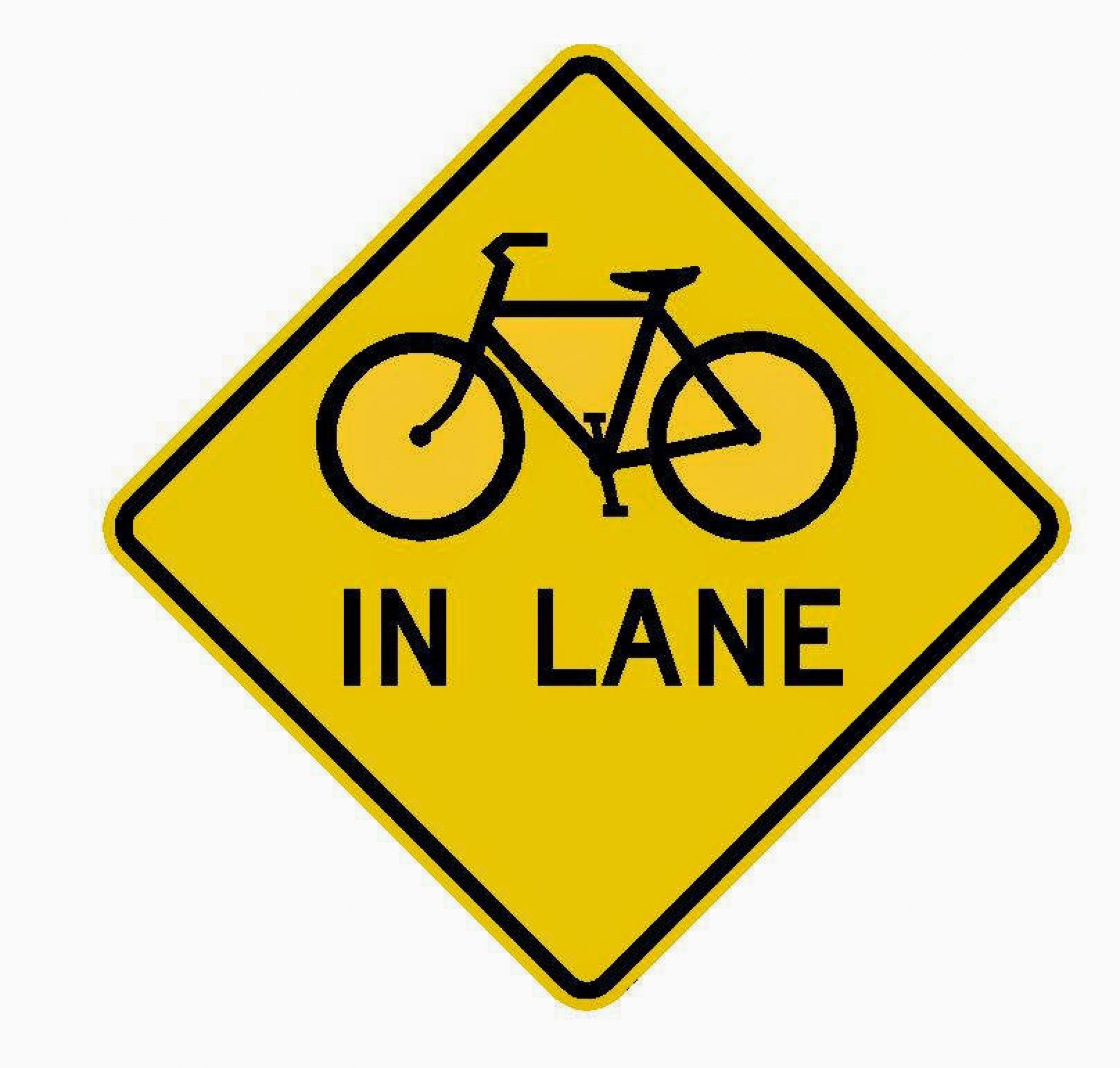
Once you stood here bold and proud
But so many cars zoomed by quite loud
Now that your existence is all but wiped out
I fear I may be next to be snuffed out
If I occupy the space you once stood.
Bike Infrastructure Hits Congressional Speed Bumps
[B’ Spokes: I’m going to take excerpts from this NPR story and intermix comments relevant to Maryland and its unique rules on how it “dispenses”* federal aid. My comments in square brackets.
*Maryland has a lower then national average for spending federal aid on bike/ped projects hence the term “dispense” is being a bit generous.]
by BRIAN NAYLOR -NPR
…
Cities are adding bike lanes with the help of a federal program that gets its money from the highway bill.
[Everywhere but Maryland allows building of bike lanes with Federal money. Well to be technically correct Maryland has some tolerance for funding bike lanes if they are part of the trail but no part of an on-road network.]
…
Washington is hardly alone in marking off bike lanes in its streets; New York has done it, as have Seattle and Minneapolis and any number of cities across the country.
…
Backers of the infrastructure point out that the amount of spending on bike paths and pedestrian improvements amounts to about 1.5 percent of transportation spending — a tiny fraction of what’s needed to pay for bridge repairs, and not what’s keeping those bridges from getting fixed.
David Goldberg of the advocacy group Transportation for America calls this is a “watershed moment,” as communities revert to an earlier time when roads weren’t owned by cars.
“We stripped [roads] down to be essentially sewers for cars, and for years we thought the throughput of vehicles was the be-all and end-all,” he says. “There’s been a significant change in recent years where cities, towns, large and small, are taking a very different approach, and they’re going back and reclaiming a little bit of that landscape.”
It’s not just bike lanes that are funded by the transportation enhancements program. Pedestrian improvements such as sidewalks and better-marked crosswalks are also funded. In part, Goldberg says, the money is being spent to reduce pedestrian deaths, most of which occur on roads built to earlier federal guidelines without proper crosswalks, for example, that are unsafe for pedestrians and other users.
“This is a national issue of having created safety problems in community after community, where we need to go back and give people safe ways to get out there, to be active, to get where they need to go,” he says, “and this is not a frill, this is a very critical piece of our infrastructure.”
[Note the stress on “community” but in Maryland the local communities cannot spend federal money on “sidewalks and better-marked crosswalks” even though we have the 4th highest pedestrian fatality rate. These things are not allowed to be funded through federal money nor is planing to get these things fixed main streamed liked other transportation networks and other maintenance issues by the localities. If you think bridges are in disrepair, think about the bicycle infrastructure that has rotted away to dust so you can no longer tell that roads were built for the bicycle and other uses also benefited as well, roads were the first multi-use path if you will.
I can’t tell you how many times I look at the location of a pedestrian fatality and there on a busy state road are two faded lines that are supposed to say crosswalk
but instead say: “So many cars have zoomed by here that they have erased the crosswalks existence, you’re next if you use this space.” And then there is the issue of only one “crosswalk” and only on one side of a busy street, like that is really going to improve pedestrian safety. :/ You need to accommodate people near where they want to cross, this has been shown in studies and no you can’t expect any reasonable person to go through 3 light cycles just to cross the street, that kind of thinking is just epic fail. ]
…
It’s not clear what lies ahead for the transportation enhancements program in the long term. Republicans in Congress want to give states the flexibility to opt out of it, and that worries safety advocates who say that without prodding from Washington, some states will focus only on cars to the detriment of everyone else on the road.
[Maryland with its stance of “Ya we support bikes… but never, ever on local roads.” is in my opinion outrageous. Baltimore City is lucky being the only locality to mange both state roads and local roads so rather then being limited to consider bike lanes only on state roads like Fall Rd it could consider an alternate like Roland Ave., other localities are not that fortunate the state says sorry we can’t put bike lanes on ____ road and we are not going to give you any money for an alternate bike route either, MDOT needs to profit whenever and wherever we don’t accommodate bikes so we can show off how much under budget we can go. Baltimore got $3 million from the state for phase one of our bike master plan, other localities do not have that as an option and I really have to ask why not?]
Continue reading “Bike Infrastructure Hits Congressional Speed Bumps”
Bike/ped funding denied because it’s too cheep
[B’ Spokes: This is worth highlighting as it’s even more applicable to bike/ped planning. Imagine being denied funding because what we want as a group is too cheep? Yet it happens all the time with bike/ped and this relates to our alert: Demand more for bike/ped https://www.baltimorespokes.org/article.php?story=20110921214018820 ]
***********************************************************
Excerpt from Greater Greater Washington:
Finally, our system of government and media has a bias toward transportation megaprojects over many smaller ones. A huge project gets headlines and attention. Leaders, from local to federal, like to be associated with big public works. Big projects make people feel that something significant is getting done.
This is unfortunate, since a larger number of smaller transportation improvements can make more of a difference for less money. As I noted in the Post, Capital Bikeshare (which was itself a big deal) could be built 18 times over for the price of the massive Gainesville interchange rebuild alone. Individual bike lanes, sidewalks, roundabouts, street reconnections, bus lanes, bus service enhancements, and more each cost little but add up to a lot of value.
The 2030 Group/Bob Chase/Rich Parsons survey of unnamed transportation experts fell (or deliberately leapt) into this trap, asking transportation engineers what their short list of 10 big projects would be to address regional mobility. Naturally, those engineers picked 10 very large projects even if 100 or 1,000 small ones would do more.
Continue reading “Bike/ped funding denied because it’s too cheep”
B’more GREEN ride: downtown to Patapsco trails.. 50/50 road/MTB!
Wednesday, September 28, 2011, 7:00 AM
Start: Panera Bread
600 E Pratt St, Baltimore, MD (map)
We’ll be on bikes!
This is a casual & fun (and zero emissions) ride from downtown Baltimore to Patapsco trails.
Roadies: You’re welcome to show up on skinny tires and head out west with us on the Gwynn Falls paved "trail" before we peel off. If it’s wet, we’ll all stay on the roads for duration of ride
MTBers: If you’re interested in dirt only and you want to save your knobbies, feel free to just meet us at the Park N Ride on rte 166, near UMBC, between 7:45-8am
Then we’ll hit the trails for an hour or so loop and head back, all (mostly) downhill back downtown… Woo hoo!
https://www.meetup.com/Biking-in-Bmore/events/34673392/?a=ea1.2_lnm&rv=ea1.2
Census: More Maryland and Virginia drivers commute to another county than other people in the U.S.
By Ashley Halsey III, Washington Post
…
More than 51 percent of Virginians and 47 percent of Maryland residents drive to another county for work. Only New Jersey, whose workforce feeds into Philadelphia and New York, comes close.
…
*********************************************************************
[B’ Spokes: If we drive more just to do daily activities like work, is the metric "crashes per miles driven" an accurate comparison of how safe it is to drive in Maryland compared to elsewhere? MDOT would like you to think it is, I think it’s a lot like saying a breakfast sandwich of one egg and one sausage is healthier then a breakfast of two eggs and two sausages so people in Maryland will typically have three breakfast sandwiches because they are healthier per unit eaten. That’s to say it’s not how you dived up the totals but what you normally do in a course of a day is the important information.]
Continue reading “Census: More Maryland and Virginia drivers commute to another county than other people in the U.S.”
Larry’s Ride and Run News Coverage [video]
If you are interested in learning a bit more about who Larry was and what he has inspired then click the link:
https://news.yahoo.com/video/baltimorewjz13-15750602/cycling-event-raises-awareness-about-bicycle-safety-26678207.html
If you still haven’t registered yet: https://bikemd.org/page.php?id=409
Dr. Bikelock – Cyclists who refuse to get on the bike path
[B’ Spokes: I find it interesting to read drivers questions about cyclists, so if you do too there is a link in the "Read more" link. But I’ll highlight one good bit from Dr. Gridlock:]
But to me, the bottom line is that if you believe in sharing the road, you share the road. You don’t decide that one category of traveler is the official representative for the entire category and if that person violated the rules than no one else in that category is entitled to courtesy.
Continue reading “Dr. Bikelock – Cyclists who refuse to get on the bike path”
Ben Cardin’s Preservation and Renewal of Federal-Aid Highways Act
An excerpt from Transportation For America about our Senator:
In addition to funding needed maintenance today, T4 America urges Congress to also enact tough guidelines in the next transportation bill to ensure that precious taxpayer dollars prioritize making existing bridges safe. One logical step forward would be Senator Ben Cardin’s Preservation and Renewal of Federal-Aid Highways Act, which would require the Secretary of Transportation to establish “state of good repair” standards for highways and bridges that receive federal funding, ensuring that federal dollars are targeted toward the most pressing needs first and holding states accountable for improving the condition of their infrastructure.
Continue reading “Ben Cardin’s Preservation and Renewal of Federal-Aid Highways Act”
Disney Channel’s Chuggington characters offer valuable safety lessons
[B’ Spokes: Ah more propaganda on how to “how to crash safely.” Seriously, we need more information out there on how walk, bike and drive safely and end the acceptability of exceeding the speed limit by 10-15mph when kids, pedestrians and bicyclists are around. And that leads to the point I’m going to pull out of this post… cars kill. And if you think your kids are safer in the car then out on the street… well you might want to rethink that.
(Note the study that recommends child safety seats does not say what portion of the current childhood traffic deaths could be prevented. For all we know most childhood traffic deaths could have happened despite proper use of a child safety seat. Safe driving is far more effective then safe crashing.)]
Highlights from Welcome to the Fast Lane: The Official Blog of the U.S. Secretary of Transportation by Ray LaHood

The sad fact is that, according to the National Highway Traffic Safety Administration, crashes are the leading cause of death in children ages 3 to 14.
Continue reading “Disney Channel’s Chuggington characters offer valuable safety lessons”
Complete Streets Bill that was passed by Council and signed by the Mayor
EXPLANATION: Underlining indicates matter added by amendment.
Strike out indicates matter stricken by amendment.
CITY OF BALTIMORE
RESOLUTION
Council Bill 09-0433
Introduced by: Councilmembers Clarke, Henry, Middleton, Branch, Kraft, Young, Conaway,
Holton, Reisinger, Cole, Welch, Curran
Introduced and read first time: December 10, 2009
Assigned to: Community Development Subcommittee
Committee Report: Favorable with amendments
Council action: Adopted
Read second time: November 8, 2010
A RESOLUTION OF THE MAYOR AND CITY COUNCIL CONCERNING
1 Street and Transportation Projects – Complete Streets
2 FOR the purpose of directing the Departments of Transportation and Planning to apply
3 “Complete Streets” principals principles to the planning, design, and construction of all new
4 City transportation improvement projects; providing certain exceptions; requiring annual
5 reports on the implementation of “Complete Streets” principals principles; and generally
6 relating to transportation improvement projects.
7 Recitals
8 Baltimore’s streets provide the critical framework for current and future development while
9 playing a major role in establishing the image and identity of the City. Recognizing this, City
10 planners and transportation officials have made consistent efforts to improve the streetscape and
11 make the City’s transportation network responsive to the changing needs of our citizens. These
12 efforts have included an expanded focus on measures to make streets more accessible to
13 bicyclists and pedestrians.
14 While these efforts have borne fruit, allowing Baltimore to rank above many southern and
15 western cities in pedestrian safety, a recent study showed that Baltimore was still more
16 dangerous for pedestrians than many peer cities in the Northeast and Midwest. Maryland as a
17 whole also ranks near the bottom in spending on street accommodations for cyclists and
18 pedestrians.
19 In recognition of the fact that any effort to create more liveable neighborhoods in Baltimore
20 must include further improvements to the streets that are such a critical component of public
21 space, a more systematic approach to inviting all people to make use of the streets must be
22 adopted. “Complete Streets” principals principles require that the needs of pedestrians,
23 bicyclists, transit riders, and people of all abilities, as well as freight and motor vehicle users, be
24 taken into account when designing and implementing changes to transportation networks. The
25 systematic application of these principals to all transportation projects would create a
26 comprehensive framework to open up all streets to the full range of diverse users present in
27 Baltimore, by encouraging walking, bicycling, and transit use while promoting safety safe and
28 contiguous routes for all street users.
1 Adoption of a “Complete Streets” philosophy for transportation projects is especially
2 advantageous in an urban area such as Baltimore where many people do not have regular access
3 to a car. Ensuring that the needs of all citizens are met by applying “Complete Streets”
4 principals principles across the board will improve access to communities throughout Baltimore,
5 make the City more liveable, encourage healthy behaviors, and reduce negative environmental
6 impacts city-wide.
7 SECTION 1. BE IT RESOLVED BY THE MAYOR AND CITY COUNCIL OF BALTIMORE, That the
8 Department of Transportation and the Department of Planning are directed to plan for, design,
9 and construct all new City transportation improvement projects to provide appropriate
10 accommodations for pedestrians, bicyclists, transit riders, motorists, and persons of all abilities,
11 while promoting safe operation for all users. This can be accomplished through the
12 incorporation of construction elements such as special bus lanes, transit stops, improved
13 pedestrian street crossings, median islands, accessible pedestrian signals, curb extensions,
14 sidewalks, ADA compliant ramps, and bike lanes.
15 SECTION 2. AND BE IT FURTHER RESOLVED, That the Department of Transportation is
16 directed to incorporate Complete Streets principals principles, as applicable and subject to State
17 and federal laws and regulations, into all Department plans, manuals, rules, regulations, and
18 programs.
19 SECTION 3. AND BE IT FURTHER RESOLVED, That the application of Complete Streets
20 principals principles may be waived for a specific project if the Director of Transportation issues
21 a documented exception concluding that application of Complete Streets principals principles
22 would be contrary to public safety.
23 SECTION 4. AND BE IT FURTHER RESOLVED, That Complete Streets may be achieved
24 through single projects or incrementally through a series of smaller improvements over time. It
25 is the Mayor and City Council’s intent that all sources of transportation funding be drawn on to
26 implement Complete Streets.
27 SECTION 5. AND BE IT FURTHER RESOLVED, That the Department of Transportation is
28 directed to report to the Mayor and City Council annually, on the anniversary of the effective
29 date of this Resolution, on the Department’s progress towards implementing Complete Streets
30 throughout Baltimore. These reports must incorporate performance measures established to
31 gauge how well streets are serving all users and include information such as crash data, uses of
32 new projects by mode, complaints, the linear feet of sidewalk built, the number of ADA
33 compliant ramps built, how many miles of bike lanes have been created, the number of
34 exemptions from the application of Complete Streets principles that have been granted, and the
35 number of, and yearly change in, overall paved lane miles.
36 SECTION 6. AND BE IT FURTHER RESOLVED, That this Resolution takes effect on the 30th
37 day after the date it is enacted.
Certified as duly passed this _____ day of ________, 20___
_____________________________________
President, Baltimore City Council
Certified as duly delivered to Her Honor, the Mayor,
this _____ day of ________, 20___
_____________________________________
Chief Clerk
Approved this _____ day of ________, 20___
_____________________________________
Mayor, Baltimore City