LETTERS: Bicycle access should be part of every county road improvement

With the proposed formation of a Bicycle and Pedestrian Advisory Committee, the County Council and Councilman David Marks have prioritized alternative modes of transportation within Towson and throughout Baltimore County.

The County Council is on the right path to making our communities more livable, family-friendly and sustainable through increasing opportunities for outdoor exercise, improving air quality and decreasing traffic congestion and enabling commuters and recreational cyclists better access on roadways.

Current construction projects could allow for improvements in bicycle and pedestrian access, by implementing bicycle and pedestrian pathways as a part of these projects.

For example, Towsontown Boulevard and Osler Drive are undergoing a widening project that will benefit the increased travel to growing Towson University.
Many students drive to the campus and park, then navigate their way either by walking, biking or bus.

More students would like to have the opportunity to bike to and within the Towson community, but are faced with limited accessibility to bike paths, and dangerous roadways.

Towson could demonstrate its commitment and be proactive by designing and implementing "greener" pathways during this growth phase.
When I was a seventh-grader at Dumbarton Middle School in 1971, my social studies teacher, Mr. Frye, cycled to work daily via Towsontown Boulevard and Osler Drive, and related the hazards of commuting by bicycle.

Today, I find myself cycling these same routes, hopping on and off the road to avoid dangerous traffic conditions on my way to work at the Towson Center.

Ann G. Greenbaum, visiting instructor, Department of Kinesiology, Towson University
Towson

Continue reading “LETTERS: Bicycle access should be part of every county road improvement”

Mobility’s Diminishing Returns

Interesting article on Strong Towns Blog by Charles Marohn – Highlights:

Today we ask the question: Have we overvalued mobility?

I’ll note that the slowing of economic growth also correlates to the end of the first life cycle of the new roads. This is the time that the long-term cost of maintenance started to kick in.

************************************************************************************
B’ Spokes: Long term maintenance of our aging infrastructure was never budgeted for, it simply was put off to let some other generation deal with it. So here it is and we are having to deal with it and not a "user fee" increase in sight for this or even to keep up with inflation. "We pay too much already." Ah, no. You are currently steeling money from schools, police departments and other things the general budget pays for.
Continue reading “Mobility’s Diminishing Returns”

Why People Don’t Bike

[B’ Spokes: I find it interesting to note that Maryland still stress trails over bike lanes.]
****************************************************************************************************
I found the results of a survey that was recently taken in Arlington County, Virginia which asked the question – “What cold Arlington County do to make it easier for you to ride a bike.” Although the survey was conducted in a single county, I believe that the results would apply to most other parts of the country. The survey include over 4000 people. The answers and percentage of survey responses are listed below.
Separate bicycle lane 15%
More bike trails 10%
Make it safer 6%
More bike racks/lockers 5%
Lighting on bike paths/lanes 3%
Road signs to alert drivers 3%
Provide bike share/rentals 3%
More connections to trails 3%
Other 16%
Don’t know 8%
Nothing would encourage me 38%
The positive result is that 54% of the people that responded had an idea of something that would encourage them to bike. Only the last category (Nothing would encourage me) which accounted for 38% of the results appeared adamantly opposed to biking. Perhaps higher gas prices would encourage them to bike.
Continue reading “Why People Don’t Bike”

Prince George’s County priority bike trails

from TheWashCycle by washcycle
The Prince George’s County proposed 2011 Priority Projects list for the FY 2011-16 state Consolidated Transportation Program was recently released and it includes a list of 18 trail projects. Now as the letter from County Executive Baker points out, there have been a lot of budget cuts and deferrels so none of these projects are a sure thing to be built – or even designed – any time soon.

https://www.thewashcycle.com/2011/04/prince-georges-county-priority-bike-trails.html

Some Highlights of Midday with Dan Rodricks

I tuned in time to hear Carol Silldorff of Bike Maryland explaining the advantages to biking to work "You get to eat more." Which was met with a lot of affirmation.
"How far is doable ride to work?" So Carol starts off with stating 20 miles, wonderful way to get attention to the fact that if you are fit, average distances by car are doable by bike. She did go on to qualify the more average distances and more realistic starting goals like biking to the store which is typically only 2 or 3 miles and everyone should be able to do that.

Fern Shen of Baltimore Brew highlight was fielding some question from a [old?] grumpy motorist complaining something about some cyclist while not riding in his way was able to pass him up in his car. In a wonderful upbeat voice she explains her ride over to the studios in a lawful manner and concluded "We are on the same side buddy."

Nate Evans the City’s Bike/ped Planner road his bike over to the studios from work, cool! He wasn’t really given a question where he could shine and some questions came really close to "Why aren’t you doing more?" Which is really unfair as it is our job as citizens to empower Nate to do more.

Bike Maryland https://bikemd.org
Baltimore Brew https://www.baltimorebrew.com/
Baltimore Bike Planning https://baltimorecity.gov/Government/AgenciesDepartments/Transportation/Planning/BikeBaltimore.aspx

AAA Exchange


image

Share the Road

& Save a Life


Bicycles are a legitimate form of transportation and bicyclists are legal drivers of vehicles, with laws and regulations established for their use. Yet a major issue is that many bicyclists feel they are not respected by motorists and must fight for their place on the road. Like motorists, cyclists need space to safely operate in traffic. They need to anticipate the actions of drivers and other road users. This requires mutual respect, which can be promoted by public information, motorist education programs and legal measures.
In 2009, 630 bicyclists were killed and an additional 51,000 were injured in motor vehicle traffic crashes. Bicyclist deaths accounted for 2 percent of all motor vehicle traffic fatalities, and made up 2 percent of all the people injured in traffic crashes during the year.
 

The 630 bicyclist deaths in 2009 accounted for 2 percent of all traffic fatalities during the year.


Alcohol-involvement — either for the driver or the bicyclist — was reported in more than 40 percent of the traffic crashes that resulted in bicyclist fatalities in 2009.  In 33 percent of the crashes, either the driver or the bicyclists was reported to have a BAC of .08 g/dL or higher.
 

Driving on roads requires care and courtesy whether you are driving a car or a bicycle.

  • Did you know bicyclists can ride on all roads, except where restricted? Bicyclists have the same rights and responsibilities as motorists, including the right to ride in the traffic lane.

  • It is illegal and unsafe for bicyclists to ride against (or facing) traffic. Bicyclists should ride on the road, and must ride in the same direction as traffic.

  • Motorists must maintain at least three feet of clearance when passing a bicyclist.

  • When a road is too narrow for cars and bikes to ride safely side by side, bicycles should take the travel lane, which means riding in or near the center of the lane.


KNOW THE FACTS?

In most states, a bicycle is considered a “vehicle” (like cars, trucks and motorcycles). All bike riders must follow and obey the same laws as the drivers of other vehicles..

Many pedestrian crossings are marked with a sign saying “Yield to Pedestrians,” reminding motorists that pedestrians have the right-of-way. However, motorists must yield to pedestrians in crosswalks even if they’re not signed.

The biggest difference between motorists and bicyclists as road users is that bicyclists are less visible, quieter and don’t have a crumple zone to protect them.


Important Safety Reminders

All bicyclists should wear properly fitted bicycle helmets every time they ride. A helmet is the single most effective way to prevent head injury resulting from a bicycle crash. [B’ Spokes: This is simply not true, the most effective way is not to get into an accident at all. Learn how to ride safe and avoid being in a crash. Wear a helmet but don’t let your safety end there.]

Bicyclists are considered vehicle operators; they are required to obey the same rules of the road as other vehicle operators, including obeying traffic signs, signals, and lane markings. When cycling in the street, cyclists must ride in the same direction as traffic. 

Drivers of motor vehicles need to share the road with bicyclists. Be courteous-allow at least three feet clearance when passing a bicyclist on the road, look for cyclists before opening a car door or pulling out from a parking space, and yield to cyclists at intersections and as directed by signs and signals. Be especially watchful for cyclists when making turns, either left or right.

Bicyclists should increase their visibility to drivers by wearing fluorescent or brightly colored clothing during the day, dawn, and dusk. To be noticed when riding at night, use a front light and a red reflector or flashing rear light, and use retro-reflective tape or markings on equipment or clothing.


image

Motorists

  • Stay alert, avoid all distractions while driving.
  • Yield to bicyclists when turning.
  • In bad weather, give bicyclists extra passing room, just as you would other motorists.
  •  Make a visual check for bicyclists by checking mirrors and blind spots before entering or leaving a lane of traffic.
  • Slow down and give at least 3 feet of clearance when passing.
  • Reduce your speed when passing bicyclists, especially when the road is narrow.
  • NEVER honk your horn at a bicyclist, it could cause them to swerve into traffic or off the roadway and crash.
  • Always check for bicyclists before opening your car door.
  • Children on bicycles are often unpredictable, expect the unexpected.


image

Bicyclists

  • Ride on the roadway or shared pathways, rather than on sidewalks.
  • Follow the same rules of the road as other roadway users, including riding in the same direction as traffic and following all the same traffic signs and signals.
  • Signal all turns.
  • Wear a bicycle helmet every time and on every ride.
  • Be visible by wearing bright colors during the day, reflective gear in low light conditions, and use head and tail lights at night.
  • Remember that respect is a two way street. Show motorists the same courtesy that you expect from them.
  • Almost three-fourths (72%) of the bicyclist fatalities were killed during the daytime between the hours of 4 a.m. and 8 pm., a 6-percent increase from the previous year. The remaining 27 percent were killed during the nighttime hours.


In 2009, the average age of bicyclists killed in traffic crashes was 41. During the past 10 years, there has been a steady increase in the average age of both bicyclists killed and those injured


Average Age of Bicyclist Killed and Injured 2000-2009


Year


Bicyclists Killed Average Age


Bicyclists Injured Average Age

2000

35

25

2001

36

26

2002

37

28

2003

36

27

2004

39

29

2005

39

29

2006

41

30

2007

40

30

2008

41

31

2009

41

31


2000-2009


39


29


Remember – Same Roads * Same Rules * Same Rights

Continue reading “AAA Exchange”

Ride to Annapolis for HB 363

https://bikemd.org/public/images/logos/ColorLogo.jpg

Bike Maryland  – Enjoy a Bike Ride and Support Your Right to Justice!

To support HB 363, bicyclists will ride to Annapolis to support the bill as well as Tami Bensky, widow of Larry Bensky, cyclist killed on Butler Road last spring and many other families that have lost a loved one in this tragic manner. Wednesday is the anniversary of Larry’s death.

Bike Ride: Wednesday, April 6, 2011 8AM start at the Baltimore War Memorial Plaza at Fayette and Holliday Streets, Baltimore.

Join us along the way if you can’t start in Baltimore:

9-9:30AM-Cromwell LR Station (B&A trailhead)

Between 9:30 and 11:00AM anywhere along the B&A

11:00AM-At the southern terminus of the B&A


You must have your driver’s license or photo id to enter the building.


Can’t bike to Annapolis – show your support by attending the hearing:  April 6th, 1 p.m., Judicial Proceedings Committee Meeting Room, 2nd Floor of the Miller Building (Senate) on Bladen St.

Bike Maryland wants to fill the room. Bringing people with you is also good.  Our physical presence sends a message. 

Press coverage:

Noon – today (Tuesday) coverage on WYPR

WTOP and can be accessed at:        https://www.wtop.com/?nid=41&sid=2330822
Sound clips at:         https://kateryanreports.blogspot.com/2011/04/making-casefor-and-against-new.html
March 30th Washington Post article    https://www.washingtonpost.com/rw/WashingtonPost/Content/Epaper/2011-03-30/Bx5.pdf
Baltimore’s Fox 45                                       https://www.foxbaltimore.com/newsroom/top_stories/videos/wbff_vid_7103.shtml
Washington Post Opinion – Sunday    https://www.washingtonpost.com/opinions/kill-on-the-road-get-off-with-a-ticket/2011/03/30/AFKJ9hJC_story.html
Baltimore Sun March 29th                    https://weblogs.baltimoresun.com/news/traffic/2011/03/aaa_lawmakers_seek_new_auto_ma.html


If you can’t attend the hearing please contact your Senator today to urge HB 363 to be passed out of the Judicial Proceedings Committee – click here to find your Senator. Support HB 363 which will strengthen vehicular manslaughter laws and close existing loopholes.

Now is the time to act – thank you!


Carol Silldorff
Executive Director
Bike Maryland
1209 North Calvert Street
Baltimore, MD 21202
410-960-6493 direct
Carol@bikemd.org
www.bikemd.org


Drivers need to get up to speed

Rules of the road change and evolve — so should motorists
By Michael Dresser, The Baltimore Sun

Driving is one of the most important things most of us do in our professional and personal lives, so why would we expect to learn it while we’re in high school and then just stop?

Doctors, nurses and other medical caregivers are expected to continue education over the course of their careers. In some fields, such as tax accounting, professionals have to update their knowledge every year or be left hopelessly behind. Even reporters can’t help but pick up a few scraps of new information as we go about our work, even though we usually get to weasel out of tests.

So when we get on the road, with other people’s lives in our hands, shouldn’t we have the expectation of lifelong learning?

Generally, we don’t. A lot of my email from drivers — particularly when it comes to interactions with bicyclists — seems to reflect the state of thinking back in the 1950s through the 1980s. The last time some people really thought about driving, it seems, is when they got their licenses.

Yet the evidence is everywhere that there are motorists who haven’t kept up — if they ever really learned how to drive.

Think of how much has changed in recent decades. The state of the law, as well as public opinion, has changed dramatically when it comes to drunken driving — an offense that was once considered more comic than reprehensible. Cellphones and texting devices are now ubiquitous in the front seats of motorists who never heard the term "distracted driving" back in driver’s ed. Roundabouts are no longer a European thing.

And bicyclists aren’t just school kids pedaling in the safety of a leafy subdivision. They’re everywhere, and their numbers are growing.

Both before and after last week’s column about how motorists should approach bike lanes, comments have come in suggesting that Baltimore city government has abdicated a responsibility to inform drivers about how to obey the law.

Sorry. Not the case. Regulating drivers and seeing to it that they know the rules are state responsibilities under Maryland law. With the state of the city’s budget, it’s unrealistic to expect the city to carry water for the state. It can barely carry its own.

On the state level, the agency responsible for driver education is the Motor Vehicle Administration, though the State Highway Administration and Maryland State Police play secondary roles in getting the word out about safe driving practices.

None of these agencies is exactly swimming in money to re-educate drivers. Nor is it clear that many drivers want continuing education. Any of us could pay to take a refresher course from a private instructor. But how many of us have done so? (My hand is down, too.) Few of us are begging our lawmakers to require midlife requalification of drivers.

So every once in a while, if it seems there’s a need, this column will pass along some tips for those who want to know more about one of the riskiest things most of us do. It’s more a stopgap than a solution, but maybe it’ll help a little.

Our guest instructor for this column is Barry Childress of the bicyclists’ group Baltimore Spokes. Childress is an experienced operator of both two-wheel and four-wheel vehicles. He’s going to address a question, posed by some readers, about whether bicyclists are required to stay in bike lanes to the right of the main travel lanes. And to do so, he’s going straight to Maryland’s traffic code:

§ 21-1205. Riding on roadways or on highway.

(a) Riding to right side of roadway: Each person operating a bicycle or a motor scooter at a speed less than the speed of traffic at the time and place and under the conditions then existing on a roadway shall ride as near to the right side of the roadway as practicable and safe, except when:

(1) Making or attempting to make a left turn;

(2) Operating on a one-way street;

(3) Passing a stopped or slower moving vehicle;

(4) Avoiding pedestrians or road hazards;

(5) The right lane is a right turn only lane; or

(6) Operating in a lane that is too narrow for a bicycle or motor scooter and another vehicle to travel safely side by side within the lane.

That’s a pretty good list of exceptions to what many think is a rigid law. If you’re sitting on a bicycle seat, all these exceptions make a lot of sense. From the front seat of a car, they might not be so obvious. Certainly my mailbag shows there are plenty of drivers out there who view a bicyclist who has left the bike lane as a dangerous fugitive.

But here’s the actual text of the rule:

§ 21-1205.(a) … Each person operating a bicycle … on a roadway shall ride as near to the right side of the roadway as practicable and safe.

Practicable and safe. That gives the bicyclist a lot of room for judgment. And it calls for flexibility from drivers.

"Both bicyclists and motorists need to understand there are times when a bicyclist needs to operate exactly like motor vehicle, especially where right turns are authorized. Bicyclists staying to the right does not always work to the advantage of everyone," Childress said.

Echoing last week’s column, he added this: "By far the major error on the motorist side is the thinking that they can pass and then turn directly in front of a bicyclist. This goes double for turning into driveways."

That’s enough for now. Class dismissed. There will be no pop quiz.

But if you can think of any brilliant ways to help drivers — and bicyclists, for that matter — to stay current on the evolving rules of the road without insulting them, drop me a line. There ain’t none of us what couldn’t stand learning something new.

Continue reading “Drivers need to get up to speed”
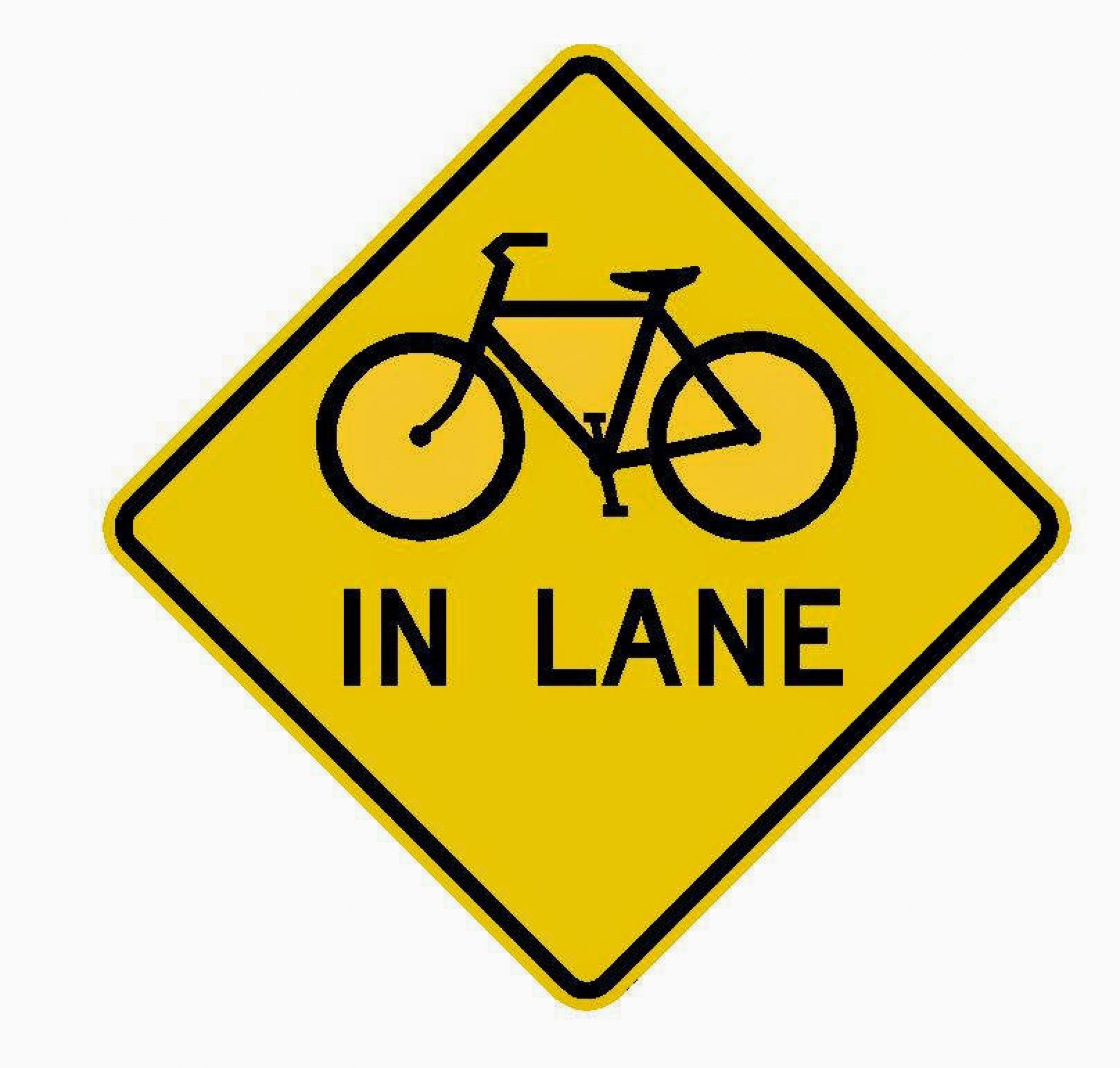
House Bill 363-Ride to Annapolis in support.

Hi Everyone –

As many of you know, the punishment handed to the reckless driver who took Larry’s life was a $500 fine and 3 points on her drivers license. That was the only penalty allowed by law due to a major gap in the criminal code in Maryland. HB 363 is a bill that would close that gap by introducing an intermediate charge between traffic charges and a 10 year jail sentence. I have tons of details on the current law and the proposed bill if you want to read them. Bottom line is that its painfully obvious that this middle level charge is necessary in cases like Larry’s and sadly, so many others.

This bill has been introduced in the House for the last 6 sessions yet never was allowed to come to a vote. This year it passed the House unanimously with a 137-0 vote. The bill is now in the Senate Judicial Proceedings Committee. It nees to be voted out of committee then voted on by the entire Senate. The chair of the Committee, Senator Brian Frosh, has made it known that he does not support the bill and won’t let it come to a committee vote. Strange how one guy can have so much power, right?? I’m hoping we can change his mind in a short amount of time.

I would love to light up Senator Frosh’s phones with overwhelming support for this bill. He can’t ignore hundreds of callers. Please…please take a minute to call his office at 1-800-492-7122 x 3124 to voice your support of HB363. Everyone should call. People who live in his district in Montgomery County should also give your name and/or address to let Sen Frosh know you are a constiuent. If you have friends or family in Montgomery County, please ask them to call, too! You do not need to discuss the bill…just simply say you want Senator Frosh to know you support House Bill 363. Email can also be sent to brian.frosh@senate.md.us but since its late in the session, a phone call may be more effective.

On April 6 there will be a Senate hearing on HB363. Coincidentally, Larry’s collision was on this same day one year ago. The hearing is open to the public but only written testimony will be taken. If you are willing to submit written testimony in support of this bill, please message me and I’ll let you know how to do so.

Session ends soon…there is very little time to act. Your help in passing this important legislation is very much appreciated. Thank you.

Tami Bensky
****************************************************************************************************
Wednesday, April 6, 2011 8:00 AM

Balt. War Memorial Plaza
@ Fayette and Holliday streets Baltimore , MD

https://www.meetup.com/Biking-in-Bmore/events/17179883/

(We need numbers! So please register via the link above so we have an idea what to expect.)
Continue reading “House Bill 363-Ride to Annapolis in support.”

Maryland Tests ‘Talking’ Buses to Warn Distracted Pedestrians Lawfully Crossing in a Crosswalks

B’ Spokes: If the announcement was along the lines "Let’s watch out for each other" or even better "Bus driver, it’s your lawful duty to yield to pedestrians." or "Driver take your time and don’t turn till it’s safe." that might be cool but "Pedestrians, bus is turning. Pedestrians, bus is turning," that’s just wrong.

Trying to put responsibility on the pedestrian to yield to a turning bus is outrageous! See previous coverage: https://www.baltimorespokes.org/article.php?story=20110322122507481

With apologies to IBTimes but I am going to introduce a lot of satire into their piece:

********************************************************************************************

Some pedestrians in Maryland are being harassed by buses turning at the street corner — automatically by the bus itself.

The harassment system – already being used in some cities – is being tested on 10 buses operated by the Maryland Transit Administration. MTA’s main bus service area is in Baltimore.

Sensors on the bus detect when the steering wheel turns which is already too late to serve as a warning but works fine just to harass and intimidate pedestrians. A pair of external speakers are used to announce pedestrians that the turn is already underway so run for your lives. There’s also an internal speaker with the same message for the driver.

"Pedestrians, bus is turning. Pedestrians, bus is turning," a loud voice from a pair of speakers outside the bus states.

MTA spokesman Terry Owens says the MTA’s engineers are always on the lookout for ways to boost the ability for bus drivers to drive aggressively and not yield to anything as that just slows down service.

"We are interested in embracing anything that’s going to help put the blame on someone else then on our drivers," he said. "One accident involving a pedestrian where we were at fault is one accident too many. If there is technology that’s available to help teach pedestrians to get the heck out of the way of a bus then we will consider it seriously."

The tests, which were announced last week, will last two months. Systems from two companies – ProTran 1 and Clever Devices – are being considered to roll out the technology on more buses if the test is successful.

Owens says that system installation will cost between $1500 and $2500 per bus, although it’s too soon to tell what the final price will be.

"We want to hear from our operators and certainly from the street, so much so there is no contact info in this press release, if you get my drift." he said.

[B’ Spokes: Again, the above is satire – Witty language used to convey scorn.]

Continue reading “Maryland Tests ‘Talking’ Buses to Warn Distracted Pedestrians Lawfully Crossing in a Crosswalks”