Should have, could have seen the cyclist = motor vehicle homicide by negligent operation (not Maryland)

Unlike Maryland where a driver has to be doing something grossly wrong like being drunk while driving (unless HB 363 passes.) In this story:
****
"There’s no initial evidence of any external factors (that contributed to the collision)," McGowan said, noting investigators will look at all possibilities.
Daley was charged with one count of motor vehicle homicide by negligent operation. She was issued a summons to appear in Wrentham District Court on a date to be set by the court, police said.
****
Seems very different then here where the driver needs to do something "wrong" (other then run over someone plainly visible in the road.)
Continue reading “Should have, could have seen the cyclist = motor vehicle homicide by negligent operation (not Maryland)”

Off-duty Portland cop allegedly assaulted while biking to work

[B’ Spokes: We really need an incentive program to get more of our officers biking to work.]


A Portland Police Bureau Sergeant who was riding his bike into work yesterday morning was involved in an altercation with a man driving a car that has resulted in the driver being arrested for hit and run and attempted assault.


image
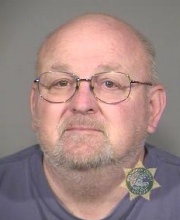
Larry Fornshell’s booking photo.
Continue reading “Off-duty Portland cop allegedly assaulted while biking to work”

WHAT’S A CITIZEN TO DO WHEN THE POLICE BOTCH AN INVESTIGATION

[B’ Spokes: I’m going to skip over the details of the fatality and share the ending of this article. And yes I am thinking of some of the bicycling fatalities here in Baltimore, we are urged to be patient till the investigation is completed and then there is no discussion, the conclusions are final. ]
*******************************************************************************************************
BY: KEVIN SCHWARTZ AND SHWETA KRISHNAN

Peter Cadden, unable to convince law enforcement officials that their conclusions were incorrect, says he thinks there should be some sort of independent board citizens like him can appeal to if they have a disagreement with the police. Such boards do exist in municipalities across the United States, often in bigger cities like Boston. Their focus is typically cases of police misconduct. Experts said they were not aware of any boards that would handle a case like Cadden’s. Because of the technical expertise necessary to assess reconstruction reports, as well as the relatively small impact such cases would have, the experts said it would be very difficult to create such a board.
“It’s hard enough to get a civilian review board that has any teeth when it comes to police misconduct,” said Barbara Dougan, a lawyer speaking on behalf of the Massachusetts chapter of the National Lawyer’s Guild. “I can’t imagine that you’d have any success at all to have a body that would reassess more technical reports.”
There is no civilian review board in Mattapoisett and nothing like it in Plymouth County. Bradley said district attorney policy when a citizen has a complaint about a report is to check back with the supervisor of the agency that authored it, which his office did in the Cadden case. “There’s not a whole lot they can do if [the reconstructionist] refuses to admit it’s wrong,” Bradley said. “I’m not saying it’s impossible, but it’s difficult to prove [a report] is botched if you have an experienced trooper giving an opinion that was approved by his experienced supervisor.”
According to Dobson, the accident reconstructionist hired by Cadden, the State Police are usually reluctant to revisit a case once a report is filed unless litigation is involved. “[Reports are corrected] almost never,” he said. “It goes into the hands of the attorney, who brings it to life only in the trial.”
Kevin Reddington, a Brockton attorney who handles accident reconstruction cases, said the motive for not changing reports is probably fear of punishment, rather than malicious intent. “Unless there’s some sort of relationship—it’s probably just an overwhelmed guy who mixed up his numbers,” he said. “What happens is they take an adversarial approach. They don’t want to end up in front of a jury, where he’s going to have his head handed to him.”
Over the past year, Cadden has appealed again to the district attorney’s office and the attorney general’s office and met with Police Chief Lyons. The officials have listened and even re-interviewed a witness, but they did not reopen the case. Cadden is frustrated and still insists the State Police report reached the wrong conclusion, but he is out of options.
“I almost feel like this is an irreversible process from their perspective,” he said of law enforcement officials. “You can’t put Humpty Dumpty back together again.”
Continue reading “WHAT’S A CITIZEN TO DO WHEN THE POLICE BOTCH AN INVESTIGATION”

AAA supports HB 363 but Senator Frosh is not so sure (Manslaughter by Vehicle or Vessel – Criminal Negligence)


Senator Frosh has been quoted in the paper saying some things that do not ring true about HB 363 and that needs to be addressed. Some quotes of Frosh in the Baltimore Sun and Washington Post, what the bill actually says and my comments:

Frosh: Already approved by the
House, a bill that would change
the law now is in the Senate
Judicial Proceedings Committee,
which Frosh chairs. He says the
rush of Senate business has kept
him from reading it. He plans to
hold a hearing next week but isn’t
sure whether he will ask the committee to vote on it.
“It depends on what the bill
says,” Frosh said, “and whether it
can be fixed and whether they can
thread the needle.

B’ Spokes: So to be fair he has not read the bill yet so this may be a bit of an over reaction but still his concerns necessitate a response.

Frosh: Proponents jubilation at House passage of the bill has been tempered by comments from Sen. Brian E. Frosh, chairman of the Senate Judicial Proceedings Committee, expressing concerns that the law could be used to jail people over unintentional driving errors.

HB 363: IT IS NOT A VIOLATION OF THIS SECTION FOR A PERSON TO CAUSE THE DEATH OF ANOTHER AS THE RESULT OF THE PERSON’S DRIVING, OPERATING, OR CONTROLLING A VEHICLE OR VESSEL IN A NEGLIGENT MANNER

B’ Spokes: Simple negligence still exists and is purposefully excluded in this bill to address that concern. This bill fills the GAP between simple negligence and recklessness.

Frosh: Sen. Brian E. Frosh, chairman of that panel, expressed misgivings about creating an offense carrying a jail term for conduct that was negligent but not intentional or reckless.

HB 363: THE PERSON SHOULD BE AWARE, BUT FAILS TO PERCEIVE, THAT THE PERSON’S CONDUCT CREATES A SUBSTANTIAL AND UNJUSTIFIABLE RISK THAT SUCH A RESULT WILL OCCUR; AND THE FAILURE TO PERCEIVE CONSTITUTES A SUBSTANTIAL DEVIATION FROM THE STANDARD OF CARE THAT WOULD BE EXERCISED BY A REASONABLE PERSON.

B’ Spokes: Really, someone that drives without the standard of care that would be exercised by a reasonable person and KILLS someone should no way, no how, in all circumstances never face jail time?

Post: “For someone to demonstrate
‘substantial negligence’ is higher
than ordinary negligence but
lower than gross negligence,”
Simmons said. “At one point I
estimated that there were 30 to
40 [vehicular] homicides that
prosecutors wanted to prosecute
but couldn’t under today’s high
standard.

Frosh: But Frosh said he’s concerned about imposing harsh penalties on drivers who may have killed others as a result of “split-second negligence.” “Our jails are bursting right now,” he said. “To me the jails are a place for people who have done something that is intentional.”

HB 363: A PERSON WHO VIOLATES THIS SECTION IS GUILTY OF A MISDEMEANOR AND ON CONVICTION IS SUBJECT TO IMPRISONMENT NOT EXCEEDING 3 YEARS OR A FINE NOT EXCEEDING $5,000 OR BOTH.

B’ Spokes: Split-second negligence??? Cute misdirection but what is he saying? It’s perfectly fine to take a split second to send a text message thus missing a red light and then killing people as a consequence? Frosh seems to keep referring to simple negligence and the penalty for that is still $500 max.

Post: To Frosh, that new standard
could be applied to the mother
who fatally hits a bicyclist when
she takes a glance at a crying child
in the back seat of her minivan

B’ Spokes: First I would like to point out that Frosh has NOT read the bill so his assertion that a glance back is more then simple negligence may not be valid. Next, as a father of five we have ALWAYS pulled off the roadway to deal with the kids. I take exception to the assertion that a mother HAS to be distracted for a split second to deal with kids. As always we trust the courts and juries to do the right thing, if we throw that out the window there is no point to making laws.

Overview

Descending order of culpability in manslaughter Simple definition Explanation Fines
Currently Maryland only has this Manslaughter Reckless, gross negligence High risk and driver knows there is a high risk of death. Felony, imprisonment not more then 10 years or not more then $10,000 or both.
HB 363.will establish this Negligent homicide (model penal code version) Substantial deviation from standard of care High risk and driver should know there is a high risk of death. Misdemeanor, imprisonment not more then 3 years or not more then $5,000 or both.
NOT HB 363 Negligent homicide (2 states and DC) Simple negligence; any deviation from standard of care Driver does something where the possible risk times the likelihood of death was greater than the benefits of doing so, and death results.

B’ Spokes: Jail time – We have jail time for for selling cars without a licence for crying out loud but when it comes to driving in a KNOWN (or should be known) risky way that ends up killing someone, well we’ll just let that go unchecked because it was not intentional, seriously? (I will also assert one major reason why risky behavior may not seem intentional is because the MVA does such a terrible job in educating drivers about driving risks with only a 20 question test. (Other States have 100 question test.)) But at the end of the day we have to trust the courts and the juries to use this tool properly, we may never see any jail time even for the most grievous of cases as there is nothing mandatory about jail time.[1]

B’ Spokes: Maximum punishments are there to cover the first time very, very close to recklessness cases. They are also there to cover repeat offenders, in spite of getting numerous tickets, there are some people that still engage in risky behavior that will sooner or later end up killing someone.

Frosh: Frosh said somebody who kills another through automotive negligence can face harsh consequences in civil lawsuits. “You can lose your house for that. You can lose your kids’ college fund,” he said.

B’ Spokes, In Conclusion:
In 2007 The Judicial Proceedings Committee (Frosh was the Chairman) failed to bring to a vote SB 267the fact that a plaintiff may have been contributorily negligent may not bar recovery by the plaintiff” which means being contributorily negligent by just 1% a plaintiff can be bared from recovery of ANY AND ALL damages is still on the books and does come up on occasion.

So apparently Frosh wants it both ways, no serious misdemeanor charges AND no civil damages either. Not to mention in civil cases it is often the insurance that pays, not the driver. This is simply not right and in most states, drivers who kill can be charged with negligent homicide, if their driving is a flagrant violation of the duty to drive carefully—even if there is no proof that the driver realized they might kill someone AND on top of that most states allow civil damages based on comparative negligence (or something similar.) The loophole in Maryland is that there is no such crime and civil remedies are denied, is it any wounder that The 2010 “Allstate America’s Best Drivers Report™” has DC and Baltimore dead last?

Note: I am sending this to Frosh to see if he would like to comment.
If you want to take action this is our latest alert.


Continue reading “AAA supports HB 363 but Senator Frosh is not so sure (Manslaughter by Vehicle or Vessel – Criminal Negligence)”

Apoyo a la ley 363

La ley en vigencia no castiga a conductores que matan a alguien con su vehículo. Esta ley está bajo revisión en este momento y ya a sido aprobada por la Cámara de representantes. Falta que la ley estableciendo como un Crimen de Homicidio a la persona que por manejar su vehículo en una manera negligente mata a una persona sea aprobada por el Senado. Para tener justicia en los condados de Baltimore y el estado de Maryland es necesario que la propuesta de ley sea aprobada por el Senado. La propuesta de ley de la Cámara de Representantes 363 (Establece como un crimen de Homicidio Involuntario por causar la muerte con un vehículo a un peatón o ciclista a la persona que se compruebe que estaba manejando su vehículo en una forma negligente.)

Por favor llame a su Senador solicitando la aprobación. Senador Zirkin (410) 841-3131 and 1-800-492-7122 x 3131 Pregúntale a votar a favor del el proyecto del ley 363. Si no están presentes hablé con el personal de la oficina, eso ayudara en el establecimiento del proyecto de la ley 363 y incrementara la seguridad de los peatones y ciclistas en el Estado de Maryland.

Have You Been in a Crash & Denied Recovery?

If so, we need your story.
We are looking for stories of cyclists and pedestrians who were involved in crashes, but were unable to recover damages for their injuries or property damage because they were found at-fault.
We need stories from the throughout the region, so please let us know if this happened to you, and forward this request to your friends who have been in crashes.
DC, Maryland, and Virginia are three of the last jurisdictions retaining a liability standard that allows blaming the victim for his or her injuries and denying any recovery if any fault can be attributed to that victim.
We want to begin chipping away at that standard and making the roadways fairer, where those at fault must pay a fair percentage for the harm they cause. But we need the real, concrete stories to make the case.
To tell us your story email us at info [at] BaltimoreSpokes.org and/or Bike Maryland https://bikemd.org/page.php?id=166
In the DC metro area follow the link after the fold.
Continue reading “Have You Been in a Crash & Denied Recovery?”

FYI AAA alert on House Bill 363

Take Action. Now!
You and your State Senator must act now to make Maryland roads safer!
AAA Urges Marylanders to Support House Bill 363 Which Will Strengthen Vehicular Manslaughter Laws And Close Existing Loopholes

Please Contact Your Senator Today to Urge HB 363 to Be Passed Out of the Judicial Proceedings Committee
 
House Bill 363 will help ensure that those recklessly negligent drivers who kill and seriously injure others can be appropriately punished.    Maryland ’s current vehicular manslaughter statute requires prosecutors to show actual intent to kill, regardless of how irresponsible or reckless their driving may have been. 

This legislation increases penalties for those who drive in such a negligent manner that it results in a crash that kills someone, or in some cases, many.

Maryland’s current law is routinely allowing some drivers to get away with murder on our roads. It is reprehensible that a motorist can drive a vehicle outrageously, and kill someone in the process through his or her own negligence, and then get away merely with a fine or a traffic ticket. We are not referring to simple negligence, but negligence that is so egregious that it exceeds ordinary negligence, such as the intentional violation of several traffic laws that lead to the death of someone.

The auto club is advocating once again to pass this important legislation, to change the penal law, and call attention to Maryland’s extremely lenient vehicular manslaughter laws. The loopholes that exist allow those who drive in a criminally negligent manner on Maryland roads and kill innocent people to escape without serious sanctions. For the sake of the victims and their families, it is the right thing to do and it’s the right time to do it.

Over the years, AAA has seen many killers on Maryland’s highways go virtually unpunished for the heinous crimes they committed behind the wheel because the standard for vehicular homicide and manslaughter are so high. Because the standard is so high, such cases are very difficult to prosecute. HB 363 will at least provide a middle-ground and criminal conviction instead of a simple traffic citation for negligent traffic offenses that result in death.

HB 363 passed in the House Chamber and the bill is now in the hands of the Senate Judicial Proceedings Committee. AAA Mid-Atlantic encourages you to take action by filling out the information below and sending a letter to your Senator asking the Judicial Proceedings Committee to vote in favor of HB 363 so the legislation will proceed to the Chamber for a full vote.

Motorists, cyclists need to learn how to share pavement

BY ROBERT VITALE – THE COLUMBUS DISPATCH

Jim Cristy’s string of close calls came to a crashing, bruising halt a week ago on Cannon Drive south of Ohio State University.

The North Side resident was riding his bike in the right lane when a car passed on his left and then made a right turn into a parking lot. Christy hit the car’s rear passenger side and was thrown to the street. He bruised his hip and shoulder.

The car never stopped.

Coexistence isn’t always peaceful these days on central Ohio streets, many of which are being re-engineered to accommodate people driving on two wheels and four.

Columbus has created 14 miles of bike lanes on its streets since 2008. The city also has added
pavement markings – “sharrows” – and signs along 37 additional miles to welcome cyclists to the
streets.

But people’s knowledge of the rules of the road hasn’t kept pace with the biking boom.

“There’s a new paradigm,” said Bernice Cage, spokeswoman for the Mid-Ohio Regional Planning
Commission, which monitors traffic of all types. “Motorists aren’t sure where cyclists should be,
and a lot of cyclists don’t know where they should be.”

Annual bike-traffic counts by MORPC show, anecdotally at least, that more people are
pedaling.

The agency counts bike riders several times a year at more than two dozen locations in central
Ohio and says it has seen increases in each of the past six years, particularly during morning rush
hours.

“We look out our window, and we see it,” said Jeff Stephens, who heads the Columbus
Transportation and Pedestrian Commission and runs an advocacy group called Consider Biking. “The
census shows it. We have counts on trails. Bike retailers’ sales are increasing.”

So consider this an avoiding-the-crash course on the laws governing how we roll.

Street or sidewalk?

State law allows bicyclists to ride on the sidewalk, but Columbus says adults must ride in the
street or on trails.

Despite the local rule, nearly half of the bicyclists MORPC counted in September were on
sidewalks.

It might seem more dangerous for bikes to ride among auto traffic, but studies have found that
it’s safer.

Drivers are more attuned to what’s on the road around them than what’s on the sidewalk. People
walk slowly enough for drivers to spot, but faster-moving bicyclists can enter their field of
vision too late.

Share the road

Some cyclists say they don’t like the street signs that remind drivers that bicycles use the
road, too. They say the message reinforces the idea that autos own the road.

According to the law, they don’t.

Columbus requires cyclists to ride as far to the right “as practicable,” but cyclists can use
their judgment. They can use the left lane for turns but can’t ride left of center. They don’t have
to use bike lanes, and they don’t have to ride at the curb.

“If a cyclist hugs the curb, they are easily squeezed off the road and into a wreck by passing
cars,” said Erle Haunn, who rides in Delaware and Morrow counties.

Jamie Fellrath, a cycling instructor who lives in Clintonville, said it’s safest for bicyclists
to ride in the right third of the right lane, not at the curb. The tactic is called “controlling
the lane,” and it tends to keep cars from driving right next to a bike.

Equal rights

Under state and local law, bikes are included under the definition of
vehicle.

That means that drivers must extend the same courtesies to cyclists that they are required to
extend to other motorists: no passing in the same lane, no tailgating, etc.

It also means that bicyclists must follow the same laws. They can ride two abreast in the same
lane, but can’t roll up to an intersection between or beside the vehicles that got there first.

“You should ride your bike the same way that you
should drive your car,” said John Canty, who commutes by bike between Worthington and
Downtown.

Equal responsibilities

If bicycles and cars are viewed equally in the eyes of the law, then the big driving no-no’s
apply to bikes, too.

Cyclists break the law if they ride through stop signs and red lights.

That’s what makes Johanna North nervous.

“I’ve had cyclists breeze through red lights and swerve in front of my car,” the Far East Side
resident said.

The ticket for running a red light – as much as $150 – is the same for bicyclists and
drivers.

According to the State Highway Patrol, about 1,500 bicyclists are injured and about 18 are
killed in Ohio every year.

Setting the pace

“There’s an impression among both drivers and cyclists that there exists something called a
minimum speed limit,” Fellrath said.

A state appeals court ruled against that idea in 2001 by throwing out the case against a cyclist
who had been ticketed for impeding traffic in the Dayton suburb of Trotwood.

Drivers can pass bicyclists just as they’d pass another car. Cyclists aren’t required to move
over to let cars pass, but they can’t pick up speed until they’re passed.

However, if a car or bicycle is going less than half the maximum speed limit, vehicles are
allowed to pass in a no-passing zone by going over the centerline. Drivers cannot pass in the same
lane.

Continue reading “Motorists, cyclists need to learn how to share pavement”