
Is Urban Cycling an Extreme Sport?

by Average Joe Cyclist
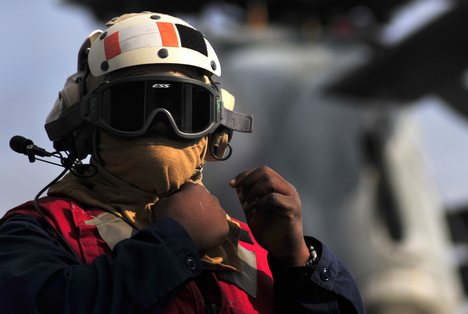
When I prepare for a bike ride in the city, I remind myself of a medieval knight preparing for battle.

  • Batteries charged? Check
  • All six lights working? Check
  • High visibility vest? Check
  • Reflective stripes on jacket and pants? Check
  • Protective goggles? Check
  • And of course … helmet securely bucked? Check

In fact, it takes me almost as long to prepare for my commute, as it takes me to actually commute.

I have taken this for granted for a long time. It’s just the way things are for urban bicycle commuters. Just like knights had to defend themselves from men on horses with pointy sticks, we have to protect ourselves from hurtling 5 ton vehicles driven by people who may be distracted by coffee, cell phones, breakfast, or all of the above. Or who may just be speeding madly in order to blow off some excess testosterone (much like the knights).

Recently I have started to question all this. If I prepare for cycling like a knight preparing for mortal combat, what kind of message am I sending? Obviously, I am sending the message that urban cycling is a very dangerous, life-threatening activity – an extreme sport, like solo rock climbing without ropes.

And if I am sending such a message, what does that mean? Well, for one thing, it means that other people aren’t likely to follow my example. After all, it’s tough enough having to go to work every day, without having to risk your life to get there.

I mean, if getting to work involved climbing bare-handed up a cliff (and coming back down the same way at the end of the day), I’m pretty sure most people would opt for welfare.

Sending this kind of message is contrary to my mission of encouraging average people to embrace cycling as a viable means of urban transportation.

On the other hand, cycling in dark clothing without a helmet on the dangerous “cycling routes” of Burnaby is contrary to my mission of staying alive.

It was in this context that I found Mikael Colville-Andersen’s argument against wearing helmets while cycling very interesting.

Mikael argues that modern humans live in a culture of fear – now that we don’t have to worry about being killed by bears at any moment, we spend our energies worrying that we will get sick and die from touching the door handles in public washrooms. Because of this, we have developed what he calls an almost pornographic obsession with safety equipment. And as with all things in modern society it all leads back to big business. As he says, “Fear is lucrative. Fear is big business.” If businesses can get people to be afraid, then we will scurry off in our thousands to stores where we can buy things that we think will protect us from the perceived danger. (Imagine how many millions of dollars are currently being spent on the smelly bottles of hand sanitizers that have suddenly become ubiquitous.)

For example, there’s a company called Thudguard that wants parents to buy infant safety headgear so that children don’t hurt themselves in the course of their normal activities (such as crawling, playing or learning to walk).

Thudguard infant helmets are marketed as devices to protect the delicate brains of crawling and toddling children. Makes you wonder how the human race has survived this far…

Yes, really. I’m not making it up. Google it if you don’t believe me.

Having raised three children, I am 100% certain that infant helmets are an insane idea (and as an ex-philosophy student, I am very seldom 100% certain about anything, so this is saying a lot). Kids fall and hurt themselves, and it’s all part of the normal process of growing and learning.

On the other hand, there are things that we do that really are dangerous. For example, 1.2 million people a year are killed driving their cars. However, we don’t acknowledge that driving cars is dangerous, and so it doesn’t even cross our minds to dress in safety gear to drive our cars. Even though motorist helmets have been invented.
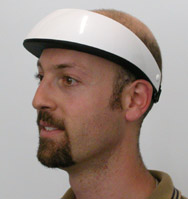
Motoring Headband – its promoters claim it will protect you against most of the damaging and fatal impacts associated with car crashes. And of course, as it’s in a neutral colour, it goes with anything.

However, as Mikael points out, motorist helmets are not promoted (let alone mandated by legislation). For example, they are not given out free with cars. That’s scarcely surprising – giving out these head bands would mean acknowledging that driving cars is extremely dangerous, and that would undermine the enormously successful job car manufacturers have done of convincing people that driving cars is a safe activity. Even though, based on the stats, driving a car is an incredibly dangerous activity.

In fact, if I was sensible, I would prepare for one of my rare car-driving-forays just as carefully as I do for a bike ride.

  • All lights working? Check
  • Bumpers in good shape? Check
  • Neck brace on to protect against whiplash in the event of being rear-ended? Check
  • Knee guards on to protect against broken knee caps in the event of a head-on collision? Check
  • Bullet proof vest on to protect against having chest crushed in the event of most kinds of high-impact accidents? Check
  • Car painted in a bright colour (preferably very bright yellow) with reflective stripes? Check
  • And of course … motorist helmet securely bucked? Check

The point is that car manufacturers don’t promote helmets because they don’t want to put people off buying cars by portraying driving as a dangerous activity. And they’re right to be afraid – the stats show unequivocally that the emphasis on bike helmets does in fact put people off cycling.

The more we promote helmets, the less people cycle.

Thus, the main problem with promoting bike helmets is that people stop cycling. Especially if you legislate it. So people are being scared away from a life-sustaining, environmentally friendly mode of transport. To make things worse, as Mikael points out, the research on whether helmets help in accidents is ambivalent. And, if you are scared off cycling by the emphasis on helmets, you may be setting yourself up for lifestyle diseases such as diabetes, heart disease and stroke.

On the other hand, there is a vast body of anecdotal evidence on the protective effects of helmets in bike accidents – see for example some of the more impassioned comments on this video.

Bottom line for me: I agree that by dressing up as if I am quaking in fear of imminent death at any second, I increase the perception that cycling is an extreme sport in which participants might die at any moment – and thus I risk scaring other people away from cycling. However, until such time as I can cycle to most places on separated bike lanes, I am going to keep preparing for cycling like a knight setting out for dangerous battle fields where heavily armed enemies will do their level best to kill him. Because even though most motorists emphatically do not want to kill me, the reality is that they could, very easily, kill me accidentally (much like we sometimes step on ants while walking, even though we really have no intent to kill ants). And if the time ever comes that I am hit by a car and go flying through the air and hit the sidewalk head first, I would very much like my helmet to take the brunt of it, not my comparatively very vulnerable head.

See what you think: https://video.tedxcopenhagen.dk/video/911034/mikael-colville-andersen-why. Not only an interesting video to watch, but a fascinating debate to read in the comments. This is not an easy issue – check it out and make up your own mind. I’d love to hear your opinions!

Continue reading “Is Urban Cycling an Extreme Sport?”

Bicycles on St Mary’s Campus

UPDATE 5PM:  He sent out another email clarifying, he wants all bikes removed by winter break so that they can get rid of the broken/abandoned bikes.  Awesome!

Santiago just sent out an email regarding bicycles on Campus which I will repost below

I hope that this e-mail finds you well and winding down the semester. As you prepare for Finals, I want to make a quick announcement about bicycles. I am currently working on creating more bicycle storage (racks, etc.) on various places on campus and in an effort to do that I would like to make a request of you. If you have a bicycle on campus and it is secured to something other than a bike rack (i.e. a bench, a tree, a fence, a log, etc.), please remove it and either secure it to an outdoor bike rack or the bike rooms provided in your residence halls. Any bikes that are left elsewhere will be considered abandoned and removed from where they are. I thank you for your assistance and attention in this matter, and look forward to some bicycle safety programs during the Spring semester.

Fuck that.  There are no where near enough bicycle racks, they would need to triple the number of racks, and there aren’t enough areas to place them that are aesthetically pleasing.  Have you ever seen the campus center/library at night?  There are dozens of them everywhere!  The bike rooms in residence halls are always full of bikes that no one ever uses, and the racks outside are also generally full.

I feel like this is something that was initiated without any input from the campus community (and if there was then he failed to mention it).  Additionally, people can’t use the designated bike areas if there is not enough room, so I feel like they should implement these new bike storage areas first before making a request like this.

Lastly, I think a bigger issue is bikes that are left on campus and never use, or that are locked up and broken.
Continue reading “Bicycles on St Mary’s Campus”

Chestertown bicyclist killed on Route 213

CHESTERTOWN — A Chestertown man died Thursday after being struck by three cars on Augustine Herman Highway, according to police.
Maryland State Police said 49-year-old Randy Thomas Littleton was riding his bicycle along the highway near Round Top Road when he turned directly into the path of a 2010 Subaru Forester driven by 58-year-old Barbara Siaman Efland of Church Hill.
*****************************************************************************************************************************************
[B’ Spokes: This sounds highly suspicious to me. Route 213 is straight, flat and has nice wide shoulders and at the T intersection of Round Top Rd there is a left turn run around lane, not exactly the most bike friendly design there is. So is the cyclists being punished simply for the "need" for cars to go straight and fast? Maybe the motorists had a hard time understanding why a cyclist would leave this nice wide shoulder and have the audacity to make a left turn like a car and failed to exercise due care. Maybe the driver was distracted? These are all speculations but I thought our 3′ safe passing law was to help guard against the excuse "but the cyclist swerved" did the police fail to examine this point due to the poor summaries issued by the State? I have lots of questions about this tragedy and by the State Police past record, I am doubtful we will see justice here.]
Continue reading “Chestertown bicyclist killed on Route 213”

Penny Troutner has an idea for Biking in B’more

via https://www.meetup.com/Biking-in-Bmore/

“Mountain biking..”

image
Let’s plan to bike all of MORE’s trails in 2011 and earn the coveted TRAIL RAT award.,,or, something like that.

Ride every trail in the MORE inventory, all 27 of them, between January 1 and December 31 of 2011 and earn the wonder and admiration of your peers. Here’s how it works: for each trail, take one picture at the trailhead AND another at a distinctive spot out on the trails. You just might earn the coveted title of “Trail Rat 2011” – Details on the link!

Animals Are Becoming Obese Like Us, Says Study

from TreeHugger

fat cat measured photo Photo: Yukari* / CC

Obesity rates among people worldwide have soared over the last several decades — but it turns out that humans aren’t the only ones packing on the pounds. According to a recent study from the University of Alabama, many animals that spend time living around humans are evidently more prone to becoming overweight, and researchers aren’t entirely sure why.

David Allison, who studies obesity at the UA Birmingham, discovered an inexplicable trend of weight gain in small primates kept in the the university’s laboratory. In hopes of learning more about the phenomenon, Allison compared his findings with 24 other data samples collected for animals ranging from domesticated dogs and cats to feral rats and chimpanzees used for research — and what it pointed to was quite troubling. Animals are getting fatter, just like we are.

There was no single thread running through all 24 data sets that would explain a gain in weight. The animals in some of the data sets might have had access to richer food, but that was not the case in all data sets. Some of the animals might have become less active, but others would have remained at normal activity levels. Yet, they all showed overall weight gain.

The skyrocketing rates of obesity among humans over the last several decades has been attributed to unhealthy diets and increasingly sedentary lifestyles — but, to Allison’s surprise, those factors don’t appear to be responsible for the animals in the study getting pudgier. In fact, at least for the lab’s primates, they should be getting thinner.

“We can’t explain the changes in [the animals] body weight by the fact that they eat out at restaurants more often or the fact that they get less physical education in schools,” the researcher quipped in an interview with LiveScience. “There can be other factors beyond what we obviously reach for.”

In the absence of any obvious reason why animals are getting fatter, some researchers are beginning to suspect the culprit may be a bit more surreptitious. Chemical additives and genetically modified food sources have been linked to childhood obesity — and a similar process seems to be taking place within animals.

Unfortunately, this disturbing trend could mean that the overall health of the animals around us is in decline, which might have broader-reaching implications not yet fully understood. But there is one bright spot — while it may become harder to get your chubby pooch to play fetch, teaching him to roll over and stay will probably be a bit easier.

Via Natural News

Continue reading “Animals Are Becoming Obese Like Us, Says Study”

Bike Lanes Make Streets Safer for Pedestrians

[B’ Spokes: Hmmm, Maryland does has a really high pedestrian fatality rate.]


from planetizen

A new study from the New York City Department of Transportation shows that streets with painted bike lanes are 40% less dangerous for pedestrians, among other findings.

A rundown from the Tri-State Transportation Campaign hits some of the highlights.

“Several of the study’s findings echo conclusions drawn by the Campaign’s recent reports. In particular, DOT’s analysis shows that 60 percent of pedestrian fatalities occur on wide “arterials,” though they make up only 15 percent of the road network — a key finding of our Dangerous Roads report. And, as with our Older Pedestrians at Risk report, the DOT notes that seniors are disproportionately represented among NYC pedestrian fatalities.”

Source:
Tri-State Transportation Campaign, August 30, 2010

Continue reading “Bike Lanes Make Streets Safer for Pedestrians”

Mayor’s Bicycle Task Force (response to police charges against Yates)

Per City Council Resolution, Nate Evans
and the Mayor’s Bicycle Task Force will be working with the Police Commissioner
to educate/train officers in bicycle rights, including the right to be
respected as legitimate travelers of our roadways.

 Mary Pat Clarke

14th District,
Baltimore
City Council

550 City Hall

100 North Holliday Street

Baltimore ,
Maryland
21202

410-396-4814 (o)

410-545-7585 fax

marypat.clarke@baltimorecity.gov


B’ Spokes response:

While I really do appreciate long term solutions we do have a rather immediate problem, since this case was settled out of court, the misapplication of the law by police was not corrected, and as such we need to advise city bicyclists:

In light of the Yates case, bicyclists in Baltimore City should know that riding on the right side of the street may be deemed by the police to be unlawful where there are parked cars in the right lane.

 
The City really needs to provide this guidance to cyclists since it is not found anywhere else. (See: https://www.mva.maryland.gov/Driver-Safety/Bicycle/default.htm which is the latest summery from MHSO and note the lack
of can’t split lanes and passing in the same lane.)

I will also assert that many of the sharrow applications encourage bicyclists to “unlawfully” split lanes, thus opening up the city to potential law suites should the police continue in enforcing motorcycle laws on bicyclists (and I will note that these motorcycles laws are in part to prevent motorcyclists from driving like bicyclists and not to prevent bicyclists from riding like bicyclists.)

Or the City can fix the problem at the source, which is my recommendation.

BaltimoreSpokes.org

Continue reading “Mayor’s Bicycle Task Force (response to police charges against Yates)”

Cyclists Faster Than Cars During Rush Hour


They looked at 11.6 million bicycle trips in Lyon between May 2005 and December 2007. The result is the first robust characterisation of urban bikers’ behaviour, they say.
Some of what they found is unsurprising. Over an average trip, cyclists travel 2.49 km in 14.7 minutes so their average speed is about 10 km/h. That compares well with the average car speed in inner cities across Europe.
During the rush hour, however, the average speed rises to almost 15 km/h, a speed which outstrips the average car speed. And that’s not including the time it takes to find a place to park which is much easier for a Velo’v bike than a car.

Continue reading “Cyclists Faster Than Cars During Rush Hour”