
from How We Drive, the Blog of Tom Vanderbilt’s Traffic by Tom Vanderbilt
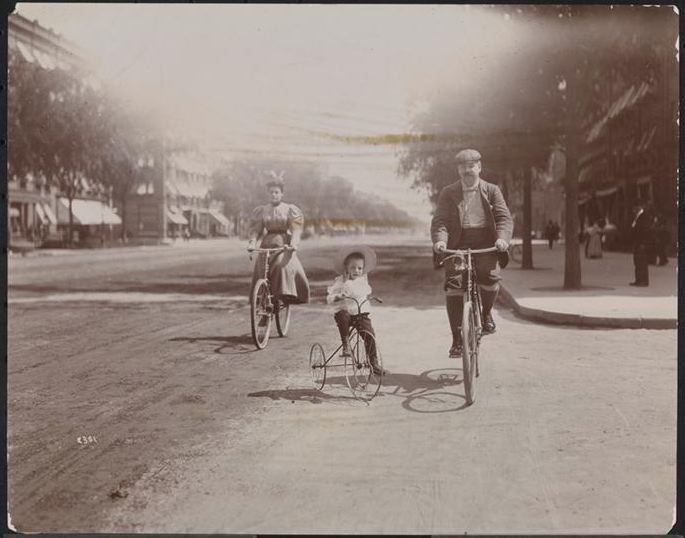
Continue reading “Gotham Cycle Chic, Circa 1896”
We are not the only ones with problems with the House Judiciary Committee
Ignition Interlock in Maryland
from Maryland Injury Lawyer Blog
In March, I wrote a post about failed efforts in Maryland to require DWI offenders to install an ignition interlock system in their vehicles. Specifically, the bill before the legislature this year would have required people convicted of alcohol related offenses to only drive cars equipped with an ignition interlock system for some period of time. Simple premise: cars can’t start if you are not sober. My first thought is who would be opposed to this. It just makes too much sense.
Reading the Maryland State Bar Association Legislative Preview today, I found out something interesting I didn’t know: this bill passed the Maryland Senate 44-0 before getting stalled in the house judiciary committee. Okay, so not one person in the Maryland Senate thinks it is a bad idea but we can’t even get it to a vote in the House of Delegates?
I think the people of Maryland would be very depressed to see how the sausage is made.
This comment to my last blog post on this should be required reading for the Maryland House of Delegates Judiciary Committee:
>>> Our son died as a passenger in an alcohol related car accident in 2002. Since then we have been trying to get a law passed for Ignition Interlock Devices in every car. State Assemblyman Felix Ortiz has been working with us and there is a bill in the NYS assembly which we are hoping will become a law some day. My husband and I also hoped that the law would be named Christopher’s Law, similar to Megan’s Law and our son would have died for something. We always believed that the technology could advance to more than blowing into a device but rather detecting blood alcohol levels through the skin; for example through a steering wheel. This shouldn’t be too difficult; the technology is already there with bracelets that detect blood alcohol levels through the skin. More information about this can be found at our blog and our website.
Continue reading “We are not the only ones with problems with the House Judiciary Committee”
Build more highways, get more traffic
By Randy Salzman
Although a Daily Progress editorial thinks otherwise, data from around the country is clear: When you build additional highways, you quickly create more traffic congestion.
Every highway project has different effects, but overall the data illustrates that more lanes of highway induce more people to drive more times and more places, until not only is any new roadway oversubscribed but the roadways it was intended to relieve are again backed up. A 1998 Surface Transportation Policy Project titled “If you Built it, They Will Come: Why We Can’t Build Ourselves Out of Congestion” found that 90 percent of new urban roadways in America are overwhelmed within five years.
A different analysis of 70 urban areas across 15 years concluded:
“Metro areas that invested heavily in road capacity expansion fared no better in easing congestion than metro areas that did not. Trends in congestion show that areas that exhibited greater growth in lane capacity spent roughly $22 billion more on road construction than those that didn’t, yet ended up with slightly higher congestion costs per person, wasted fuel, and travel delay… . On average the cost to relieve the congestion reported by TTI [Texas Transportation Institute] just by building roads could be thousands of dollars per family per year.
…
Unfortunately for those of us who want our tax dollars spent wisely, as both a nation and a community we’re invested in out-dated, short-term thinking. Media rarely understand or report the whole story of the American “love affair with the automobile.”
But even without the full story, all of us need to understand this: It is not population growth that creates congestion, it is new driving — which grows at an annual rate at least twice population, regardless of where the rate is measured. Since 1970, U.S. vehicle miles traveled have increased 121 percent — four times population growth.
If you think this is a chicken-and-egg problem, consider: “A 2000 study of 26 years of transportation data determined that one-third of all new road capacity in the Baltimore/Washington area has been used up by new travel that wouldn’t have occurred without highway expansion,” a 2002 report noted. “Between 64 percent and 94 percent of properties in nine Maryland highway corridors were developed after the completion of the highway — a clear demonstration of how highway construction can alter land-use patterns.”
In 2004, a study of the entire Mid-Atlantic region found “changes in lane-miles precede changes in travel” and a meta-analysis of dozens of studies found that, on average, a 10 percent increase in lane miles induces an immediate 4 percent increase in vehicle miles traveled, which climbs to 10 percent — the entire new capacity — in a few years.
Please note that these studies are all past tense. In future tense, construction advocates apply today’s driving rates to a simplistic formula and claim that “X minutes of savings per driver” will accrue due to the new highway. Although politicians and transportation boards rarely compare figures after expensive construction projects are complete, those projected time savings never exist in any post-construction analysis.
…
Continue reading “Build more highways, get more traffic”
Lax on speeding
from Getting There by Michael Dresser
In June 2009, the Getting There column recounted the story of lead-foot lobbyist Bruce C. Bereano, who had amassed a startling number of traffic tickets during his driving career.
At the time, the colorful Bereano had been ticketed 22 times in the state since 1996 — though the disbarred attorney won not-guilty verdicts in about one-third of those cases.
…
The tickets follow an April 30 citation in Queen Anne’s County for going 70 mph in a 50-mph zone. Though Bereano frequently contests speeding tickets, in this case he pleaded guilty and the judge knocked the convicted speed down to 59 and let him off with a fine and court costs amounting to $60. Had he paid by mail, the fine would have been $160.
It’s puzzling why any judge would give a break to Bereano at that time because he had a guilty finding on another speeding ticket in June 2009 and a probation before judgment on another ticket the previous month.
…
On one hand, it’s pretty funny how this guy keeps getting off or getting slaps on the wrist despite a record of speeding convictions. But all it would take is one crash in which someone is hurt, and the humor would quickly go away.
…
Continue reading “Lax on speeding”
Value of Femur Fractures
from Maryland Injury Lawyer Blog
In the past, I have written on the value of fractured and broken legs. Now, in a relentless, unyielding effort to cover the settlement and trial value of every single bone in the human anatomy, let’s thin slice broken legs a little thinner: femur fractures in Maryland, the District of Columbia, and Virginia.
This month’s Metro Verdicts Monthly graph on the front of their publication compares verdict and settlement amounts for femur fractures in Washington, D.C., Maryland and Virginia. Since 1987 the median verdict or settlement amount of a femur fracture case in the District of Columbia has been $250,000.00, and in Virginia it has been $200,000.00. However, the median verdict or settlement in a femur fracture case in Maryland has been $75,000.00. The national average is $167,000.
Why are Maryland femur fracture cases valued at roughly 35% of the value of a femur fracture case in D.C. or Virginia?
…
Continue reading “Value of Femur Fractures”
Bicyclist killed in crash with deputy’s car
By: Kelsey Volkmann – Examiner Staff Writer
A Carroll County sheriff?s deputy struck and killed a bicyclist with his patrol car Tuesday night in Westminster, bringing the total number of bicycle-related fatalities in Maryland to five this year.
Cpl. Carlos Bustos, a five-year veteran of the Carroll County Sheriff?s Office, was patrolling eastbound on Route 140, east of the Route 27 overpass, when his patrol car collided with a bicyclist who was crossing a dark section of Route 140 from the TownMall of Westminster, said Lt. Phil Kasten, spokesman for the Carroll County Sheriff?s Office.
Westminster Fire Department paramedics pronounced the bicyclist, Mario Garcia Salgado, 25, of Westminster, dead on the scene.
Bustos was transported to Carroll Hospital Center, where he was treated for cuts to his left arm and hand. He is now on administrative leave while investigators piece together an accident reconstruction, which could take several weeks.
Several streetlights in that area were not working, Kasten said, and that may have led to the fatal wreck. Salgado was not wearing a helmet; Maryland law requires bicyclists under the age of 16 to wear a helmet.
Capt. Randy Barnes, Westminster police spokesman, said he did not know whether Salgado?s bike had reflective gear or a light, which are required for night riding. Failure to comply can result in a $40 fine, said 1st Sgt. Russ Newell, state police spokesman.
Maryland State Police said this incident is the second fatal bicycle-related wreck in Carroll County so far this year. Jennifer Michele Clayton, 38, of Westminster, died last month after being struck by a car in New Windsor, according to state police.
BY THE NUMBERS
Number of bicycle-related fatalities in Maryland:
» 1999: 6
» 2000: 6
» 2001: 13
» 2002: 7
» 2003: 6
» 2004: 12
» 2005: 7
» 2006: 5
Source: State Highway Administration
B’ Spokes: Additionally per FARS https://www-fars.nhtsa.dot.gov/People/PeoplePedalcyclists.aspx
2007: 7
2008: 6
2009: 11
Related: 2009 Bike/ped fatalities by county https://www.baltimorespokes.org/article.php?story=20101101220408408
Continue reading “Bicyclist killed in crash with deputy’s car”
Safe Routes to School Network Organizer for 1000 Friends of Maryland
Location: Maryland
Salary: Contract, 20-hours/week, $20-$28/hr
Schedule: Closing Date: Wednesday, January 5, 2001, 5:00 p.m. EST
Description:
Background: Safe Routes to School (SRTS) is a federal program designed to make it safe, easy and convenient for children in grades K-8 to walk and bicycle to schools. The federal government passed SRTS legislation in 2005, making funding available for infrastructure improvements (sidewalk, bike lanes, pathways, street crossings, etc) and for educational programs throughout the state of Maryland.
This funding provides a critical opportunity to bring together organizations and leaders within Maryland to ensure the best use of the funds, and to initiate policy changes which improve opportunities for children to walk and bicycle to schools, increasing their levels of physical activity and safety. The Safe Routes to School National Partnership is hosted by the non-profit Bikes Belong Foundation, and is a network of more than 500 organizations. Its mission is to serve a diverse national community of organizations that advocates for and promotes the practice of safe bicycling and walking to and from schools throughout the United States.
Contract Description: Provide support and technical assistance to the Safe Routes to School Maryland Network for 2011. The Organizer will influence policies at the state-level to benefit walking and bicycling for children and families, especially lower-income communities most vulnerable to childhood obesity. The State Organizer will work 20 hours/week on statewide issues, following a Scope of Work and program direction by the SRTS National Partnership’s State Network Manager.
Continue reading “Safe Routes to School Network Organizer for 1000 Friends of Maryland”
CWL 2010 #4 Pricing Driving
from TheWashCycle by washcycle
I’ve been dreading writing this one because I fear it will be viewed as some sort of “War on Drivers” kind of thing. I’m frequently a driver these days, so I certainly don’t want to declare war on myself. But, to be frank, if we’re going to get more cyclists we’re going to have to have fewer of something else (or more total trips – it is true that bike sharing systems create trips where people would have just stayed at home, but that is really a niche). The best place, from a social cost standpoint to get cyclists from is the current pool of drivers. One way to do that, without it being some sort of “war on drivers,” is to properly price the cost of driving, which would encourage some fence sitters to save money by biking, walking, taking metro, etc…There are several ways we subsidize driving that could be addressed.
The gas tax: The federal gas tax has been stuck at 18.4 cents per gallon since 1993. With inflation that means we’ve been cutting the tax every year. The Federal Highway Trust Fund, which gets ~2/3rds of its revenue from the gas tax, has recently been running at a deficit, and our roads have billions of dollars of deferred maintenance. Just indexing the current tax to inflation would go a long way toward solving the problem, but if we want the gas tax to continue to fill the gap in the FHTF, it will probably need to be increased. On the one hand, 81% of people say they’d pay more taxes to repair and upgrade our infrastructure, but almost the same percentage said they’d oppose an increase to the gas tax. So that’s a mixed message.
Furthermore, you could make a case that the tax should be increased to cover the environmental costs of mining, shipping, refining and burning gasoline. Some have even argued that the gas tax is a fair way to pay for the Iraq war. An analysis done in 1998 showed that to capture the full cost of gasoline, the tax would need to be raised by several dollars per gallon. That is probably too extreme for most people.
Personally I’d like to see us move to a Vehicle Miles Traveled (VMT) tax to cover the costs of roads and infrastructure, with a multiplier for car weight; and a gas tax to cover some clean air, clean water and alternative fuel initiatives. But that is probably not going to happen.
…
The Motorist’s Identity Crisis
Author: Brian Ladd
Bicyclists and transit riders are losers – right? Or are they elitist, sneering yuppies? Brian Ladd says that people’s attitudes and transportation choices are shaped by deep-seated feelings about respectability, and it planners should pay attention.
Non-motorists often wonder why drivers seem so oblivious to their needs and even their safety. Todd Litman’s recent Planetizen post on “The Selfish Automobile” argues persuasively that motorists’ sense of entitlement has grown out of plans and hidden subsidies that stack the deck in their favor, while appearing to do the opposite. Automobile dependence, as he describes it, has structural causes and psychological effects. Attitudes, though, can carry their own power. Auto-centered planning and auto-centered lives have made it hard for American motorists even to imagine alternative transportation. The idea of getting around without a car has been just too frighteningly gauche to contemplate. But that may be changing.
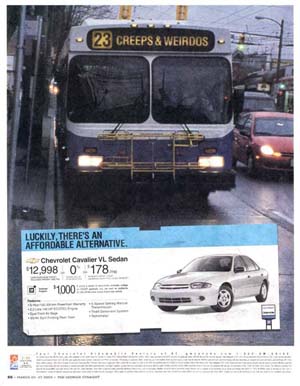 Most Americans know one thing about the bicyclists they see on the roads: they are losers, and you thank God you’re not one of them. Who, after all, rides bikes (at least for transportation, not recreation) in the United States? Mostly kids who aren’t old enough to drive—and not even so many of them anymore. Adult cyclists are seen as people too poor to own a car, or too dysfunctional to have a license: grizzled misfits and dark-skinned immigrants you see wobbling along the side of your suburban highway as you zoom past their elbows. Hollywood, as Tom Vanderbilt has shown in a recent Slate article, powerfully reinforces this contempt for the carless.
The reality of biking and bikers is, of course, more complicated. But even the fantasy is more complicated. In American cities with newly thriving bike cultures, cyclists have acquired an entirely different image: as arrogant yuppies. Just look at the letters column or the comments thread any time a daily newspaper publishes a story about bike lanes or shared streets. One motorist after another rages against the privileged spandex crowd that interferes with ordinary working stiffs trying to drive to work: They should be banned from the roads! The police need to crack down on them! Why do we have to get licenses and pay taxes, while they don’t? Life is so unfair for us motorists! The venom is often shocking, but the sentiments are heartfelt–even if a cyclist, just home from her daily brush with death, can only shake her head in disbelief.
But wait: weren’t motorists the superior ones? Who’s sneering at whom here? Could it be that motorists are sitting a little uneasily in their driver’s seats? It’s harder to dismiss cyclists as beneath contempt when you suspect that they might just be contemptuous of you. What’s a poor motorist to think? They’ve always known that bicyclists are scum, but now they aren’t quite sure why.
The same confusion applies to transit users. Here the dichotomy is older and clearer: buses versus trains. On the one hand, you have the image of the typical bus rider (outside of Manhattan and perhaps a few other exclusive locales): the definitive loser. According to a saying that circulates in England, and is often falsely attributed to Margaret Thatcher, a man who has reached the age of thirty and still rides the bus can count himself a failure in life. American bus riders, probably even more than their British counterparts, are painfully aware of what passing motorists think of them. After all, they learned it in high school, where the world divides between kids with cars and those condemned to ride to school in the yellow “loser cruiser.”
When a Los Angeles bus rider asked presidential candidate George W. Bush about transit improvements in 2000, Bush responded, “My hope is that you will be able to find good enough work so you’ll be able to afford a car.” Bush was undoubtedly sincere. Like many Americans—probably most—he saw a bus (like a bicycle) as a nothing more than a pathetic substitute for a car.
On the other hand, the commuter train has survived the entire auto age in several of our older cities, and its clientele has held onto its moderately exclusive image. In the long-vanished age of the “family car”—that is, when there was only one per family—the suburban housewife dropped off her suit-clad husband at the rail station, so she could have the station wagon (that’s where the name comes from) for the day. Most suburban commuter lines still do, in fact, serve a fairly upscale clientele: just look at the parking lots. Meanwhile, many U.S. cities without these legacy systems are building new light-rail lines, which are clearly angling for prosperous riders who either own cars or could afford them. Even where these lines are not claiming street space from cars, they are competing for scarce transportation dollars that could be used to build roads. Understandably, some motorists are suspicious of—or simply bewildered by–what appear to be efforts to make mass transit fashionable.
It is easy for number-crunching economists and planners to ignore the power of fashion, but we do so at our peril. People’s attitudes and transportation choices are shaped by deep-seated feelings about respectability. This is not to suggest that the practical advantages of cars (whether dependent on subsidies or not) don’t matter. They have made it easy for American motorists to avoid contemplating their transportation choices. If at all possible, you drive. Anything else seems inconvenient, uncomfortable–and certainly embarrassing. So the average driver, like the apocryphal Margaret Thatcher and the real George W. Bush, finds bicyclists and bus riders either pitiful or incomprehensible–and politicians cannot resist demonizing bike-friendly policies.
But if cyclists and transit users no longer seem to envy motorists, then motorists might be facing a crisis of confidence. In the short run, their insecurity may harden attitudes, as anxious drivers cling to their steering wheels and rage against the trendsetters. But change may be coming. If teenagers’ desire to drive continues to weaken, if Hollywood begins to give bikes and buses a trendy aura, we will know that the tides of fashion are changing. If cars cease to be the essential token of respectability—if you can be cool without one—then the automakers may be in deeper trouble than they think.
For a long time to come, cars will remain the most practical choice for many people. But motorists’ anger and defensiveness may itself be evidence of a cultural revolution in the making.
Brian Ladd is an urban historian and author of the book Autophobia: Love and Hate in the Automotive Age
A conversation with a traffic engineer [video]
found via Greater Greater Washington
[B’ Spokes: Like GGW I too had conversations like this. It’s rather scary to realize when a traffic engineer wants to “improve safety” they mean first induce faster driving then make it safer for the speeding motorists and less safe for everyone else.]