MoCo councilmember says not all pedestrian traffic deaths are ‘avoidable’

By Dave Jamieson

The Montgomery County Council just held a transportation subcommittee hearing dealing with pedestrian safety on the county’s roads, where 14 peds were killed last year. When it came to the prospect of slowing auto traffic for the benefit of people on foot, at-large Democratic councilmembers Nancy Floreen and Marc Elrich had very different takes on the subject.

Here’s Ms. Floreen, who lists traffic safety as one of her top priorities:

I’m sorry to be such a downer, but I don’t think we’re doing that great a job. I don’t think there should be any pedestrian deaths. We’re allowing [auto] mobility and speed to dominate the pedestrian existence, as long as we have community design issues that encourage speed… If someone can expect a smooth [and fast] trip to their destination, they’re going to expect it and they’re not going to look out for the pedestrian. We should give greater thought to our design standards. Who’s winning the speed battle? Shouldn’t we do all we can to allow the pedestrians more respect than our systems currently allow?

And here’s her foil, Mr. Elrich:

I don’t agree with Ms. Floreen that all pedestrian fatalities are avoidable. If you try to walk in front of moving cars at 25 miles per hour, [you might get killed]. If people think they can do anything they want do whenever they want, and that a driver can swerve and avoid them, that’s not a reality. People will die as long as they do stupid stuff. You can’t make this world so safe that no one can be harmed. The cost of doing that would be extraordinary.

Continue reading “MoCo councilmember says not all pedestrian traffic deaths are ‘avoidable’”

Cyclist’s Lives Valued at $2,500?

[B’ Spokes: Note that in Maryland the fine for negligent driving is less then $500.]


by JoeAverage

The Manitoba courts apparently value a cyclist’s life at $2,500 – judging by a fine they recently handed down to a man who killed two cyclists.

Motorist Ian Gibbons of Brandon struck and killed two cyclists two years ago. The victims, Robert Joseph Carrier from BC and Daniel Hurtubise from Quebec, were attempting to raise money for diabetes research by cycling across Canada. Thanks to Gibbons, they never made it.

Gibbons was likely driving dangerously, as he was originally charged with dangerous driving causing death. However, the courts could not prove this, and Gibbons was able to plead to careless driving – which bought him the outrageously inadequate sanction of a $5,000 fine and loss of his driver’s licence for three years. This is scarcely a wrist slap for slaughtering two stand-up guys who were out there trying to help others.

Oh, and it took the Manitoba courts a year to get around to charging the motorist. Apparently they had more important things to do than worry about two dead cyclists…

Yes, I’m angry. No, actually, I’m furious. How will motorists ever learn to respect the lives of cyclists when the courts send such clear messages that cyclists’ lives are worth close to nothing? (By the way, I think most motorists do respect our lives; it is the moronic, hate-filled minority of cyclophobes I am referring to. The ones who find it funny to buzz us and honk at us, and those who simply fail to see us because they are driving carelessly or dangerously.)

Nancy Pettigrew killed by Motorist in Giant SUV

I wonder how seriously the US courts will take the death of 30-year-old Green Party Senate Candidate Natasha Pettigrew, killed while riding her bike in Maryland by a woman wielding an SUV? The driver in her giant Cadillac Escalade was so oblivious of the trifling existence of cyclists that she did not even bother to stop, and travelled home with Pettigrew’s bike lodged under her car. Am I the only person who sees something wrong with this picture?
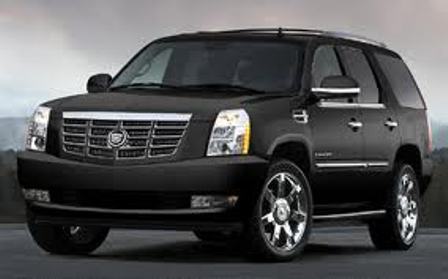
IMHO, no one needs a car this big! No one needs a car so big that it can kill a woman and the driver doesn’t even notice!

Actually, I’ll go further and say, no one needs a car, period. If this apparently short-sighted driver in Maryland had been on a bike herself, the worst that could have happened is a few bruises for both women! But no, she had to be not only in a car, but in a car so big that she could kill a woman and not even notice!

Once again, a fine, upstanding human being mown down by a dangerous or grossly careless motorist.

But … We can’t LIVE without our Cars!

I know that most motorists will tell you, with completely straight faces, that they not only need their cars, but actually they could not live without their cars! I do not know where this pervasive myth has sprung from. But it accounts for the bizarre fact that we choose to ignore the carnage that cars inflict on us.

And it’s not just cyclists, but also pedestrians who are mown down. And while cyclists and pedestrians are visibly more vulnerable to death-by-car, motorists are terrifyingly vulnerable as well; they too die like flies. Every year, around 3,000 Canadians die while driving their cars. Compare that to 152 Canadian soldiers who have died in the whole eight years we have been in the Afghanistan war zone.

But we as a society have decided to ignore death-by-car, choosing to see it as the inevitable price we pay for the cars we believe we cannot live without.

This even though we managed just fine without cars for 99.8% of our existence as humans.

(Homo sapiens has been around for at least 50,000 years, while Henry Ford only started production in 1914 – I did the math!)

I know that giving up cars isn’t easy. If it was easy, I would have done it a long time ago! We have grown fat and lazy and insanely impatient, and so we are dependent on our cars. Still, I do think it is possible for most people, perhaps beginning with baby steps … such as biking to work one day a week.

Tell me what you think. Is it possible for us to get over our car addiction?

Continue reading “Cyclist’s Lives Valued at $2,500?”

Some great news from the MTA

GUARANTEED RIDE HOME PROGRAM GIVES YOU A

LIFT HOME WHEN YOU NEED IT


A personal illness, family
emergency or unscheduled overtime can happen without warning while you’re
at work. The Greater Baltimore/Washington Region Guaranteed Ride Home Program
provides a free ride home for registered commuters who ride in a carpool or
vanpool, take transit, bike or walk to work at least twice a week.


In the event of an
unexpected emergency or unscheduled overtime, Guaranteed Ride Home will arrange
for a free taxi ride, a free transit ride, or even a free rental car up to four
times each year to get you home.


The program is free.
The rides home are free. Sign-up is easy. Call 800-745-RIDE (7433) for
information or sign-up at
www.commuterconnections.org.

Who’s in charge of funding for bike/ped projects?

I’ve reported previously how Maryland spends the lowest percentage of Transportation Enhancement (TE) funds on bike/ped projects. Maryland has the highest local match requirement in the nation while $20 million of TE sits unobligated in the bank (update 2010 figures are in and $31M is available less our $6M obligated. We are only planning to spend 20% of the money available in an election year?) Maryland has a ridiculously low maximum project cost for the Recreational Trail Program (RTP), Baltimore Metro has spent NO Congestion Management and Air Quality (CMAQ) funds on bike/ped projects, while other major cities have made use of these funds for bike/ped projects. Recently I reported how Maryland is below the national average on spending Highway Safety Improvement Program (HSIP) funds.
Basically every Federal program that is used to support cycling is grossly underutilized in Maryland.
I don’t know about you but it sounds to me like we have a problem.
So I ran across this in State Law:
§ 2-606. Bicycle and Pedestrian Advisory Committee.
(a) Purpose.- The Governor shall appoint a Bicycle and Pedestrian Advisory Committee (MBPAC) to provide guidance to State agencies concerning:
(1) Funding of bicycle and pedestrian related programs;

(h) Meetings.- The Committee shall meet at least quarterly with at least one meeting held in Annapolis.

So lets bring this issue to MBPAC and see what they say, quoting the August MBPAC minutes:
"Jim Titus stated that Barry Childress, a local bicycle advocate, claimed that MBPAC did not fulfill all of its statutory requirements. In response Michael Jackson passed out a copy of Section 2-606 of the Transportation Volume of the Annotated Code of Maryland which lists MBPAC’s duties. Upon review of Section 2-606 none of the members other than Jim Titus expressed agreement with Mr. Childress’s statement. Marci Ross proposed that MBPAC consider cutting its meeting schedule from bi-monthly to four meetings per year. Ensuing discussion provided a consensus that this item be continued for discussion at the October meeting."
[Heavy sigh]
To bring my point home I’m going to quote Richard Layman and the research he did for the Western Baltimore County Bike Master Plan:
"State of Maryland transportation enhancement program match requirements. Of all the state participants, Maryland’s requirement for local match, 50%, is the highest. This requirement is significantly higher than all of the states bordering Maryland. West Virginia and DC have a 20% match. Virginia also has a 20% match requirement, but will fully fund projects under $200,000. Delaware requires a 2% match/$100,000 of award, while Pennsylvania does not require match, considering local expenditures on preconstruction planning to satisfy match requirements. By comparison to Maryland, the bordering states have a larger and more geographically diverse number of jurisdictions participating in their enhancement program. It may be worth evaluating Maryland’s program requirements for local jurisdiction participation in the transportation enhancement program, in order to increase the number of jurisdictions actively participating, and to bring the State’s utilization of the available funding closer to 100% of available funds, versus the roughly 80% that is actually obligated." [Note: we have averaged about 80% of appointed funds but the percentage from available funds is much, much lower.]
I’ll copy this to the chair of MBPAC and see if he would like to respond.
Continue reading “Who’s in charge of funding for bike/ped projects?”

Tom Quirk for Baltimore County Council 1st Council District

Walkable Communities

Necessary for the success of Smart Growth policies and the health and safety of our children is greater awareness of the needs of pedestrians and bicyclists.

Walkable communities mean

  • Safe streets for our children to walk to school or to the park
  • Decreased traffic congestion
  • Decreased emissions
  • Increased demand for local businesses
  • Improved public health

Tom chose to locate his office on Frederick Road just a mile from his home because he believes in walkable communities and vibrant local business corridors.

Continue reading “Tom Quirk for Baltimore County Council 1st Council District”

Citizens push commission to craft new approach to public transit

By Larry Carson, The Baltimore Sun

Getting around Howard County on a public bus has been slow since 41-year-old David Bittner was a kid. Back then, he knew that his bicycle was a faster way to get to the town’s shopping mall from Owen Brown than the old Rouse Co. Columbus system. Suburbia, after all, wasn’t designed for mass transit.

"It’s kind of a system of last resort," Bittner told the advocates group, who have been pushing for better public transit for a decade.

Bus service is important for economic development, the county’s chamber of commerce has said. "The success of our business community requires transportation options," including "improved level of transit service," according to the chamber of commerce’s legislative action issues statement for 2011.

Republican county executive candidate Trent Kittleman talked about being ready "to accommodate people who don’t drive cars" at an Oct. 13 chamber candidates forum when a transportation question was asked.

One problem, Ulman said at the forum, is "we’re left out of the mass-transit world," except for MARC train service at the county’s eastern edge. Prospects of Columbia getting service from either Washington’s Metro system or Baltimore’s light rail line are nil, officials have said, because Howard doesn’t have the volume of riders to make it worthwhile.

"We’re in this doughnut hole between the large public entities," said Paul Farragut, commission co-chairman and a former executive director of the Baltimore Metropolitan Council. Allen Cornell, a former board president of Corridor Transportation Corp., now CMRT, is the other co-chairman.

But as county roads become more congested, and with thousands of federal defense workers, contractors and now cybersecurity jobs on the way, better transit and development planning must be part of the mix, officials say.

That’s why options such as walking and cycling were important in planning for Columbia’s new downtown, and why the county has supported building homes mixed with stores and offices near the three commuter train stations in the county, he said.

Continue reading “Citizens push commission to craft new approach to public transit”

Friday, November 5th, The Cyclists’ Bill of Rights

Come one, come all! Let your voices be heard and support these bills! (or you can email, addresses at the end of the article.)

Friday, November 5, 2010

Hearing: Community Development Committee

12:00 PM Du Burns Council Chamber, 4th floor, City Hall
09-0176R The Cyclists’ Bill of Rights
09-0433 Street and Transportation Projects – Complete Streets
https://www.baltimorecitycouncil.com/legislative_calendar.htm

A COUNCIL RESOLUTION concerning
..title
The Cyclists’ Bill of Rights
FOR the purpose of reaffirming support for efforts to improve conditions for cyclists and encouraging more widespread awareness of the "Cyclists’ Bill of Rights" .
..body
Recitals
The widespread use of bicycles brings many benefits to a community. Cycling improves people’s health, increases public safety, encourages greater involvement in communities, reduces traffic congestion, improves air quality, reduces our reliance on fossil fuels, and generally is better for the environment than alternate methods of travel.

The City of Baltimore has long recognized these myriad benefits and has therefore consistently sought to encourage cycling. In these efforts, the City has been blessed with a strong and vibrant local cycling community eager to serve as a partner. Many in the cycling community throughout the nation have begun to promote a "Cyclists’ Bill of Rights" that they feel encapsulates the treatment that cyclists should be able to expect from government.

This "Cyclists’ Bill of Rights" expresses the following tenets:
1. Cyclists have the right to travel safely and free of fear.
2. Cyclists have the right to equal access to our public streets and to sufficient and significant road space.
3. Cyclists have the right to the full support of educated law enforcement.
4. Cyclists have the right to the full support of our judicial system and the right to expect that those who endanger, injure, or kill cyclists will be dealt with to the full extent of the law.
5. Cyclists have the right to routine accommodations in all roadway projects and improvements.
6. Cyclists have the right to urban and roadway planning, development, and design that enable and support safe cycling.
7. Cyclists have the right to traffic signals, signage, and maintenance standards that enable and support safe cycling.
8. Cyclists have the right to be actively engaged as a constituent group in the planning and implementation of roadway and transit projects.
9. Cyclists have the right to full access for themselves and their bicycles on all mass transit.
10. Cyclists have the right to end-of-trip amenities that include safe and secure opportunities to park their bicycles.
11. Cyclists have the right to be secure in their persons and property and be free from unreasonable search and seizure, as guaranteed by the Fourth Amendment.
12. Cyclists have the right to peaceably assemble in the public space, as guaranteed by the First Amendment.

The City has repeatedly signaled its agreement with these principals in the past – notably, by including policies that further the goals articulated in the "Cyclists’ Bill of Rights" in its Bicycle Master Plan. Today, the City Council reaffirms its support for efforts to improve conditions for cyclists by encouraging more widespread awareness of the "Cyclists’ Bill of Rights" among government agencies and the general public.

NOW, THEREFORE, BE IT RESOLVED BY THE CITY COUNCIL OF BALTIMORE, That this Body affirms its support for the principals contained in the "Cyclists’ Bill of Rights" and encourages all citizens to have a greater appreciation for the rights of cyclists.

AND BE IT FURTHER RESOLVED, That a copy of this Resolution be sent to the Mayor, the Mayor’s Bicycle Advisory Committee, the Bicycle Coordinator for Baltimore City, the Director of the Office of Sustainability, the Director of Public Works, the Director of Transportation, the Police Commissioner, the Planning Director, the City Solicitor, the Director of the Baltimore Office of Promotion and the Arts, the Executive Director of the Parking Authority, and the Mayor’s Legislative Liaison to the City Council.
https://legistar.baltimorecitycouncil.com/detailreport/Reports/Temp/10242010102933.pdf
https://legistar.baltimorecitycouncil.com/detailreport/?key=4613

[Complete Streets after the fold.]
Continue reading “Friday, November 5th, The Cyclists’ Bill of Rights”

Martin O’Malley for Maryland Governor

from Greater Greater Washington

by Cavan Wilk

Because of his firm stances on major issues that will shape Maryland’s future, Greater Greater Washington is happy to endorse Governor Martin O’Malley for a second term.

Governor O’Malley has been a consistent champion of the Purple Line and the Baltimore Red Line. Both projects would provide acres and acres of smart-growth formatted economic development opportunities. Those opportunities will include places that are currently economically vibrant and ones that are desperately in need of new investment.

During the current 2010 election, Mr. Ehrlich has gone on record opposing the Purple Line. During debates in Baltimore, he expressed similar opposition to the Baltimore Red Line.

Finally, Mr. Ehrlich was a huge proponent of the ICC. Little good will come out of this project, except the unintended sticker shock (i.e. the highest toll rate per mile https://greatergreaterwashington.org/post.cgi?id=3645 ) that is leading to Marylanders realizing the actual costs of expensive new highways.

Continue reading “Martin O’Malley for Maryland Governor”

Officials to mark Charles Street byway status

[B’ Spokes: Something to bike to.]
***************************************
from Getting There by Michael Dresser

Charles Street, Baltimore’s premier north-south artery, will have its day iin the spotlight Monday when state, city and Baltimore County officials gather at Mount Vernon Place to celebrate the road’s designation as a National Scenic Byway.

The selection actually took place last year, but officials are just getting around to throwing a party in Charles’ honor.

County Executive Jim Smith, Maryland Transportation Secretary Beverly Swaim-Staley and city Transportation Director Khalis Zaied will be among the speakers at a new conference at 11 a.m., which will be folllowed by a "min-fair" from noon to 1 p.m.

When you think about it, Charles Street is a worthy candidate — starting in gritting South Baltimore and passing through downtown, Mount Vernon, Charles Village, Johns Hopkins University, Roland Park and into Baltimore County as far north as Lutherville. Dozens of historic buildings have their address on the street. That’s pretty scenic.

Continue reading “Officials to mark Charles Street byway status”