Traffic Death Experts Ignore the Role of Dangerous Streets

by Angie Schmitt

When it comes to preventing traffic fatalities, are the country’s leading authorities missing the point?

Scientists at the Center for Disease Control told the New York Times last week that the key to preventing traffic deaths is strong seat belt laws, speeding enforcement, car seat promotion, drunk driving prevention and restrictions for teenage drivers. Traffic collisions claim 40,000 lives annually in the United States.

A wheelchair user struggles to navigate a wide road. Research indicates that street design plays a significant role in the crash rates on our roads. Photo: Transportation for America

Urbanists like Phil Langdon, writing for the New Haven Safe Streets Coalition, wonder why perilous streets fail to warrant discussion, given the wealth of research linking specific road designs to traffic fatalities:

It seems strange that an epidemiologist at the CDC — which recently has shown a strong interest in the effects of community design — would not point out the role played by roadways that practically invite motorists to speed.

Planning consultant Peter Swift and others, in a study that was first presented to the Congress for New Urbanism in 1997, amplified in 2002, and amplified again in 2006, identified an important reason for serious traffic accidents: Many residential streets are too wide.

After studying the conditions under which nearly 20,000 accidents occurred over eight years in Longmont, Colorado, Swift and his co-authors came to an unambiguous conclusion: “narrow streets are safer.” They declared: “Clear relationships are evident between accident frequency and street width.” In the Longmont study, the difference between a typical 36-foot-wide residential street and a 24-foot-wide street was found to be “a 487 percent increase in accident rates.”

Additional research has linked suburban-style street patterns to increased traffic fatalities, as well, Langdon writes. The CDC’s failure to mention these factors highlights the inconsistent signals from public health leaders when it comes to traffic deaths. While some CDC studies have mentioned the need to reduce driving, officials don’t seem to be in the habit of promoting that message the same way they urge the public to buckle up or avoid driving drunk.

Elsewhere on the Network: Vote with Your feet Chicago wonders whether the Windy City has lost its momentum when it comes to promoting cycling; Missouri Bicycle and Pedestrian Federation celebrates the enormous turn out for an Open Streets event in Madison; and Crossroads explores how Transit Oriented Development could reduce residential segregation.

Continue reading “Traffic Death Experts Ignore the Role of Dangerous Streets”
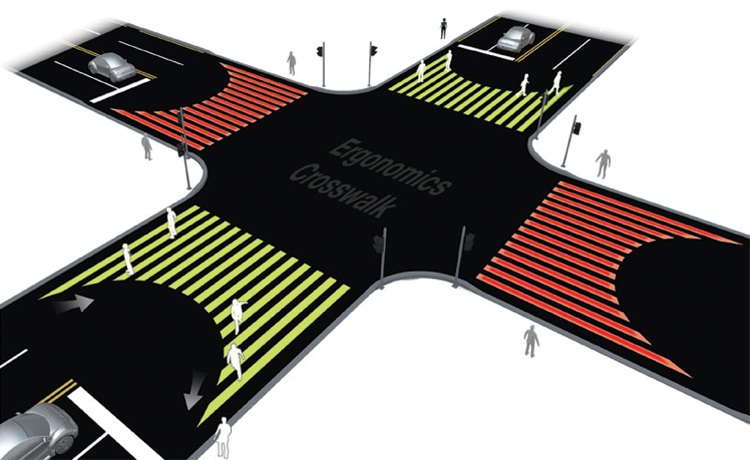
Clever Crosswalk Squashes Jaywalking, by Making it Legal

Jaywalking: Everyone does it, so you might as well legalize it. But is there any way to make it less dangerous?

Design to the rescue! Korean designer Jae Min Lim has the clever idea to turn crosswalks into, well, “J”s. By curving the typical Zebra crossing to take up a wider swath of road, you carve out a nice, safe path for pedestrians — one that reflects how they actually walk.


Continue reading “Clever Crosswalk Squashes Jaywalking, by Making it Legal”

MD Trails Summit


Greetings Trail Enthusiast! 


REGISTRATION IS NOW OPEN!

The Maryland Trails Summit :

Sharing the Vision-Making the Connections

October 19, 2010


The Maryland Department of Natural Resources (DNR) is proud
to announce that the Maryland Trail Summit will be held on Tuesday, October
19th at the Holiday
Inn BWI
Airport in Linthicum
Heights , Maryland .
The Summit will bring together trail users from all over the State to discuss
the future of trails in Maryland, preview an interactive map and website, work
on regional projects, network with other trail users and planners, learn about
trails in neighboring states and much more!


This opportunity is not to be missed. This 1-day event is
the culmination of ideas and input from the four Regional Roundtables that DNR
hosted this past summer. If you are a commuter, boater, bicyclist,
rollerblader, hiker, walker, skier, jogger, pet lover, paddler, camper, birder,
off-road vehicle rider, equestrian, or anyone else that has an interest in
trails in Maryland
this is the event for you!


Maryland’s very first trail summit is just around the
bend, so complete your online registration and come prepared to learn and
discuss the future of trails in Maryland. We hope to see you there!  https://www.dnr.state.md.us/land/Trails/FirstTrailsSummit.asp

Limited Space – Register online today to assure your
seat!


The Md Trails Summit
Team

MdTrailsSummit@dnr.state.md.us

https://www.dnr.state.md.us/land/Trails/index.asp 


Note From a Non-Free-Range 16-Year-Old

from FreeRangeKids by lskenazy
Dear Free-Range Kids: I wish I had been raised Free-Ranged. What parents don’t seem to realize is that when your parents are constantly hovering, it’s like being told No You Can’t every single day.
I am sixteen years old. I am sixteen years old, I don’t drink, I don’t even LIKE parties, and I have never even seen a real joint. I am a straight A student who is currently taking more college courses than a college freshman. I am also, apparently, too irresponsible to ride my bike to school. Or to my best friend’s house (which is about halfway down my would-be bike route to school).
I had this really odd realization the other day. I noticed that when I go bike riding with my dad, I tend to be less competent than when I go by myself. The days when I do my homework without being told are the days when no one is there to tell me to do it. When there is someone there to “hover” over me and make sure I’m okay, I become less capable. One time, while riding my bike, I went past the “boundary lines” for where I’m allowed to ride, and instead explored another part of my neighborhood (by the way, my neighborhood’s definition of “youth crime spree” was when a kid spray painted a p***s on a fence two and a half years ago). When I decided to head back, I was able to remember which streets I had taken without a problem. This took me completely by surprise.
I think what happens for a lot of kids is that when our parents keep denying us the chance to look after ourselves, we eventually stop trying, which our parents see and take as evidence that we’re not ready yet.
Continue reading “Note From a Non-Free-Range 16-Year-Old”

Traditional safety messaging just does not seem to be getting the job done

So let put a 3d "hologram" in the middle of the road of a little girl crossing the road.

"The 3D image will look like an indistinguishable mark from far away, but by the time the driver is within 30 metres, the image of the girl and ball will become clear.

“You’ll see this image start to rise off the pavement and it will look like a little child is crossing the street. As you get closer to the image, the image recedes into the pavement,” Mr. Dunne said."

Continue reading “Traditional safety messaging just does not seem to be getting the job done”

DIY: Inner Tube Rack Strap

from Kent’s Bike Blog by Kent Peterson

I enjoy Roy Doty’s Wordless Workshop cartoons. Roy is a master of explaining a problem and a solution without using words. I’m way more wordy than Roy and anyone who doubts that can look at this post as proof. I can’t even post a super simple Do-It-Yourself project without having some kind of wordy intro!

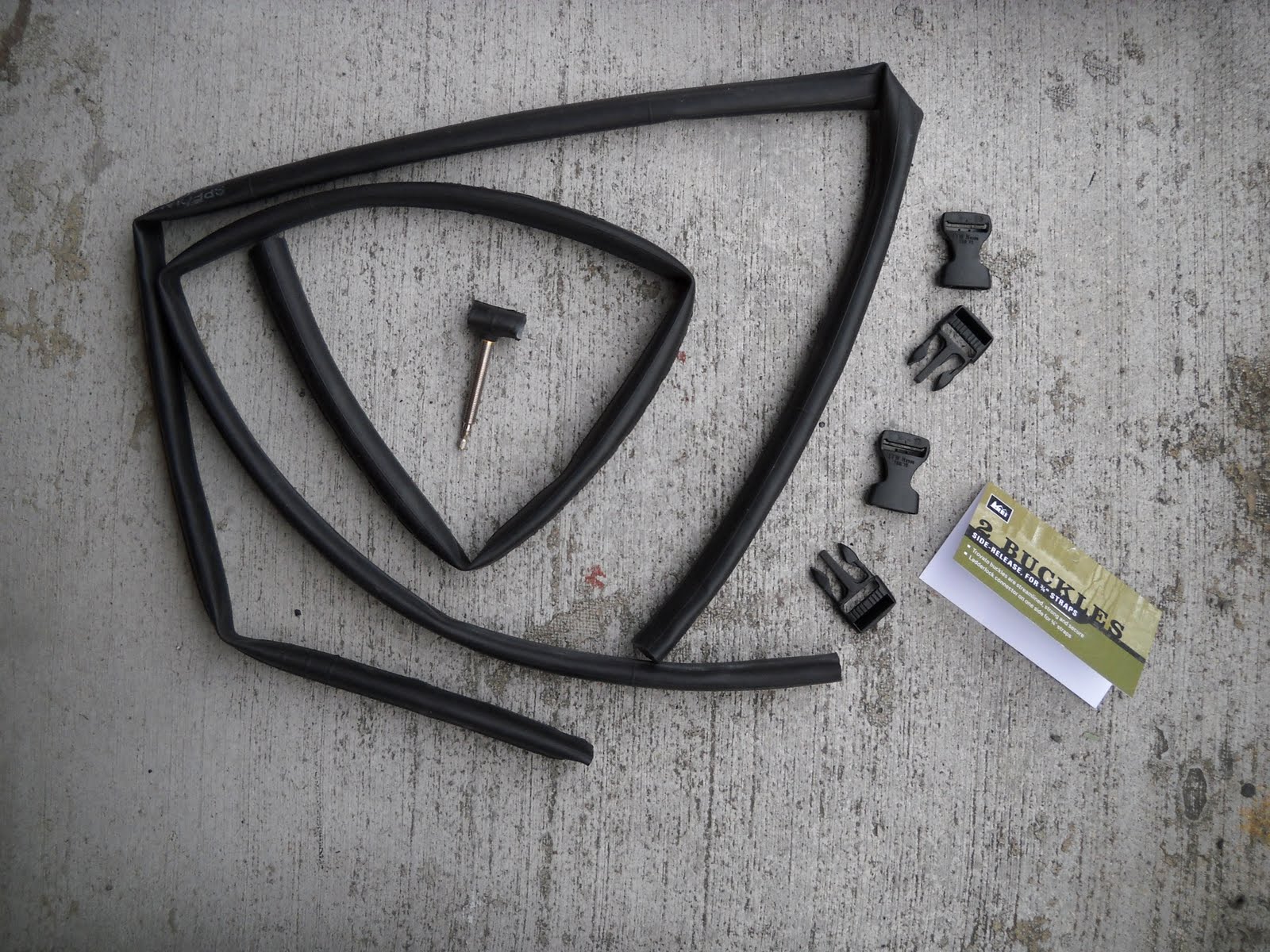
I patch my own tubes but I still wind up with a surplus of used tubes. A lot of bike shops have the same problem and although many tubes in the Seattle area wind up getting recycled into cool Alchemy Goods products, you can probably get used tubes just for asking. And, unfortunately, I manage to find discarded bike tubes along the roadside and bike paths around here.
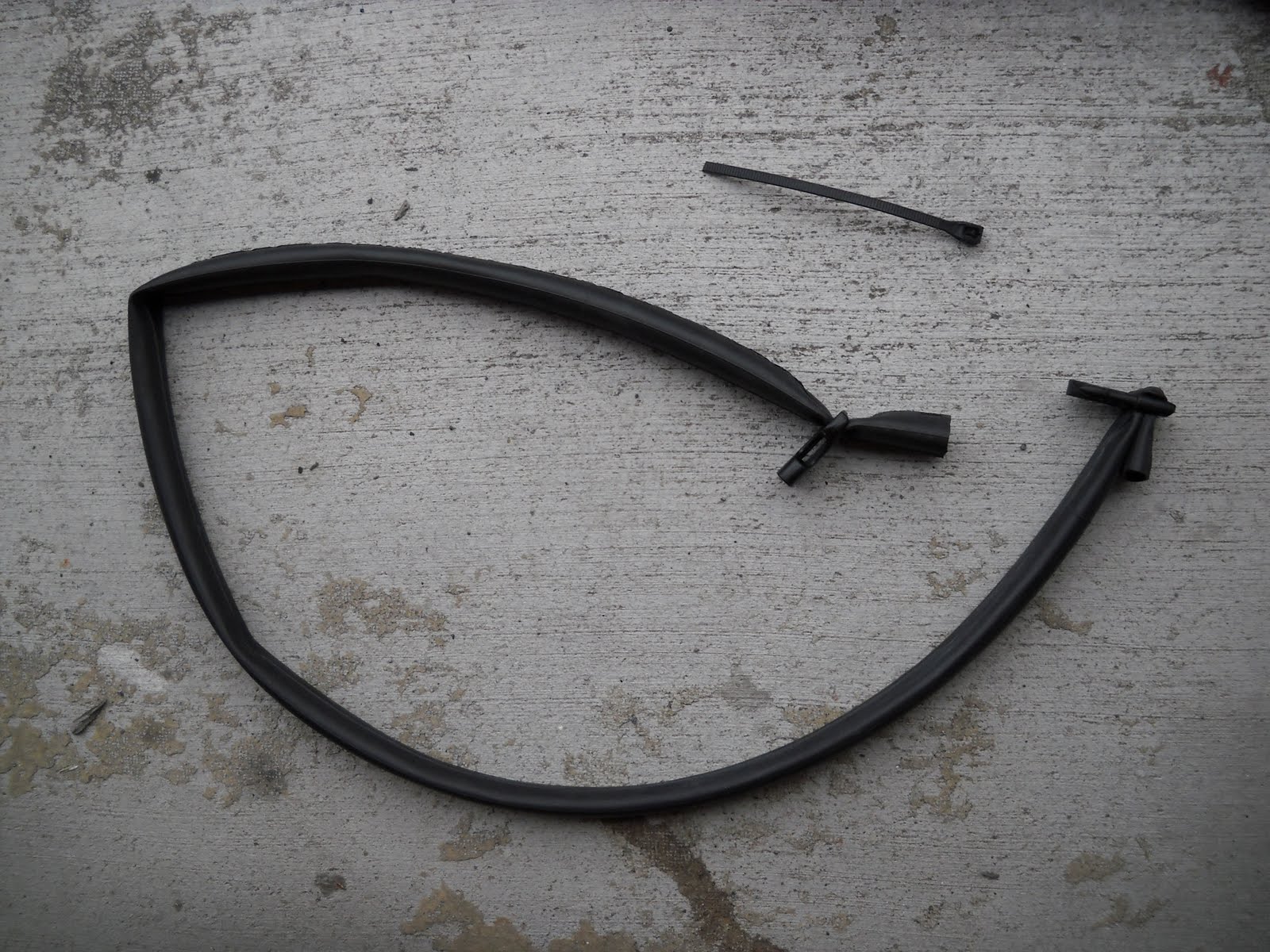
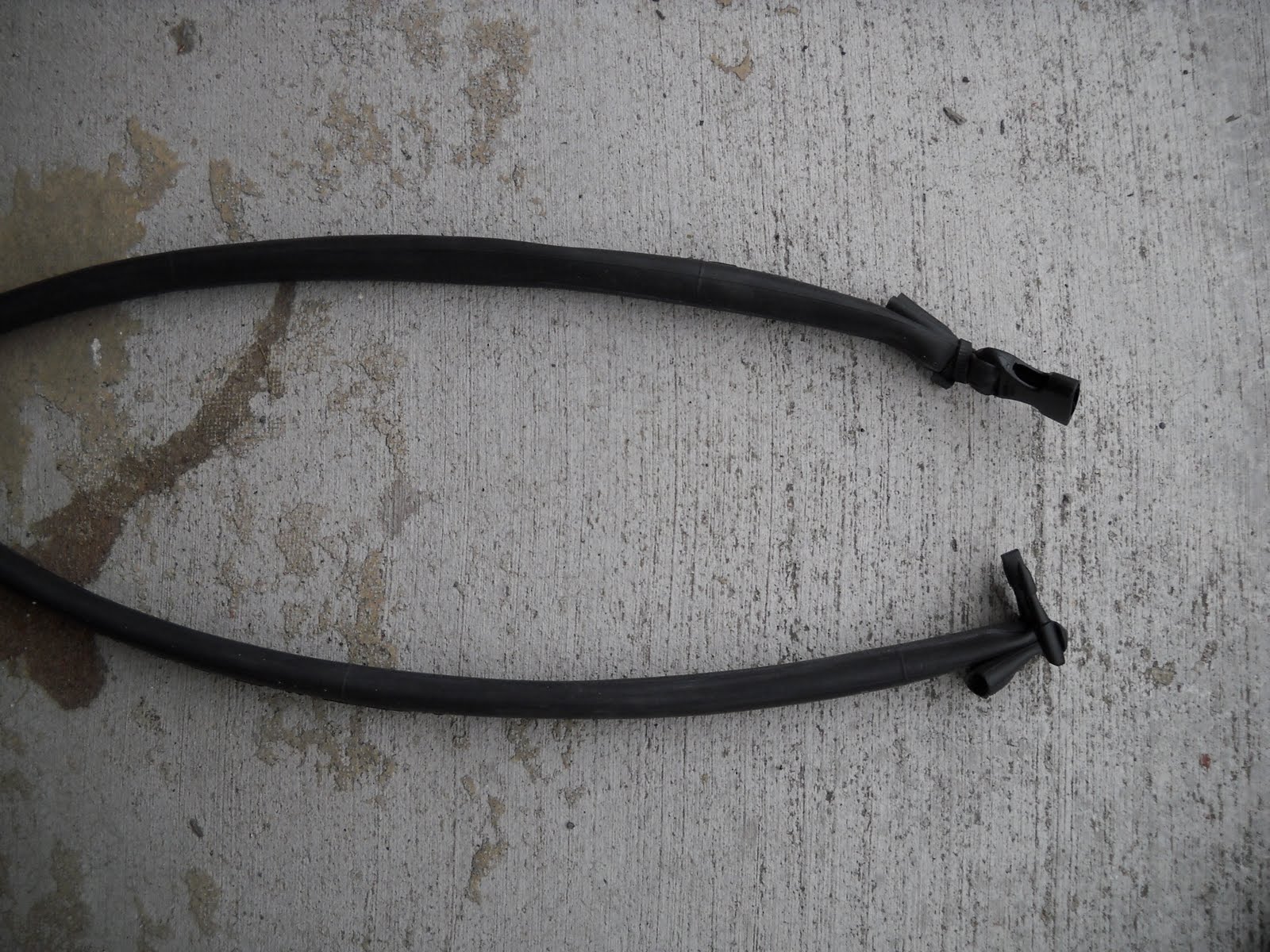
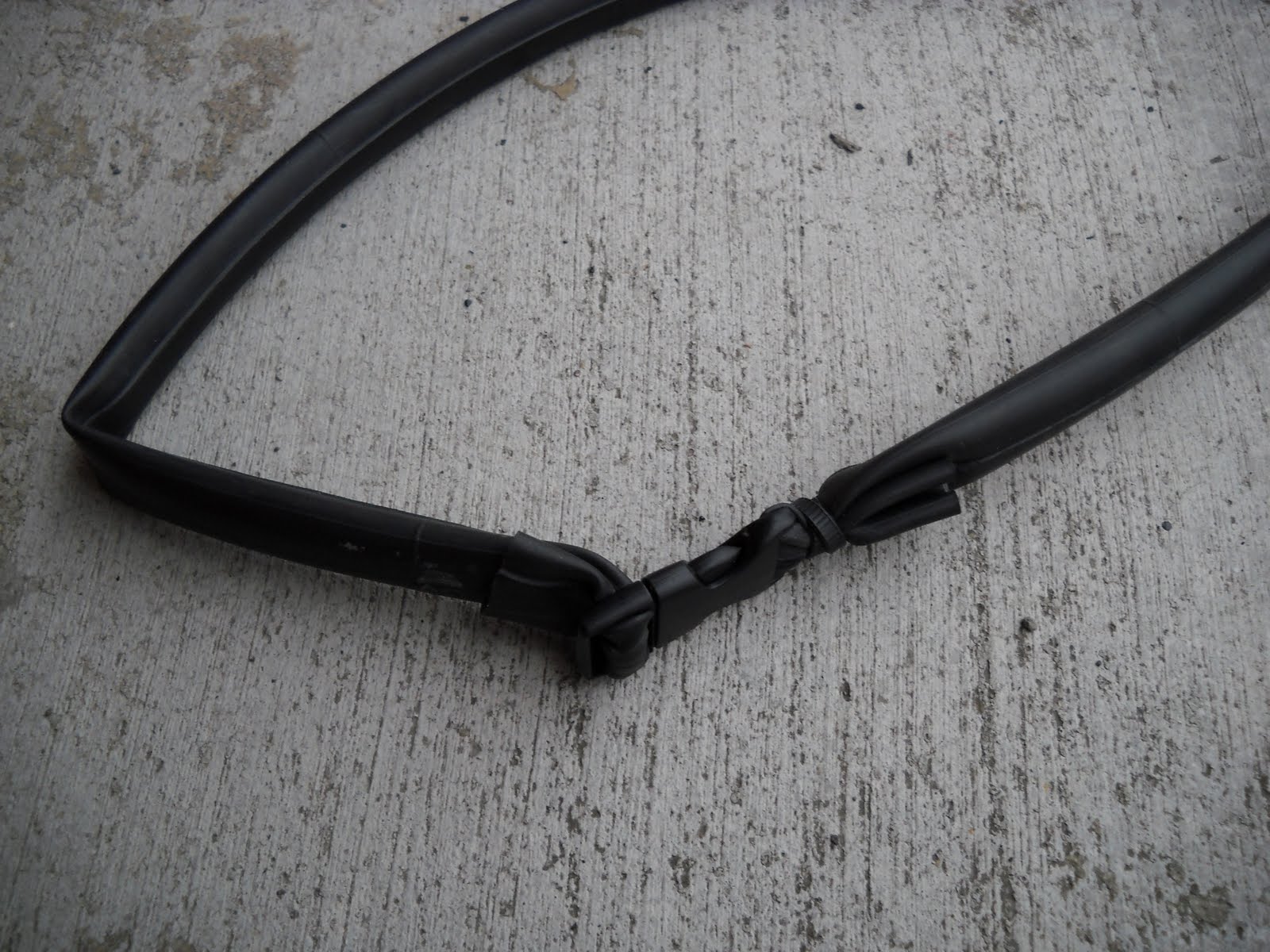
So here’s a quick, easy and cheap way to re-purpose a bike tube. One 700c tube plus a couple of buckles from REI or a craft store and a couple of zip ties (total cost, less than two bucks) will yield a pair of strong and stretchy rack straps or a belt or what have you. The pictures tell the story.


Keep ’em rolling,

Kent “The Mountain Turtle” Peterson
Issaquah WA USA

Continue reading “DIY: Inner Tube Rack Strap”

Black Hawk bike ban court case

From Bicycle Colorado via cyclelicio.us:

On Wednesday, August 18, three bicyclists that received tickets for riding their bikes in Black Hawk appeared in court for arraignment and pled not guilty based on an invalid ordinance. This initiates the legal process to determine the validity of the bike ban.

At the hearing, the defense attorneys moved to dismiss the charges and submitted a legal brief arguing that bike ban violates state law and is unconstitutional. Primary among the arguments are that the bike ban ordinance violates state law because it prohibits cycling on the access road connecting Black Hawk to other communities, and that it is unconstitutional because it treats Black Hawk citizens differently from visitors.

The judge ordered a comprehensive briefing schedule and set a hearing for oral argument on the matter for October 20 in Black Hawk.

The case is being heard in Black Hawk’s Municipal Court, which holds court once a month on the third Wednesday of the month under Judge Ronald W. Carlson. In Colorado, city court judges are hired by the city council, so it’s a hopeful sign that Judge Carlson is even willing to hear this case.

Maybe he’s bemused by the 39 page brief submitted by defendants’ counsel for a traffic ticket.

The Motion to Dismiss is a fascinating read. Besides the comprehensive list of the Colorado statutes the city of Black Hawk violates through their bicycle ban, some of the highlights include:

  • The constitutional argument the defendants make is apparently under the equal protection clause, rather than any free travel common law argument, because Black Hawk residents are permitted to use their bikes on town streets if that’s how they need to get around. The law treats residents and non-residents unequally.
  • The original bike ban ordinance passed in July 2009 states the law was passed based on findings that local streets are not safe for cyclists. Only after the city began getting some heat on the issue did they try to cover their bases by ordering an engineering study after the fact.
  • The ‘bicycle safety’ engineering study performed by Stolfus & Assocates for Black Hawk is itself questionable, according to the brief. The bike safety report used Federal Highway Administration methodology for determining the “bike friendliness” of a community that makes no finding on the safety of a road.

Props to Colorado cyclists for funding this defense. I’m sure St Charles Missouri cyclists are watching this closely.

Continue reading “Black Hawk bike ban court case”

I Love Riding in the City

NAME: Mitch Ryan
LOCATION: Baltimore, MD
OCCUPATION: Server/Student/Retail Slave

Where do you live and what’s it like riding in your city?
I proudly live in downtown Baltimore, MD. Riding around here is truly unique because of the bike culture. We do everything from gigantic mass rides to some pretty intense allycats. Baltimore is a fairly hilly city with almost no bike lanes so it’s a workout too! Did I mention it’s beautiful here? Being the Quirky City, it’s best viewed by bike.

What was your favorite city to ride in, and why?
As cliché as it may sound, riding through Times Square, NYC was my favorite experience. It was at 2 AM and the lights made it seem like daylight. Flying through streets jammed packed with taxis is purely exhilarating.

Why do you love riding in the city?
I love riding downtown because of the focus it requires. Anything else that may be weighing on you has to be forgotten about as you dodge obstacles and maintain your speed.

Or just say whatever you want about riding in the city…
Baltimore is hot y’all. Watch out!

Continue reading “I Love Riding in the City”

Crime vs. Accident?

[B’ Spokes: I share Velouria’s quandary, police can give speeding tickets with no injury and no damage why not unsafe passing tickets? The primary role of police should not be to fill out forms for insurance companies! They are to serve, protect and educate in maters of public safety, epic failure here. At least they got a report, good luck with even that in Baltimore.]
******************************************************************************
from Lovely Bicycle! by Velouria
I was cycling across town with a friend today, who suggested that we take the side streets instead of my usual route along the major roads. We were cycling on one of these quiet streets, when a sedan passed us too closely and hit my friend’s bicycle with the side of their car.
The impact was not strong enough to knock the bicycle over, but it did happen – and the driver kept going until forced to stop at a red light. We caught up to the driver, and my friend quickly took a cell-phone picture of the license plate – at which point the driver stopped the car and came out, expressing annoyance. My friend said, "You hit me with your car." The driver replied, "Well, you should have been more careful!" (More careful? We were cycling in a straight line in broad daylight!) At that point my friend took out their phone and called the police – telling the driver that they were going to file a report. Bewildered ("The police? But you’re fine!") the driver got back in their car, pulled over to the side of the road, and we all waited.
The officer arrived and asked whether anybody was injured and whether there was any damage to the bicycle. When we replied in the negative, the officer seemed confused: "So there is nothing to do here then." We repeated that the driver hit my friend with their car, to which the officer (politely) replied, "Well, if nobody was injured and there is no damage to your bicycle, that’s not a crime. That’s an accident." He then proceeded to file a report of the "accident," stressing verbally that there has been no injury or material damage. Both my friend and the driver gave testimony, and I gave testimony as a witness. We were then informed of where and when we could pick up a copy of the report, and everyone went their separate ways.
And this brings me to my question. Is it correct, that unless a driver actually injures a cyclist or damages a bicycle while hitting them, then hitting a cyclist in itself is not illegal? That is basically what the officer was telling us, but it does not sound right to me. What about the "passing no closer than 3 feet" rule? If a driver hits a cyclist while passing, does that not automatically mean that they were closer than 3 feet? The driver was unapologetic about what happened, and did not deny that they saw us prior to hitting my friend’s bicycle. Yet the officer did not even ask the driver why they did not pass us at a safer distance. Perhaps what the officer meant to express, was that there was no way to determine what actually happened without video cameras or tangible evidence (such as injury or damage to the bicycle) – but his words did not come across that way.
Regardless of the outcome, I am glad that my friend filed a report. As I understand it, these things get entered into the DOT statistical data, and can lead to the development of safer infrastructure on that street if enough such incidents are reported. But I remain confused about what type of collision between motor vehicle and bicycle constitutes an illegal act versus what constitutes an accident. Can any of the cycling activists out there fill me in?
Continue reading “Crime vs. Accident?”