By bcp
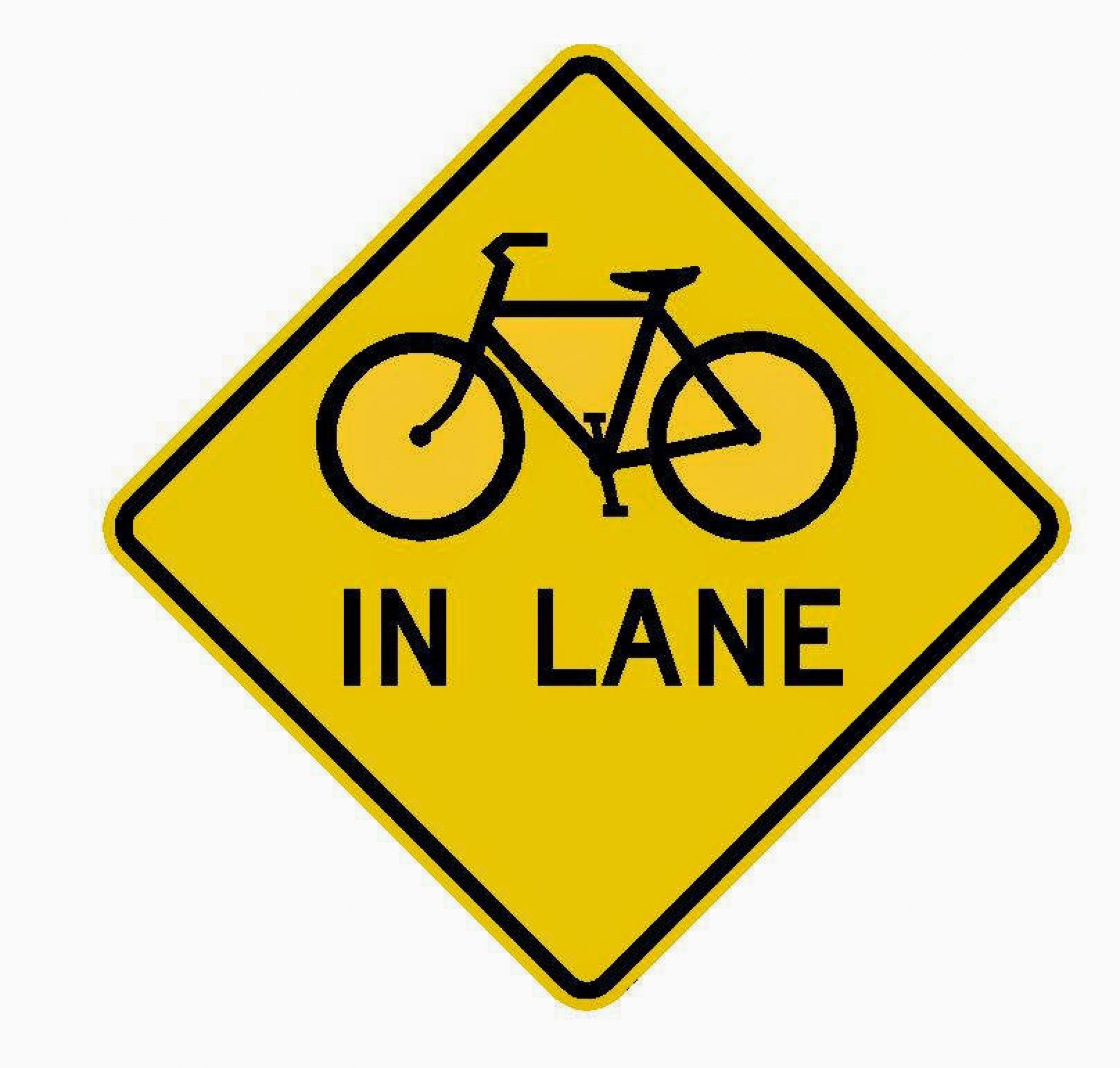
When riding on those back roads with no shoulder, could you not be in the center of the lane as I come around that blind turn?
The spandex riding shorts get stuck in the cooling fan and caused me to overheat.
thank you in advance.
[B’ Spokes: Another fine example of the "excellent" driver "share the road" education our drivers receive."
Continue reading “If you ride a bicycle, please read.”
God Bless Copenhagen
from Cycle Jerk
A hotel in Copenhagen is offering guests the chance to earn a free meal if they are willing to put some effort into powering the building. via BBC
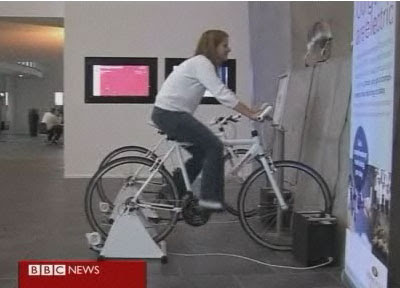
The deal is if a guest generates 10 watts of power for the hotel they get a free meal at the hotel restaurant. If the food is decent and full of carbs that’s a pretty good deal.
Going Green Downtown
Making Maryland’s Downtowns More Sustainable
From Oakland to Ocean City, Maryland’s citizens share the same goal
of living in healthy, vibrant communities where they can live, work
and prosper. As a result, communities have a major investment in the
infrastructure — streetscapes, schools, water/sewer lines — of their traditional
downtowns and neighborhoods. These communities are also faced with the
challenges of the coming decades including an increasing population, rising
energy costs, limited resources, water and air pollution, and climate change.
This guide, a collaboration between the Maryland Department of Housing and
Community Development (DHCD) and the Maryland Department of Natural
Resources (DNR), is designed to address those challenges, giving communities
throughout Maryland an important set of principles, guidelines, and examples of
how to pursue and implement sustainable practices. Sustainability emphasizes the
balance between economic, social and environmental resources needed for today with preserving those same resources for
future generations. In order to maintain and even expand those resources, there needs to be a focus on best practices such
as compact mixed use development, rehabilitation and reuse, and pedestrian orientated design — all major characteristics
found in Maryland’s historic Main Street communities.
Since 1998, DHCD’s Main Street Maryland
program has strived to improve the economy,
appearance and image of the State’s traditional
business districts, utilizing the National Main Street
Center’s Four-Point Approach™. In addition to the
Four Points, DHCD has initiated a Clean, Safe
and Green strategy to increase sustainability in
Maryland’s designated Main Street communities.
With a commitment to adopting green strategies
that impact and benefit businesses, residents and
visitors, Main Street Maryland communities
provide some best practices that can be
implemented in downtowns across the State. There
is a strong connection between how we treat the
built environment and the quality of our natural
environment—this guide brings that connection
into focus.
We can reshape our communities by reinvesting in older areas, reducing waste and improving energy efficiency. Making
Maryland’s downtowns more sustainable ensures that communities will be Smart, Green and Growing for generations
to come.
Continue reading “Going Green Downtown”
City Council to hear pro-bicycle bills
By Michael Dresser, The Baltimore Sun
 |
| Greg Cantori’s bicycle tire shows the dangers of a storm grate, which can pose a serious threat to bicyclist safety. Cantori hopes that Baltimore City officials can soon phase in safer grates to replace those that can ensnare bike tires. |
Storm grates might seem like an inconsequential matter to drivers, but for bicyclists their design can make the difference between a smooth ride and serious injury.
Grates are just one of the topics to be considered by the City Council Thursday as it holds hearings on a package of bills that seeks to promote bicycling in Baltimore.
Bicycle advocates believe the group of five bills on the hearing schedule is the largest ever brought before the Council on that topic. They say they have gathered more than 1,000 signatures on petitions in support of the bills, and they’re hoping for a heavy turnout for the 4 p.m. hearing before the Community Development Subcommittee.
“What we’re seeking is to make the city more of a bike-friendly place,” said Carol Silldorff, executive director of One Less Car, a group that advocates for alternatives to private vehicles.
The bills, whose lead sponsor is Councilwoman Mary Pat Clarke, address such matters as redesigning storm grates, requiring bike racks in new developments, ticketing motorists who park in bike lanes and improving communication between bicyclists and police on safety issues.
Another Clarke bill would require the city to adopt a Complete Streets program, joining a nationwide trend of integrating the concerns of bicyclists, pedestrians and wheelchair users — and not just vehicles — into planning of transportation projects.
Bicycle and pedestrian advocates have enjoyed several years of favorable treatment from City Hall under the administration of former Mayor Sheila Dixon, an enthusiastic bicyclist and fitness buff. They see the bills as an early indicator of whether pro-bicycle policies will continue to thrive under mayor Stephanie C. Rawlings-Blake, who has been largely preoccupied with budget issues since Dixon’s resignation in February.
Greg Hinchliffe, chairman of the Mayor’s Bicycle Advisory Committee, said the members of that largely holdover panel strongly support the bills but said he cannot speak for the mayor.
“A year ago, I could have answered an enthusiastic yes, but, as we know, things have changed at City Hall, and [the mayor] has been too busy with the transition and the financial crisis to pay much attention to us,” he said in an e-mail. “That said, I know she is supportive of a greener city in general.”
City Hall: City of Annapolis releases new bicycle map
By RHONDA WARDLAW, For The Capital
The City of Annapolis is pleased to release its new bicycle map, which will guide cyclists in navigating Annapolis.
On the map, you will find local attractions, scenic routes, Maryland bike laws, how to take your bike on Annapolis buses, local bicycle tours and much, much more.
…
Continue reading “City Hall: City of Annapolis releases new bicycle map”
Man was hit by a truck on Belair Road Tuesday, suffered life-threatening injuries
By Jessica Anderson, The Baltimore Sun
Police have identified the cyclist who remains unconscious with life-threatening injuries after he was hit by a truck on Belair Road Tuesday.
The man is a French national, but his has not been released pending family notification, said Lt. Robert McCullough, a spokesman with Baltimore County police. He said the man was identified Wednesday night by residents from his Baltimore County neighborhood.
Police said the man was injured while riding his bike northbound on Belair Road, near I-695 at about 5:30 p.m. Tuesday when he was hit by a Ford Pick-up truck, which was also traveling northbound on Belair Road, according to a police news release.
Continue reading “Man was hit by a truck on Belair Road Tuesday, suffered life-threatening injuries”
LAB responds to AAA complaint about bike lanes
…
Of course, there are some detractors. AAA has come out and said they’ll bring the city to a grinding halt…although a quick look at Pennsylvania Avenue today suggests that tour buses and taxis are doing an excellent job already of bunging up the travel lanes as well as the parking lanes, and that despite the construction zone extending beyond the width of the eventual bike lanes themselves, the street seems to be working just fine.
Indeed, evidence from city after city in this country and the rest of the world suggests that
a) AAA’s favored approach of adding more and more lanes ad infinitum hasn’t worked for 50 years (all it’s done is get even more people stuck in the same traffic jams) and probably isn’t going to start working today all of sudden
b) Putting in better bike infrastructure really does generate more bike traffic and either reduce or slow the increase in car traffic – look at Portland over the last 15 years, New York City in the last two as classic examples
c) When travel lanes or capacity is reduced, traffic goes away. People find other ways or other modes; or they don’t make the trip. Happens every time a bridge goes out, or a major construction project blocks off a major artery – people adapt.
d) And by even AAA’s survey indications, a lot of people will adapt by going by bike. That’s a good thing. That’ll reduce congestion; make more room for delivery vehicles and tourist buses and taxis.
The reaction of AAA is unfortunate, if not utterly predictable. And maybe it’s good that after years of really not having to worry about bikes because we weren’t making much inroad (sic) into their territory…maybe now they are getting a little flustered with such an iconic and visible street as Pennsylvania Avenue having bike lanes. We are starting to succeed and make a difference.
What AAA and others fail to see is that we’re not proposing a zero-sum game. We’re not trying to do away with cars, nor are we anti-car. Cars will have a critical role to play in our transportation system into the forseeable future…but not as the ONLY means of getting around, and not as the ONLY, exclusive user of the public realm to the detriment of almost everything else – clear air, health, climate, safety, energy etc. Great cities and great streets have choice. They enjoy and celebrate diversity. They feature PEOPLE not traffic. They have balance. Altering the balance of traffic on Pennsylvania Ave won’t choke it or bring it to a halt – it will bring it to life. And the nation’s real Main Street (not the ghastly DC Beltway, as AAA would have you believe it is) deserves to be brought to life again.
Andy Clarke
President, League of American Bicyclists
Continue reading “LAB responds to AAA complaint about bike lanes”
Oil, Dollars, and Sense
By Jan Mueller
Senior Policy Associate, Environmental and Energy Study Institute
…
First, the cost of U.S. dependence on oil has become intolerably high—in terms of lives lost and dollars sent abroad, let alone other economic, public health, and environmental costs. Second, the limits of America’s financial and economic resources have become painfully clear.
…
If we are serious about reducing our dependence on oil and making the best use of limited resources, we need to invest in a transportation system that moves people and freight in the most cost and energy efficient way possible.
…
The old “fix-it-first” issue was analogous to asking whether you should build an addition to your house before you fixed the leaks in the roof. Given the nation’s uncertain financial future, however, the question now is more akin to asking whether it makes sense to build that addition if you might never have enough money to fix the roof.
…
[B’ Spokes: Note that the “fix-it-first” issue has been to date more about how to get more money from the Feds so they could add capacity over actually fixing things first.]
…
Not only has the current system for funding transportation through fuel taxes proven inadequate, it also provides the wrong signal to transportation agencies.
…
Continue reading “Oil, Dollars, and Sense”
Say yes to farm stands
One of our local farms needs support! They’re having trouble convincing the County that they should be allowed to open a farm stand on their property. What’s a farm without a farm stand??? Two public meetings: May 5 and 6, Room 2, Jefferson Building, 105 W. Chesapeake Ave, Towson, 21204 at 10:00 AM. Please show up or write letters of support for Springfield Farm!
Continue reading “Say yes to farm stands”
How to get votes? With a bike of course! [video]
I would love to see more politicians riding around on bikes and meeting and talking with the locals then standing on street corners waving at cars as they go by.