
Homeowners in car-dependent areas without access to alternative transportation are at greater risk of foreclosure, according to a report released yesterday by the Natural Resources Defense Council (NRDC) that calls for mortgage underwriting standards to begin taking so-called "location-efficiency" into account.
…
Continue reading “New Report Links Homeowners’ Auto Dependence With Foreclosure Risk”
A Bike-Ped State of the Union: 9.6% of Trips, 1.2% of Federal Funding
by Elana Schor on January 28, 2010
With the nation still digesting the State of the Union address, the Alliance for Biking & Walking picked an auspicious day to release their biennial Benchmarking report on America’s bike-ped behavior. The group’s bottom-line conclusion: federal transportation funding continues to disproportionately shortchange travelers powered by their own two feet.
 (Chart: Alliance for Biking & Walking)
The Alliance crunched numbers from all 50 states to determine how much of their federal transportation dollars are spent on improving bike-ped infrastructure, access, and safety.
Overall, the report found that biking and walking account for 9.6 percent of all U.S. trips (0.9 percent of that share from biking, 8.7 percent from walking) but just 1.2 percent of federal transport spending.
That gap was exacerbated in recent months by a cancellation of transportation funding that occurred when Congress failed to pass a new six-year federal bill in the fall. Many states trimmed disproportionately from their Transportation Enhancements funds, which come from Washington’s highway program and account for about half of federal bike-ped spending.
But that doesn’t mean states are entirely losing ground when it comes to bike-ped improvements. Since the Alliance’s last report in 2007, the number of states setting goals to boost walking and biking has risen by 44 percent — while the number of states working on decreasing bike-ped fatalities has increased by 78 percent.
The Alliance also singled out states doing particularly well — and poorly — at encouraging residents to walk and bike. Some of the highest-achieving states may come as a surprise (Alaska, home of the “bridge to nowhere,” is tops for walking to work). Check out a few winners and losers after the jump, and download the Alliance’s complete Benchmarking report right here.
Continue reading “A Bike-Ped State of the Union: 9.6% of Trips, 1.2% of Federal Funding”
2010 Benchmarking report
State Overview of Primary Benchmarking Indicators (or 196 pages in 3)
Maryland:
Mode Share – Middle 1/3 among states
Safety – Bottom 1/3 among states
Funding – Bottom 1/3 among states
Staffing – Top 1/3 among states
Bike/Ped Policies – Top 1/3 among states
Advocacy Capacity – data unavailable
Baltimore:
Mode Share – Top 1/3 among states
Safety – Top 1/3 among states
Funding – Middle 1/3 among states
Staffing – Middle 1/3 among states
Bike/Ped Policies – Bottom 1/3 among states
Advocacy Capacity – Bottom 1/3 among states
High to Low Ranking of Bicycling and Walking Levels
Maryland 32 out of 50 – Baltimore 11 out of 51
Low to High Ranking of Bike/Ped Fatality Rates
Maryland 35 out of 50 – Baltimore 13 out of 51
High to Low Ranking of Per Capita Funding to Bike/Ped
Maryland 45 out of 50 – Baltimore 33 out 51
Bicycle Safety RANKING
Maryland 36 out of 50 – Baltimore 27 out of 51
Pedestrian Safety RANKING
Maryland 35 out of 50 – Baltimore 10 out of 51
Continue reading “2010 Benchmarking report”
The Bicycle Kitchen

The Bicycle Kitchen is a dedicated room for our resident’s bikes, with everything you need to store, repair and maintain your ride. Located just inside the main entry, it gives you a convenient place to securely store your bike – which frees up space in your home and makes getting on the road a snap. And the Kitchen’s decked out repair area has all the tools you need to keep your bike rolling – pumps, tools and a repair station are all at your disposal, which is a great resource, considering the miles of bike paths and lanes just outside your door.
The Enforcement of Imaginary Laws
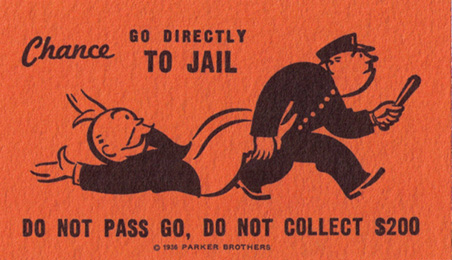
[Some interesting cases]
…
The unwarranted traffic stop
I think Richard Moeur’s story is exemplary in both his handling and its outcome. I got several good take-aways from it:
- Ask the officer’s intentions. Find out what he is requesting (ride on the sidewalk, ride on the edge of the road, ride on a different road).
- Resist the urge to discuss the law right away and ask for a name and badge number
- If the opportunity presents, be armed with a copy of the statutes (you can get one free here)
- If the officer asks why you were riding where you were, present the pertinent talking points (know your talking points, I suspect most of our readers do)

In my opinion, it’s better to not get a citation than to have to deal with one in court (even if you win). In the event that the officer does not respond favorably to your roadside defense, the best course may be finding a way to comply without compromising your safety, then deal with educating the officer via contact with the department.
[I’ll note that I had success with “Excuse me, but are you requiring me to ride in an unsafe and illegal manner?” When ordered to ride on the sidewalk.]
…
Continue reading “The Enforcement of Imaginary Laws”
Motorists Tell Nick The Bicycle-Commuter To Bike On Sidewalks
If Tampa police do not know Florida bicycle laws and believe bicyclists should bike on sidewalks, no wonder motorists follow that lead and harass bicyclists on the road by yelling at them to get off the road and bike on the sidewalks.
…
Continue reading “Motorists Tell Nick The Bicycle-Commuter To Bike On Sidewalks”
Baltimore County Walking and Bicycling Survey
Help make Baltimore County more /bike/ped friendly and submit improvement for the roads you walk or bike on.
https://www.surveymonkey.com/s/RQTZ2VQ
And please forward!
You Can’t Fight the State DOT – Or Can You?
It seems to be remarkably difficult for citizens to influence the decisions of major transportation agencies. I use the example of a state DOT here, but it could be a transit agency. How might one go about doing this effectively? There are two major parts: political and technical.
[No doubt we need good bicycling advocacy in the state so those of you who want to try your hand at this here is a good primer on what & how basics.]
Continue reading “You Can’t Fight the State DOT – Or Can You?”
Smart, Green, and Growing – The Sustainable Communities Act of 2010
SENATE BILL 285
Synopsis:
Stating findings and intent of the General Assembly concerning sustainable communities; providing for the designation of specified areas as sustainable communities eligible for specified programs; reestablishing and altering the Maryland Heritage Structure Rehabilitation Tax Credit Program to be the Sustainable Communities Tax Credit Program; authorizing the Director of the Maryland Historical Trust to issue up to $50,000,000 in the aggregate in initial credit certificates for the tax credit; etc.
…
(4) develop public infrastructure that is incidental to the implementation of a community legacy project, such as streets, parking, public utilities, landscaping, lighting, and improvements to pedestrian and bicycle circulation;
…
Is planned to maximize the use of transit, walking, and bicycling by residents and employees; and
Continue reading “Smart, Green, and Growing – The Sustainable Communities Act of 2010”