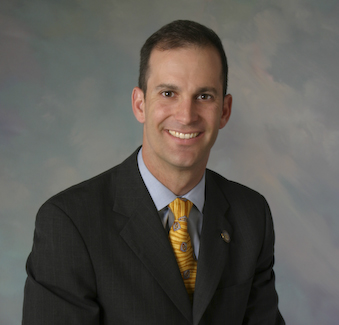
What happened in the legislative session

You’ve heard a lot from us lately as together we worked to protect funding for land conservation and toughen the state’s smart growth laws. Now that the 2009 legislative session has come to a close, I wanted to update you on how our priorities for growth and the environment fared. Here are the highlights. For a more detailed look visit our website at www.friendsofmd.org, where you’ll find information on a broad range of growth and environmental legislation from the 2009 session.

2009 legislative session in a nutshell

Environment and the Budget

Smart and Fair Growth

Global Warming

Greener Growth

Transportation Choices

Environment and the Budget: Good Outcomes. Governor O’Malley and the legislature recognized that the environment remains a priority for Marylanders as they made tough financial decisions.

  • Funds for Program Open Space were restored after prolonged budget negotiations. Governor O’Malley and state lawmakers showed strong leadership in preserving funds for Maryland’s premiere land conservation program.
  • The Governor’s budget invested in transit at the same level as highways for the first time in the State’s history. The legislature left transit funding intact.
  • Funding was mostly preserved for the Community Legacy Program, Maryland’s highly successful program to support redevelopment in towns and cities.

Smart and Fair Growth: Mixed Results.


The biggest disappointment this session was

the failure to make real progress on growth policies. 1000 Friends brought together a diverse coalition of leaders in smart growth, the environment, hou
sing and faith-based communities to fight for standards and accountability in local planning decisions. Although the bill did not pass, we did win some elements of this policy on the House floor and have set the stage for next year’s fight. The Governor and General Assembly also took strong action to correct the court decision about Terrapin Run.

  • Our top priority bill, which would have set performance standards and accountability in local land use plans, did not pass.
  • The Governor’s bill to correct the court decision about Terrapin Run and make zoning decisions consistent with local growth plans passed.
  • The Maryland Heritage Structure Rehabilitation Tax Credit Program, or Historic Tax Credit, was not reauthorized, a blow to a highly effective tool for redevelopment and smart growth.

Global Warming: Big Victory! The General Assembly passed the Greenhouse Gas Reduction Act. This strong law will reduce global warming pollution by 25 percent below 2006 levels by the year 2020.

Greener Growth: Key Victories. Several bills passed this session that will reduce the impact of development on the environment.

  • The legislature passed the first bill in the nation to require the removal of all nitrogen pollution from septic systems. The scope of the bill was limited through the legislative process to just designated critical areas that have the biggest impacts on the Bay.
  • Private homeowners were prevented from building sprawling, environmentally untenable homes by installing private wastewater treatment plants to allow the growth.
  • The strongest energy efficiency codes in the nation were adopted.

Transportation Choices: Small Steps. No significant legislation passed this year to create a more balanced transportation system with more options for walking, bicycling and using transit.

  • Transit-oriented development received a boost with the Governor’s bill to allow the use of local taxes to finance development efforts near transit stations.
  • Efforts to de-fund the Inter-County Connector did not succeed.
  • Legislation to promote bicycling, including a bill to give bicyclists 3′ when passing, failed.

Want to dig deeper? Visit our website at www.friendsofmd.org for a full run-down of environmental and growth bills.

Maryland Fatality and Incapacitating crashes

In general people seemed unconcerned about Maryland’s traffic deaths at 615 which is almost 2 a day. Well what about 5,393 people incapacitated for 2007, that’s better then one every two hours on average. Compare that to 7 bicyclists killed and 73 incapacitated, now how safe do you feel driving in Maryland vs cycling?
Oh and this stands out like a sore thumb: Baltimore City Car crash rates per:
VMT 534.9 – State Avg: 177.8
Pop. 304.2 – State Avg: 179.7
Licen. Dr. 616.2 – State Avg: 254.5
Regist. Veh. 678.5 – State Avg: 212.6
Continue reading “Maryland Fatality and Incapacitating crashes”

RentaBikeNow.com

What is RentaBikeNow.com?
RentaBikeNow.com is North America’s only coast-to-coast bike rental network that works with participating bike shops and rental locations. Shops from Florida to Oregon and Hawaii to Maine list their available bikes on our website. We manage inventories and schedules and take customer reservations 24/7.
How does your online system work?
Customers select the location, time period, and type of bike desired, then choose from available bikes. Your selections, including accessories and tours, are placed in a shopping cart for easy checkout. Once complete, you will receive a printable confirmation that details the pick-up location, map and directions, balance due and local riding information. Simply arrive at the specified time and location to complete the transaction and pick-up your bike.
Continue reading “RentaBikeNow.com”

Pedaling Revolution: How Cyclists Are Changing American Cities

“A growing number of Americans, mounted on their bicycles like some new kind of urban cowboy, are mixing it up with swift, two-ton motor vehicles as they create a new society on the streets. They’re finding physical fitness, low-cost transportation, environmental purity—and, still all too often, Wild West risks of sudden death or injury.” —from the Introduction
In a world of increasing traffic congestion, a grassroots movement is carving out a niche for bicycles on city streets. Pedaling Revolution: How Cyclists Are Changing American Cities explores the growing bike culture that is changing the look and feel of cities, suburbs, and small towns across North America.
Continue reading “Pedaling Revolution: How Cyclists Are Changing American Cities”

DENVER’S REGIONAL TRANSIT TAKES POSITIVE STEP

-> According to an article in the Apr. 13th Bicycle Colorado eNews, "The Regional Transportation District (RTD) in the greater Denver area has taken another positive step for bicyclists. RTD has lifted the requirement for bicyclists to have a special permit to bring bicycles on light rail trains. Instead, RTD has added bike signage inside light rail cars and on doors where bikes may enter.
"When the light rail first opened, RTD prohibited bicycles on trains during peak hours. RTD listened to the bicycle community and changed its policy to allow bicycles during all operating hours. A 2005 nationwide study found RTD is one of the top transit agencies in the U.S. for the number of bicycle boardings on bus and rail. We congratulate RTD on its positive progression of bicycle-friendly policies."
Continue reading “DENVER’S REGIONAL TRANSIT TAKES POSITIVE STEP”

Possible Velomobile manufacture and distribution in the US. Requesting your input.

Hello everyone! I’m involved in a small research project with some other students at Penn State University. The purpose of our study is to figure out how much interest and desire there is for Velomobiles in the U.S., as well as figuring out what design and features are best for the riders. We are inviting everyone to give their opinions and concerns about the idea.
A local bike shop owner and nation-wide recumbent distributer wants to manufacture Velomobiles and can ship them anywhere in the U.S. For those of you who don’t know what a Velomobile is, it is essentially a recumbent trike with a plastic/fibreglass/ or canvas shell surrounding it. It is a kind of pedal-car. The Velomobile includes an "electric assist" motor which can be switched on or off and features a battery pack that actually recharges as you pedal (like the alternator in a car) For more info and pictures check https://en.wikipedia.org/wiki/Velomobile
This Velomobile model is still in it’s design/proto-type phase and the owner still isn’t exactly sure what direction he should take in the design. A few options exist. Particularly, the Velomobile can be sold pre manufactured, all the shell and motor parts built into a recumbent trike. Option 2 is the manufacture of do-it-yourself VeloKits which can be adjusted and fitted to existing recumbent trikes. These VeloKits are also removable, should the owner want to ride in the open air again. This method would, of course, be much cheaper. Other ideas include constructing a sturdier, heavier model with a more powerful motor; however, this would limit it’s usability depending on state and local regulations.
As a cyclist myself, I have a pretty good grasp on the benefits, problems, and concerns about Velomobiles, but we need input from cyclists all over the country, the more, the better.
So please, let us know your opinions!
We have drafted some short web surveys to gather quantifiable data. The goals of the survey are to get an idea of how you use your bike, some questions on whether or not you would be interested in the Velomobile concept, some design preferences, pricing ideas, and some general demographic information.
Continue reading “Possible Velomobile manufacture and distribution in the US. Requesting your input.”

Earth Week Events at Whole Foods Market Mt Washington

[Baltimore Spokes: Also note that Whole Foods sponsors many bike events, we really appreciate their contribution to a more livable, sustainable community.]

Earth Week Events Monday, April 20th – Composting Made Easy and Cheap Class
Monday, April 20th – Genji Earth Day Promotion
Tuesday, April 21st – Green, Local and Sustainable Cooking Class
Wednesday, April 22nd – Ecological House Cleaning Class
Wednesday, April 22nd – Reusable Bag Giveaway
Thursday, April 23rd – Baltimore Green Map
Friday, April 24th – Kids Green Activity
Friday, April 24 – Home Energy Audit Information
Saturday, April 25th – Green Children’s Book Reading, Signing and Activity
Saturday, April 25th – Recycled Art Show & Giving Grill
Continue reading “Earth Week Events at Whole Foods Market Mt Washington”

End-of-Session Wrap-Up

Cardin Annapolis Reports

Delegate Jon S. Cardin  District 11, Baltimore County


April 15,

2009

Dear Friend:

The 426th session of the Maryland General Assembly drew to a close Monday night, and I again thank you for giving me the opportunity to represent you.  I have been honored to serve the 11th District with my teammates Bobby Zirkin, Dan Morhaim and Dana Stein.  In a dire fiscal situation, we have worked hard to reflect your priorities. To that end, this letter is designed to give a modest synopsis of some of my 2009 accomplishments and a personal perspective on the legislative session at-large.

“The person who is waiting for something to turn up might start with their shirt sleeves.” – Garth Henrichs

Regrettably, in this economic climate it was difficult to reach an agreement on one of my priorities — voluntary public campaign finance. The program gained real momentum when Senate President Mike Miller came out in support of the measure. Another bill that gained significant momentum was my bicycle safety bill which calls for cars to maintain a three-foot buffer when passing cyclists or pedestrians. This bill passed overwhelmingly in the Senate, but stalled in the House Environmental Matters Committee. Both of these important measures attracted a great deal of media attention, and I look forward to working towards their success next session.

Continue reading “End-of-Session Wrap-Up”

UNIV. OF OREGON STUDENT HONORED FOR BIKE LOAN PROGRAM

Briana Orr, an environmental studies and planning, public policy and management major at the University of Oregon, will receive the 2009 Faith Gabelnick Student Leadership Award at the Oregon Civic Engagement Awards next week in Portland, Oregon. Orr started the UO Bike Loan program, a unique twist on the familiar model of free-bike programs.
"Briana’s program is a phenomenal example of how to take bicycles discarded by departing students and turn them around as long-term loans to students," said Marc Schlossberg, an Associate Professor in the University of Oregon’s Planning, Public Policy, and Management Department.
Orr’s program is a simple model that can be easily replicated in other locales. For $65, a student gets a bike, a helmet, a lock, and a bike basket. The full $65 is returned at the end of the year if all of the equipment is returned.
"The program began this year and has been a real success, with a long waiting list of people who want a bike," said Schlossberg. " In its first year, the program focused on international students as a pilot since they tend to live close to campus and don’t bring vehicles with them. Brilliant!"
Continue reading “UNIV. OF OREGON STUDENT HONORED FOR BIKE LOAN PROGRAM”