
[As a cyclists a good percentage of my emergency avoidance situations are caused by motorists on cell phones.]
…
The Maryland Highway Safety Foundation said it hopes to recruit 100 businesses with a cumulative 100,000 employees to adopt policies covering such matters as cell phone use, texting while behind the wheel, driving while intoxicated and other traffic offenses. Foundation co-chairman David Nevins announced the effort at a morning meeting that drew some of the state’s top political leaders, including Gov. Martin O’Malley, House Speaker Michael E. Busch and Rep. C.A. Dutch Ruppersberger.
After the meeting, O’Malley said his administration would become one of the employers to adopt such rules for users of state-owned vehicles. "Stay tuned. It’s in the offing," he said
…
Neither cell phone use nor texting while driving is explicitly banned under Maryland law, even though either could possibly be covered under the state’s negligent driving statute. The General Assembly has so far resisted passing legislation addressing cell phones or texting except in the case of novice drivers.
…
[Maryland ranks the 8th highest in pedestrian traffic fatalities it’s time the General Assembly started to do something about it.]
Continue reading “Safety group calls for cell phone driving code”
Public Transportation: Benefits for the 21st Century
* In 2005, Americans took 9.7 billion trips on public transportation – 15 times the number of trips they took on domestic airlines. 1,2
* From 1995 through 2005, public transportation ridership increased by 25 percent, 1,3 a growth rate higher than the 11 percent increase in U.S. population4 and higher than the 22 percent growth in use of the nation’s highways over the same period.
* Without public transportation, travel delays would have increased by 27 percent.
* Public transportation produces 95 percent less carbon monoxide (CO), 90 percent less in volatile organic compounds (VOCs), and about half as much carbon dioxide (CO2) and nitrogen oxide (NOx), per passenger mile, as private vehicles.
* Real estate-residential, commercial or business-that is served by public transportation is valued more highly by the public than similar properties not as well served by transit.
* More than four in five seniors believe public transportation is a better alternative to driving alone, especially at night.
Each year, public transportation use in the U.S. saves:
* 1.4 billion gallons of gasoline, representing 4 million gallons of gasoline per day
* The equivalent of 34 supertankers of oil, or a supertanker leaving the Middle East every 11 days
* The equivalent of 140,769 fewer service station tanker trucks clogging our streets each year
* The equivalent of 300,000 fewer automobile fill-ups each day
In addition to reduced pollution, direct health benefits of public transportation include:
* Lower rates of respiratory and heart disease. The health effects of mobile source pollution can be severe and even life-threatening, particularly to children, older adults and adults with respiratory illnesses. Many groups are at greater risk because of chronic lung or cardiovascular disease, including people with diabetes, whose cardiovascular systems are threatened by particle pollution.
* Lower accident rates. According to a 2006 report, public transit has 0.03 fatal accidents per 100 million miles-about 1/25th the rate for automobiles; injuries as well as fatalities are reduced.19
* Quality of life. Public transportation fosters a more active lifestyle, encouraging more people to walk, bike and jog to transit stops. An analysis of 2001 National Household Travel Survey data for transit users finds that walking to and from transit helps inactive persons attain a significant portion of the recommended minimum daily exercise they need; 29 percent of respondents get 30 minutes or more of exercise a day from walking to or from transit.20
Continue reading “Public Transportation: Benefits for the 21st Century”
Bicycles Still a Major Source of Injury
Although bicycles are a healthy and cost-saving alternative form of transportation, they’re also the cause of a lot of childhood injuries.
In fact, automobiles are the only other consumer product that causes more childhood injuries.
…
[Hmmm, and being a passenger in a car is the leading cause of premature death for kids in the United States and that wrong way bike riding is still a significant component of car/bike crashes and they are concerned about bike helmets? I will strongly assert that the over emphasis on wearing helmets and zilch on safe riding practices and the hazards to public health of having car centric roads is a major evil in our society and bike helmets alone are not going to fix this.]
Continue reading “Bicycles Still a Major Source of Injury”
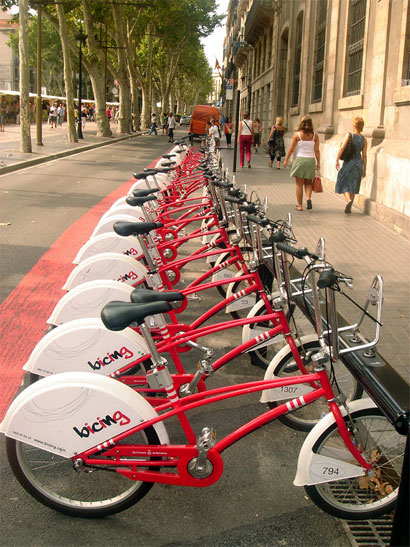
Bike lanes, paths or trails, where should the State be putting its efforts?
According to the National Survey of Bicyclist and Pedestrian Attitudes and Behavior:
The change most desired in the community among all cycling frequencies was to increase bicycling facilities such as more bicycle lanes (38%), more bicycle paths (30%), and more bicycle trails (14%).
Yet Maryland seems to emphasize trails and paths sometime to the expense of bike lanes or bikeable shoulders. I will strongly assert that the main reason for this is that there is currently no set funding mechanism and procedures for bike lanes as there is for paths and trails.
Continue reading “Bike lanes, paths or trails, where should the State be putting its efforts?”
BikePed Beacon — November 2008
|
|||||||||||||||
|
|||||||||||||||
|
|||||||||||||||
|
|||||||||||||||




 Active Transportation for America: A

BALTIMORE GREEN FORUM
a monthly environmental education & discussion forum
Global warming and uncontrolled growth ARE affecting Maryland! Find out how YOU can be part of the solution.
In continuation of this second year of exciting programs: This month’s Baltimore Green Forum will feature a briefing on the environmental policies expected to be introduced in Annapolis during the 2009 Legislative Session. You will learn about the environmental threats of global warming and uncontrolled growth; provide feedback on potential environmental legislation, and discuss using your power as a voter to protect the environment.
Continue reading “BALTIMORE GREEN FORUM”
No Respect for Speed Limits
When it comes to speeding, many American motorists don’t worry about safety. They just worry about getting caught.
Those are the findings by researchers from Purdue University who surveyed nearly 1,000 motorists about speed limits and driving habits. They found that https://www.baltimorespokes.org/admin/story.php?mode=editmany drivers are cynical about the safety benefits of driving within speed limits, and many think they can drive safely while speeding as long as they won’t get caught, according to the report in Transportation Research Part F: Traffic Psychology and Behaviour.
“So the faster you think you can go before getting a ticket, the more likely you are to think safety’s not compromised at higher speeds,” said Fred Mannering, a professor of civil engineering at Purdue, in a press release. “For whatever reason, respect for speed limits seems to have deteriorated.”
Continue reading “No Respect for Speed Limits”