
Every city deserves a ciclovia of its own

Michael Dresser, Baltimore Sun

Greg Cantori wants to get into the Colombian import business and bring his product to the streets of Baltimore.

What he’d like to import is a concept called ciclovia – a weekly festival on the streets of Bogota. He and his colleagues have been meeting with city officials, urging them to bring the idea to Baltimore under the Americanized name "Sunday Streets." Cantori told the Maryland Bicycle Symposium meeting in Annapolis last week that the initial response has been encouraging.

"Imagine Artscape every Sunday, spread out over 20 miles," Cantori said. "It becomes an extension of the park system."

Gilmore said Cantori and city officials are scheduled to make a presentation to Mayor Sheila Dixon on the proposed Sunday Streets program next month.

Let’s hope the mayor is in a receptive mood. This city could stand to slow down and have a little fun on Sundays.

If Baltimore acts quickly , it could become the first major U.S. city to make a ciclovia a regular event. It would be a welcome change to become known for a Colombian import that didn’t contribute to the body count.
Continue reading “Every city deserves a ciclovia of its own”
Baltimore Regional Transportation Authority Study Task Force – Upcoming Hearing

Senate Bill 644 – Establishing a Baltimore Regional Transportation Authority Study Task Force to consider specified transportation-related issues, and to study and make recommendations regarding the creation of an independent transportation authority for a specified region; providing for the membership of the Task Force; requiring the Task Force to report to the Governor and the General Assembly by a specified date; etc.

There seems to be growing sentiment for such a Study Task Force to be created. Remember that this bill does not create a Baltimore Regional Transportation Authority. What it does is call for studying the idea of creating such an Authority (to take over from the MTA some or all of the Baltimore Region’s transportation planning, funding, operating and maintaining duties).
Continue reading “Baltimore Regional Transportation Authority Study Task Force – Upcoming Hearing”

Why Not? Black Box for Cars

When we started this column last year, FORBES challenged us to report back if any why-not ideas make it to the product shelf. Road Safety International offers an inspiring example of bringing a why-not idea to market. Driving a car is one of the most dangerous things people do. There are 24 million auto accidents a year, and 2.4 million people are injured in them. Annually, the number of auto fatalities would be equivalent to the deaths from a 737 plane crash every day.
Most of us don’t want to think about the dangers of driving. That fatalistic attitude is wrong. It’s possible to make automobiles safer and make money in the process. To see how, take a lesson from airplanes. The first thing people do after a plane crash is look for the "black box" (more formally known as the event data recorder). Why not a black box for cars? It would allow police and carmakers to understand what happened just before the crash. The traditional way of reconstructing events, looking at skid marks and steel deformation, is extremely unreliable.

It isn’t only that black boxes can make cars safer. They can also make safer drivers. The Berlin highway safety administration found that after the city’s police department started using data recorders in their patrol cars, damage during rescue trips fell by 36%. Also in Germany, a taxi company installed these boxes in its fleet and collision rates fell by 66%. In the U.S., Sunstar Emergency Medical Services found that black boxes reduced its ambulance accidents by 95%. If there were a drug as effective in saving lives, people would be clamoring outside the Food & Drug Administration for its approval.
Just knowing the box is there changes drivers’ behavior. Fear of getting caught may be a more powerful motivator than fear of getting killed….
Continue reading “Why Not? Black Box for Cars”

HOUSE BILL 143 – Safe passing and right of way in a bike lane

Synopsis:

Requiring that a driver of a motor vehicle, when overtaking a bicycle, an Electric Personal Assistive Mobility Device (EPAMD), or a motor scooter, not pass unless the driver can do so safely without endangering the rider; requiring a driver of a motor vehicle to yield the right-of-way to a person who is riding a bicycle, an EPAMD, or a motor scooter in a bicycle lane; etc.
Continue reading “HOUSE BILL 143 – Safe passing and right of way in a bike lane”

Speeding New York’s Buses

This article sounds a lot like here.


Almost 20 separate north-south bus routes in Manhattan require close to two hours to complete their 10-mile journey. You can take Amtrak 110 miles from New York to Philadelphia and enjoy an authentic Philly Cheese steak in about 90 minutes.


Despite the dismal statistics, any effort to boost the quality and popularity of mass transit in New York City must include buses. Improving bus service remains far easier, faster and more cost efficient to than improving the subway system.

“Unlike subway lines, when talking about buses these are not items that need huge multimillion dollar capital output,” said New York City Councilmember John Liu, chairman of the Transportation Committee. “We’re talking months, not years or decades. It is common sense.”


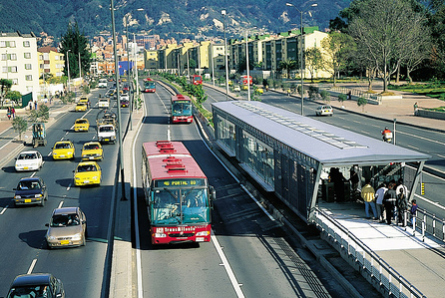
In 2001, the city [Bogot
Continue reading “Speeding New York’s Buses”

Wiki bike maps and bike routes


OpenStreetMap is a free editable map of the whole world. It is made by people like you.

OpenStreetMap allows you to view, edit and use geographical data in a collaborative way from anywhere on Earth.

OpenStreetMap’s hosting is kindly supported by the UCL VR Centre and bytemark.

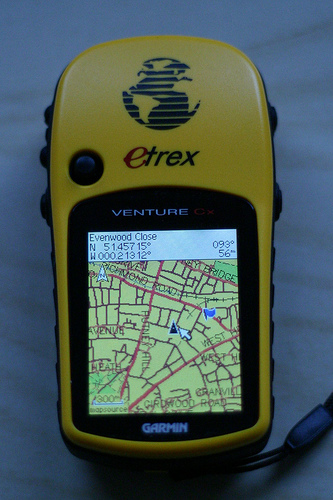
While there are no local bike routes yet, there is a lot of potential here. They are using this in the UK to produce the following bike map:
Continue reading “Wiki bike maps and bike routes”

Chicago Mayor defending cyclist

Chicago bicyclists, Mayor Daley knows your pain.

The mayor introduced an ordinance Wednesday that would slap fines ranging from $150 to $500 on motorists who turn left or right in front of someone on a bicycle; pass with less than three feet of space between car and bike; and open a vehicle door into the path of a cyclist.

Daley, an avid rider, said he personally has been involved in unhappy encounters with motorists, providing them with "a few choice words" and "salutes" that he said were delivered "in the Chicago way."
Continue reading “Chicago Mayor defending cyclist”