
Joint Statement Regarding the Revised Transportation Outlook 2035

The Baltimore Regional Transportation Board has released for public review a revised Transportation
Outlook 2035 long-range plan. Transit funding under this revised plan is only $238 million greater than
in the plan released in July of this year, a mere 3% of the 22-year budget. This amount will barely begin
to bring the region the vastly improved transit system appealed for so strongly to the Board in August by
the citizens and organizations of the region.

Incredibly, transit expansion funding remains below that in the plan adopted by the Board only four
years ago, and is a mere 26% of total expansion expenses
Continue reading “Joint Statement Regarding the Revised Transportation Outlook 2035”
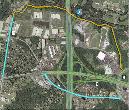
I-95

[Note: that north is the right side of the picture.]
Hi Everyone,

As promised, we are sending this newsletter out to all of you
because there are a lot of things going on that affect your bicycle
travels here in Harford County. Speaking of news, I urge you all
to attend the next Transportation Management Association
Meeting on Thursday, November 27, 2007at 9:00 am at the
HEAT Center in Aberdeen. Melissa Williams of the MdTA will be
presenting the latest information on I-95

Cutting car emissions saves lives

by Donovan Vincent – city hall bureau
A new study on the health effects of air pollution from traffic in Toronto says a 30 per cent reduction in vehicle emissions could save nearly 200 lives a year and $1 billion in health costs.
The Toronto Public Health report, to be released Monday, also estimates that "mortality-related” costs associated with traffic pollution in the city are about $2.2 billion annually.

Authored by Dr. David McKeown, Toronto’s medical officer of health, the study claims this pollution contributes to about 440 premature deaths and 1,700 hospitalizations a year in Toronto.

"When I was growing up, around 35 years ago, maybe one or two children I knew had asthma. Now it’s normal to see kids with (inhalers),” he said, adding he hadn’t read the health department report, but had a rough idea of its findings.
The report says pollution from traffic leads to about 200,000 restricted-activity days per year, where people spend the day sick in bed, or curtail their usual activities.

"Given there is a finite amount of public space in the city for all modes of transportation, there is a need to reassess how road space can be used more effectively to enable the shift to more sustainable transportation modes," it says.
Continue reading “Cutting car emissions saves lives”

enVISIONing Annapolis

An upcoming presentation by enVISIONing Annapolis will be held at 7 p.m. on Tuesday, November 27, 2007 at The Boys & Girls Club, Bates Heritage Center, 121 South Villa Avenue.

Speaker Jane Holtz Kay, architectural critic for The Nation and renowned author of Asphalt Nation, will lead a conversation on "Cars vs. People: Transportation in Annapolis?"

Jane Holtz Kay will discuss the economic, emotional, and physical gridlock caused by cars in American cities and propose ways to get where we need to go without destroying where we live.

All "Conversations" are free and open to the public. This series of public Conversations is sponsored by enVISIONing Annapolis Foundation, St. John’s College, and Annapolis Charter 300.

Legally Speaking – with Bob Mionske: A fatal bias?

By Robert Mionske JD


You raise an interesting point: many cycling deaths result in no criminal legal accountability.


But there’s another type of response I want to discuss in this column-the response from law enforcement and the media. In Bicycling & the Law, I discuss the institutional biases against cyclists, including law enforcement and media biases. Following the recent cyclist fatalities, we have seen firsthand some textbook examples of those biases. I will be discussing some of those cases in this column,


Continue reading “Legally Speaking – with Bob Mionske: A fatal bias?”

Where Bicyclists Can Ride

[A letter to the editor Washington Post]
Per a request from a gentleman who drove quite close to me — and vocally protested my right to share the road — while I was riding my bike south on 17th Street NW around N Street in the District one morning last week, I did look into the law. According to the D.C. Department of Transportation’s guide "Common Enforcement Errors Involving Bicyclists," which is available on the agency’s Web site:
"A bicyclist does not have to ride to the far right if the lane is narrow or if he/she is trying to avoid car doors, pavement hazards, or similar hazardous conditions. A narrow lane is defined as one [that is] 11 feet or less. Most lanes in the District are 11 feet or less."
At the time, I was passing a truck parked in the right lane and another bicyclist. Further, the law "requires an overtaking vehicle to pass to the left at a safe distance." This clearly was not the case during this incident.
Finally, according to the Washington Area Bicyclist Association Web site, "Full lane use [is] allowed when traveling at the normal speed of traffic," as I was.
I am embarrassed that I replied to this gentleman’s anger with equal anger. For that I apologize.
Continue reading “Where Bicyclists Can Ride”