
Apparently this driver almost right hocked a cyclist (2nd most frequent bike accident) but "a officer saying that he wa doing a investigation.i told him what happen and he said not to worry that the other person have no case."
Thank you Maryland police for making the roads safer, not!
Traffic law = to protect drivers from criminal charges when breaking the law with their car.
Car insurance = to protect drivers from financial harm when breaking the law with their car.
Criminal traffic law = Keep the fines low so more can go to the plaintiff in a civil suite
Civil law + Contributory Negligence = Any degree of contributory negligence would bar the plaintiff from collecting damages.
I mean seriously there has to be something for an "educational moment" like a good brow beating or something on record that this guy goes around cyclists in a "possibly" unsafe manner. Something, anything, pretty please?
Continue reading “I’m an idiot drvier in Maryland and this is my story”
Dear Mountain Biking Enthusiast:
Dear Mountain Biking Enthusiast:
I recently had the pleasure of meeting with a number of you to discuss the issue of mountain biking at our reservoirs. At that meeting it was determined that a new task force would be convened to review and revise the current Mountain Biking Plan. The task force will have broad-based representation so that all interested groups have the opportunity for input. Please note that our Watershed Rangers have not ticketed mountain bikers for going off-trail, they have enforced, and will continue to enforce, all other regulations including after-sunset trespassing.
I thank all of you who have taken the time to write. I am confident that by working together we can protect our reservoir lands as well as enjoy the recreational opportunities they afford. Please share this message with your fellow mountain bikers.
Sincerely,
Sheila Dixon
Mayor
Baltimore City
Continue reading “Dear Mountain Biking Enthusiast:”
The art of abandonment
A interesting read for those into urban revival but what struck me was this opening about a car centric city in all its spectacular gray:
IT IS January 2007 in Detroit; 8am, so morning is just starting to moan across the sky. Detroit is on the far western edge of the eastern time zone; winter days are short. You are preparing to head downtown from an Oakland county suburb—West Bloomfield, maybe, Southfield or Farmington Hills. To get into Detroit from any of them you’ll take the Lodge freeway. You have to: Detroit has no commuter trains, no subway, metro or underground. In the Motor City, you drive. So you trundle along on the Lodge, the morning growing lighter but not sunnier, the sky becoming the same nondescript grey as the tarmac, when, at the Lodge’s southward turn, where it meets the Davison freeway coming from the east, something unusual catches the corner of your eye.
Continue reading “The art of abandonment”
FIT! The Urbanite Guide to Getting Healthy and Being Well
Oops. Another year (or is it a decade?) has come and gone, and you’re no closer to being in shape and feeling healthy than you were last year at this time. You meant to join a gym and start a yoga program and bike to work and go for long walks and wake up early and work out … you really did. So what happened? You got busy, or bored, or you re-aggravated that trick knee from college and had to drop the regimen after a week. Or maybe you didn’t even know where to start.
Look around and you will find yourself in good company. Despite a burgeoning fitness industry and ever-more-compelling evidence linking excess weight to a constellation of public health problems, we keep getting bigger and bigger: The average Marylander has put on at least 18 pounds since 1988. The nonprofit United Health Foundation estimates that by 2018 more than half of Maryland residents will be obese, with the projected cost of additional health care to treat increased illness landing north of $7 billion. Kind of makes the cost of gym membership [or a bike] pale in comparison.
…
Continue reading “FIT! The Urbanite Guide to Getting Healthy and Being Well”
Study: Baltimore Unsafe For Pedestrians, Cyclists
BALTIMORE (WJZ) ― A new study ranks Maryland and the Baltimore area among the worst when it comes to pedestrian and bicycling safety.
Derek Valcourt has details on the study and why some question its findings.
Johns Hopkins student Miriam Frankl was killed by a driver while crossing the road, Chuck Yates, 67, was run over by a truck as he rode his bike through Baltimore and a 20-year-old ballet dancer was struck and killed as she was trying to cross Rt. 24 in Harford County.
The horrible headlines have become all too common and, according to a new study by Transportation for America, pedestrians and bicyclists make up 19.4% of Maryland’s traffic-related deaths. That study labels the Baltimore/Towson area as the 29th most dangerous metropolitan area in the nation for both walkers and bikers. That’s no surprise to many Baltimore natives.
“I’ve almost gotten hit down here and I’ve been working down here for over 10 years, at least three times trying to cross the street,” said Carolyn Winder.
The study examines the amount of money being spent on pedestrian safety in Maryland. It ranks the state as second worst in the nation, spending only six-tenths of one percent of its total federal transportation funds on bicycling and walking projects.
State highway officials fault the study for only looking at federal dollars and not looking at how state dollars are spent, and they say more federal dollars are going toward pedestrian improvements than the study indicates.
“We’re really probably a leader in the pack if you look at all of our spending and the whole picture,” said Valerie Burnette Edgar, State Highway Administration.
[Baltimore Spokes: I can not emphasize enough the absurdity of the above statement, imagine going to a doctor to review your progress on your diet and he asks you how much money you have spent on diet food. And he responds you are making great progress as you are spending a lot on diet food. And you are thinking but I gained 100 lbs how is this good progress? Similarly Maryland’s pedestrian fatality rate is now the 6th worst per FARS. Road safety is a lot like a diet as it requires a proper mix of a variety of items and some of those are very low cost items. In rearguards to supporting a variety of items for road safety Maryland is an epic failure. It’s not about how much you are spending it’s about results and how smart you are with spending.]
“I think the report does have some methodological problems to it, but the point is well taken that we need to be doing a lot more in terms of pedestrian safety,” said City Transportation Deputy Director Jamie Kendricks.
[Baltimore Spokes: While I applaud the efforts the City is doing what Federal Aid money I can trace to Baltimore has been Federally earmark funds. That is to say we had to do an end run around the State to bypass the State not following recommend Federal policies in administering Federal Funds. And the absurd bit is now this counts as the State spending funds on our behalf.]
State highway officials say they plan to spend more than $113 million in bicycle and pedestrian improvements over the next five years.
City officials say they’ve already added 45 miles of bike paths in Baltimore and have plans to add another 60 miles of bike lanes next year.
[Baltimore Spokes: Here’s a novel idea; (just to name one) how about also enforcing crosswalk laws? As I said it’s about supporting a variety of items for road safety.and not what is being spent, not mention some things are very low cost.]
Continue reading “Study: Baltimore Unsafe For Pedestrians, Cyclists”
Why MARC doesn’t allow most bikes
By Michael Dresser
There was a lot of discussion on the Getting There blog last week about MARC and bicycles, with some readers questioning why the Maryland Transit Administration isn’t more open to bringing the two-wheelers on board. I suggested that bringing bicycles aboard the trains could pose a safety hazard. Now we’re getting the official version from Henry M. Kay, the MTA’s deputy administrator for planning and engineering (at right in 2005 Sun photo).
Here’s his explanation of MTA’s policy:
When MTA tuned up its bike policies a decade ago we took a close look at MARC with the idea of making it as bike-friendly as Light Rail and Metro (since then the buses were also equipped with racks). Commuter railroads are very diverse in terms of their ridership, equipment, stations and operating environments so what might work on one system won’t work on another. As you correctly identify, our challenge is crowding on peak period trains and the safety issues associated with unsecured and protruding objects. The Penn Line in particular is the fastest commuter railroad in the nation so strict safety standards are in place.
Our solution was a vertical bike rack mounted to the side of each passenger coach. The bike storage area would be separated from the rest of the car by a partition. Our design was tested at the Federal Railroad Administration’s facility in Colorado. However, since it would have meant the loss of two rows of seats in each car we ultimately decided not to proceed. Adding a dedicated car for bikes is not an option for us because we are short on mid-day and overnight storage space. Under our current policy you can bring a bike on board if it can be folded and stowed out of the aisle. Otherwise, we have racks and lockers available at many stations. We are installing more when we receive requests. Here’s a link to a comprehensive description of our policies: https://www.mtamaryland.com/resources/bikesonmta/MTA_Bicycles_Brochure.pdf
From what I know of MARC’s capacity issues, taking space away from passengers to provide secure bike storage would provoke a commuter revolt. I’m going with the MTA on this one.
Continue reading “Why MARC doesn’t allow most bikes”
This time, someone took the whole bike rack in Charles Village
The problem: The bicycle rack at Baltimore’s first on-street bike parking area in Charles Village is missing.
…
"It was a big deal. … To have it go away so quickly, it was like, ‘Well, that’s no fun,’ " Walther said.
The good news is, the bike racks will return – although there will be fewer spots for bikes than before, to balance with demand for car parking, said Nate Evans, the bicycle and pedestrian planner for Baltimore’s Department of Transportation.
…
[Baltimore Spokes: IMHO the problem was the two hour limit on the bike Parking, people were afraid to park there and then have their bikes confiscated. That is after all the impression you get when you see a warning sign and no bikes. Please next time no time limit unless there is over use by commuters.]
Continue reading “This time, someone took the whole bike rack in Charles Village”
10 Leading Causes of Death, United States 2006, All Races, Both Sexes
Directly and indirectly, dependence on the motor vehicle is the leading cause of preventable death.
Motor vehicle fatalities (significant part of the blue boxes) and heart disease (major contributing factor is the lack of exercise) are at (or next to) the top of the list for all ages.
|
Age Groups |
 |
||||||||||
| Rank | |||||||||||
|
1
|
Congenital Anomalies 5,819 |
Unintentional Injury 1,610 |
Unintentional Injury 1,044 |
Unintentional Injury 1,214 |
Unintentional Injury 16,229 |
Unintentional Injury 14,954 |
Unintentional Injury 17,534 |
Malignant Neoplasms 50,334 |
Malignant Neoplasms 101,454 |
Heart Disease 510,542 |
Heart Disease 631,636 |
|
2
|
Short Gestation 4,841 |
Congenital Anomalies 515 |
Malignant Neoplasms 459 |
Malignant Neoplasms 448 |
Homicide 5,717 |
Suicide 4,985 |
Malignant Neoplasms 13,917 |
Heart Disease 38,095 |
Heart Disease 65,477 |
Malignant Neoplasms 387,515 |
Malignant Neoplasms 559,888 |
|
3
|
SIDS 2,323 |
Malignant Neoplasms 377 |
Congenital Anomalies 182 |
Homicide 241 |
Suicide 4,189 |
Homicide 4,725 |
Heart Disease 12,339 |
Unintentional Injury 19,675 |
Chronic Low. Respiratory Disease 12,375 |
Cerebro- vascular 117,010 |
Cerebro- vascular 137,119 |
|
4
|
Maternal Pregnancy Comp. 1,683 |
Homicide 366 |
Homicide 149 |
Suicide 216 |
Malignant Neoplasms 1,644 |
Malignant Neoplasms 3,656 |
Suicide 6,591 |
Liver Disease 7,712 |
Unintentional Injury 11,446 |
Chronic Low. Respiratory Disease 106,845 |
Chronic Low. Respiratory Disease 124,583 |
|
5
|
Unintentional Injury 1,147 |
Heart Disease 161 |
Heart Disease 90 |
Heart Disease 163 |
Heart Disease 1,076 |
Heart Disease 3,307 |
HIV 4,010 |
Suicide 7,426 |
Diabetes Mellitus 11,432 |
Alzheimer’s Disease 71,660 |
Unintentional Injury 121,599 |
|
6
|
Placenta Cord Membranes 1,140 |
Influenza & Pneumonia 125 |
Chronic Low. Respiratory Disease 52 |
Congenital Anomalies 162 |
Congenital Anomalies 460 |
HIV 1,182 |
Homicide 3,020 |
Cerebro- vascular 6,341 |
Cerebro- vascular 10,518 |
Diabetes Mellitus 52,351 |
Diabetes Mellitus 72,449 |
|
7
|
Respiratory Distress 825 |
Septicemia 88 |
Cerebro- vascular 45 |
Chronic Low. Respiratory Disease 63 |
Cerebro- vascular 210 |
Diabetes Mellitus 673 |
Liver Disease 2,551 |
Diabetes Mellitus 5,692 |
Liver Disease 7,217 |
Influenza & Pneumonia 49,346 |
Alzheimer’s Disease 72,432 |
|
8
|
Bacterial Sepsis 807 |
Perinatal Period 65 |
Influenza & Pneumonia 40 |
Cerebro- vascular 50 |
HIV 206 |
Cerebro- vascular 527 |
Cerebro- vascular 2,221 |
HIV 4,377 |
Suicide 4,583 |
Nephritis 37,377 |
Influenza & Pneumonia 56,326 |
|
9
|
Neonatal Hemorrhage 618 |
Benign Neoplasms 60 |
Septicemia 40 |
Septicemia 44 |
Influenza & Pneumonia 184 |
Congenital Anomalies 437 |
Diabetes Mellitus 2,094 |
Chronic Low. Respiratory Disease 3,924 |
Nephritis 4,368 |
Unintentional Injury 36,689 |
Nephritis 45,344 |
|
10
|
Circulatory System Disease 543 |
Cerebro- vascular 54 |
Benign Neoplasms 38 |
Benign Neoplasms 38 |
Complicated Pregnancy 179 |
Influenza & Pneumonia 335 |
Septicemia 870 |
Viral Hepatitis 2,911 |
Septicemia 4,032 |
Septicemia 26,201 |
Septicemia 34,234 |
Continue reading “10 Leading Causes of Death, United States 2006, All Races, Both Sexes”
Charm City: 1903
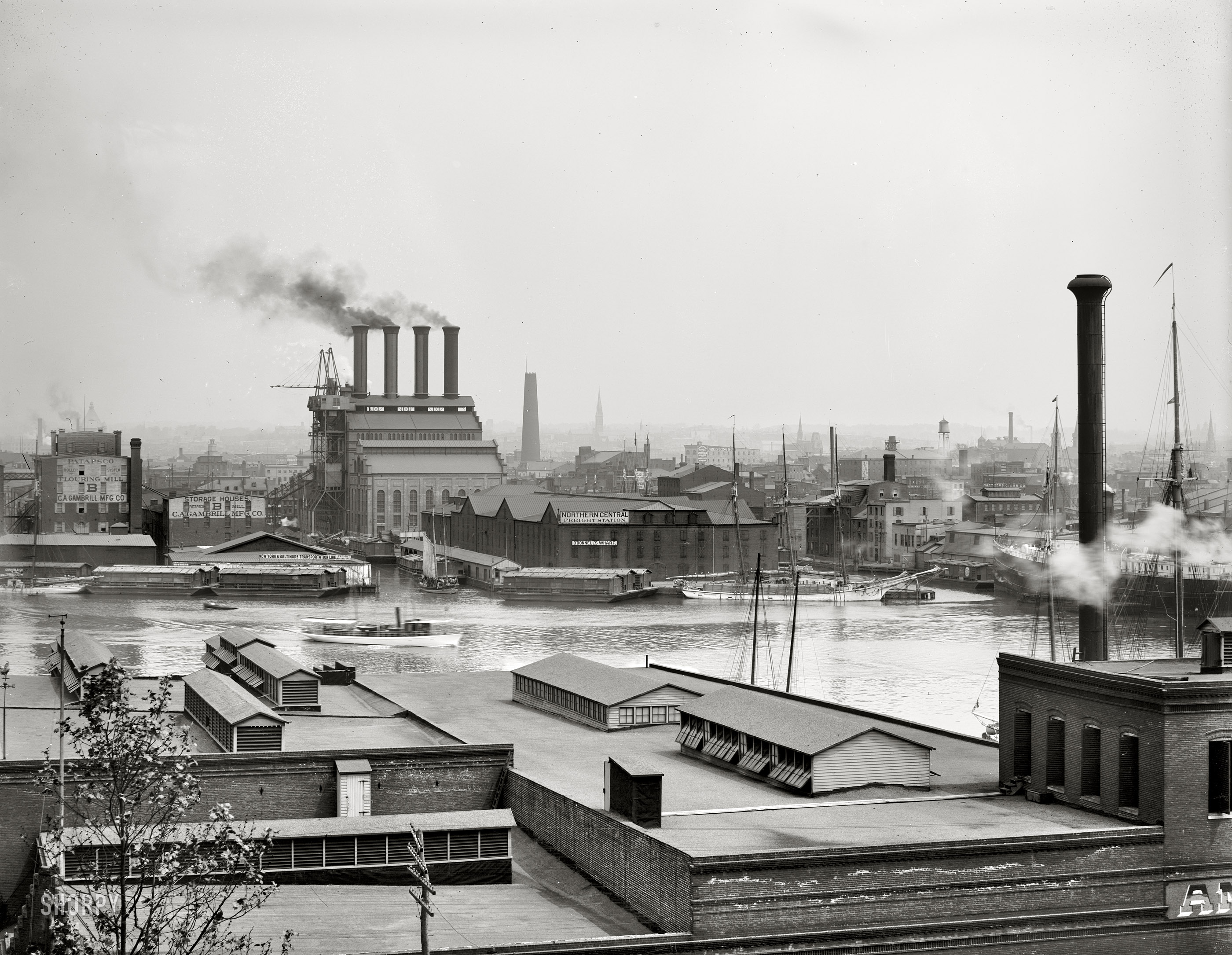
OK nothing about bicycling but boy has the view from Federal Hill changed.
Continue reading “Charm City: 1903”
10 mistakes that can derail your bike injury case

by Doug Landau
Free
Continue reading “10 mistakes that can derail your bike injury case”