
By Bob Mionske
I was returning from a ride, but one of my main routes home was closed for bridge repairs, so I had to use another bridge to cross the river (with eleven bridges connecting the city across the Willamette River, there’s a good reason Portland is nicknamed “Bridgetown”). The alternate route I chose was a bridge with a multi-use path that is wide enough for about three or four pedestrians standing side by side. It was noon, and there were people walking, jogging, and pushing strollers. And of course, cyclists were present.
I was passed by a cyclist, and fell in behind him. As we approached someone walking in the same direction in which we were traveling, I slowed to pass, but the cyclist in front of me just kept his speed. When he was about 10 feet behind the pedestrian, he moved over to the left just enough to avoid hitting the pedestrian from behind. Then he careened back to the right just in time to avoid riding head-on into a jogger. I waited until it was safe to pass, and then proceeded with caution past the pedestrian at about 8 mph. Coming from the opposite direction, I saw another biker doing better than 15 mph. He overtook a pedestrian by swerving over into our half of the walkway, causing me to brake hard to avoid a collision. This behavior was repeated by other cyclists for the duration of my ride across the bridge, and it got me thinking about how we cyclists treat other traffic.
When we’re on the road, we are the underdogs, and I applaud cyclists who stand up for themselves when their rights are being violated. But if some of us are standing up for our rights while simultaneously violating the rights of others around us, that’s hypocritical, and makes for terrible public relations with the majority of the public that doesn’t ride. Further, demanding courtesy and respect from a non-cycling public while not respecting those people will only make it that much harder for us to achieve gains for cyclists.
Beyond this pragmatic perspective—that bad PR is bad for cycling, this isn’t just about PR. At it’s core, this is about common courtesy and respect for the rights of other people.
Ironically, I think that some of the behavior we are seeing is generated by “sunshine cyclists.” These are the people who only ride in the fair weather of the summer months; most of the year, they are in their cars. Now, I think it’s great that people are riding, even if it’s only for a few months out of the year, and even if it’s only because everybody else is doing it. And I think there may be a lot of different reasons why some cyclists seem to ride so discourteously. Some may just be utterly clueless about riding, beyond the basics of keeping the bike upright; some may believe the hype that that’s how cyclists ride; and some may just be self-centered people who ride the same way they drive—with utter disregard for anybody but themselves.
Regardless of which type of cyclist the fair-weather rider is, they are all less invested in relationships between cyclists and others, and therefore, in the affects of their behavior. Fair-weather riders especially seem to have no regard for pedestrians or motorists as they blithely weave around motorists, pedestrians, and other cyclists—and the brunt of any ill-will created by these riders will be borne by year-round cyclists. A pedestrian on a multi-use path doesn’t see somebody who just got on a bike for the first time in 10 years, and is just plain clueless about how to ride around others; all the pedestrian sees is a “cyclist.” And the same thing is true of the “cyclist” who drives most of the year, and thinks that riding without regard for the rules or for common courtesy is part of “the freedom” of being a cyclist. And what about the bully who pushes people around regardless of whether he’s driving or riding? All the pedestrian sees is a “cyclist.”
Of course, not every discourteous cyclist is a fair-weather cyclist. Some year-round cyclists really do believe that their “freedom” means they have rights without corresponding responsibilities to others. And some percentage of people are just inconsiderate, regardless of their chosen mode of getting around; you’ll find them driving, you’ll find them walking, and yes, you’ll find them riding a bike. In my experience, there are fairly few cyclists who are this callous, but again, the impression they create about “all cyclists” is lasting. And of course, because they don’t care about anybody but themselves, they also don’t care that they are creating lasting negative impressions that affect the rest of us.
This means that it’s up to the rest of us—the vast majority of cyclists—to set a better example. One place to begin is on the multi-use path. For cyclists who are used to riding on the road in traffic, the multi-use path can perhaps present a difficult mental transition. On the road, we are at the bottom of the “food chain.” However, once we are on a multi-use path (or “MUP”), we are suddenly the “top predator.”
And even though time spent on the MUP may only represent a brief portion of our ride, the impression about cyclists we are leaving is much greater, relative to our time spent on the MUP, because we interact so closely with pedestrians when we are on the MUP. And of course, these pedestrians are also in all likelihood motorists (and probably voters, too), which means that impressions we create on the MUP will continue to reverberate long after we’ve left the MUP.
It makes sense then, for us to make an effort to create a better environment for everyone (and in the process, improve our P.R.). We can do simple things, like taking care not to frighten or endanger pedestrians when we’re passing them. Besides not creating a lasting bad impression, riding courteously around pedestrians will mean that we are lessening the risk of collisions. And it also means that we are exercising the due care that the law requires of us. It’s a win-win, and it doesn’t cost us a thing.
…
Continue reading “If you ride near pedestrians, you may be doing the rest of us a disservice.”
Can you legally wear headphones while riding?
By Bob Mionske
One of the more common negative cycling stereotypes is that of a tuned-out rider blissfully unaware of his surroundings as he pedals along, lost in the music blaring from his headphones. The reasons cyclists ride with earbuds are as varied as the riders themselves. Music may motivate some to train harder, while others like the way it helps filter out wind noise. Also, moving to music is an ancient tradition dating back to the dawn of human culture. For some, listening to music while riding is just a perfect way to combine two beloved activities.
Although detractors say it’s unsafe, that’s not necessarily true. Most headsets for portable devices are designed in a way that does not inhibit outside sounds from reaching the ear. And in most states, it is not illegal to wear earbuds or a headset while riding. Of course, if you’re listening to music at ear-damaging volumes, outside sounds may be drowned out, but no law requires vehicle operators to be able to hear. If the law did require that, motorists would not be allowed to crank their stereos up and deaf people would be prohibited from operating vehicles. The fact is, when riding we rely less on our ability to hear other vehicles–an imprecise source of information regardless of how fine-tuned our ears are–than we do on sight, along with our balance and our body’s sense of itself in space and time. Thus, even if headphones did impair hearing–and generally they don’t if you’re listening at a reasonable volume out of a single earbud–it’s still possible to safely operate a bicycle.
However, if wearing headphones while riding is against the law in your state (see box), you face potential penalties for doing so. Although the most common one is a traffic ticket, there are potentially more serious ramifications: If you are involved in a collision and you were wearing headphones in violation of the law, you may be found to be liable for negligence even if the other person was also negligent.
The Law: Riding with Tunes
Only five states regulate the use of headphones by cyclists, and generally the limitations are directed at all vehicle operators. Two of those states–Florida and Rhode Island–prohibit any use of headsets. The intent is to ensure that vehicle operators won’t inhibit their ability to hear sirens and vehicle horns.
The other three states that regulate the use of headsets–California, Delaware and Maryland–prohibit their use in both ears; in these states, one ear must be left uncovered. Maryland makes an exception to this law for riders on bike paths.
Some states make a distinction between headsets used for playing music or other recorded material and those used for cell phones. For example, Florida lifts its ban on earphones when they’re used with a cell phone. In fact, as more states begin to regulate mobile-phone use, vehicle operators are increasingly being required to use hands-free devices.
…
Continue reading “Can you legally wear headphones while riding?”
“Bike Bills” Update
Yesterday’s work session & vote on 3 of the bike bills went smoothly and with little debate. Attending the Community Development Subcommittee meeting were Councilmembers Cole, Stokes, Kraft & bills sponsor Mary Pat Clarke. Several members of Baltimore’s cycling community were present as well.
The 3 bills passed by the Community Development subcommitte include:
09-0175R Informational Hearing – Baltimore Police Department – Police and Cyclists
09-0430 Transit and Traffic – Bike Lanes
09-0431 City Streets – Bike-Safe Grates
09-0175R passed without debate with the official hearing being held sometime in October
09-0430 passed with one amendment citing not only the Manual for Uniform Traffic Contral Devices (MUTCD) for the creation of bike lanes, but also “other nationally recognized standards” which will include NACTO’s “Urban Bikeway Design Guide”. There was limited debate on the amount of the fine set at $75, (an increase over the proposed $50 fine) whereas a Blocking and Obstructing Traffic fine carries $250. While the cycling community does support a higher fine, the non-cycling community does not. Also, Councilman Cole stated that police would more likely write a $75 ticket over a $250 ticket.
09-0431 also passed without debate.
These bills will be presented to City Council on Monday, September 20th, 5 pm at City Hall.
For more coverage on these bills, visit Baltimore Brew
Paterson Signs Two Traffic Justice Bills Into Law
On Friday evening, New York Governor David Paterson signed two bills intended to make streets safer by giving law enforcement greater leeway to bring charges against reckless drivers.
As Streetsblog readers are well aware, New York City pedestrians and cyclists are seriously injured or killed by vehicular mayhem on a daily basis, but in the vast majority of cases, the motorist remains free to get right back behind the wheel. Even on crowded city streets, it’s exceedingly rare for drivers who maim or kill to face consequences more serious than a traffic ticket.
One reason prosecutors hesitate to bring charges is that the standards for proving criminal negligence or recklessness can be difficult to meet. Hayley and Diego’s Law, sponsored by Dan Squadron in the State Senate and Brian Kavanagh in the Assembly, creates an intermediate charge — a traffic violation called careless driving — which prosecutors can use in cases where criminal convictions seem unlikely. Motorists found guilty of careless driving will have to complete a driver education course and face fines up to $750, jail time up to 15 days, and license suspensions up to six months — or a year for repeat offenders.
"We expect that the NYPD and District Attorneys are always looking at all the different options to hold people accountable for actions that lead to injuries and deaths," said Transportation Alternatives’ senior policy advisor Peter Goldwasser. "With this law, we expect that they will be able to do that to an even greater degree and create a deterrent effect."
…
[Reading the full article is recommended.]
Continue reading “Paterson Signs Two Traffic Justice Bills Into Law”
Yes For Real: Fake Eyelashes For Your Car
I guess as these things demand more of our money some effort to make them seem more human is needed.
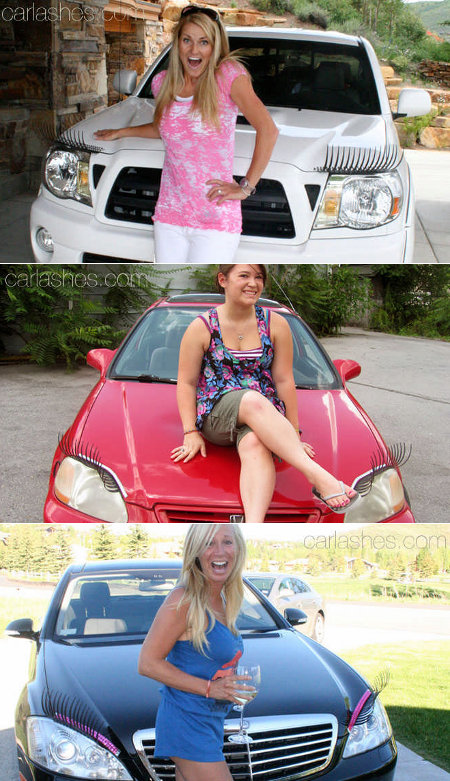
Continue reading “Yes For Real: Fake Eyelashes For Your Car”
Start of school year means busier roads
By Ryan Marshall, Times Staff Writer
Among all the things youngsters have to worry about when it comes time to go back to school, getting there shouldn’t be one of them.
With school in Carroll County scheduled to start Tuesday, the State Highway Administration is warning drivers to watch out for children and other pedestrians along Maryland’s roads.
Once school starts back up, there will be many more children walking, and drivers accustomed to less busy roads in the summer should be aware of the change, said SHA spokesman Chuck Gischlar.
Traffic usually decreases by about 15 percent during the summer as schools are out and people are away on vacation, he said. But fall brings more students walking, and roads are busier from school buses, parents driving children to school and teens driving themselves to classes.
It’s important that drivers, pedestrians and bicyclists all use caution any time they’re on the roads, said Lt. Andrew Winner, commander of the Westminster barrack of the Maryland State Police.
"It’s inherently dangerous to walk on a roadway [that is] traveled by vehicles," he said.
…
Continue reading “Start of school year means busier roads”
Baltimore and its future: crime and the attack on bicyclists
by buzoncrime
The future of Baltimore is in bicycling, and in walking.
Or it would be except for the horrific news of attacks on bicycle riders in Baltimore’s northern neighborhoods, especially near where Stephen Pitcairn was stabbed to death in a heartbreaking robbery heard by his mother hundreds of miles away.
First there was Dan Rodricks’ piece on an attack on a cyclist during the day near the Baltimore Streetcar Museum. A lot can be said about that story, not the least of which was the slow and uninspired police response, both on the 911 operator, the officer, and most importantly how the police force is structured to respond to crime from law abiding citizens. (Betcha, 23-1, if I said my armored car just got held up and I’m following it on Falls Road, the response might have been a little better). It’s nice that the guy who got pelted with stones was able to use some moral suasion to pester the kids into shaking his hand (some of them, anyway). Buz isn’t sure about that’s staying power. They learn to "bank" people for fun and power in their neighborhood, but it’s usually someone we never hear about. [By the way, I wonder what that police report looks like, when the officer eventually did find the victim–if any report was even written-heh, heh, since, actually, the kids committed an attempted armed robbery.]
Then we learn about folks being attacked as they ride their bikes through the "red zone" between North Avenue and lower Charles Village. Groups of guys knock riders off their bikes, and one of them grabs the bike from the fallen victim, and rides off. This has happened even during the evening commute hour.
Our city’s future and livelihood as a livable urban space is dependent on young persons, young professionals, artists, hipsters, and even good ole bike riders like yours truly getting out of their cars and riding to work or school or just around town. Our future depends on bicycling.
Yep, riding bikes. Nobody seems to get this yet. And our city leaders are all wrapped up in patting themselves on the back for looking backward and sponsoring the past: the silly Grand Prix race in downtown Baltimore. (Nascar has been losing attendance at many venues.)
Wouldn’t it have been wonderful instead, if our leaders looked to the future and took the coming end of fossil fuels, global warming and the oil spill in the Gulf seriously? Many well-educated young professionals get it: they choose local, organic, they recycle and they bicycle and walk.
Can you imagine the leadership shown if Baltimore dedicated itself to being truly bicycle and pedestrian friendly for that week, and making an effort to make cycling to and from work a priority all the time? Instead we pander to corporate interests, desperate to get any hunk of money from them, which will never cover the city’s costs to put on the event. Desperate for few more bucks for the hotels and minimum wage jobs many offer. For a week. For a city with one of the highest asthma and allergy rates in the country, one of the highest air polluted cities in the country, and a downtown already choked with traffic on weekends when really nothing is going on, and which has one of the longest average commutes in the country. Noise, pollution, street closings for people trying to get to work for weeks in advance, and after, oh, and yeah, sure, eventually we’ll go swimming in the harbor. I’m sure there’s going to be a lot of police and fire overtime needed for the event, as well–in this fiscally broke city.
But the bike robberies might get a few arrests, then they’ll be forgotten. The message the city is sending: who cares about bikes and safe walking and stuff: let’s all go to cars and race: it’s great. Um, yeah, it’s about as exciting as watching paint dry–till there’s these great crashes and explosions. So, like Preakness, the city evolves into being an entertainment place for a few days, with lots of partying, drinking, out-of-towners having "fun", etc. But the city’s real problems basically get unaddressed, because they’re too hard.
There’s a lot of anger out there between the "haves" and "have-nots", and it often leads to violence. There’s little or no manufacturing jobs out there, and a large chunk of the city is a no-go zone, where an internal civil war rages over the "game", and the anger pops loose–mostly on weekends. One judge told me a couple of years ago, regarding our broken criminal justice "system", "the criminals aren’t afraid of us anymore". He was meaning us in general–the taxpayers.
So, despite what you may have thought about former Mayor Dixon, she did have a vision of clean and green for the city, and was an avid bicyclist herself. As John Lennon might have said, Imagine: closing downtown streets, not for a car race, but for bicycling and walking, in an effort to get folks moving, healthy, and combating obesity, and doing it often, and using it as a marketing and selling point in conjunction with the city’s other strengths. An effort to bring the city to a more human scale, where we get to chat and wave at each other and therefore become safer. Instead, we get 200mph cars racing each other downtown, and the bike robberies and "bankings" continue.
Continue reading “Baltimore and its future: crime and the attack on bicyclists”
Law would increase pedestrian fatalities by emboldening people to — horror! — cross the street.
by
New Jersey is becoming a safer place to walk and bike, new data shows. The state has seen an eight percent decline in traffic fatalities, according to preliminary crash statistics for the year, and the trend is particularly encouraging for pedestrians and cyclists, writes Michelle Ernst at Mobilizing the Region:
 A New Jersey police officer on a “crosswalk sting.” Photo: Mobilizing the Region
What’s most striking about the statistics is the victim classification
break down. A 25 percent decline in bicycle and pedestrian fatalities
makes up the entire year-to-date reduction in statewide traffic
fatalities.
While passenger and driver fatality rates are unchanged, bicyclist fatalities dropped from 10 to 7 and pedestrian fatalities
dropped from 106 to 80, compared to the same period last year. Ernst discusses the role some statewide legal reforms may have played in the reduction:
Obviously there isn’t enough data to show causality between the decline
in fatalities and New Jersey’s recently passed law requiring drivers to
“stop and stay stopped” for pedestrians in crosswalks, or the ensuing crackdown on motorists who fail to yield. But the numbers certainly help allay concerns that the law would increase pedestrian fatalities by emboldening people to — horror! — cross the street.
Also on the Network, Grist explains how Ryan Rzepecki’s “Social Bicycle” bike-sharing system works; Austin Two Wheels makes the case for bicycle infrastructure using data from New York City; and Dead Horse Times calls for “micro-routes” to help fill the void left by the elimination of a bus route in Portland.
Boy, 10, robbed
Four teens assaulted a 10-year-old boy and stole his bicycle in Brooklyn Park on Thursday evening, county police said.
The boy was riding his bike in the 4000 block of Audrey Avenue around 6:20 p.m. when the teens shoved him off, knocking him to the ground.
They stole the bicycle – a gray Mongoose with gold pegs on the front tire and silver pegs on the back tire – and ran away.
They were last seen running across Doris Avenue.
The child was taken by ambulance to Harbor Hospital in Baltimore with minor injuries.
The teens are black, between 16 and 18 years old, and were all wearing black basketball shorts and white T-shirts.
**********************************************************************************************************************************
Young cyclist hurt
County rescue personnel received a call at 8:48 p.m. Friday for a seriously injured bicyclist on the BMX track at Severn-Danza Park in Severn.
Upon arrival, they found a 12-year-old male rider who had suffered serious but not life-threatening injuries, Rostek said.
Paramedics transported the boy by ambulance to Johns Hopkins Children’s Center in Baltimore.
Continue reading “Boy, 10, robbed”
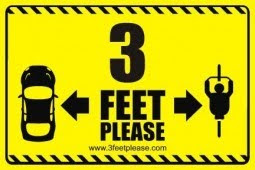
Helpful Safety Resources for Bikes
By Kim
Wow, thank you for all of your comments on my Cycling and Traffic post. I received a ton of helpful advice! I thought that I would add it here so that everyone can benefit.
First of all, there is this brilliant essay from Eye on Annapolis, which was sent to me from Jen. In the essay, Ann Brennan talks to drivers about why she does some of the things she does while she is out on the bike. A great read for cyclists and non-cyclists alike.
Kitzzy sent me a few links that are specific to the Orlando area, but are still wonderful tips for everyone. CommuteOrlando offers some tips about being a confident cyclist. Cycling Savvy comes from the Florida Bicycle Association, and offers some tips about certain maneuvers you can make while on the road.
Kitzzy also sent the Bicycling Street Smarts manual, which includes a lot of helpful information, plus diagrams about riding in traffic, on streets, in darkness, etc. I especially like the section on riding through traffic circles, which will be helpful if and when I get up the nerve to ride the Route 30 (Hampstead) Bypass, which is the closest Bike Route to my house.
My friend Misty sent me a link to Bicycle Safety. This offers a lot of information that was in the Bicycling Street Smarts manual, but in a shorter version with catchier titles. This site also offers a lot of statistics on how many bicycle accidents occur from different mistakes. My takeaway is that around 33,000 people die in car crashes in the U.S. each year. About 1 in 41 is a bicyclist.
After Kitzzy’s links that were local to Orlando, I decided to do my own research to see if Maryland or Baltimore had any bike information out there. I found my county office of tourism offers some interesting bike tours of my local area. This is interesting, and offers some routes I’d love to try, but doesn’t really go into safety at all.
Baltimore City offers some information on Bike Baltimore, but again, this is mostly maps and not really information about biking safely in Baltimore City. The Maryland Department of Transportation offers similar services, with bike maps of the Bike Routes in the state of Maryland.
The best Maryland resource that I found was OneLessCar.org, This includes events, news and information for Maryland cyclists, but their safety page didn’t include nearly the important information that was found in any of the links that anyone sent me. It did, however, include a wonderful fact sheet on Bicycle Safety for Children. There are some great tips on that one, so take a look at it if you are thinking of buying your child a bike.
The biggest thing that I’ve learned from reading up on all of these websites is that I should sit and memorize all of this before going out on the road. Right now, I only interact with cars at trail crossings and in my own neighborhood. I can begin practicing the safety lessons that I’ve learned in my neighborhood, but it will be a little while before I’ve learned enough to ride on roads outside of my neighborhood. Right now, for example, I am still not quite confident enough to reach down and grab my water bottle while I’m riding. If I can’t do that, then I’m not ready to ride on a bigger street just yet.
Image Credit: One Less Car.org
Continue reading “Helpful Safety Resources for Bikes”