Walmart helps fund purchase of Baltimore Police bicycles

By ABC 2 News

Baltimore, Md. – Baltimore Police are teaming up with Walmart to Bolster its Bicycle Patrol Unit. Walmart is now funding of the purchase of 33 police-spec bicycles.

The initiative support Baltimore City’s multi-faceted approach to crime reduction and effectively engage the community in which it serves.

These police bicycles will provide efficient, capable and community-engaging patrol.

They offer increased mobility over other police vehicles, allowing for a more immediate response to serious police calls for service, as they can navigate through alleys and congested roadways more expeditiously then their larger automobile counterparts.

Moreover, and perhaps more importantly, the bicycles garner considerable community attention, which leads to greater and more positive police/community relations, particularly with youth.

Continue reading “Walmart helps fund purchase of Baltimore Police bicycles”

10 Rules For Urban Commuting

from Commute by Bike by Josh King

Josh King in his commuter armorJosh King lives in Seattle, where he commutes by bike every day, rain or shine. Earlier this year he switched to full-time single speed commuting; you can read his thoughts on going gearless at www.singlespeedseattle.com


My commute through Seattle’s Capitol Hill and into the heart of downtown takes me through a maze of cars, pedestrians, and well-intentioned but not always well-thought-out nods to cyclists.  But in this chaos lies the beauty of riding to work every day: It is simultaneously a workout, a mental challenge and, quite possibly, the most efficient way to get to work. But it’s not the same as riding on a placid trail somewhere, blissing out to the iPod.  It’s not even like a fast group ride on a country road.  It requires both heightened attention and a willingness to forget many of the “rules” of cycling.  In their place, here are 10 things I’ve learned about daily commuting in the city:

  1. Obeying traffic rules is not your first priority. There are traffic rules aplenty to deal with in urban riding – street lights, stop signs, one way streets, construction zones, bus lanes, etc.  Obeying these rules is all well and good, but priority number one is staying safe.  I will unapologetically admit to breaking at least a half-dozen traffic rules each way, every day.  Roll through stop signs? You bet.  Run red lights?  Check.  Disobey the “Construction – street closed” signs that have been blocking my route home for the last month?  Absolutely.  You see, while traffic rules have a certain logic, they are built around cars, not bikes.  A moving bike is a safer bike, as momentum allows you to skirt obstacles and avoid danger from any direction.  Sitting motionless in the road at a stop sign or light, a cyclist is at his or her most vulnerable.  Better, then, to slow down, look carefully and keep moving if the way is clear.  The idea is to be critical, to not slavishly accept and obey the traffic rules just because they are there.  Recognize that your safety comes first.
  2. Don’t pay attention to bike lanes. Hell, nobody else in the city does.  I routinely encounter buses, double-parked cars, delivery vans, wrong-way skateboarders and inebriated pedestrians blocking bike lanes.  Always be prepared to take the lane.  Plus, many bike lanes put you solidly in the “door zone” when you’re anywhere on the inner two-thirds of the lane.  That’s not much of a problem when traveling uphill, but a major issue on downhill bike lanes.  Always take the lane – not the bike lane, the whole damn thing – when traveling downhill.
  3. Better aggressive than meek. While stupidly aggressive riding is problematic and dangerous, overly-cautious riding is also a problem.  Riders who are afraid to assert themselves in traffic are a danger to themselves and other riders.  Seeking refuge from traffic, they ride too close to the curb, where the pavement sucks, junk abides and car doors and pedestrians are apt to strike at any moment.  They give up their precious momentum when moments of indecision strike, cutting back on their options and imperiling riders behind them.  Riders new to city streets should accept their trepidation and actively work to overcome it.  As this study about traffic deaths among London cyclists found, an abundance of caution in riding is not a benefit.
  4. Pacelines are very bad. Riding on someone’s wheel is fine when you’re spinning out in the country, but not so good in the city.  You’ve got no idea whether they’re a confident rider, or if they’re going to suddenly brake because someone’s puppy gets too close to the curb.  Be cautious of other riders and give them a wide berth, particularly if they look skitterish or cautious.
  5. Variety is not the spice of life. Save the mixing it up for whatever else you like to do for fun.  You’re riding a bike to and from work for chrissakes, isn’t that fun enough?  You don’t need to alter your route just to add variety.  Knowing your route – every pothole, blind right turn and nasty intersection of it – is critical to riding safely.  Be predictable in your riding and your route.  Get a tattoo or something if your route isn’t exciting enough.
  6. Don’t signal. Look, let’s be honest here – most bike riders don’t know what a right-hand turn signal looks like, let alone drivers.   Signaling is just not going to be useful most of the time, and engaging in the pointless pursuit means taking one hand off your handlebars.  I’ll start signaling when I get nice smooth streets, but until then I’m keeping both hands on the grips.  Go ahead and signal if it’s helpful to a driver and you can do it safely, but dispense with that dumb-ass right turn signal nonsense.  Just point where you’re going.
  7. Don’t stand on your rights. Yeah, you’ve got a bike lane, or the right-of-way, or whatever.  It doesn’t matter.  The laws of physics trump all traffic rules.  A bus is entering the bike lane to meet a stop right ahead of you?  Don’t try to pass in the bike lane.  Ditto for drivers making right turns, clueless pedestrians and lost dogs.  Ride like your life is on the line.  Do what’s safest and most predictable to others in the road, even if that means giving up “your” lane or, God forbid, stopping.
  8. Take the lane. This is a key skill for all urban riders.  Visibility and safety demand that you be able to take the lane any time.  If circumstances feel the least bit dodgy, take the lane.  It may piss drivers off, but better a honk than getting doored or run over.  This is particularly true when it’s not fully safe for a driver to pass you with enough clearance.  If there’s any doubt, don’t tempt drivers to pass you – take the lane and block them, even (especially?) if they honk.
  9. Don’t be a right-winger. I see this all the time:  cyclists waiting at a red light, hanging at the right corner.  Or passing traffic through a green light, on the right.  Dumb, dumb, dumb.  This is the number one way to get hit when riding in the city.  The cars won’t see you as they’re trying to turn right, and they’ll plow right into you or pull across you when you don’t have time to stop.  This is why cities like Portland have installed so many bike boxes:  The safest place to be at a red light is at the front of the line of traffic.  Failing that, take the lane and take your turn with the cars.  Just don’t think you should use the right lane when going through intersection.
  10. Wear a helmet, stupid. I seem to see more helmets in Seattle than in Manhattan, where wearing one must be against the law.  But still – too many fixie hipsters and other too-cool types are cruising around with helmets.  I like that as much as the next guy when cruising on the beach or a resort bike trail somewhere, but the city is HARD.  There’s lots of stuff that will jump up and bite you, and a crack in the pavement or an errant car door can smack your head before you know it.  It’s too high a price to pay for fashion, and besides – there are lots of cool bike helmets starting to hit the market.

Continue reading “10 Rules For Urban Commuting”

How Does Federal Funding Impact Infrastructure for Biking and Walking?

By The Robert Wood Johnson Foundation

[Highlights]

State policy—on suballocation and matching funds—plays a role in spending on bicycle and pedestrian infrastructure in metropolitan regions.
For most federal transportation funding programs, states receive the majority of the money and decide how to spend it. The federal government recommends suballocation, allowing metropolitan planning organizations to directly control funding for transportation enhancements and congestion mitigation and air-quality programs, rather than having to apply to the state. However, many states do not do this. [Like Maryland]

Maryland, for example, requires local governments to provide a 50 percent match, making it more difficult for them to fund bicycle and pedestrian projects. In California and Florida, the state provides the required match.

In Baltimore and Sacramento, spending on infrastructure resulted in a small although statistically significant positive effect on bicycling and walking.
— In Baltimore:
● Bicycling: Trails and improvements to the appearance of the street were modestly related to an increase in bicycling.
● Walking: Improvements to the appearance of the street were related to increased walking, but trail and sidewalk projects were not.
— In Sacramento:
● Bicycling: Bike lane projects were associated with an increase in bicycling, but trail projects were not.
[I’ll note that Baltimore is now seeing this with it’s bike lanes but the State is still over stressing trails over on-road accommodations.]

● Walking: The limited data did not show any association between trail or sidewalk improvement and walking.
● Sacramento used about $5.5 million more of its federal funding on bicycle and pedestrian infrastructure than did Baltimore:
— Sacramento spent 95 cents per resident and used about 2.4 percent of its federal transportation funding on bicycling and pedestrian infrastructure.
— Baltimore spent 59 cents per resident and used 1 percent of its federal transportation funding on bicycling and pedestrian infrastructure.
● The case studies show that support from local governments and advocacy groups is a key driver of metropolitan planning organization–level support for bicycle and pedestrian investments. State policy also plays a role in encouraging and supporting bicycle and pedestrian spending at the regional level, both directly and through its influence on local governments. Other unique regional factors also have influenced spending.

Recommendations
The research team reported the following recommendations for federal policy-makers in the report The Regional Response to Federal Funding for Bicycle and Pedestrian Projects:
● Pass more funding directly to metropolitan planning organizations rather than routing it through the states, thereby reducing the effect of differences in suballocation.
● Design funding programs to achieve specific outcomes and develop outcome-oriented measures of success, or encourage states and regions to create their own programs that tie funding more tightly to local planning goals.
● Provide more tools to state and local governments to help bicycling and walking projects meet eligibility requirements such as demonstrated emissions reductions.

[Yo Maryland, read this: vvvvvv]
● Prohibit states from requiring more than the federally specified local match.
[^^^^^^^^^^^^^^^^^^^^^^^^^^^^^^^^^^^^^^]

● Introduce more requirements for institutionalized non-motorized transportation planning to improve the ability of metropolitan planning organizations to meet their goals for bicycling and walking.
● Continue to emphasize public involvement in the planning process to ensure opportunities for local advocates to shed light on bicycling and pedestrian needs.

Continue reading “How Does Federal Funding Impact Infrastructure for Biking and Walking?”

Bike-Phobic Colorado GOP May Lose Major Party Status

Remember the crazy guy from Colorado and his UN conspiracy theory and the evils of promoting bicycling? Well recent poles show him having 9% of the vote and if that wasn’t enough of a zing against being anti-bike, the GOP may be demoted to minor party status in Colorado until 2014 if he fails to get 10% of the vote.

Hopefully this will send a message to other politicians being anti-bike is not a good thing.

More info in Streetsblog Capitol Hill blog
Continue reading “Bike-Phobic Colorado GOP May Lose Major Party Status”

Introducing Bike Maryland!

Bike Maryland

Last week One Less Car changed its name to Bike Maryland! 

Bike Maryland’s mission is to encourage and promote bicycling, increase safety, improve conditions, and provide a voice for all bicyclists in Maryland. 

Bike Maryland supports public transportation programs but our serious focus will be on supporting bicycling programs, initiatives and advocacy campaigns throughout the state of Maryland.  A current Bike Maryland goal is to increase the number of bicycle friendly communities, universities and corporations in Maryland. 

Does your community, university or place of work support biking?  Is it a commuter friendly environment with bike racks, bike facilities, showers or more?  If so, please contact us and let us know about your special bike friendly environment.  If you live, work or study in a place that isn’t bike friendly, future newsletters will definitely address this topic. 


Your Right To Use Single Track Trails is in Jeopardy!
Emergency Public Meeting this Thursday October 28th.   

Trail users, local communities, outdoor groups, business and ALL who are enriched by the recreational trails at Loch Raven Reservoir are invited to an emergency public meeting on Loch Raven Reservoir trail use changes. The meeting will be held on Thursday, October 28, 2010, from 7:00 to 9:00 p.m. at the Timonium Fairgrounds in the Fasig-Tipton building

  • The goal: Raise awareness about access and recreation issues and convince lawmakers that we need their support to keep single track trails accessible to ALL user groups.
  • The issue: Department of Public Works (DPW) Reservoir Natural Resources Section Police officers have begun enforcing an old and restrictive 1998 Mountain Biking Plan. Single track trail users have been informed that the intent is to restrict access to ALL users!
  • The urgency: Restrictions to single track access have been made by DPW without the public’s knowledge, input or the opportunity for real collaborative problem solving.

Click here for directions, additional information and updates. Contacts: Bob Compton and Dave Blum, MORE, Loch Raven Trail Liaisons at LochRaven@more-mtb.org.

Please sign this petition to tell Baltimore City’s Mayor, the City Council and the Department of Public Works that you want Single Track Trails at Maryland’s Loch Raven, Liberty and Pretty Boy Reservoirs to be legally open to ALL users including mountain bikers, hikers, runners, bird watchers and fishermen.

CLICK HERE to sign the petition.

The Mid-Atlantic Off Road Enthusiasts (over 5,000 members, 950 volunteer hours at Loch Raven this year alone), the International Mountain Biking Association, Bike Maryland (17,000 members), local businesses, local schools, the boy scouts and the citizens who use the trails want and often already work to correct poor trail conditions, remove liter, protect the environment and our municipal water supply. These groups have expertise in building sustainable trails, provide a substantial volunteer base to maintain a world class trail system, and have a history of achieving results. DPW is being asked to partner with organized volunteer groups to help maintain the trails.

Baltimore’s watershed areas are among the largest open spaces accessible to Maryland residents. They are a valuable recreational resource we cannot afford to lose!


Have you been in a bicycle crash recently or know someone who has? We need your help to gather data on bicycling injuries and fatalities in Maryland.

Please take a moment to send us your answers to the following questions:

  1. Where did the crash take place?
  2. Was the accident caused by a bicyclist, motorist, faulty infrastructure, conditions/weather, another reason or combination of the above?
  3. How old was the bicyclist?
  4. Was the bicyclist injured or killed?
  5. Was the bicyclist obeying the rules of the road?
  6. Did a police officer respond to the incident? What was the protocol followed?
  7. Was the bicyclist a frequent rider or new to biking?

Thank you for taking the time to give us your input during the data gathering phase of the new Maryland Bicycle Ambassadors Program. Our goal is to make Maryland a safer place to bike for everyone!

In New York’s bike lanes, who are the real scofflaws?

by Elly Blue
"Those scofflaw bicyclists!"
You hear that phrase a lot, or a version of it.
It’s true that, at least in New York City, there’s probably a scofflaw in any given bike lane at any given time.
But chances are high it’s not the person on the bicycle.
So observed the staff of Manhattan Borough President Scott Stringer when he sent them out to 11 bike lanes in Manhattan to record every single traffic infraction occurring in the lanes.

There’s a tendency to talk about people who ride bikes as though they’re a lawless bunch of yahoos. This study is a breath of fresh air in showing that no, they are simply, like all other people, responding to an environment that doesn’t always serve their needs. When you’re driving, the extra space a bike lane offers is a matter of mobility and convenience; if you’re riding a bike, it’s a matter of being seen and staying alive.
People run red lights on bikes not out of wanton disrespect for the world’s moral order, but because when you’re riding in a sea of cars occupied by people who probably don’t notice or care about your existence, you’re much safer getting as far ahead as possible.
So it’s a relief to hear that the study’s policy recommendation to address red-light compliance is not enforcement or even education but installing more bike boxes. A bike box — basically a space between the stop line for cars and the crosswalk where someone on a bike can wait for the light to change in a more visible position — provides a safer and more comfortable alternative to running the light, rather than penalizing or reforming behavior that’s already motivated by safety.

Continue reading “In New York’s bike lanes, who are the real scofflaws?”

October 28th informational meeting about Loch Raven Trails


you are invited!

Dear Loch Raven Trail User–

We have organized an informational meeting regarding the current state of events at Loch Raven Reservoir regarding the trails that have been in existence for many decades.

The meeting is scheduled for October 28th, at the Timonium Fairgrounds. The meeting will start at 7:00 PM and last for 9:00PM.

This meeting won’t be aimed the complaints we all have regarding this situation, but rather will be focused on updating you all on the issue at hand, and what we are doing to fight these changes.

PLEASE FORWARD THIS EMAIL to anyone you know that utilizes these beautiful trails. If you are a resident of any communities surrounding Loch Raven, please make contact with your HOA to educate them on the issue at hand. Further information can be retrieved at: https://www.lochraventrailaccess.com

My apologies for  the late notice, but Loch Raven Trail Access Informational Meetingwe have to act now and quickly!

Questions, just ask.

Thanks,
Dave Blum and Bob Compton
MORE Co-Trail Liaisons for Loch
Raven

DIRECTIONS:
The meeting will be at the Timonium Fairgrounds in the building that sits right next to the McDonalds.  The sign on the front says,” Fasig Tipton” (FYI- Formed in 1898 by William B. Fasig and Edward A. Tipton, Fasig-Tipton Co. is North America’s oldest Thoroughbred auction company.) 

You will enter the fair grounds at the first entrance which is across York road from the Giant shopping center.  Make an immediate left into parking for the event and the building will be right in front of you at the other end of the parking area.


MoCo councilmember says not all pedestrian traffic deaths are ‘avoidable’

By Dave Jamieson

The Montgomery County Council just held a transportation subcommittee hearing dealing with pedestrian safety on the county’s roads, where 14 peds were killed last year. When it came to the prospect of slowing auto traffic for the benefit of people on foot, at-large Democratic councilmembers Nancy Floreen and Marc Elrich had very different takes on the subject.

Here’s Ms. Floreen, who lists traffic safety as one of her top priorities:

I’m sorry to be such a downer, but I don’t think we’re doing that great a job. I don’t think there should be any pedestrian deaths. We’re allowing [auto] mobility and speed to dominate the pedestrian existence, as long as we have community design issues that encourage speed… If someone can expect a smooth [and fast] trip to their destination, they’re going to expect it and they’re not going to look out for the pedestrian. We should give greater thought to our design standards. Who’s winning the speed battle? Shouldn’t we do all we can to allow the pedestrians more respect than our systems currently allow?

And here’s her foil, Mr. Elrich:

I don’t agree with Ms. Floreen that all pedestrian fatalities are avoidable. If you try to walk in front of moving cars at 25 miles per hour, [you might get killed]. If people think they can do anything they want do whenever they want, and that a driver can swerve and avoid them, that’s not a reality. People will die as long as they do stupid stuff. You can’t make this world so safe that no one can be harmed. The cost of doing that would be extraordinary.

Continue reading “MoCo councilmember says not all pedestrian traffic deaths are ‘avoidable’”

Cyclist’s Lives Valued at $2,500?

[B’ Spokes: Note that in Maryland the fine for negligent driving is less then $500.]


by JoeAverage

The Manitoba courts apparently value a cyclist’s life at $2,500 – judging by a fine they recently handed down to a man who killed two cyclists.

Motorist Ian Gibbons of Brandon struck and killed two cyclists two years ago. The victims, Robert Joseph Carrier from BC and Daniel Hurtubise from Quebec, were attempting to raise money for diabetes research by cycling across Canada. Thanks to Gibbons, they never made it.

Gibbons was likely driving dangerously, as he was originally charged with dangerous driving causing death. However, the courts could not prove this, and Gibbons was able to plead to careless driving – which bought him the outrageously inadequate sanction of a $5,000 fine and loss of his driver’s licence for three years. This is scarcely a wrist slap for slaughtering two stand-up guys who were out there trying to help others.

Oh, and it took the Manitoba courts a year to get around to charging the motorist. Apparently they had more important things to do than worry about two dead cyclists…

Yes, I’m angry. No, actually, I’m furious. How will motorists ever learn to respect the lives of cyclists when the courts send such clear messages that cyclists’ lives are worth close to nothing? (By the way, I think most motorists do respect our lives; it is the moronic, hate-filled minority of cyclophobes I am referring to. The ones who find it funny to buzz us and honk at us, and those who simply fail to see us because they are driving carelessly or dangerously.)

Nancy Pettigrew killed by Motorist in Giant SUV

I wonder how seriously the US courts will take the death of 30-year-old Green Party Senate Candidate Natasha Pettigrew, killed while riding her bike in Maryland by a woman wielding an SUV? The driver in her giant Cadillac Escalade was so oblivious of the trifling existence of cyclists that she did not even bother to stop, and travelled home with Pettigrew’s bike lodged under her car. Am I the only person who sees something wrong with this picture?
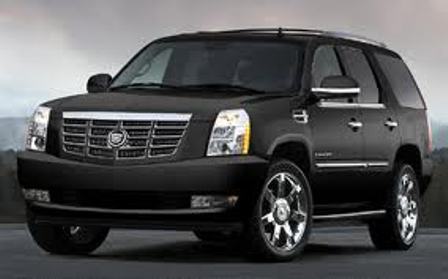
IMHO, no one needs a car this big! No one needs a car so big that it can kill a woman and the driver doesn’t even notice!

Actually, I’ll go further and say, no one needs a car, period. If this apparently short-sighted driver in Maryland had been on a bike herself, the worst that could have happened is a few bruises for both women! But no, she had to be not only in a car, but in a car so big that she could kill a woman and not even notice!

Once again, a fine, upstanding human being mown down by a dangerous or grossly careless motorist.

But … We can’t LIVE without our Cars!

I know that most motorists will tell you, with completely straight faces, that they not only need their cars, but actually they could not live without their cars! I do not know where this pervasive myth has sprung from. But it accounts for the bizarre fact that we choose to ignore the carnage that cars inflict on us.

And it’s not just cyclists, but also pedestrians who are mown down. And while cyclists and pedestrians are visibly more vulnerable to death-by-car, motorists are terrifyingly vulnerable as well; they too die like flies. Every year, around 3,000 Canadians die while driving their cars. Compare that to 152 Canadian soldiers who have died in the whole eight years we have been in the Afghanistan war zone.

But we as a society have decided to ignore death-by-car, choosing to see it as the inevitable price we pay for the cars we believe we cannot live without.

This even though we managed just fine without cars for 99.8% of our existence as humans.

(Homo sapiens has been around for at least 50,000 years, while Henry Ford only started production in 1914 – I did the math!)

I know that giving up cars isn’t easy. If it was easy, I would have done it a long time ago! We have grown fat and lazy and insanely impatient, and so we are dependent on our cars. Still, I do think it is possible for most people, perhaps beginning with baby steps … such as biking to work one day a week.

Tell me what you think. Is it possible for us to get over our car addiction?
Continue reading “Cyclist’s Lives Valued at $2,500?”

Some great news from the MTA

GUARANTEED RIDE HOME PROGRAM GIVES YOU A

LIFT HOME WHEN YOU NEED IT


A personal illness, family
emergency or unscheduled overtime can happen without warning while you’re
at work. The Greater Baltimore/Washington Region Guaranteed Ride Home Program
provides a free ride home for registered commuters who ride in a carpool or
vanpool, take transit, bike or walk to work at least twice a week.


In the event of an
unexpected emergency or unscheduled overtime, Guaranteed Ride Home will arrange
for a free taxi ride, a free transit ride, or even a free rental car up to four
times each year to get you home.


The program is free.
The rides home are free. Sign-up is easy. Call 800-745-RIDE (7433) for
information or sign-up at
www.commuterconnections.org.