
An 83-year old woman who lived alone in the town of Ishinomaki, Japan, escaped the tsunami by fleeing on her bicycle.
When she heard about the tsunami warning, she did the first thing that came to mind and jumped on her bicycle. She prides herself on her health and fitness, she said.
…
Continue reading “83-Year-Old Japanese Woman Escapes Tsunami — By Bike”
After 7 Years, Finally a Vote for Maryland’s Vehicular Manslaughter Bill
From Change.org
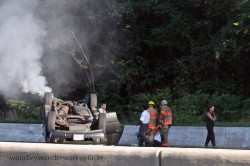 For seven years, accident victim and cycling/walking advocates have been trying to close a flagrant loophole in Maryland’s law to make the road safer for bikers, pedestrians and all who use the road. And for six years running, the bill would get stuck in the same committee. Over and over again.
Now, for the first time ever, the State House Judiciary committee plans to finally vote on the bill. Approval would set the stage for passage by the House by April, a gigantic leap forward towards passing this law.
Almost 5,000 people have already signed a Change.org petition urging the House to pass the bill. The petition was started by Kenniss Henry, whose only child, 30-year-old Natasha Pettigrew, was killed by a hit-and-run motorist on her bicycle last Fall. As Maryland’s law stands now, no matter how reckless the behavior, short of drunkenness, the driver is likely to get off with merely a traffic violation and minimal fine. The new law would close this loophole, introducing jail time for criminally reckless drivers who kill others with their behavior.
As Bike Maryland states: “There have been far too many fatalities on Maryland roads. Motorists are not penalized adequately and get off with a minor traffic court slap on the hand.”
If you live in Maryland, there is an urgent action still to be taken. Call your Delegate today to clearly register your last minute support for the bill.
Here’s how: Enter your home address HERE to identify your Delegate – your Delegate will be listed on the left side of the screen. Click on your Delegate’s name for contact information. Pick up the phone and make a 2 minute phone call. Let them know you are a constituent and you support House Bill 363. It is not necessary to discuss the bill in more detail.
The bill could come up for a vote any day this week. Please call immediately to register your support. And if you haven’t yet—please sign the petition.
Photo credit: Woodleywonderworks via Flickr
Continue reading “After 7 Years, Finally a Vote for Maryland’s Vehicular Manslaughter Bill”
The latest battle in the nonexistent ‘War on Cars’
A great article from the Grist, the highlight:
…
It’s a huge and
incredibly wonky document. But one part of it jumps right out. In it, Litman
takes on people who object to paying higher gas taxes, tolls, or parking fees (emphasis mine):
Critics are wrong to claim that raising
road tolls, parking fees or fuel taxes is unfair. Does charging admission at movie theatres constitute a “war
on film viewers”? Does charging for bread constitute a “war on eaters?” Motor
vehicle user fees only finance about half of roadway costs and a much smaller
portion of parking facility costs; the rest is financed indirectly through
general taxes (for local roads), higher retail prices (for business parking),
lower wages (for employee parking), and higher housing costs (for residential
parking) (Litman 2009; Subsidy Scope 2009). This funding structure forces
people who drive less than average to subsidize their neighbors who drive more
than average. Automobile travel also imposes other external costs, including
congestion delays, accident risk, pollution emissions, and various economic and
environmental costs from fuel consumption. North American fuel taxes are among
the lowest among developed countries and have not been raised to account for
inflation during the last two decades. These low user fees exacerbate traffic
and parking congestions. The pricing reforms that critics call “anti-car” are
often the most effective way to address the problems motorists face.
The truth is, as Litman points out, that
no one is calling for an obliteration of cars from the American landscape. Reform
advocates instead want policies that give more people more choice — which
might be nice, considering the way gas prices are going.
…
Continue reading “The latest battle in the nonexistent ‘War on Cars’”
Guest Post: Penny Troutner on Cycling Advocacy in Baltimore
From Baltimore Velo

In light of the recent Krasnopoler tragedy and the frustrating situation over at Loch Raven, it has become obvious that despite the strides we’ve made as a cycling community in Baltimore, we still have a long way to go. So where do we go from here?
Penny Troutner, owner of Light Street Cycles, has an idea of where we can start. Penny has put together her thoughts about cycling advocacy in Baltimore in a guest post for Baltimore Velo. It’s definitely worth the read,….
I used to do some lobbying for a health care non-profit, trying to expand heath care coverage in Maryland. The message, that increasing affordable health care is a moral and economic imperative, is a tough sell, you know. Someone with a corporate or government job may have no idea what it is like to go without health care. And getting the message through is quite a challenge – the political world is full of advocates, and it’s difficult to get a coherent idea through all the noise. There was no room for apologies regarding the problems of Medicare fraud, or disputes about whether we’re going in the exact right direction, or complaints that our own personal health care issue wasn’t being addressed. The message had to be organized, focused, positive, and relentless.
Bicycle advocacy is a tough sell also. Most government administrators don’t know what it is like to use a bicycle for commuting, rigorous exercise, competition, socializing, exploration, or escape (from life’s frustrations – not the other kind, …although, there’s that).
Anyway, just when it seemed as though Baltimore City was poised to make real progress in our direction, we have been dealt blow after blow of disappointments. A very obvious and tragic case of a car not yielding the right of way to a bicyclist in a bike lane is still not resolved by the police. Loch Raven Reservoir, long loved, long ridden, and consistently maintained by mountain bikers is being yanked away – every proposal and partnership offer from the mountain bike community being immediately dismissed. A resolution by the Baltimore City Council for Complete Streets design is rejected by the City Administration. Pretty lousy, right? So, we could whine about it… or we could do something.
Let’s say we should do something – it has to be the right thing. The bicycle advocacy movement needs operate in the same manner as any good lobbying effort. The group needs to be organized, focused, positive, and relentless to break through the noise and earn respect outside it’s domain.
It’s not there yet. There are significant hiccups. Here are some of our common, negative actions:
- When experienced cyclists critique the value of bike lanes, progress for the inexperienced cyclist crumbles and takes a back seat to internal bickering. Those already enamored of our sport need to advocate for conditions that encourage more people to take up our sport and increase our numbers.
- When cyclists rise up on one issue, their own, and ignore the plight of other cyclists, the potential strength of the message dissolves, and we devolve into just a few small inconsequential and unconnected groups, easily dismissible. There is strength in numbers and we are stronger as a whole.
- Finally, when cyclists criticize other cyclists or apologize for cyclists’ behaviors, or bring negative cycling behavior to the attention of the officials we lobby, it’s as disruptive as nails on a chalkboard. When advocating for an underrepresented group, the officials already hold all the cards – there’s no sense handing them a whole new deck. Casting cyclists in a bad light reinforces the very opinion we are trying to reverse – that we are a problem. There is no reason to demonize your own, others are doing that very nicely already. Stand up for your own and deflect criticism from officials. That is the job of the advocate. It is about the whole – it is not about you.
So how do we know what to say? Face time with someone who has many pressing issues to deal with is precious. When speaking to government officials or the press, are we making the best use of the time?
- Are we staying on point and pounding in the group message?
- Using a few key phrases that frame the argument?
- Giving the official some positive action he/she can take to alleviate a bad situation and feel productive?
- Making it clear to whomever is your audience: our issue is their issue, our gain will be their gain?
- Conveying the plight of those we are representing? The official has no interest in developing empathy for this group of people; however, if that empathy develops over time, then we have a convert – the best of all possible triumphs. Councilwoman Mary Pat Clarke is a prime example.
Those in charge must direct the group to be exactly this – organized, focused, positive, and relentless. As they lead, the rest of us need to offer our support and participation. However, any of the previously mentioned negative actions will demonstrate a lack of solidarity, innate organizational weakness, and a lack of resolve on the part of the advocates. If I were on the other side and witnessed such actions, I would not take us seriously, either. So, let’s start our journey with an important thought for all of us:
Primum Non Nocere – Do No Harm.
Continue reading “Guest Post: Penny Troutner on Cycling Advocacy in Baltimore”
$10 million suit says driver pulled a U-turn before colliding with bicyclist
from Baltimore Brew by Fern Shen
The lawyer for the family of a comatose Johns Hopkins University student, critically injured while riding his bicycle last month in north Baltimore, said the family’s $10 million lawsuit against the driver whose car struck him is meant to send a strong message to motorists.
“I don’t think she’ll be (criminally) charged and I’m not sure she should be,” said Andrew G. Slutkin, the lawyer who filed the suit Monday against Jeanette Marie Walke in Baltimore City Circuit Court.
“I don’t think she intentionally did this, I think she made a mistake,” Slutkin said, referring to the 83-year-old Walke, whose car allegedly struck 20-year-old Nathan Krasnopoler on Feb. 26.
But Slutkin argued that judgments like the one Krasnopoler’s family is seeking against Walke are the only way to make Baltimore-area roads safer and prevent similar tragedies.
“The moral of the story is, we need to better educate motorists about the law and about co-existing on the roads with motorcyclists and pedestrians and bicyclists and everyone else,” he said, in a telephone interview. The suit alleges that Walke violated multiple traffic laws in the late Saturday morning collision.
Messages left for Walke today were not returned.
No charges have been filed against Walke. Police have not completed their investigation into the crash, according to Shonte Drake, deputy communications director for the Baltimore City State’s Attorney, who said that media reports that police met to discuss the case today with prosecutors are “a misquote.”
Baltimore city police have backed away from earlier statements that the driver would not be charged and that the cyclist was at fault.
Until other accounts surface, though, the six-page complaint offers the most detailed scenario yet of what may have happened in the crash that has roiled the cycling community and set off a passionate — sometimes ugly – debate among motorists and cyclists about whose behavior most needs to be curbed.
A University Parkway U-turn?
According to the Krasnopoler family’s complaint, Nathan was riding his bike northbound on University that day and Walke was driving southbound on University when she “made a U-turn, and drove past Nathan as both Nathan and Defendant were now traveling northbound on University Parkway approaching 39th St.”
Walke turned right into the driveway of her apartment building, the Broadview, and cut off Krasnopoler’s right of way, the suit alleges. The suit also claims that Walke “failed to properly signal” before making the turn into the Broadview driveway.
The suit says Krasnopoler was unable to stop his bike and was thrown over Walke’s vehicle, which then ran over him, pinning him on his back underneath. Krasnpoler was severely burned because the driver left the car running when it was on top of him, the suit alleges.
His other injuries include eye damage, facial fractures, broken ribs and collarbone, two collapsed lungs and traumatic brain injury, the suits says. The Johns Hopkins engineering student has remained in a coma since the crash.
In the phone interview, Slutkin reiterated the suit’s claim that Walke broke several laws, including failure to yield the right of way in a bike lane.
“I mean, how much clearer could it be when there is a bike lane and there’s a law that just went into effect three months earlier that protects them?” Slutkin said.
(He may be referring to a new law that requires motorists to yield the right of way to cyclists when they are in a designated bike lane or to the so-called “three-foot law,” which says motorists overtaking bicycles “must pass safely at a distance of not less than 3 feet.”)
Slutkin’s firm, Silverman, Thompson, Slutkin & White, also handled the case of the family of another cyclist, John R. “Jack” Yates, who was killed by a truck turning right off Guilford Avenue in 2009. “It echoes this case,” Slutkin said.
The defendants (Potts & Callahan Inc. and the driver of the truck) settled the Yates family’s civil lawsuit for an undisclosed sum. In the Yates case, police also made statements early on that the driver was not at fault. “We found video and other evidence to prove that was not the case,” Slutkin said.
He said the firm has spoken with about a dozen people, “some were at the scene, some were there shortly thearefter,” and “people tell us (Krasnopoler) wasn’t flying, he wasn’t doing anything unusual, he was in the bike lane going maybe 15 miles an hour. She had passed him right before and must have forgotten about it. She turned, cutting him off and causing him to go flying over the car.”
Slutkin said even though he knows some cyclists are reckless, most are not and that he finds some peoples’ hostility toward cyclists “especially in the Sun comments section . . . really annoying.”
“There are a lot of people with this terrible animosity toward cyclists,” Slutkin said. “And the police have their bias against cyclists too.”
Continue reading “$10 million suit says driver pulled a U-turn before colliding with bicyclist”
Cambridge Installs Self Help Tool Stations
from Boston Biker
This is awesome…
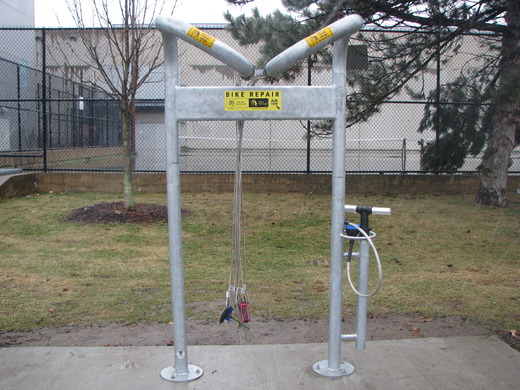
Cambridge Transportation Program Manager Cara Seiderman said the city has installed the bicycle repair stations in Harvard Square and outside the main library in the past two weeks. Another center was installed at Fresh Pond late last year.
“It’s a way of supporting and making it easier for people to bike,” Seiderman said.
The stands provide tire gauges and pumps, Allen wrenches and a few other tools that enable cyclists to make minor repairs, such as adjusting seats or handlebars.
Each station cost the city about $1,000 and Seiderman said the city got the idea from MIT which has already installed repair stations around its campus.
The installation of the repair stations comes as the city has seen a growing number of people riding bikes through Cambridge. A study conducted by the city estimates that the number of people bicycling in Cambridge more than doubled between 2002 and 2008, based on a study of the number of cyclists counted traveling through 17 different intersections. Seiderman said the number has continued to rise since 2008.(via)
For almost free (as far as these sort of things go) you can now stop by two locations in Cambridge and pump up your tires, fix a flat, and several other easy repairs. Thanks Cambridge, Boston you paying attention?
I think this is a great idea, and hope to see a couple of these near some popular bike parking spots all over town.
Continue reading “Cambridge Installs Self Help Tool Stations”
Lawyers for Hopkins student hit by car file $10M suit
The Daily Record coverage, which I will highlight:
“We shouldn’t have to police the police,” he [Slutkin] said.
Continue reading “Lawyers for Hopkins student hit by car file $10M suit”
Bill to create new crime of negligent homicide by vehicle clears major hurdle in Maryland House Committee
In the Maryland General Assembly, House Bill 363 (Manslaughter by Vehicle or Vessel, criminal negligence) unanimously passed the House Judiciary Committee, with amendments. The bill would create a new crime of negligent homicide by vehicle or vessel, with a maximum term of three years.
The existing crime of manslaughter by vehicle requires proof that the defendant consciously disregarded a substantial risk of killing someone. Except for drivers who were either drunk or at least 30 mph faster than the speed of traffic, no one has been convicted unless a witness at trial testified as to the driver’s state of mind, which makes it impossible to convict most solo drivers.
For further details, please see WABA’s testimony.
Maryland is one of only a handful of states where a conviction for vehicular homicide is so difficult. Under House Bill 363, it will be possible to convict a defendant who should have known there was a risk of killing someone, without proving that the defendant actually knew about the risk.
Passing the House Judiciary Committee is a major milestone. The bill has been introduced each of the last seven years, but never brought to a vote, due to the opposition of Judiciary Committee Chairman Joseph F. Vallario (D-Prince Georges).
If you live in Maryland, please call your delegates and ask them to support the bill. Even if you only get their staff, calls make a much greater impression than emails. But emails are certainly worthwhile if you can only find the time after business hours.
Please act as soon as you can, because bills move fast this time of year. The amended bill has not yet been posted. In the next few days, we will provide an update on the amendments and what we need to do next.
(The author, Jim Titus, is a Member of the WABA Board of Directors and resident of Prince George’s County, MD.)
Bicylists can be road ragers too, it seems
Michael Dresser posted an “interesting” complaint letter from a motorist against a cyclist and Michael’s comments were very balanced in response to that letter (his article follows.) I think bicyclists in the Baltimore Metro Area should be appreciative of Michael’s understanding of these issues and being able to address these issues in a more mainstream fashion. Michael calls on both motorists and bicyclists for more civility and does a good job of giving the motorist a new framework on how to rethink the issue but fails in my opinion to give cyclists a new framework. So here is my attempt:
The root of the problem: I am right and you are wrong
This goes for both bicyclists and motorists, let me begin with a true story: In a parking lot there were two motorists one pulling out and one pulling into parking spaces. Both proceeded till blocked by the other persons actions, they honked, they cursed and then finally got out of their cars to discuss the issue “rationally.” One insisted that the person pulling into a parking space has to yield to the one pulling out. The other person insisted that you can’t backup till the area is free of cars so the person pulling in has the right-of-way. And there they sat for 15 minutes with neither one budging and insisting that they are right and the other one is wrong.
This can be easily fixed be replacing “I am right and you are wrong” with LOOK FOR OPPORTUNITIES TO DO A RANDOM ACT OF KINDNESS. And this goes both for motorists as well as bicyclists.
The two levels of “I am right and you are wrong”
It is important to note that there are two levels to this kind of thinking. The most problematic is where the person’s who THINKS they are right reacts to the other persons actions in a negative way, honking or a one finger salute are common reactions and both are wrong. And there is more aggressive behavior of cars swerving across the cyclists path “to teach them a lesson” and such as the cyclist In Michael’s post. But there is a subtle lower level that is equally hazardous for bicyclists.
To explain; picture a j-walker standing on the center line and how much care, courtesy, passing space you give them when driving by in your car. Now picture a person lawfully crossing in a crosswalk and.how much care, courtesy, passing space you give them when driving by in your car. If you are like most people you will give more care to the lawful crossing pedestrian then to the unlawful one. And generally no one finds fault in this kind of behavior UNLESS there is a mismatch of “rules” like in my first story.
This mismatch of “rules” is a very real problem bicyclist face as they are given less courtesy by motorists if the motorist “thinks” the cyclist is in the wrong. If we were to poll people in Maryland we would find that people think bicyclists must: ride on the sidewalk, ride against traffic, ride with traffic, ride in the middle of the traffic lane or ride to the far right of the roadway as possible.
I imagine right now people are going “I know which one is right.” Stop it! No seriously, stop it. Look for opportunities to be kind and considerate, even to crazy bicyclists or motorists. If you want bicycle advocates to wag their finger at this cyclist we need everyone to focus on their safe and lawful behavior on the roadway and not other people’s, enforcement is the job of the police and you can get into a lot of trouble if you try to enforce the laws on your own.
There is little doubt that cyclists feel frustrated and possibly a bit helpless in the onslaught of everyone trying to force what they “think” is right on them and it’s all different. My typical response to an aggressive motorist is “If you think I am doing something wrong call the police. If you try to enforce the law on your own, I call the police and you can go to jail.”
No arguing what is or is not the accepted rule just a plain statement that you can put another person’s life in danger when you act out with your car and there can be serious consequences. This is step one to help a bicyclist feel less helpless and approach conflicts more constructively then a one figure salute. Step two, is the bicycling advocates are working with the State and Baltimore City to improve education and enforcement on ALL sides.
The lack of education and the right turn problem at intersections
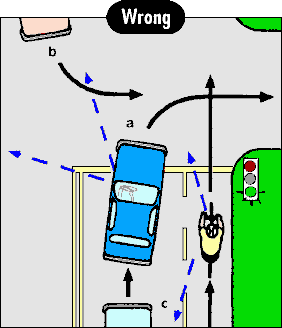
Most cyclists know this is a dangerous position to be in, after all who wants to be in a crash like Nathan Krasnopoler? But how do we deal with this problem? Where is the guidance for bicyclists besides just riding far right? So most bicyclists just try to get out of that uncomfortable situation as fast as possible… by running the light. While that is not a good resolution of the problem it is compounded by unlawfully and impatient drivers who refuse to wait behind the bicyclist before making their right turn. Where is the motorists guidance not to do this? No one is fully innocent with this problem.
When the rules are not clear for all road users and how they are supposed to interact, chaos results.
Bicyclists please see: Must read for bike safety
Motorists please see: Turning across bike lane graphics and Bicycle Safety: It’s a Two-Way Street
And please everyone, lets look for opportunities to do a random act of kindness. Being on the road has enough junk for everyone to deal with but if we all did something nice for someone else, who knows we could make being in traffic a pleasant thing. – B’ Spokes
Continue reading “Bicylists can be road ragers too, it seems”