BEING ON FOOT DOESN’T MAKE YOU SPECIAL

B’ Spokes: Here are some excerpts from this great satire piece by By Matt Meltzer on Miami Beach 411 (pertains to Maryland as well I think):

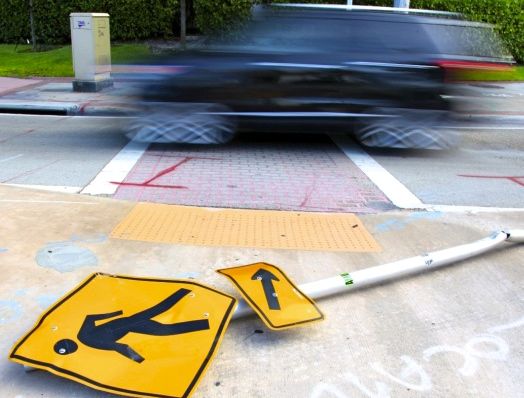
Turning right on a red? As long as there’s no cars go for it. Doesn’t matter if a family of five is trying to cross. If they live in Miami, they know to stop. Crosswalk without a stop sign? That’s what we in Miami call a colossal waste of street paint. Nobody’s slowing down, and cars are a lot bigger and faster than you. Chance it if you like, because you think you have some sort of “right of way.” But the consequences if you’re wrong aren’t worth trying us.

LAWLESSNESS = EFFICIENCY

image

Now some would complain and say this makes Miami a dangerous city. I say it actually helps us be more efficient. Traffic here – especially street traffic – is bad enough as it is. And what with the new red light cameras curtailing our trademark “Four to a Red’ move, it’s getting even slower. Could you imagine if our drivers had to wait for slow-moving tourists to cross the street too? We’d never get anywhere.

Read the full article: https://www.miamibeach411.com/news/miami-pedestrians

What a Difference 60 Years Makes: Dragnet’s Hunt for a Hit-and-Run Killer

by Angie Schmitt, Streets Blog

We have to thank Network blog Copenhagenize for pointing us to this video, from a 1954 episode of the classic detective series Dragnet. In this installment, Los Angeles Police Detective Joe Friday and his team investigate a hit-and-run collision that killed a young boy and his grandmother as they were crossing the street.

Apparently the attitude toward traffic deaths among law enforcement officials has changed quite a bit since 1954, notes Copenhagenize’s Mikael Colville-Andersen:

As Sergeant Joe Friday puts it [6 minutes, 18 seconds in]: “How much difference, for example, as far as moral guilt is concerned, is there between the following: #1 the man who plans a killing, takes up a gun, finds his victim and shoots him to death. And #2 the man who thinks he has to look out for no one’s welfare but his own, gets behind the wheel of a car, disregards the ordinary rules of safety and proceeds to commit homicide with a motor vehicle. Often times the crime masquerades under the guise of an accident. Morally, no matter how you spell it, it adds up to murder just as surely as if the person had taken a gun and shot his victim down.”

Imagine. Look at how much air time was given to a hit & run. Things have certainly changed. Maybe lucrative car commercials ended up weeding out bad branding like this storyline.

Contrast that with modern-day New York City, where the family members of hit-and-run victims have to sue the police department for failing to investigate a very similar crime. Where’s Joe Friday when you need him?


Continue reading “What a Difference 60 Years Makes: Dragnet’s Hunt for a Hit-and-Run Killer”

Sunday Train: The Steel Interstate and the Great Highway Lie

by BruceMcF, Daily Kos

What The Big Highway Lie Is Not, Part I
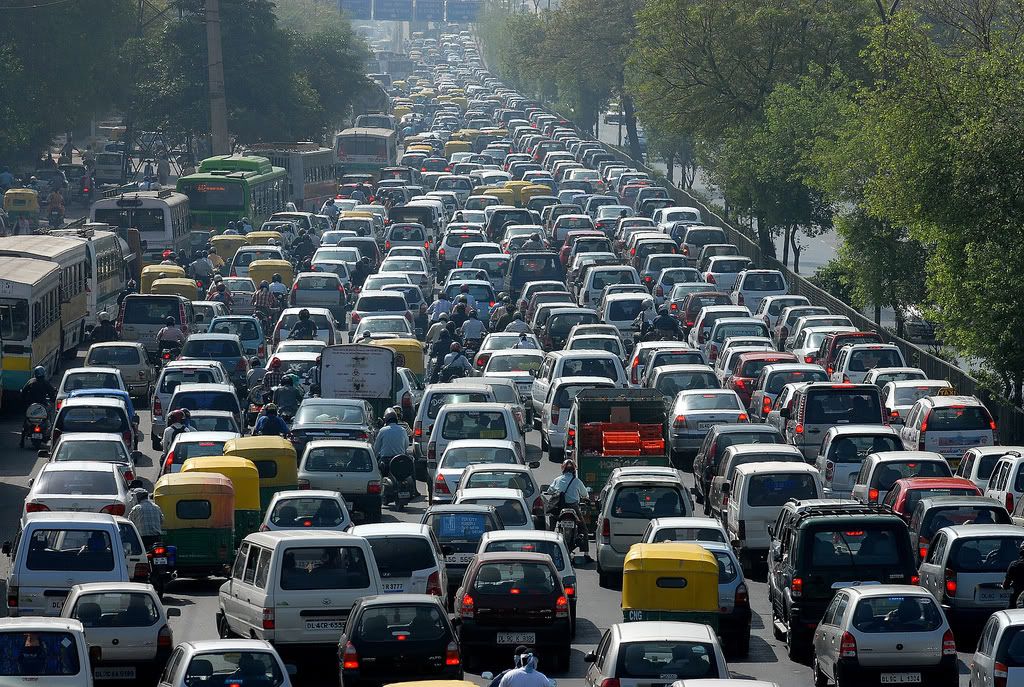
imageThere are some people who labor under the misconception that gas taxes fund highway maintenance cost.

The notion is quite absurd on the face of it. The share of the federal highway fund that goes to roadworks is greater than the share of driving that takes place on funded highways, so obviously driving on unfunded streets … mostly urban and inner-suburban city streets … yields gas taxes that cross-subsidize driving on funded highways.

For example, here is the 2008 FHA Highway Statistics on highway revenues as a percentage of total disbursements:

  • 46.61% Motor Fuel and Vehicle Taxes
  • 5.11% Tolls
  • 4.57% Property Taxes and Assessments
  • 22.19% General Fund Appropriations
  • 9.60%  Investment Income and other Receipts
  • 10.95% Bond Issue Proceeds

Of course, the gas tax and vehicle tax revenues are collected for all road uses, and only directed to qualifying highways. While qualification of urban streets for state gas tax funding varies by state, urban streets that do not qualify for national or state highway designation are excluded from federal highway gas taxes.

Of course, over half a century of subsidy has channeled traffic onto these federally funded highways (that is, Interstate, National, State, County and Township highways), but still, according to the introduction to the 2011 CBO report on alternative approaches to highway funding:

About 25 percent of the nation’s highways, which carry about 85 percent of all road traffic, are paid for in part by the federal government.

… so the direct gas tax and vehicle tax proceeds from driving on federally funded highways is at most 85% of 46.61%, or about 40%.

And, of course, this is also a substantial overstatement, since that is about 15% from Federal gas taxes and about 25% from state gas taxes. And in most states, gasoline is exempt from state and local sales taxes, so that only a portion of state gas taxes are an actual additional user fee, with much of the state gas tax simply being a diversion from the general fund. It would be as if alcohol sales in a state charged a “drinks tax” which went into providing infrastructure in support of drinking parties ~ and were exempted from state sales tax.

I don’t have any recent figures on how much of total state gas tax revenues is an increment over what would be the sales tax proceeds on sales tax exempt gasoline sales, and how much is a diversion, but if the additional user tax component is between 40% and 60% of total state gas taxes, then total “farebox cost recovery” of the highway system is between 30% and 35%.

While “nobody serious seriously believes that gas taxes fully fund our nation’s highways”, anybody who has read the Tea Party Parade that fills many online newspaper comments sections when a rail project is covered knows that lots of people are happy to make the absurd claim.

Now, that absurd claim is simply wishful thinking. It collapses immediately when presented with the publicly available Federal Highway Administration figures. The fact that it is confidently stated by so many serves to establish how many people are happy to state facts that are blatantly false, often passed on from someone else equally misinformed because it sounded like something that ought to be true.

https://www.dailykos.com/story/2012/06/17/1100829/-Sunday-Train-The-Steel-Interstate-and-the-Great-Highway-Lie


B’ Spokes: It’s worth noting that the bulk of the “farebox cost recovery” of the highway system goes to interstate highways. And I will assert that in terms of simple dollars analogy all the money that cars pay in “user fees” go toward the interstate highway system… roads that cyclists are prohibited from using. So when it comes to roads that all modes use, we all help pay for. If cars get a specific “user” tax then why can’t we treat our sales tax as a user tax that helps fund the roads? Keep in mind that outdoor recreation spending is near twice that of motor vehicles (and a portion of motor vehicle spending is exempt from sales tax.)

the farebox recovery ratio above is not a ratio of physical cost imposed upon the highway system by driving, but a ratio of revenues to our inadequate highway spending. From the ASCE report cited above (p. 99), 5yr road spending of $380.5b can be set against total investment needs of $930b, for a 59% shortfall.

Outdoor Industry report says recreational cycling pumps $81 billion into U.S. economy each year

by Jonathan Maus, Bike Portland

According to the report, Americans spend more on bicycling gear and trips ($81 billion) than they do on airplane tickets ($51 billion). That $81 billion is spread between $10 billion on bikes, gear, and accessories and over $70 billion on bicycle "trip related sales." The direct economic impact of that spending supports 772,146 jobs. The report claims that the "ripple effect spending" of all this bicycling activity is over $198 billion and supports 1,478,475 jobs.

The OIA says outdoor recreation is an "overlooked economic giant." With annual spending at $646 billion, it’s third in total annual consumer spending behind only financial services/insurance and health care spending. By way of comparison, total annual spending on motor vehicles and parts is just $340 billion.

https://bikeportland.org/2012/06/20/outdoor-recreation-report-says-bicycling-pumps-81-billion-into-u-s-economy-each-year-73608

In Metro Portland, Car Collisions More Costly Than Congestion

If that is true in the Portland metro area how much more so for Baltimore County?

Population
Portland Metro 2,226,009
Baltimore County 805,029

Fatal crashes from 2007-2009
Portland Metro 151
Baltimore County 270

So with 61% of the population of Portland Metro we have 179% more fatal crashes. Yet we spend more time and money in trying to "solve" congestion then improving safety. Priorities need to change!

Portland metro crash info: https://streetsblog.net/2012/06/21/in-metro-portland-car-collisions-more-costly-than-congestion/
And https://bikeportland.org/2012/06/20/metro-state-of-safety-report-collisions-cost-region-958-million-per-year-73564
Continue reading “In Metro Portland, Car Collisions More Costly Than Congestion”

Changes at Proteus Bike Shop

Via Bike Arlington
As many of you know, Jill DiMauro will be leaving Maryland later this summer. Jill is moving to upstate New York so that she can be near her partner, who is moving to Canada for a year — she must leave the U.S. for 365 days before reapplying for residency status. Because U.S. immigration law does not recognize same-sex marriage, Jill cannot sponsor her partner’s status.
Proteus has a long and interesting history. The shop moved to its current location — a former auto repair shop (we think) — on Route 1 at Erie Street in College Park in the 1970s. In the early days, the shop built custom bikes and bicycle frames, including special orders for racers. Jill purchased the shop in 2003, bringing an enormous passion for everyday bicycling and long-distance riders. Jill specializes in bike fitting, the art and science of helping riders achieve the most comfortable and efficient riding position. A former community planner, she has also made Proteus a second home and friendly hangout for many bike enthusiasts from all over the region.
The new owners are Laurie Lemieux and Ben Bassett. They purchased the shop in May, under a transition plan that will stretch through the end of July. Jill will continue managing the shop and doing pro-fits through July 31.
Laurie is a women’s health nurse practitioner and was most recently employed as a professor of nursing at Catholic University. She earned her masters degree from the University of Maryland and her doctor of nursing practice degree from Johns Hopkins University. She will be transitioning to full-time at the shop throughout this summer as she winds down her teaching duties. She occasionally contributes to this forum under the username “mllwhnp”. (Disclosure: we have been married for 29 years!)
Laurie is a regular on Proteus shop rides and Thursday potlucks. She rides an Orbea road bike on weekends and uses her Bianchi cyclocross bike for commuting. She is currently working as Jill’s apprentice, doing pro-fits and working on bike and accessory orders. She shares Jill’s passion for excellent bike selection and proper fitting — one of her goals for the shop is that a certified bike fitter would be at the shop on every shift, as well as by appointment. She is especially interested in helping newer riders of all ages and abilities improve their fitness, avoid injury, and get riding every day!
Many DC area cyclists have ridden with Ben at one time or another. He regularly rides in local century (or longer) road rides and mountain bike events. He has been known to take 50+ mile rides on his unicycle, cargo bike, or vintage Wizard of Oz bike (and not get dropped)! If you haven’t met him on a ride or at the shop, he is one of the friendliest and most unassuming cyclists you will even meet. His knowledge of bikes and parts is encyclopedic.
Shop repair manager Anthony Reiss and mechanic John Huntzinger will continue to work full time at the shop. Anthony is a former BMX rider and touring enthusiast who has taken self-supported cross-country rides. He has done every imaginable type of repair and bike build, as well as some that were previously unimagined. Johnny joined the shop’s staff about three years ago — he builds bikes, does repairs, and helps Anthony and Ben with customer service.
Of course, Proteus would not be able to thrive without its loyal volunteers. The extended Proteus family have made this transition possible, and will continue to be the backbone of the shop. Everyone is trying to make the best of a crazy legal situation, but we are very excited that Proteus will be in good hands for the future. Jill is leaving the shop in secure financial shape, and has recently signed a long-term lease for the shop’s physical space. Laurie and Ben have made arrangements to continue the shop’s relationships with Bianchi, Kona, Jamis, and Felt (and maybe Orbea) bike makers, as well as with accessory suppliers Endura and Louis Garneau and others. The shop will operate with nearly no debt, and will continue to make a priority of supporting the local bike community.
We are planning to have going away party for Jill in late July. We don’t have a final date and time yet, but it will probably be on a weekend evening after the shop closes at 6pm. All are welcome to drop by and give Jill our thanks and best wishes.
-Jeff
PS. The shop’s website hasn’t been updated yet, but in the meantime, the best way to keep up with what’s going on at Proteus is to visit the Facebook page: www.facebook.com/proteusbicycles .
Continue reading “Changes at Proteus Bike Shop”

US House of Representatives rejects funding Vehicle Mileage Tax studies

by Scott Wilson (Rational Transport) on Road Pricing

The blocking of further funding for this was proposed by Rep. Chip Cravaack (R-Minn.). He argued that it would “would hurt rural drivers, cost a lot to implement, since it would require devices in each car to track how many miles have been driven, and could impinge on privacy rights.”

Now I’m not one to argue whether or not the Federal Government ought to be responsible for funding such studies, as it really depends on whether it wants to supplement or replace its own Federal gas tax. However, I can question the view of Rep. Cravaack, which contains a range of misconceptions. 

I’ll go through them point by point:

Hurts rural drivers: This is a question of equity, and whilst the issue of equity raises claims of winners and losers, the only sure way to ensure equity is to charge according to a fair allocation of costs. Charging by distance on the face of it, means you use the road network more so you pay more. However, does that mean rural users are likely to be overcharged? There is a paucity of accessible research on the revenue generated by different roads by location. However, what I have seen over the years indicates that rural roads get heavily cross subsidised simply because the fixed costs of those roads can’t be recovered easily from the very low volumes of traffic on them. So the question comes as to who should subsidise them or if there is a better way to take this into account. One way is to ask whether the access value of a road to a property might better be recovered from charging the property itself as well as the motorist. That could mean not charging rural trips as much, because property owners value others being able to get to their properties. My counter-argument to this one, is that vehicles visiting rural areas should also pay.  Besides, fuel taxes hurt people who can’t afford new fuel efficient vehicles.  There is a concern that is worthy of debate, but rural roads will equally benefit if heavy trucks pay for the long mileage they undertake on them.  My point is that what is charged (and how it is charged) should reflect cost.

For more good points continue reading here: https://roadpricing.blogspot.com/2012/06/us-house-of-representatives-rejects.html


B’ Spokes: Something I want to bring up as well as I have heard that rural drivers resent subsidizing mass transit since they don’t benefit from it. Well then why should city drivers subsidize rural roads?

rural roads get heavily cross subsidised simply because the fixed costs of those roads can’t be recovered easily from the very low volumes of traffic on them.

Anyway the current system isn’t working too well and it seems such a shame not to look at other ways to get the job done.

Beach Blanket Bike Party!

Friday, July 27, 2012 – 7:00 PM

Washington Monument

That’s right, it’s been friggin’ HOT out there! So what better way to theme our next ride than a BEACH party! Rock your best board shorts or bikini tops (or whatever you want to wear) and bring along a beach ball and water guns as we party our way through Baltimore!

The route, as usual, will be posted later in the month, but we know we are going to pass the Orioles game (like in May) AND make our notorious impromptu dance party at the convention center during Otakon! Our finish this year is confirmed at the sandy boardwalk of Bay Cafe in Canton with happy hour drink prices for all of us! ($3.50 drinks, across the board, minus top shelf) so be sure to plan on joining us after the ride for drinks and food!

Like always, meet us at the monument at 7pm for a 7:30 sharp roll out time! for more information visit our website www.baltimorebikeparty.com, especially if you haven’t been out with us before!

https://www.meetup.com/Biking-in-Bmore/events/72188002/?a=ea1_grp&rv=ea1&_af_eid=72188002&_af=event&_af_mid=13466589&_af_s=625267c47c1ea9ec44f761b0726c976d6bfd7e69

Carroll County Man Day Away from Ending Continental Bike Ride to Support Wounded Vets

BY: KELLI STEELE – WGMD NEWS
A Carroll County, Maryland soldier nearing the end of his military career is just days away from successfully ending a solo bicycle trip across the United States in which he is raising awareness and funds to support military veterans wounded in the service of our country.
59-year-old Sergeant First Class Bill Cherneski will end his ride in Ocean City on Saturday; Tuesday, he rolled into his hometown of Hampstead, Maryland for the first time since April 28 when he began his cross-country trek at the Pacific Ocean in La Push, Washington.
Cherneski will be riding today towards Ocean City to finish his mission of making it to the Atlantic Ocean by noon on Saturday.
https://www.wgmd.com/?p=62318