
By Rick Bernardi, J.D., Bicycle Law
You’ve probably seen “the comment.” It goes something like this. A news article reports that a cyclist was injured, or maybe even killed. The cyclist was following the law. The driver was not. Maybe the driver was just being careless. Maybe the driver was deliberately targeting the cyclist for harassment, or worse.
It doesn’t matter, because “the comment” always follows the same logic: “When cyclists stop breaking the law…” Regardless of what actually happened, regardless of the fact that this particular cyclist was following the law and this particular driver was not, some aggrieved motorist feels obliged to point out that cyclists break the law.
This is the myth of the scofflaw cyclist.
Now, let’s talk about myths for a moment.
Typically, people will use the word “myth” to mean a falsehood. That, however, is not an accurate meaning of “myth.” A myth is actually a story that explains the world according to the perspective of the story-teller. Every culture, for example, has a myth about how the world was created, and how the people of that particular culture came to be in this world.
So by “myth,” I don’t mean that it’s falsehood that cyclists break the law. Of course it’s true that some cyclists break the law. But it’s also true that some cyclists obey the law. Some drivers break the law. Some drivers obey the law. Some pedestrians break the law. Some pedestrians obey the law.
The truth is, motorists, cyclists, and pedestrians are all really just human beings getting around by different means, and all three groups break the law, each in their own way. Motorists speed. Cyclists run stop signs. Pedestrians jaywalk.
The problem is, if somebody wants to explain why one of those groups—cyclists, for example—are a cultural outsider that should be discriminated against, the truth is too complex, too messy, to support that conclusion. So a myth, the myth that cyclists are scofflaws, explains why they are unworthy of protection, unworthy of justice, unworthy of compassion.
…
Read the full article: https://www.bicyclelaw.com/blog/index.cfm/2012/12/5/Confronting-the-Scofflaw-Cyclist
Maryland struggles with reducing pedestrian deaths
B’ Spokes: Just to note Baltimore County is #2
*******************************************************
Ben Giles, Washington Examiner
Maryland transportation officials lowered the bar when they set new goals for reducing pedestrian fatalities after the number of deaths continued to climb despite a nearly $50 million effort to make roads more walker-friendly.
…
The state’s struggles can in part be traced to Prince George’s and Montgomery counties, which rank first and third, respectively, for the number of pedestrian deaths between 2007 and 2011.
…
Montgomery County has shown signs of progress thanks in part to a county-funded pedestrian safety initiative, officials said, which saw $5 million initially set aside for the program.
…
https://washingtonexaminer.com/maryland-struggles-with-reducing-pedestrian-deaths/article/2514884#.UL4zoYfO1yQ
Under Bill Moving Through D.C. Council, Cyclists Hit By Cars Would Get Additional Civil Remedies
[B’ Spokes: I would love to see a similar effort for Maryland.]
*********************************************************************
By Martin Austermuhle, DCist
A bill that would give cyclists that are hit by cars additional civil remedies was approved by a D.C. Council committee today, moving the bill forward more than a year after it was introduced. Under the provisions of the bill, a cyclist knocked off of their bike by a car will be able to sue for either $1,000 or damages, whichever is greater, along with reasonable attorney’s fees and costs if the total amount of damages stemming from the incident is less than $10,000.
According to a committee report, the bill aims to offer cyclists an additional civil remedy in cases that may not produce significant injury but could still lead to thousands of dollars of medical expenses. In those cases, say cycling advocates, it’s often hard for cyclists to find attorneys who will take their case, due to the relatively low value of damages. "The goal of the legislation is to incentivize attorneys to take on the cases of bicyclists in these lower-damages situations, by making provision for attorney’s fees and costs and creating a floor for actual damages of $1,000," says the report.
The bill stemmed from a 2011 incident where a cyclist was knocked off of his bike while riding along Rhode Island Avenue NE. (He famously caught the incident on camera.) The Washington Area Bicyclist Association pushed the proposal, which was based on a similar law passed last year in Los Angeles.
During a November 2011 hearing, WABA Executive Director Shane Farthing explained the issue thusly: "Assault is already illegal, but roadway assault cases with bicyclist victims are never brought by the U.S. Attorney’s office. Assault is also prohibited by civil law, but civil representation is only available to cyclists when they have been significantly injured. Thus, we cyclists are encouraged to share the roadways with motor vehicles, but are given no protection when the operators of those vehicles – frustrated at being asked to share with us—lash out and intentionally harm, or attempt to harm, us."
D.C. Council Chair Phil Mendelson, who originally seemed to doubt the value of the bill, ushered it through the Judiciary Committee today, after which it will head to the full council for consideration. And though there were some small changed made to the bill, Farthing said that was happy to see the bill move forward.
"Our goal is that folks get access to justice," he said this afternoon.
https://dcist.com/2012/11/cyclist_harassment_bill_moves_forwa.php
Longer-distance bike commuting notes
Lots of nice comments about bike commuting for those thinking about taking the plunge.
https://www.dailykos.com/story/2012/11/24/1164409/-Longer-distance-bike-commuting-notes
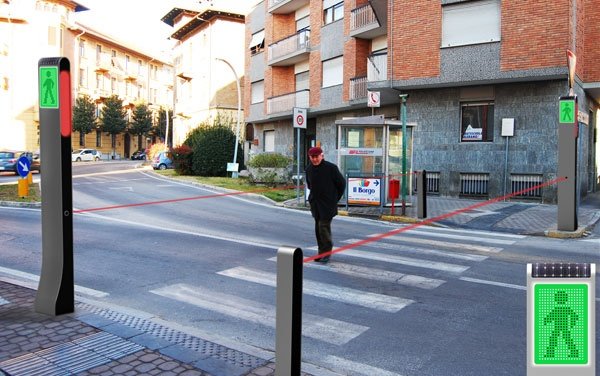
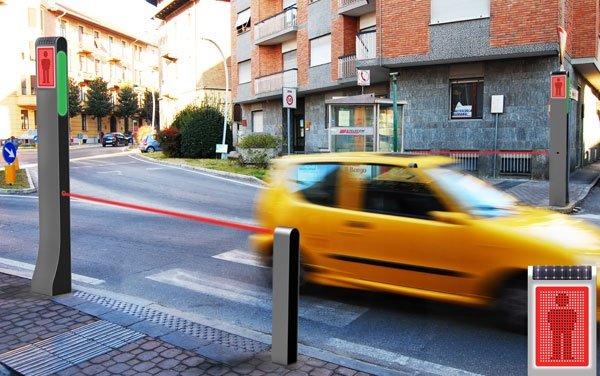
Lasers Make Everything Better: Laser Crosswalk Concept
How to have a yard you can eat

Via: Blue Water Baltimore
Permaculture and edible landscaping expert Michael Judd, founder of Ecologia: Edible and Ecological Landscaping, is making a special visit to Baltimore to talk about how to have your yard and eat it too. December 4th at 7pm.
https://bcmastergardeners.wordpress.com/2012/10/31/december-lecture-have-your-yard-and-eat-it-too/
Continue reading “How to have a yard you can eat”
Contributory negligence – one persons story
B’ Spokes: As you might know I try to collect various information about Maryland’s contributory negligence doctrine and this is one disturbing report.
*************************************************
by Greg, a comment on The WashCycle
In Maryland, 70% of civil suits involving a pedestrian and a vehicle the pedestrian is at fault. Recently, as an example, my friend was hit by a truck on my block walking away from a tow truck with flashing sirens. In spite of Maryland’s requirement that the driver yield right of way when approaching a vehicle using authorized flashing lights and slow to a prudent speed, he swerved around the truck and struck my friend resulting in medical bills and injuries.
My friend, because he was walking on *my property* but on the right hand side of the road as opposed to the left hand side of the road, was found to be contributory negligent and therefore not entitled to any relief.
Contributory negligence makes a lot of sense when you’re talking about someone walking on ice with disregard for their own safety – however to infer that a pedestrian or cyclist needs to hold themselves to a higher standard of vigilance than someone driving a 2000+lbs vehicle is backwards and flies in the face of common sense. People holding hammers need to watch where they swing, I shouldn’t need to walk around the edge of my property worrying about vehicles striking me down because I’m on the side of the road where my house is…
Biking the Great Allegheny Passage
A nice article and sample itinerary. I also want to give a special shout out to our friends at Grouseland Tours (https://www.grouseland.com/ )
https://www.ajc.com/news/travel/biking-great-allegheny-passage/nTF6K/
Researchers Find Link Between Autism and Traffic Pollution
by Angie Schmitt, Streets Blog
One more reason to reduce driving: Exposure to high levels of traffic pollutants may increase the risk that children will develop autism, according to a study published recently in the Archives of General Psychology.
…
The study found that autistic children and their mothers were twice as likely to live in high-pollution areas during pregnancy and the first year of life, controlling for other factors.
…
https://dc.streetsblog.org/2012/11/27/researchers-find-link-between-autism-and-traffic-pollution/
Lessons Leaned in Creating Bike Master Plans
B’ Spokes: Since we have several areas developing Bike Master Plans this article by Richard Layman is a recommended read for those involved in the process. Some highlights from the article:
I often make the point that plans are beginnings, not endpoints.
government is about "sustained efforts."
prepared advocates poised to act are key.
if you want to improve the situation for whatever you are advocating for, YOU NEED AN AGENDA, one that is clear, cogent, and ideally comprehensive and complete.
If you don’t identify the gaps, I guarantee they will never be corrected.
[B’ Spokes: I’ll also echo the importance of this as too often "what can easily be done" takes focus over "what needs to be done."]
https://urbanplacesandspaces.blogspot.com/2012/11/the-western-baltimore-county-pedestrian.html