The Federal Highway Administration at 100

by Richard F. Weingroff

On October 3, 1993, the Federal Highway Administration (FHWA) celebrated
100 years of service to the country. General Roy Stone, the agency’s first
head, called the movement to improve the Nation’s roads a “peaceful campaign
of progress and reform.” Today, the 68,800-kilometer (42,800-mile) Dwight
D. Eisenhower System of Interstate and Defense Highways is the most visible
result, but the peaceful campaign continues as the FHWA adapts to the intermodal
demands of the 1990s.


Origins

In the second half of the 19th century, the railroads dominated interstate
travel, and the limited pre-railroad network of roads fell into neglect. In
the 1880s, however, the growing popularity of a new mode of transportation,
the “ordinary” bicycle — the type with the large front wheel — was the first
sign of change. The speed and individual mobility afforded by the bicycle
created a nationwide craze — complete with bicycle clubs, clothes, races,
and touring guides — for what appeared to be the next important mode of transportation.
With the introduction of the “safety” bicycle with two wheels of the same
size and the pneumatic tire in the late 1880s, the craze became an economic,
political, and social force in the United States. By 1890, over one million
bicycles were being manufactured in the country each year.

image
image

The biggest problem was that, outside the cities, the nation’s bad roads
made bicycling a laborious, dangerous process. As one contemporary slogan
put it, the roads were, “Wholly unclassable, almost impassable, scarcely jackassable!”
The Good Roads Movement was a response to this problem. Bicycle groups, led
by the League of American Wheelmen (L.A.W.), and manufacturers, led by Col.
Albert Pope, worked at the federal, state, and local level to secure road
improvement legislation.

Continue reading “The Federal Highway Administration at 100”

This court outcome is considered a joke but it is far more severe then whatever could happen here

One year ago, 21 year old Tressa Russell ran over 66 year old Stanly Brown (February 11, 2009) when she drove away from a pizzeria. Last week she was sentenced to 3 years of probation, 240 hours of community service and a fine of $5,400.00. What bothers me is not the lack of incarceration but her utter deficient humanity, oh yeah I didn’t mention, she thought she hit a pothole so she kept on driving. She only returned to the scene after she called a friend who told her there were police and ambulances where she said she hit that pothole.
Link to the story from the Albany Times Union : https://www.timesunion.com/AspStories/story.asp?storyID=896427
In an exact quote from her statement printed by the Albany Times Union, she plead guilty primarily, “so I could get my car back and to make the victim’s sisters happy for the loss of their brother.”
The article continued, “The defendant (Tressa Russell) appears to be more upset about the loss of her car and license than the loss of the life of the victim, Stanley Brown.”
In court, Russell’s attorney, Joseph McCoy, said his client was remorseful. He said his client’s decision to leave the scene in no way contributed to the victim’s death.
Just hitting Stanley with her car contributed to him dying.
I hope that our cultural apathy takes a break when hearing story’s like this, until that happens I’m going to continue talking about it.
Continue reading “This court outcome is considered a joke but it is far more severe then whatever could happen here”

People can’t smoke. Cars can.

image

image
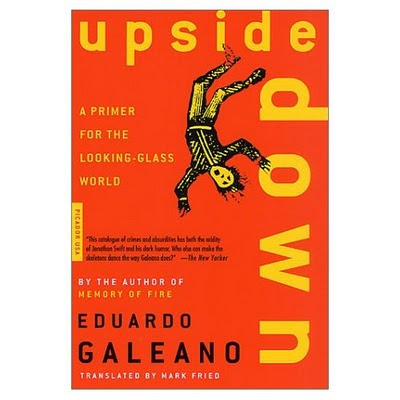
The essay is titled The Sacred Car and is in the book Upside Down – A Primer for the Looking-Glass World.

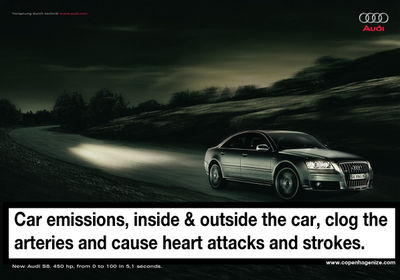
Human rights pale beside the rights of machines. In more and more cities, especially in the giant metropolises of the South, people have been banned. Automobiles usurp human space, poison the air, and frequently murder the interlopers who invade their conquered territory – and no one lifts a finger to stop them. Is there a difference between violence that kills by car and that which kills by knife or bullet?


I saw a cigarette ad in a magazine with the required public health warning: ‘Tobacco smoke contains carbon monoxide.’ But the same magazine has several car ads and not one of them warned that car exhaust, nearly always invisible, contains much more carbon monoxide. People can’t smoke. Cars can.
Continue reading “People can’t smoke. Cars can.”

Secretary LaHood Issues Recall of the American Motorist

“DoT Secretary Ray La Hood has recalled the entire surface transportation fleet to replace an endemic factory defect: dangerous loose nuts have been installed behind the steering wheels of more than half of our cars…”

Too far out to be true? Much has been said lately about the recall of all those Toyotas due to defects in brake algorithms and sticky accelerators. But from what I have read in multiple sources (here is one), there have been about 19 deaths over a decade cause by Toyota’s faulty throttles. Not sure how many have been killed by the brakes, but I suspect similar low numbers.

Meanwhile, what about the real “factory defects” in our vehicle fleet? We have killed roughly 400,000 people in traffic crashes over the last decade and according to the FHWA: “Depending on the source, driver error is cited as the cause of 45 to 75 percent of roadway crashes and as a contributing factor in the majority of crashes (Hankey, et al, 1999).”

Out of all those deaths, the defective gas pedal can explain perhaps %0.005. Driver error? 45-75%. Who are we kidding?

While roads and cars have acquired numerous safety features over the last quarter century (divided highways, better pavement, numerous safety improvements on vehicles including better body design, brakes, tires, lights, and air bags), we see two big problems. One, that motorists increasingly take safety for granted and engage in high-risk behavior such as driver distraction. Secondly, all these improvements have done little to protect non-motorists such as bicyclists and pedestrians.

DoT Secretary Ray LaHood has been quoted as calling Toyota “safety deaf” over the accelerator issue. But looking at the FHWA report, don’t you think its about time that the Secretary of Transportation looked at the cause of the lion’s share of traffic crashes and demanded a recall of that most imperfect of designs, the American motorist, to repair his or her safety defects?

Continue reading “Secretary LaHood Issues Recall of the American Motorist”

From a mobility to an accessibility orientation

image

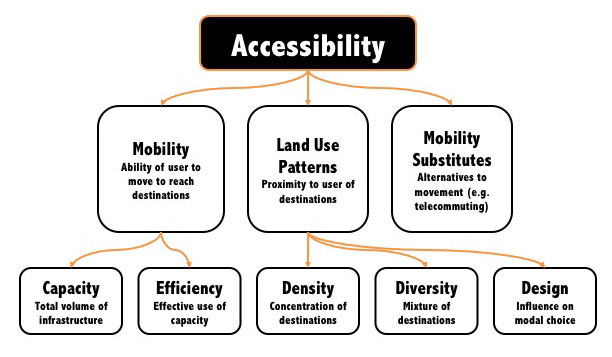
If mobility is “The ability to travel where you want when you want”

Then success is measured in terms of vehicle miles traveled – the more movement, the better.

But is having to drive further to work and further to shop really a desirable strategy? And is having congested roads proof of success in getting more people mobile?

If the car is indeed the ultimate in mobility why then is a common response to “Hey do you want to go see such and such?” “Nah, too much traffic and parking is a pain.” For an example there is evolution of the movie industry, theaters are losing to video rental places and video rental is losing to Red Box and other methods that require little to no travel time.

So this hints that the solution in getting people to what they want when they want it is like in the Dune novels in order to travel further we need to fold space to get our destinations closer to where we are. So modern mobility is stressing less miles traveled and looking at land use patterns. And I will assert that the indicator of getting land use right is when cycling is more common place as when distances required to do what we want when we want are within easy biking distances then true mobility has been archived.
Continue reading “From a mobility to an accessibility orientation”

NJ’s ‘Bicycle Bandit’ Pleads Guilty To 8 Bank Jobs

CAMDEN, N.J. (AP) ― A man police dubbed the “Bicycle Bandit” has admitted committing eight bank robberies in southern New Jersey and Delaware.

Forty-eight-year-old Brian Layton of East Greenwich Township pleaded guilty Tuesday before U.S. District Judge Jerome Simandle in Camden.

Layton was arrested Sept. 25 while trying to flee from a New Jersey state trooper on the Garden State Parkway.

[Which brings this unrelated video to mind.]

Continue reading “NJ’s ‘Bicycle Bandit’ Pleads Guilty To 8 Bank Jobs”

First Lady Launches Childhood Obesity Push With Nod to Biking & Walking

Many kids today aren’t so fortunate. Urban sprawl and fears about safety often mean the only walking they do is out their front door to a bus or a car. Cuts in recess and gym mean a lot less running around during the school day, and lunchtime may mean a school lunch heavy on calories and fat. For many kids, those afternoons spent riding bikes and playing ball until dusk have been replaced by afternoons inside with TV, the Internet, and video games. – First Lady Michelle Obama
Continue reading “First Lady Launches Childhood Obesity Push With Nod to Biking & Walking”

Transport-Related Apps for Your Smartphone

To highlight the biking one:
CycleTracks
CycleTracks, a tool developed by the San Francisco County Transportation Authority, uses your smartphone’s GPS support to record your bicycle trips, display maps of your rides, and help transportation planners make San Francisco a better place to bike. At the end of each trip, real-time data representing the trip purpose, route, and the date and time are sent to the Transportation Authority. Planners use the data to improve the bicycle-use component of their computer model and better predict where cyclists will ride and how land development and transportation infrastructure will affect cycling. Users get to see maps and statistics of their rides.
Continue reading “Transport-Related Apps for Your Smartphone”