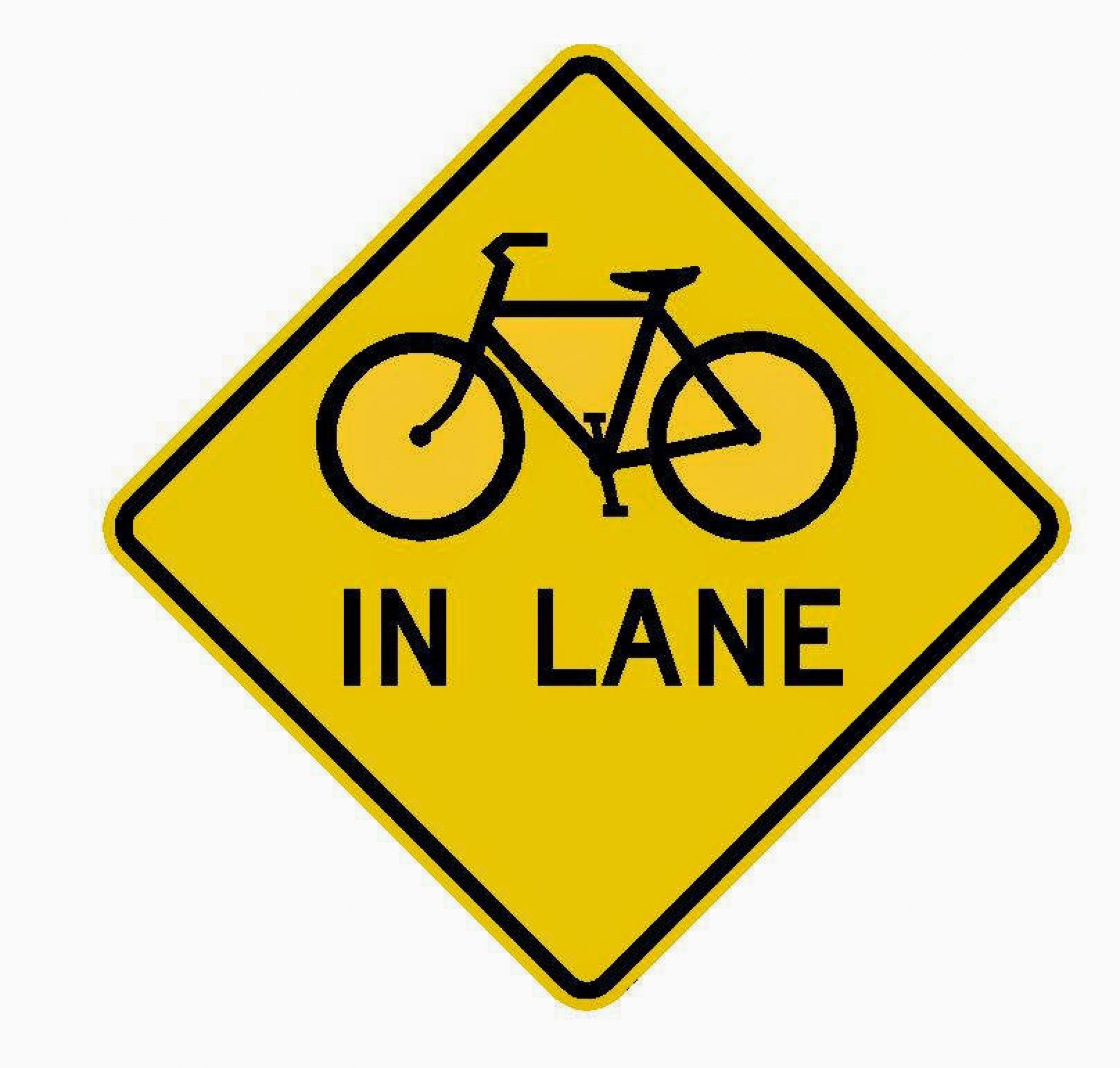
"While kids sit at home texting their friends and slaying computer-generated monsters, a growing number of their parents and grandparents are clogging the roads atop a contraption that was once considered a child’s toy." – D. Dowd Muska
A very interesting formalization of the problem, it is as if kids stuck at home with nothing better to do is not only good but ideal and its only the old folks out and about on a bike that is the scourge of American life.
Continue reading “Four Wheels Good, Two Wheels Bad”
Bikes holding up traffic in bike lane?
The media event of Caron Butler, the Crown Prince of Denmark and two Congress members riding down Pennsylvania’s new/but not finished bike lanes to promote bicycle transportation (and celebrate the 50th anniversary of the Danish embassy) got plenty of coverage yesterday.
…
"Amid dwindling rush-hour traffic, cars honked and sped past the gaggle of cyclists, photographers and reporters. Before the group biked off toward the White House, one woman rolled down her car window to point out that the bicycle event was holding up heavy weekday traffic."
Holding up traffic? Weren’t they in the bike lanes? And if traffic was dwindling, what’s with the honking?
…
Continue reading “Bikes holding up traffic in bike lane?”
Model for a safe road is an Interstate highway … Buzz, wrong
from How We Drive, the Blog of Tom Vanderbilt’s Traffic by Tom Vanderbilt
…
The problem is that American road builders’ model for a safe road is an Interstate highway – with limited access, wide lanes, and few turning options. The result is that engineers try to turn every road into an Interstate, with serious effects on aesthetics, and on safety too.
Dumbaugh argued that there is another model for a safe road, and that is the local street that is “dangerous by design.” Its hazards – curbside trees, for instance – are obvious. They force drivers to slow down, and that makes for greater safety.
He showed a slide of a stretch of road in Florida he had studied as part of a larger investigation of car crash sites. This particular stretch is lined by trees – the obstacle traffic engineers love to hate – on not just one but both sides. But it was clear from the picture that this is part of a real neighborhood – the kind of area where a driver instinctively slows down.
The road runs through the campus of Stetson University, an area with college students, dorms, and bars. And yet during the five year period his study covered, Dumbaugh said, there was not a single fatal crash there.
…
Continue reading “Model for a safe road is an Interstate highway … Buzz, wrong”
How Cul-de-Sacs Are Killing Your Community
from INFRASTRUCTURIST by Melissa Lafsky

The Harvard Business Review has a piece this month on research by Lawrence Frank, Bombardier Chair in Sustainable Transportation at the University of British Columbia, on the effects of cul-de-sacs in neighborhoods in King County, Washington. He found that residents in areas with the most interconnected streets travel 26% fewer miles by automobile than those in areas with many cul-de-sacs. Meanwhile, recent studies by Frank and others show that the higher a neighborhood’s overall walkability, the greater the amount of walking and biking— which means a drop in per capita air pollution, fuel use, and body mass index.
The theory behind cul-de-sacs was that they lessened traffic, since they change the primary function of local streets — rather than offering a way to get anywhere, now they simply provide access to private residences. The problem is that this design inherently encourages car use, even for the shortest trips. It also limits the growth of communities and transportation options. Consider the above maps of one-kilometer walks in two different Seattle suburbs — the first, in Woodinville, is all cul-de-sacs that result in a disconnected jumble of streets with no walking or bike paths, while the second, in Ballard, offers an interconnected network of streets that provide easy access to shopping, parks, and other destinations. The argument that cul-de-sacs increase safety because they limit traffic is also misguided — the more empty and desolate a suburban (and often affluent) street is, the more likely crime is to occur. Also, it’s much harder for emergency vehicles to reach these homes if they’re sequestered in the belly of a web of disconnected dead-ends.
As more and more direct evidence piles up that these dead-end developments are doing no one any good, the cul-de-sac tides are beginning to change: Last year, the Virginia legislature passed a law limiting cul-de-sacs in future developments. And if other states see the benefits for VA – more efficient streets that are cheaper to maintain, as well as other savings from not having to widen arterial roads that otherwise were overburdened by cul-de-sacs — perhaps they’ll follow suit.
Image: Urban Design 4 Health
Continue reading “How Cul-de-Sacs Are Killing Your Community”
Dependence on foreign oil
from TYWKIWDBI by Minnesotastan
* In 1974 with 36.1% of oil from foreign sources, President Richard Nixon said, “At the end of this decade, in the year 1980, the United States will not be dependent on any other country for the energy we need.”
* In 1975 with 36.1% of oil from foreign sources, President Gerald Ford said, “We must reduce oil imports by one million barrels per day by the end of this year and by two million barrels per day by the end of 1977.”
* In 1979 with 40.5% of oil from foreign sources, President Jimmy Carter said, “Beginning this moment, this nation will never use more foreign oil than we did in 1977 – never.”
* In 1981 with 43.6% of oil from foreign sources, President Ronald Reagan said, “While conservation is worthy in itself, the best answer is to try to make us independent of outside sources to the greatest extent possible for our energy.”
* In 1992 with 47.2% of oil from foreign sources, President George Bush said, “When our administration developed our national energy strategy, three principles guided our policy: reducing our dependence on foreign oil…”
* In 1995 with 49.8% of oil from foreign sources, President Bill Clinton said, “The nation’s growing reliance on imports of oil…threatens the nation’s security…[we] will continue efforts to…enhance domestic energy production.”
* In 2006 with 65.5% of oil from foreign sources, President George W. Bush said, “Breakthroughs…will help us reach another great goal: to replace more than 75 percent of our oil imports from the Middle East by 2025.”
* In 2009 with 66.2% of oil from foreign sources, President Barack Obama said, “It will be the policy of my administration to reverse our dependence on foreign oil while building a new energy economy that will create millions of jobs.”
Continue reading “Dependence on foreign oil”
T-Shirt Says to “Eat Less”, I say "Bike More"
from Jay Parkinson + MD + MPH = a doctor in NYC

So Urbane Outfitters pulled this T-shirt from their stores due to cries from anorexia groups that it sends the wrong message. So let’s look at the numbers:
Prevalence of Anorexia = 1%
Prevalence of Obesity = 35%
Americans eat, on average, 3,790 calories a day. That’s nearly double what we should eat. Know how many calories you should eat. [Note what an active person needs to eat, personally I think they need another column for really active people who average 20+ mile bike rides daily. ;)]
I think it’s safe to assume that the US could stand to “eat less.” In fact, obesity kills more people than smoking. It’s a message the vast majority of us need to implement in our lives. Because remember, the kids today are expected to live a shorter, lower quality life than their parents. And that’s not due to anorexia.
UPDATE: So any time I mention anything on my blog about eating less/obesity, it tends to irk many people. A few people have commented saying “No, the US doesn’t need to eat less, we need to eat healthier.” So here’s the deal. If one person eats 5,000 calories of fast food a day vs. another person who eats 5,000 calories of food from Whole Foods, both will be obese. It’s simple physics. First, ensure you are taking in just the right amount of calories per day. Then, ensure those calories come from healthy, fresh, and whole foods.
I don’t support this t-shirt, but I do support the conversation it brings up. We need to have a real dialogue about this issue of obesity. Our culture doesn’t want to talk about it for fear of offending 35% of the population. But the real issue is, it’s killing 35% of the population. Ignoring the issue won’t help us progress and solve this epidemic. So what does the conversation look like? We desperately need to change our culture and understand that obesity is bad for you, bad for our economy, and bad for the environment.
UPDATE 2: Why did I post this?
Continue reading “T-Shirt Says to “Eat Less”, I say "Bike More"”
Survey: More support road rules
By Larry Copeland, USA TODAY
Americans strongly support public policies to reduce highway deaths, including some measures that many elected officials consider too restrictive, such as alcohol ignition interlocks and traffic enforcement cameras, a new national survey finds.
The Center for Excellence in Rural Safety at the University of Minnesota found that most Americans support ignition interlocks for those convicted of drunken driving and automated speed enforcement using cameras and radar. Respondents also support sobriety checkpoints, mandatory motorcycle helmet laws, phased-in privileges for new drivers and laws enabling police to ticket drivers solely for not wearing seat belts.
…
Continue reading “Survey: More support road rules”
Commuting 101 : Don’t Have a Shower?
by Bike Shop Girl
One large complaint or worry for beginner bike commuters is the lack of showering, or showing up sweaty to work. This is a valid worry and shouldn’t be overlooked as your employer, co-worker or client may not appreciate the “biker look.”
Top tips if you don’t have a shower at work

- Photo Credit : Fritz
- Wear wicking clothing. I actually avoid wearing padded shorts in the morning as it creates a “funk” that you can’t avoid. If my commute is shorter in distance I find a comfortable saddle and wear a stretchy, breathable pair of shorts. Either a jersey, or tech-t on top, comfortable shoes or maybe my cycling shoes for longer distances.
- Action Wipes. No joke, go buy them. I’m not paid or bribed to say this (I have to say that by law,) but Action Wipes are in all my saddle bags and in my desk at work. A quick “pocket shower” with Action Wipes and re-installation of deodorant and I’m fresh!
- Bring extra clothes. Don’t worry about working up a sweat as you can use your Action Wipes to clean up and then put on all new clean clothes. Also, I am talking to put on a whole new outfit from top to bottom, putting on clean clothes and dirty socks doesn’t give you the same “fresh” feeling.
- If you may need it, keep a spare at work. This means everything you can’t do without, because we are talking about clothes currently I will mention those but recommend extra tubes/lube/tools at work too.
- If all else fails, start stinking in very important meetings and maybe they will install a shower at your work place.
Road diets in Seattle- two dozen since 1972, proven effective on several fronts
[B’ Spokes: Note a road diet is taking 4 lane road and making a center turn lane, two travel lanes and two bike lanes.]
****************************************************
By David Hiller
….
As of April 2010 Seattle has implemented two-dozen road diets. The first were done in 1972 on California Ave SW and N 45th St. Since then, study after study has shown that road diets result in lower speeds, increased bicycling and walking, and fewer injuries and deaths, all while maintaining vehicle capacity. It’s what one would call a “win, win, win.”
SUCCESS ON STONE WAY
…
Data collected by SDOT on Stone Way shows:
* • Motor vehicles now traveling at speeds closer to the posted 30 mph limit.
* • A decline of more than 80 percent in those going faster than 40 mph.
* • The changes made to the street lowered total all collisions by 14 percent and pedestrian collisions by 80 percent.
* • Motor vehicle traffic volume decreased 6% on the corridor over the study period. This might lead one to believe that the project increased traffic on adjacent streets as people changed routes to avoid delays, but traffic decreased more on adjacent streets than it did on Stone Way N itself.
* • Bike traffic – the stuff we care about – increased 35% over the period and represents 15% of the peak hour volume.
Continue reading “Road diets in Seattle- two dozen since 1972, proven effective on several fronts”
The Secrete Powers of Time
This video has nothing to do with biking really but I found points in the video interesting like measuring the pace of life and the faster pace the more heart attacks, We are rewiring people and how they think so they’ll get angry over waiting for small delays of less then minute, like waiting for your computer booted up.
Is there a secrete power in how we view and utilize time?
Continue reading “The Secrete Powers of Time”