
In 1997 Vermont’s pedestrian fatality rate was 2.04 per 100,000 population and Maryland’s was 2.10 not a whole lot of difference. In 2008 (latest year) Vermont’s pedestrian fatality rate was 0.16! While Maryland made a modest improvement of 2.06.
If you look at the trends on FARS you see that other states are making progress while Maryland is basically staying the same. So Maryland’s ranking among the other states keeps going up to our current rank of the 6th highest pedestrian fatality rate.
I’ll see if I can dig up more info on this and thanks to one of our readers for bringing this to my attention.
Continue reading “Once upon a time in Vermont”
You’re safer on the bicycle than on the sofa!

Copenhagen’s campaign run by the city’s public health office.
Continue reading “You’re safer on the bicycle than on the sofa!”
I didn’t see him
[B’ Spokes: Another great article by By Bob Mionske. While it focuses on the effectiveness of the bike box in Portland I’m going to pull out the bit about trucks turning right and the police bias in memory of Jack Yates, a Baltimore cyclists killed by a right turning truck that didn’t signal yet was not found at fault because "I didn’t see him."]
***************************************************************************
Three years ago this month, Portland, Oregon was rocked by a tragic death. On October 11, 2007, after taking a lunch break at her apartment, 19-year-old Tracey Sparling, a student at the Pacific Northwest College of Art, was riding her bike back to campus. A few blocks from the college, she stopped at a red light. She was in the bike lane. To her left, also stopped, was a cement truck. When the light changed, the truck driver, who was unaware that Sparling was in the bike lane next to his truck, turned right, his truck cutting an arc across the bike lane. Sparling was knocked from her bike and killed.
Portland’s cyclists were still grieving when, 11 days later, tragedy struck again. On October 22, Brett Jarolimek, a popular local racer and bike shop employee—and a talented artist who had graduated from the same art college Sparling had been attending—was riding downhill in the bike lane when he was passed by a garbage truck. At the bottom of the hill, the truck stopped, preparing to make a right turn. As Jarolimek approached the truck, the driver appeared to be yielding to him, but then, suddenly, the driver made his right turn, too late for Jarolimek to stop. Jarolimek, 31, was killed instantly. The truck driver, whose damaged mirror was held on with a bungee cord, never saw Jarolimek.
Portland’s cyclists were shocked by these deaths. But their grief was mixed with outrage at the response of the Portland Police Bureau, which seemed to be bending over backwards to absolve the drivers of any responsibility for these deaths. Yes, both drivers had not seen the cyclists before they turned into them, but under Oregon law, they were required to look before turning—and the police were refusing to issue citations to the drivers. Their reasoning: When the cement truck driver turned into Tracey Sparling, police determined that “there’s just no way he could have seen her,” because she had been stopped next to his truck, in his blind spot. That explanation didn’t quite address the question on everybody’s minds—“Why didn’t the driver look before turning?”—but police attempted to address that doubt when they declined to cite the garbage truck driver who turned into Brett Jarolimek. As police explained, “…yielding the right of way, and determining whether a traffic violation has occurred, comes down to a matter of perception. Basically, the driver has to perceive he has to yield the right of way.” However, if they thought that would calm the furor, they were wrong. They were also wrong on the law.
The problem lay in the traffic investigators’ interpretation of the law. In their view, if the driver did not intentionally violate right of way, or just didn’t bother to look, there was no violation. If the driver simply said the magic words “I didn’t see him,” the police would not cite the driver. However, there was no such intent requirement in the law, no such absolution for not bothering to look. If a cyclist (or a motorist) runs a stop sign, and says, “I didn’t see it,” the cyclist can still be ticketed; there is no requirement in the law that the cyclist had to have intended to violate the law. If a motorist (or a cyclist) is speeding, and says, “I didn’t see the speed limit sign,” the motorist can still be ticketed; the police don’t have to prove that the motorist intended to speed. Similarly, a citation for “failure to yield” does not require proof of an intent to break the law. It is the act, regardless of intent, that is prohibited.
But in the autumn of 2007, Portland police seemed determined to shift the blame away from the drivers involved. And then, almost unbelievably, it happened again—on November 6, another cyclist was right-hooked, at the exact same spot where Jarolimek had been killed just ten days before. The cyclist, Siobhan Doyle, was more fortunate; she survived the crash, although she sustained a broken arm and other serious injuries. And once again, Portland cyclists were outraged by the police response. Police refused to investigate the collision, because Doyle did not suffer trauma-level injuries—and because they refused to investigate, the driver was not cited. The Police claimed they did not have the manpower to investigate collisions resulting in non-trauma-level injuries. But when they refused to investigate the collision that resulted in Doyle’s injuries—despite eyewitness accounts that the motorist had been driving recklessly just prior to colliding with Doyle—they were not saying that policy prohibited them from investigating. Instead, they were just saying that they were choosing not to investigate—even though they were standing right there at the scene.
…
Continue reading “I didn’t see him”
Why I don’t cover TIGER grants
Smart Growth Around America’s article really hit the spot IMHO and I quote:
If The Onion were covering last week’s TIGER 2 announcements, the headline would be: “DOT to replace the deteriorating Kittery-Portsmouth Memorial Bridge; other 70,997 bridges out of luck.”
Continue reading “Why I don’t cover TIGER grants”
The other side of cycling crashes
N.C. woman talks about guilt after killing cyclist
https://www.charlotteobserver.com/2010/10/24/1784528/nc-woman-talks-about-guilt-after.html
The Defenders [TV show ~45 min.]
"to free a single mother accused of running down a jogger while chit chatting on her cell phone"
https://www.cbs.com/primetime/the_defenders/video/?pid=T7cyPIhv3uIDWVU9g28FViE_3ymBTy6k
Surviving ADHD at Work and School
By Angela Haupt
…
At School
Spurred by greater awareness of the condition and a growing number of diagnoses, schools are catering to ADHD students with innovative approaches to learning, such as under-the-desk pedaling devices that simulate bicycle riding. Desks that are designed for standing or have built-in treadmills are also popular. Movement and standing enhance focus and attention, says Katherine Schantz, head of the Lab School, which serves students in kindergarten through twelfth grade in Baltimore and Washington, D.C., who have ADHD and learning disabilities.
…
Continue reading “Surviving ADHD at Work and School”
10 Rules For Urban Commuting
from Commute by Bike by Josh King
 Josh King lives in Seattle, where he commutes by bike every day, rain or shine. Earlier this year he switched to full-time single speed commuting; you can read his thoughts on going gearless at www.singlespeedseattle.com
My commute through Seattle’s Capitol Hill and into the heart of downtown takes me through a maze of cars, pedestrians, and well-intentioned but not always well-thought-out nods to cyclists. But in this chaos lies the beauty of riding to work every day: It is simultaneously a workout, a mental challenge and, quite possibly, the most efficient way to get to work. But it’s not the same as riding on a placid trail somewhere, blissing out to the iPod. It’s not even like a fast group ride on a country road. It requires both heightened attention and a willingness to forget many of the “rules” of cycling. In their place, here are 10 things I’ve learned about daily commuting in the city:
- Obeying traffic rules is not your first priority. There are traffic rules aplenty to deal with in urban riding – street lights, stop signs, one way streets, construction zones, bus lanes, etc. Obeying these rules is all well and good, but priority number one is staying safe. I will unapologetically admit to breaking at least a half-dozen traffic rules each way, every day. Roll through stop signs? You bet. Run red lights? Check. Disobey the “Construction – street closed” signs that have been blocking my route home for the last month? Absolutely. You see, while traffic rules have a certain logic, they are built around cars, not bikes. A moving bike is a safer bike, as momentum allows you to skirt obstacles and avoid danger from any direction. Sitting motionless in the road at a stop sign or light, a cyclist is at his or her most vulnerable. Better, then, to slow down, look carefully and keep moving if the way is clear. The idea is to be critical, to not slavishly accept and obey the traffic rules just because they are there. Recognize that your safety comes first.
- Don’t pay attention to bike lanes. Hell, nobody else in the city does. I routinely encounter buses, double-parked cars, delivery vans, wrong-way skateboarders and inebriated pedestrians blocking bike lanes. Always be prepared to take the lane. Plus, many bike lanes put you solidly in the “door zone” when you’re anywhere on the inner two-thirds of the lane. That’s not much of a problem when traveling uphill, but a major issue on downhill bike lanes. Always take the lane – not the bike lane, the whole damn thing – when traveling downhill.
 Better aggressive than meek. While stupidly aggressive riding is problematic and dangerous, overly-cautious riding is also a problem. Riders who are afraid to assert themselves in traffic are a danger to themselves and other riders. Seeking refuge from traffic, they ride too close to the curb, where the pavement sucks, junk abides and car doors and pedestrians are apt to strike at any moment. They give up their precious momentum when moments of indecision strike, cutting back on their options and imperiling riders behind them. Riders new to city streets should accept their trepidation and actively work to overcome it. As this study about traffic deaths among London cyclists found, an abundance of caution in riding is not a benefit.
- Pacelines are very bad. Riding on someone’s wheel is fine when you’re spinning out in the country, but not so good in the city. You’ve got no idea whether they’re a confident rider, or if they’re going to suddenly brake because someone’s puppy gets too close to the curb. Be cautious of other riders and give them a wide berth, particularly if they look skitterish or cautious.
- Variety is not the spice of life. Save the mixing it up for whatever else you like to do for fun. You’re riding a bike to and from work for chrissakes, isn’t that fun enough? You don’t need to alter your route just to add variety. Knowing your route – every pothole, blind right turn and nasty intersection of it – is critical to riding safely. Be predictable in your riding and your route. Get a tattoo or something if your route isn’t exciting enough.
- Don’t signal. Look, let’s be honest here – most bike riders don’t know what a right-hand turn signal looks like, let alone drivers. Signaling is just not going to be useful most of the time, and engaging in the pointless pursuit means taking one hand off your handlebars. I’ll start signaling when I get nice smooth streets, but until then I’m keeping both hands on the grips. Go ahead and signal if it’s helpful to a driver and you can do it safely, but dispense with that dumb-ass right turn signal nonsense. Just point where you’re going.
 Don’t stand on your rights. Yeah, you’ve got a bike lane, or the right-of-way, or whatever. It doesn’t matter. The laws of physics trump all traffic rules. A bus is entering the bike lane to meet a stop right ahead of you? Don’t try to pass in the bike lane. Ditto for drivers making right turns, clueless pedestrians and lost dogs. Ride like your life is on the line. Do what’s safest and most predictable to others in the road, even if that means giving up “your” lane or, God forbid, stopping.
- Take the lane. This is a key skill for all urban riders. Visibility and safety demand that you be able to take the lane any time. If circumstances feel the least bit dodgy, take the lane. It may piss drivers off, but better a honk than getting doored or run over. This is particularly true when it’s not fully safe for a driver to pass you with enough clearance. If there’s any doubt, don’t tempt drivers to pass you – take the lane and block them, even (especially?) if they honk.
- Don’t be a right-winger. I see this all the time: cyclists waiting at a red light, hanging at the right corner. Or passing traffic through a green light, on the right. Dumb, dumb, dumb. This is the number one way to get hit when riding in the city. The cars won’t see you as they’re trying to turn right, and they’ll plow right into you or pull across you when you don’t have time to stop. This is why cities like Portland have installed so many bike boxes: The safest place to be at a red light is at the front of the line of traffic. Failing that, take the lane and take your turn with the cars. Just don’t think you should use the right lane when going through intersection.
- Wear a helmet, stupid. I seem to see more helmets in Seattle than in Manhattan, where wearing one must be against the law. But still – too many fixie hipsters and other too-cool types are cruising around with helmets. I like that as much as the next guy when cruising on the beach or a resort bike trail somewhere, but the city is HARD. There’s lots of stuff that will jump up and bite you, and a crack in the pavement or an errant car door can smack your head before you know it. It’s too high a price to pay for fashion, and besides – there are lots of cool bike helmets starting to hit the market.
In New York’s bike lanes, who are the real scofflaws?
by Elly Blue
"Those scofflaw bicyclists!"
You hear that phrase a lot, or a version of it.
It’s true that, at least in New York City, there’s probably a scofflaw in any given bike lane at any given time.
But chances are high it’s not the person on the bicycle.
So observed the staff of Manhattan Borough President Scott Stringer when he sent them out to 11 bike lanes in Manhattan to record every single traffic infraction occurring in the lanes.
…
There’s a tendency to talk about people who ride bikes as though they’re a lawless bunch of yahoos. This study is a breath of fresh air in showing that no, they are simply, like all other people, responding to an environment that doesn’t always serve their needs. When you’re driving, the extra space a bike lane offers is a matter of mobility and convenience; if you’re riding a bike, it’s a matter of being seen and staying alive.
People run red lights on bikes not out of wanton disrespect for the world’s moral order, but because when you’re riding in a sea of cars occupied by people who probably don’t notice or care about your existence, you’re much safer getting as far ahead as possible.
So it’s a relief to hear that the study’s policy recommendation to address red-light compliance is not enforcement or even education but installing more bike boxes. A bike box — basically a space between the stop line for cars and the crosswalk where someone on a bike can wait for the light to change in a more visible position — provides a safer and more comfortable alternative to running the light, rather than penalizing or reforming behavior that’s already motivated by safety.
…
Continue reading “In New York’s bike lanes, who are the real scofflaws?”
Cyclist’s Lives Valued at $2,500?
[B’ Spokes: Note that in Maryland the fine for negligent driving is less then $500.]
by JoeAverage
The Manitoba courts apparently value a cyclist’s life at $2,500 – judging by a fine they recently handed down to a man who killed two cyclists.
Motorist Ian Gibbons of Brandon struck and killed two cyclists two years ago. The victims, Robert Joseph Carrier from BC and Daniel Hurtubise from Quebec, were attempting to raise money for diabetes research by cycling across Canada. Thanks to Gibbons, they never made it.
Gibbons was likely driving dangerously, as he was originally charged with dangerous driving causing death. However, the courts could not prove this, and Gibbons was able to plead to careless driving – which bought him the outrageously inadequate sanction of a $5,000 fine and loss of his driver’s licence for three years. This is scarcely a wrist slap for slaughtering two stand-up guys who were out there trying to help others.
Oh, and it took the Manitoba courts a year to get around to charging the motorist. Apparently they had more important things to do than worry about two dead cyclists…
Yes, I’m angry. No, actually, I’m furious. How will motorists ever learn to respect the lives of cyclists when the courts send such clear messages that cyclists’ lives are worth close to nothing? (By the way, I think most motorists do respect our lives; it is the moronic, hate-filled minority of cyclophobes I am referring to. The ones who find it funny to buzz us and honk at us, and those who simply fail to see us because they are driving carelessly or dangerously.)
Nancy Pettigrew killed by Motorist in Giant SUV
I wonder how seriously the US courts will take the death of 30-year-old Green Party Senate Candidate Natasha Pettigrew, killed while riding her bike in Maryland by a woman wielding an SUV? The driver in her giant Cadillac Escalade was so oblivious of the trifling existence of cyclists that she did not even bother to stop, and travelled home with Pettigrew’s bike lodged under her car. Am I the only person who sees something wrong with this picture?
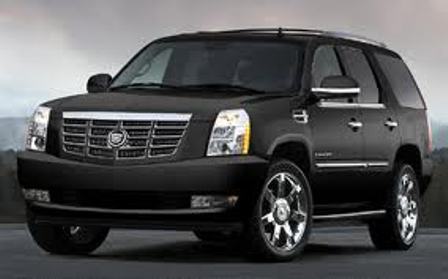
IMHO, no one needs a car this big! No one needs a car so big that it can kill a woman and the driver doesn’t even notice!
Actually, I’ll go further and say, no one needs a car, period. If this apparently short-sighted driver in Maryland had been on a bike herself, the worst that could have happened is a few bruises for both women! But no, she had to be not only in a car, but in a car so big that she could kill a woman and not even notice!
Once again, a fine, upstanding human being mown down by a dangerous or grossly careless motorist.
But … We can’t LIVE without our Cars!
I know that most motorists will tell you, with completely straight faces, that they not only need their cars, but actually they could not live without their cars! I do not know where this pervasive myth has sprung from. But it accounts for the bizarre fact that we choose to ignore the carnage that cars inflict on us.
And it’s not just cyclists, but also pedestrians who are mown down. And while cyclists and pedestrians are visibly more vulnerable to death-by-car, motorists are terrifyingly vulnerable as well; they too die like flies. Every year, around 3,000 Canadians die while driving their cars. Compare that to 152 Canadian soldiers who have died in the whole eight years we have been in the Afghanistan war zone.
But we as a society have decided to ignore death-by-car, choosing to see it as the inevitable price we pay for the cars we believe we cannot live without.
This even though we managed just fine without cars for 99.8% of our existence as humans.
(Homo sapiens has been around for at least 50,000 years, while Henry Ford only started production in 1914 – I did the math!)
I know that giving up cars isn’t easy. If it was easy, I would have done it a long time ago! We have grown fat and lazy and insanely impatient, and so we are dependent on our cars. Still, I do think it is possible for most people, perhaps beginning with baby steps … such as biking to work one day a week.
Tell me what you think. Is it possible for us to get over our car addiction?
Traffic Safety Film of the Week
from How We Drive, the Blog of Tom Vanderbilt’s Traffic by Tom Vanderbilt