Which Came First, The Bike Or The Bike Lane? (Video)

via Treehugger

bikelanes netherlands image
Image credit ::Modern Mechanix

When Richard Masoner of Cyclelicious asked “What came first, the bikes, or the bike lanes? Do bike facilities encourage people to bike? Or are they a response to increased demand after there are more bikes on the road?” I sent him a link to a post we did showing that bike lanes existed in 1928, but another commenter sent in a fabulous video telling the history of bike lanes, which explains how they date back to Napoleonic times.

The film explains that there were not a lot of roads in the Netherlands; the primary means of transport was by canal boat. Road building was tough in the soggy soil. Napoleon build a network of roads, but they deteriorated rapidly. When the bike came along, the Napoleonic roads were narrowed and given over to bikes. By 1905 there were strong rules to keep cars and carts off the bike lanes, and soon trees and hedges were planted between the bike paths and the new roads being built to accommodate the car.

So in fact, the bike lanes did come first. More in Cyclelicious. See also Copenhagenize for the history of bike lanes in Copenhagen.

Continue reading “Which Came First, The Bike Or The Bike Lane? (Video)”

AAA Gets an Earful From Members About Equality for Bikes

DC Streets Blog covers AAA’s "Highway Trust Fund money should be reserved just for highways." And besides their comments I have a few of my own: Over the years we have bolstered up the Highway Trust Fund from the General Budget and other non-user fees because it did more then just car centric highways. Now someone think it would be a great idea to cut out 1.5% of the spending because of the lack of "user fees" but at the same time assumes that they get to keep all the extra non-user fee funding (~50% from memory) that have went into the fund. I say they can have all their user fees and we’ll take all the funding that has come from the General Fund, But that is just the point; by having one funding source that encourages: being more context sensitive in design, a greater benefit for all, cars get more money for roads and everyone else suffers a bit less when roads are built.
Since all this junk is coming from AAA mid-Atlantic I have a better idea for you to pursue: You are aware that these so called "user fees" do not go back to the users who paid for them but are redistributed through a formula, So essentially drivers in Maryland are paying for highways in Texas. This redistribution made sense to build the Eisenhower National System of Interstate and Defense Highways but now that we are trying to increase capacity of that system the redistribution of funds no longer makes sense. If AAA wants more Federal money in Maryland for roads, this would do far more then cutting TE funding alone could ever do.
Continue reading “AAA Gets an Earful From Members About Equality for Bikes”

The Story of a Bicycle Crash, from Street to Court

via Struck DC submitted by [their] reader Tracy:
The Crash: I was hit by a minivan while riding home from my first day at a new job. The accident happened on Connecticut Avenue NW at the intersection with Fessenden Street NW at about 6 PM on December 1, 2008. I was traveling northbound on Connecticut Avenue, and I had changed into the left lane in order to make a left turn onto Fessenden Street. I signaled my turn by extending my left arm perpendicular to my body. I was wearing a reflective jacket and had a flashing rear light on. As I made the turn, I was hit from behind by what I later learned was a Toyota Sienna minivan. I did not see the vehicle before or during the collision. I was thrown from my bicycle into the middle of the intersection with Fessenden Street, where only a passing pedestrian, who ran to help me, saved me from being run over by oncoming Fessenden traffic after the light changed. Police and EMS responded to the scene, and I was taken to Sibley Hospital. I was interviewed by the police officer while at the hospital, but he did not issue any citations in conjunction with the accident. My pelvis was broken in 3 places, and it took almost one year for me to make a full physical recovery from the collision, followed by another year to win a successful civil court tort case against the driver who hit me.
Since the crash, I have heard many stories of injury and recovery from my fellow cyclists, and I have realized how lucky I am to be alive, fully recovered, and even covered by two different health insurance policies on the day of the crash. Winning the case against the driver has really helped me process what happened to me and turn the experience into a positive one. To continue the positivity and spread it, I would like to share with my fellow DC cyclists.
Tracy’s Tort Tips:
1. WITNESSES. At the scene of the accident, any witnesses who were not involved in the accident (as drivers or passengers) are critical. The only reason I won my tort case was because the pedestrian who saved me that day was willing to come out to Rockville District Court at 8 AM on a work day to testify. Otherwise it was a case of he said, she said. An interesting thing to note is that he did not see the actual collision. However, he was able to testify to both the traffic conditions on Connecticut Avenue (green light, which changed to red after the collision) and the driver’s behavior after the collision. His testimony contradicted some aspects of the driver’s story. So even though he wasn’t an eyewitness to the crash, he made a crucial difference in my case. If you are in an accident, unless you are actually unconscious or in an at-risk situation, I strongly urge you to try to collect contact info from anyone you see around after the crash – they might walk away before the cop gets there.
2. LIABILITY. It matters whether or not the police cite anyone after the accident. They’re not supposed to cite if there were no witnesses, unless they happened to see the crash themselves. In my case, the driver’s insurance company refused liability for the accident because he claimed it was my fault, there were no witnesses to say otherwise, and he wasn’t cited. However, even if you are cited, that doesn’t mean it was your fault. It might mean your cop did not know the law (gasp!). You can still sue the driver. If the cop didn’t see the accident, the police report won’t even come into evidence, as it is all hearsay.
3. VENUE. You may be wondering about that Rockville District Court thing, since the accident happened in DC and I am resident of the District. Virginia, Maryland, and DC are all what is called “contributory negligence” states, as opposed to “comparative negligence” states. That means that if you are even 1% at fault in an auto accident, you can’t collect any damages because you contributed to the collision. In a comparative negligence state, if you were 1% at fault, the court would simply reduce the damages it awarded you by 1% at the end. Suing the driver in Maryland did not help me avoid this issue. But I chose to use a Maryland District Court because by limiting the damages I was seeking to $30,000, I was able to get the case before a judge instead of a jury, and get the case over with much quicker. Also, I did not have to pay any expert witnesses – my medical bills stood in for a doctor’s testimony, which otherwise would have cost me ~$400/hour. I was only able to do this because the driver lived in Montgomery County.
4. STATUTE OF LIMITATIONS. You won’t know how much to sue for until you’ve racked up all your medical bills, which takes time. Make sure you know the statute of limitations for when you need to file suit by – in Maryland it is 3 years.
5. HOW MUCH TO SUE FOR? I sued for $30,000 so that I could avoid a jury trial. I was concerned that the jury would not be sympathetic to me for arbitrary reasons. I’m really glad I made this decision, because it made the case go much faster, and the judge was really cool to me. My lawyer wanted me to sue for $50,000, but he gave me all the information I needed to make this decision even though it meant less money for him, and I’m glad I was confident enough to stick by suing for less. I think being very conservative about money helped me win.
6. JUDGMENT. If the other guy is found liable, then you get your damages. My medical bills totaled over $15,000, so the judge gave that to me right off the bat for “economic damages.” He said I was also entitled to non-economic damages for pain and suffering. The amount of time it takes you to fully recover is a big factor for judges in deciding this dollar value, so be very clear on your timeline of recovery. I kept a calendar of my recovery and I’m really glad I did so because otherwise it would have been impossible to remember all the dates a year later. In the calendar I wrote all of my doctor’s and physical therapy appointments, and noted milestones in my recovery (e.g. “able to put on pants,” all the way up to “able to run 3 miles”).
One thing that surprised me was that the driver’s lawyer actually went through all of the notes that my physical therapists had written during our sessions. These included lots of things like “patient is improving but recovery is slow because of noncompliance.” What that means is that I did not rest enough while I was recovering – I kept going to work, for example. I should have rested more, but I didn’t have any sick leave accumulated at work, and I’m an active person – even as I recovered I was pushing my limits, trying to get back to my old lifestyle. The lawyer argued that my high medical bills were my fault because of this. The judge rejected this argument because he said that if I had rested more and recovered faster, he just would have given me economic damages for missing work and non-economic damages for missing fun instead. Justice! However, I wish now that I had not been so chatty with my physical therapists. They did not need to know all the specifics of how I spend my weekends. They could have just done with me telling them how my hip was feeling and doing. For example, I could have said “my hip is sore today,” not “my hip is sore because I hiked 40 miles this weekend.” It would have been just as accurate for me to say “my hip is sore because I was hit by a minivan.” So, I recommend not providing to your doctors or therapists any extraneous information that is not medically relevant because they might write it down and it could be used against you.
7. EVIDENCE. I was surprised when my lawyer told me that the record of the driver who hit me was not admissible. He said the only thing that the court would consider was what happened with this particular accident, and it didn’t matter if he had run over 100 people. What is admissible are the clothes you were wearing when the accident occurred, your gear (helmet, lights, etc), and your bike. Take pictures of all of these things after an accident and save the actual items if at all possible. It’s also a good idea to take pictures of where the accident occurred as soon as possible, because if your case makes it to court 2 years later like mine did, the place could have changed by then!
8. LAWYER. You need a lawyer who knows the law, is experienced in bicycle cases, and will return your phone calls. That’s about all you can hope for. My attorney was Tom Witkop (https://witkopjustice.com/default.aspx) and while his office and email could be a lot more organized, he never lost any paperwork, he returned all of my calls, he knows the law cold, and he showed up in court on the right day (November 17, 2010!). And he won, so he gets 40%. My understanding is that the lawyer gets between 30% and 40%, so perhaps you can try negotiating on that amount.
Dear reader, I hope you do not get hit by a car. But if you do, I hope my advice can help you. Most people, like car drivers and cops, aren’t going to do much for you, so live another day so that you care for the people in your life who take good care of you.
Sincerely,
Tracy
Continue reading “The Story of a Bicycle Crash, from Street to Court”

How to Talk About Cycling to a Conservative

[Some highlights:]

A study in one community showed that properties located near bike paths increased in value by 11% more than similar properties not near such facilities.
The Outdoor Industry Foundation estimates that the bicycling industry supports 1.1 million jobs and generates $17.7 billion in tax revenue each year.
A 3% reduction in traffic can result in a 30% reduction in traffic congestion.
Cycling reduces heart disease and other costly health problems – blunting the need for expensive health care – regardless of who pays for it.
The total maximum annual cost of bike commuter credit: less than $75 million even if every existing bicycle commuter got it – Total subsidies to drivers and transit users: $4.4 billion
Cycling generates $133 billion annually in economic activity
$76 billion a year on health care costs related to physical inactivity – Bike/Ped infrastructure can reduce this
$164 billion a year on health care costs associated with traffic injuries and deaths – caused by cars
$64 billion a year on health care costs of asthma and air pollution

Continue reading “How to Talk About Cycling to a Conservative”

Is Urban Cycling an Extreme Sport?

by Average Joe Cyclist

When I prepare for a bike ride in the city, I remind myself of a medieval knight preparing for battle.

  • Batteries charged? Check
  • All six lights working? Check
  • High visibility vest? Check
  • Reflective stripes on jacket and pants? Check
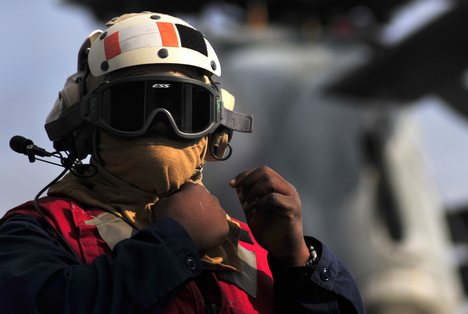
  • Protective goggles? Check
  • And of course … helmet securely bucked? Check

In fact, it takes me almost as long to prepare for my commute, as it takes me to actually commute.

I have taken this for granted for a long time. It’s just the way things are for urban bicycle commuters. Just like knights had to defend themselves from men on horses with pointy sticks, we have to protect ourselves from hurtling 5 ton vehicles driven by people who may be distracted by coffee, cell phones, breakfast, or all of the above. Or who may just be speeding madly in order to blow off some excess testosterone (much like the knights).

Recently I have started to question all this. If I prepare for cycling like a knight preparing for mortal combat, what kind of message am I sending? Obviously, I am sending the message that urban cycling is a very dangerous, life-threatening activity – an extreme sport, like solo rock climbing without ropes.

And if I am sending such a message, what does that mean? Well, for one thing, it means that other people aren’t likely to follow my example. After all, it’s tough enough having to go to work every day, without having to risk your life to get there.

I mean, if getting to work involved climbing bare-handed up a cliff (and coming back down the same way at the end of the day), I’m pretty sure most people would opt for welfare.

Sending this kind of message is contrary to my mission of encouraging average people to embrace cycling as a viable means of urban transportation.

On the other hand, cycling in dark clothing without a helmet on the dangerous “cycling routes” of Burnaby is contrary to my mission of staying alive.

It was in this context that I found Mikael Colville-Andersen’s argument against wearing helmets while cycling very interesting.

Mikael argues that modern humans live in a culture of fear – now that we don’t have to worry about being killed by bears at any moment, we spend our energies worrying that we will get sick and die from touching the door handles in public washrooms. Because of this, we have developed what he calls an almost pornographic obsession with safety equipment. And as with all things in modern society it all leads back to big business. As he says, “Fear is lucrative. Fear is big business.” If businesses can get people to be afraid, then we will scurry off in our thousands to stores where we can buy things that we think will protect us from the perceived danger. (Imagine how many millions of dollars are currently being spent on the smelly bottles of hand sanitizers that have suddenly become ubiquitous.)

For example, there’s a company called Thudguard that wants parents to buy infant safety headgear so that children don’t hurt themselves in the course of their normal activities (such as crawling, playing or learning to walk).

Thudguard infant helmets are marketed as devices to protect the delicate brains of crawling and toddling children. Makes you wonder how the human race has survived this far…

Yes, really. I’m not making it up. Google it if you don’t believe me.

Having raised three children, I am 100% certain that infant helmets are an insane idea (and as an ex-philosophy student, I am very seldom 100% certain about anything, so this is saying a lot). Kids fall and hurt themselves, and it’s all part of the normal process of growing and learning.

On the other hand, there are things that we do that really are dangerous. For example, 1.2 million people a year are killed driving their cars. However, we don’t acknowledge that driving cars is dangerous, and so it doesn’t even cross our minds to dress in safety gear to drive our cars. Even though motorist helmets have been invented.
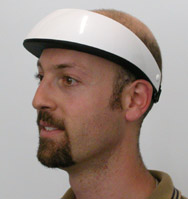
Motoring Headband – its promoters claim it will protect you against most of the damaging and fatal impacts associated with car crashes. And of course, as it’s in a neutral colour, it goes with anything.

However, as Mikael points out, motorist helmets are not promoted (let alone mandated by legislation). For example, they are not given out free with cars. That’s scarcely surprising – giving out these head bands would mean acknowledging that driving cars is extremely dangerous, and that would undermine the enormously successful job car manufacturers have done of convincing people that driving cars is a safe activity. Even though, based on the stats, driving a car is an incredibly dangerous activity.

In fact, if I was sensible, I would prepare for one of my rare car-driving-forays just as carefully as I do for a bike ride.

  • All lights working? Check
  • Bumpers in good shape? Check
  • Neck brace on to protect against whiplash in the event of being rear-ended? Check
  • Knee guards on to protect against broken knee caps in the event of a head-on collision? Check
  • Bullet proof vest on to protect against having chest crushed in the event of most kinds of high-impact accidents? Check
  • Car painted in a bright colour (preferably very bright yellow) with reflective stripes? Check
  • And of course … motorist helmet securely bucked? Check

The point is that car manufacturers don’t promote helmets because they don’t want to put people off buying cars by portraying driving as a dangerous activity. And they’re right to be afraid – the stats show unequivocally that the emphasis on bike helmets does in fact put people off cycling.

The more we promote helmets, the less people cycle.

Thus, the main problem with promoting bike helmets is that people stop cycling. Especially if you legislate it. So people are being scared away from a life-sustaining, environmentally friendly mode of transport. To make things worse, as Mikael points out, the research on whether helmets help in accidents is ambivalent. And, if you are scared off cycling by the emphasis on helmets, you may be setting yourself up for lifestyle diseases such as diabetes, heart disease and stroke.

On the other hand, there is a vast body of anecdotal evidence on the protective effects of helmets in bike accidents – see for example some of the more impassioned comments on this video.

Bottom line for me: I agree that by dressing up as if I am quaking in fear of imminent death at any second, I increase the perception that cycling is an extreme sport in which participants might die at any moment – and thus I risk scaring other people away from cycling. However, until such time as I can cycle to most places on separated bike lanes, I am going to keep preparing for cycling like a knight setting out for dangerous battle fields where heavily armed enemies will do their level best to kill him. Because even though most motorists emphatically do not want to kill me, the reality is that they could, very easily, kill me accidentally (much like we sometimes step on ants while walking, even though we really have no intent to kill ants). And if the time ever comes that I am hit by a car and go flying through the air and hit the sidewalk head first, I would very much like my helmet to take the brunt of it, not my comparatively very vulnerable head.

See what you think: https://video.tedxcopenhagen.dk/video/911034/mikael-colville-andersen-why. Not only an interesting video to watch, but a fascinating debate to read in the comments. This is not an easy issue – check it out and make up your own mind. I’d love to hear your opinions!
Continue reading “Is Urban Cycling an Extreme Sport?”

Bike Lanes Make Streets Safer for Pedestrians

[B’ Spokes: Hmmm, Maryland does has a really high pedestrian fatality rate.]


from planetizen

A new study from the New York City Department of Transportation shows that streets with painted bike lanes are 40% less dangerous for pedestrians, among other findings.

A rundown from the Tri-State Transportation Campaign hits some of the highlights.

“Several of the study’s findings echo conclusions drawn by the Campaign’s recent reports. In particular, DOT’s analysis shows that 60 percent of pedestrian fatalities occur on wide “arterials,” though they make up only 15 percent of the road network — a key finding of our Dangerous Roads report. And, as with our Older Pedestrians at Risk report, the DOT notes that seniors are disproportionately represented among NYC pedestrian fatalities.”

Source:
Tri-State Transportation Campaign, August 30, 2010

Continue reading “Bike Lanes Make Streets Safer for Pedestrians”

Cyclists Faster Than Cars During Rush Hour


They looked at 11.6 million bicycle trips in Lyon between May 2005 and December 2007. The result is the first robust characterisation of urban bikers’ behaviour, they say.
Some of what they found is unsurprising. Over an average trip, cyclists travel 2.49 km in 14.7 minutes so their average speed is about 10 km/h. That compares well with the average car speed in inner cities across Europe.
During the rush hour, however, the average speed rises to almost 15 km/h, a speed which outstrips the average car speed. And that’s not including the time it takes to find a place to park which is much easier for a Velo’v bike than a car.

Continue reading “Cyclists Faster Than Cars During Rush Hour”