Metrolink bike train cars

from Rebuilding Place in the Urban Space by Richard Layman

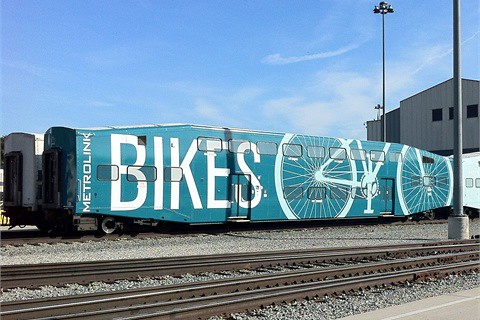
Notions Capital sends us the link to this piece from Metro Magazine, “Metrolink launches ‘bike cars’ to transport cyclists,” which includes this great image.
Metrolink bicycle train car
Standard Metrolink cars can carry two bikes (presumably on hooks), the cars with the bike wrapping (or other indicators) can carry 18 bikes and at least initially will run on weekends on the “Inland Empire” trains providing service to beach communities.

This Streetsblog LA entry from August, “Box: Metrolink Passes Bike Friendly Test,” has images of the interior of the train cars.

Continue reading “Metrolink bike train cars”

"auto-oriented cities spend twice as much"

-> "’As people drive less, governments also should prepare for a drop in revenue from fuel taxes, an eventuality that could in itself limit how many roads are built,’ Mr. Tomer says. But over the long term, building fewer roads could bring economic relief to cities and their residents, as auto-oriented cities spend twice as much to get people around than cities that rely more heavily on public transit, walking and cycling."
— Anita Elash, The Globe and Mail
https://bit.ly/rIUEhs
from CenterLines, the e-newsletter of the National Center for Bicycling & Walking.

What drivers can do to be more cyclist aware

by Chris Gidney and Alex Margolis – Car Buzz

Before we begin, this isn’t an anti-driving post, we’re not lambasting drivers. As much as drivers need to be more cyclist aware, follow road rules and drive safely, vice versa also applies!
 

Learn to share

As a car driver you may think the road belongs to you, but nobody owns the road. Everyone has a right to pass and re-pass on public highways. By law, a bicycle is a vehicle, so treat it like one.
 

Appreciate that cyclists are helping you

Counter-intuitive to what you may believe, cyclists actually reduce congestion on the roads by not driving cars. They ‘re reducing the time you spend in traffic jams as they’re taking up so much less space. Cyclists have a phrase for this, often seen on t-shirts and posters: One Less Car.
 

Avoid dooring cyclists

It’s illegal! It can also be fatal, and happens more than you’d expect. Don’t  open any doors without checking there aren’t any cyclists behind you. You could easily sweep them clean off their bikes and it won’t be pretty. Think about the breadth of your door, it’s easily 1-1.5m wide.

Driving with cyclists
 

Realise cyclists are vulnerable

You’re driving a vehicle hugely heavier and more powerful than theirs. In any impact, they will be the losers. Perhaps it’s best we take after most other European countries which operate ‘strict liabilty’. These regulations result in the motorist’s insurance usually being deemed to be responsible in any crash involving a cyclist. In the same way that a cyclist would be at fault in a smash with a pedestrian. With the driver always at fault in any accident, drivers become evidently more cautious around cyclists.
 

Helmets don’t equal guaranteed safety 

Of course they’re definitely worth wearing, it’s just that drivers often think a cyclist with a helmet is 100% safe. Well, they’re not.
 
A helmet is designed to withstand head-on impacts of no more than 13mph! Some cyclists choose not wear to wear helmets and a UK study showed they are given more caution by drivers. A cyclist with a helmet, however, is by no means invincible.
 

Exercise some caution and be patient

90% of cyclist casualties in recent years were caused by careless inattention, firstly by drivers, secondly by cyclists (nidirect.gov.uk) It’s your responsibility to avoid hitting the cyclist, not the responsibility of the cyclist to avoid getting hit by you. 
 
Pay attention and be on the lookout for cyclists at all times, especially when reversing. Use your mirrors as cyclists may overtake slow-moving traffic on either side. They may sometimes need to change direction suddenly, so just be aware of this and observe any indications they give such as looking over their shoulder. Don’t  tempt them into taking risks or endanger them.
 

Allow plenty of space

When overtaking a cyclist you’re required to give them as much room as you would a car. They may need to swerve to avoid hazards. Always anticipate that there may be a pothole, oily, wet or icy patch or some other obstruction. Cyclists endanger themselves by cycling in straight lines! 
 
Don’t drive too close behind a cyclist as you may not be able to stop in time if they come off their bike or do something abruptly. Unless you have an entire clear, empty lane in which to pass, slow down and wait until there is room to pass. Pass them slowly!
 
Cars and cyclists
 

Drive slowly on low-vis roads

On rural roads or those with limited visibility remember that a cyclist could be around the next corner. It could also be an elderly person, a child or an animal. Reducing your speed reduces the risk of something happening. 
 
You can’t see ahead of hills and curves, slow down as you don’t know what’s on the other side. Make sure you can stop the car at all times. At night the need to do so is more exaggerated. You need time for the headlights to shine on the road ahead and recognise that there’s something there.
 

Cyclists have a right to claim the lane

That’s correct. They have as much right as you do to take up the entire lane. You may think they’re being utterly selfish by doing so, but in fact they’re preventing having an accident. They really aren’t trying to slow you down, it’s just the safest way for them to cycle particularly if there’s a blind bend, a narrowing of the road, a high risk junction, pinch point or traffic lights ahead. Additionally if there’s a narrowing of the road, they’re stopping you squeezing through far too cosily beside them.
 
Cyclists should never cycle in the gutter as it gives no room for avoiding obstacles and leaves them no room to fall if an accident occurs, meaning they could go straight under your wheels. Not nice.
 

Beware a left turn

Turning left is how most accidents occur. A cyclist may sneak up, perfectly legally, beside you while you’re waiting impatiently at a red light. It’s not at all illegal for cyclists to filter on the left or right of lanes but it is often difficult to spot them, especially when hidden by your blind spot. You’ll hit the cyclist as they carry straight on and you’ve made a left right into them. Also be vigilant when pulling out of a side street, or car park. 
 

Get on a bike!

Not until you experience what it’s like to be a cyclist on a busy road will you truly be able to empathise with them and realise how careless drivers can be at times. Cyclists can too be careless, but it usually ends in them getting hurt, not you!

Chris Gidney is a keen cyclist and technician at SRAM. 

Alex Margolis is the co-founder of carbuzz
A big thanks to Carlton Reid for helping edit the post
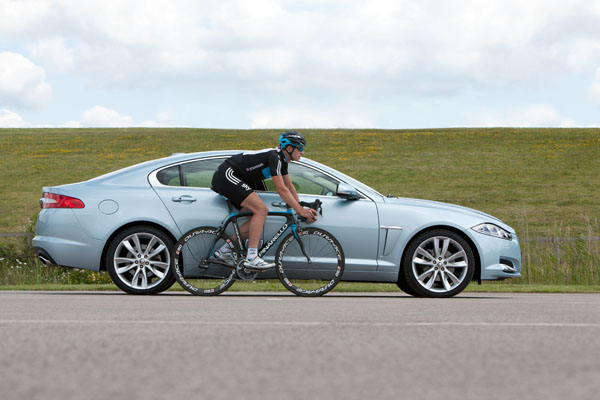
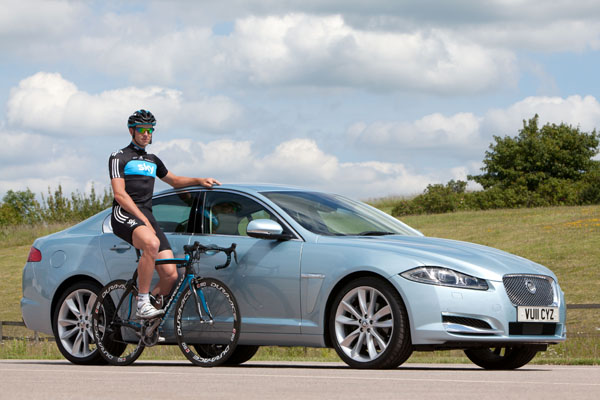
Pictures from Jaguar, showing Team Sky and the Jaguar XF

Related articles: Road Tax – There’s no such thing

Continue reading “What drivers can do to be more cyclist aware”

Self-Reliance Grows in the Utrecht Traffic Garden

I’m going to highlight this Street Film as this IS safety education…
This is not teaching just what you need as a kid pedestrian or…
just what you need to know as a car driver…
This teaches the interaction with all street users from one mode of transportation view…
then 15 minutes later switch mode of travel and learn from that point of view till all modes are practiced.
https://www.streetfilms.org/self-reliance-grows-in-the-utrecht-traffic-garden/

What Universities Can Do to Encourage More Cycling

Guest post by Cyndi Laurenti:


A
university isn’t simply an institution of higher learning, but one that should
aim to produce well-rounded citizens. For many schools this includes a greater
emphasis on student wellness and social responsibility, which can be addressed
by encouraging the use of bicycles among undergrads and
PhD
candidates alike. Universities that
successfully promote cycling will find their campuses becoming more attractive
to the student body even as the pollution produced by cars is
reduced.

Promoting the use of bicycles requires universities to make
bicycling a safe, convenient, and desirable mode of transport to students. A
university that fails in any of these three areas will find their students
reluctant to embrace bicycling. Conversely, universities with effective plans to
encourage bicycle usage will find their students very receptive to a bicycling
lifestyle.

Schools must ensure bicyclists can safely ride around campus
without endangering themselves or others. The first and most important goal is
to make sure bicycles can share the roads with cars and pedestrians. This is
normally accomplished by having bicycle-only lanes and paths. In areas where
that’s impossible, bicycle lanes should be clearly marked and all students made
fully aware of the rules of the road as they pertain to cyclists. Maps can be used to help
students find bicycle-friendly routes.

In addition, safe bicycling
requires the creation and enforcement of driving regulations, and immediate
action against those who don’t abide by them. An unsafe bicyclist, pedestrian,
or driver can contribute to long-term reluctance among many students to bicycle.
However, if they can see the administration takes safety violations seriously,
students will become more confident about riding on campus.

Making
bicycling convenient generally requires the placement of bicycle racks close to
classes, dormitories, and dining halls. In addition, schools can provide
heavy-duty locks to prevent theft or insure that all bike racks are observed by
campus police, either in person or via CCTV cameras. Tufts University provides
a bicycle registry service to make theft less likely.

Some universities make
bikes available to students on a rental or even free basis. Edinboro
University’s “Green Bike” program allows students to make use of bikes while on campus for
free
. This allows students with limited
finances to switch to bicycling while on campus, and encourages them to consider
purchasing a bike for off-campus use.

Finally, schools should attempt to
make bicycle use an attractive lifestyle. Stressing cycling’s contribution to
the environment, students’ social lives, and physical well-being can encourage
students to make use of bicycles. These efforts can help make student biking a
self-sustaining culture, as new students chose to adopt the practices of their
bicycling classmates.

Events like Indiana University’s “Little 500” can call attention to the benefits of bicycling. Schools can
also stress the financial benefits of bike ownership, especially given the
generally high cost of parking permits for cars. In these ways, students come to
see bike use and ownership as a natural and beneficial choice.

By
encouraging bicycle use, universities can reduce campus congestion and pollution
while encouraging healthy lifestyles among the student body. Doing so requires
schools to focus on improvements in both the physical structure of their
campuses and the adoption of policies to encourage bike riding. Both schools and
students will find themselves reaping handsome rewards from adopting such
bicycling-friendly policies.

Making your bike glow down the road…

By K’Tesh via Bike Forums

I’m known locally for my bike’s reflective properties… I take a bike that looks like this:


2011 Trek Montare (near stock condition)

and make it look like this:


2011 Trek Montare (Using Avery blue, white, and black reflective films)

If anybody’s looking to do it themselves, here’s a quick little primer on how to do it…

First locate your reflective material. For the large areas, I’ve been using Avery and 3M Scotchlight self-adhesive reflective films for years now, but my supplier is shifting to another product from Oracal. It’s as good as the Avery product they say, and it’s cheaper (15″ wide $14USD/yd, 24″ wide $24USD/yd(ish)). It comes in a number of colors, and has a 1yd/color minimum purchase (3 colors = 3 yards = lots of coverage).

Continue reading “Making your bike glow down the road…”

Bicycle Travel Economic Impact Survey 2011

Greetings!
Adventure Cycling Association would like to invite you to participate in a special survey created by a team from the University of Montana. The survey is designed to help Adventure Cycling Association understand the spending patterns of touring cyclists and the economic impact bike tourism has on communities. If you have taken an overnight or multi-day bike trip in the past few years, please consider participating in this short survey.
The survey will take about 10-15 minutes to complete and is voluntary. Your responses will remain confidential and anonymous.
Please keep one, specific trip in mind when filling out the survey. We recommend using either your longest or most recent trip from the past three years.
Thank you for participating in our survey. Your feedback is important.
https://www.zoomerang.com/Survey/WEB22DMBS8FFH8