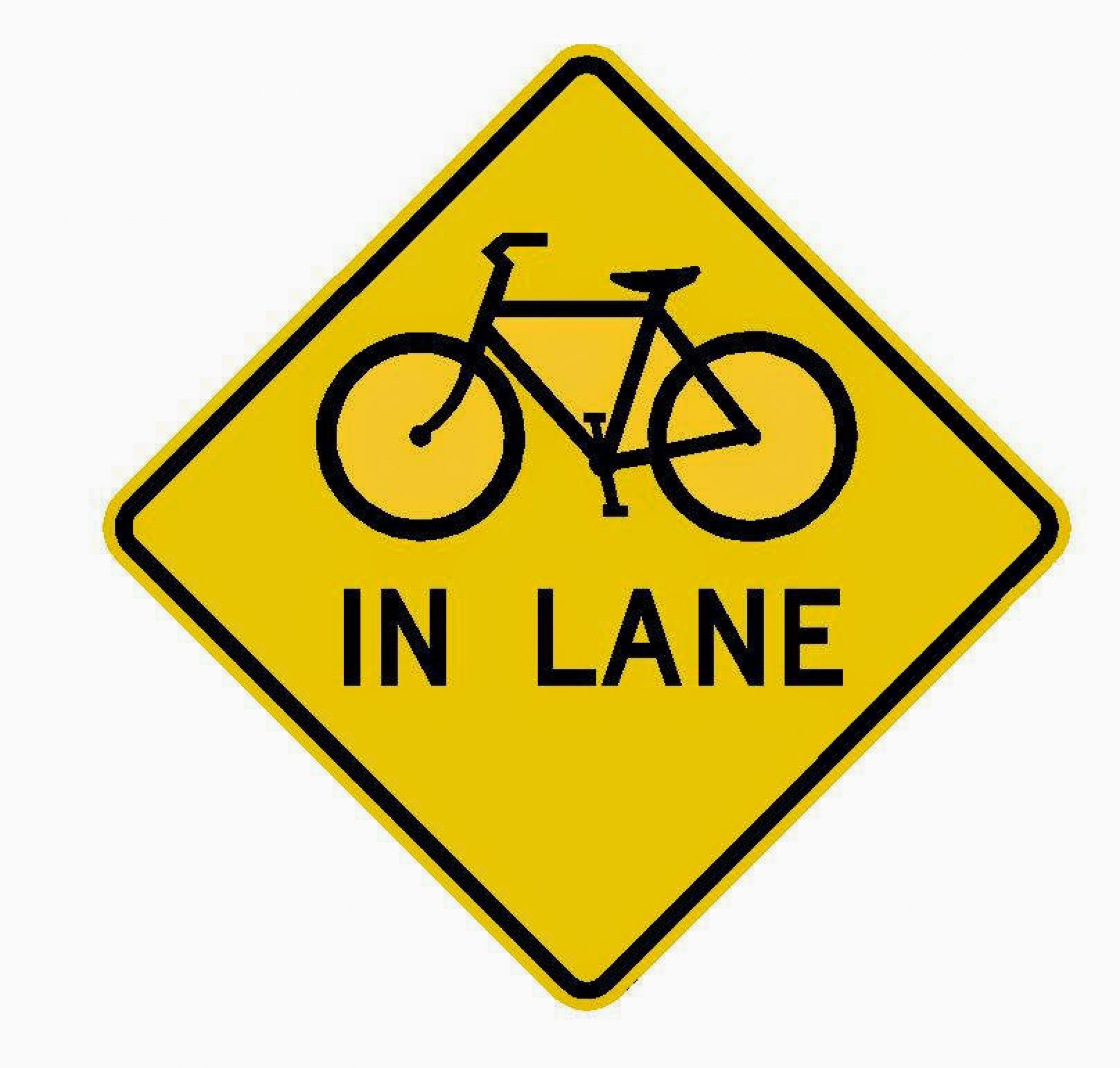
[B’ Spokes: This is an interesting idea of only allowing this where signed.]
*********************************************************************************
By Henry Samuel, Paris, telegraph
A new government decree has just authorised cyclists in the French capital to go through red lights, after road safety experts deemed the measure would cut road accidents.
It follows a fierce three-year campaign by cyclists’ associations.
Under the new system, which will be first tested on 15 crossroads in the East of the French capital, cyclists are allowed to turn right or go straight ahead even when the lights are red.
They must, however, make way for pedestrians and incoming traffic on the left and will be held responsible in the event of an accident.
Red and yellow signposts posted on traffic light poles will inform cyclists that they can ignore the lights in designated 30km per hour zones. If judged feasible, the scheme will then be rolled out to 1,700 crossroads in Paris.
…
Continue reading “Paris cyclists given right to break traffic laws”
What a difference no automobile traffic makes, even if it’s just one day
My friend Yvette Hess (Bikes for the World) sent me these photos from Manila, first her view all week:

Then with no Sunday Morning traffic:

Here’s Why Drivers Get Away With Murder In NYC
[B’ Spokes: I know the Mayor’s Bicycle Advisory Committee has talked about incorporating "Bike Stat" in with "City Stat" so I am sharing this because the same thing could be said for Baltimore, we don’t track what should be important information about crashes. I’ll just skip through the article sharing highlights. This also may give us a hint why police here are so quick with "The driver will not be charged" in bicycle crashes.]
*********************************************************************
By John Del Signore, Gothamist
This morning the City Council grilled representatives from the NYPD on why so few drivers face criminal charges after killing or maiming pedestrians and cyclists. … The department has been widely criticized for failing to issue criminal charges to drivers after serious accidents, as well as withholding the most basic details about their investigations. Today Councilmembers tried to understand why so many drivers get away with murder.
…
"We don’t accept gun violence as a way to die, and we shouldn’t accept traffic deaths either."
…
Vacca’s first question to Deputy Chief … was about speeding, and how often drivers caught speeding are charged with reckless endangerment. The answer came not from Cassidy, but from Susan Petito, an NYPD attorney, who politely explained that they simply don’t know, …
The NYPD reps frequently cited their inability to search for data during the hearing. At the same time, the department touted its TrafficStat data, which Chief Cassidy argued has enabled the department to reduce traffic fatalities by 39% over the past decade.
…
Here’s what we do know, and it helps explain why so many drivers get away with murder:
* The NYPD issued more summonses to cyclists than truck drivers last year: …
…
* The AIS will only investigate accidents in which the victim dies or seems likely to die. If you get hit by a driver and end up in a wheelchair for the rest of your life, there’s no AIS investigation. The patrol officers will fill out an accident report, and traffic tickets might be issued, but there will never be an in-depth investigation or follow-up.
* 241 pedestrians or cyclists were killed by drivers last year. Only 17 of the drivers responsible faced criminal charges.
* Asked how many criminal charges were filed against drivers in non-fatal accidents, the NYPD reps said they were not aware of any.
* Hayley and Diego’s Laws were created to empower the NYPD to issue "careless driving" charges, but the NYPD says judges have repeatedly thrown out these charges on the grounds that an officer has to personally witness the accident in order to file the charge.
And because traffic court judges have been throwing out "careless driving" tickets, the NYPD says they’ve instructed patrolmen not to issue them. Only the AIS is currently authorized to file charges under Hayley and Diego’s law, and since AIS only investigates fatal accidents, the law hasn’t done much good. Councilmember Brad Lander was particularly galled by this, asking the NYPD reps, "More than 3,000 crashes last year led to serious injury, and yet patrolmen can’t write a ticket [under Hayley and Diego’s law]?"
Councilmember Vacca recommended new legislation authorizing the NYPD to seize vehicles operated by speeding and reckless drivers. … as long as the default response to a motor vehicle crash is ‘accidents happen,’ the behaviors that are killing and injuring people will continue."
Also in attendance were the relatives of killed or injured cyclists, including Erika Lefevre, the mother of Mathieu Lefevre, an artist who was killed by a truck driver who left the scene of the accident in Williamsburg and did not face any criminal charges. (The Brooklyn DA is now conducting an independent investigation to determine if serious charges are warranted.) Lefevre, who had to sue the NYPD to release information about the AIS’s sloppy investigation, told the City Council, "The only person the NYPD showed courtesy, professionalism, and respect towards was the driver who ran over Mathieu."
…
Continue reading “Here’s Why Drivers Get Away With Murder In NYC”
Cyclists save city governments money
-> "Cyclists save city governments money by reducing traffic congestion, stormwater run-off, air pollution, and road maintenance expenditures. Many cities are doing little things to show their gratitude. Barcelona recently installed a counter on a main route displaying the time, temperature, bike count for the day and progress toward the official annual ridership goal for that route…"
— Christine Grant, Sightline Daily
https://bit.ly/xCtM71
from CenterLines, the e-newsletter of the National Center for Bicycling & Walking.
Berliners enjoy cleanest air in major European cities: report
From English.news.cn
BERLIN, Sept. 7 (Xinhua) — Residents in the German capital of Berlin are breathing the cleanest air in major European cities, as the municipality’s consistent efforts to decrease soot and other particulate pollution paid off, according to a new report released here Wednesday.
…
The Berlin municipality’s comprehensive strategy to curb high pollution emitters and efficiently put the use of private cars at a reasonable level has significantly contributed to the amelioration of the city’s overall air quality.
…
"The proportion of car traffic on the road has shrunk by 6 percent, while the use of bicycles has doubled to 13 percent," said Werner Reh, a transportation expert for BUND.
…
Continue reading “Berliners enjoy cleanest air in major European cities: report”
Coexisting With Bicyclists: 10 Rules for Drivers
[B’ Spokes: This is cool because it comes from a car site.]
by Kathleen Doheny, Edmonds
…
1. Appreciate Bicyclist Vulnerability: A car weighs 2 tons or so, while the average bike is a mere 20 pounds, says Tim Blumenthal, president of People for Bikes, an advocacy group.
“In any collision, any physical interaction between car and bike, the bike always loses,” he says. “I’ve never seen a collision where the bike rider came out less injured,” he says.
Gary Brustin, a bicycle accident attorney in Santa Monica and San Jose, California, says he has seen the severity of the injuries to cyclists increase in recent years. Among the factors driving the increase, he suspects, are older riders, including baby boomers, whose bones may be more fragile than those of younger riders. An increase in high-speed roads with bike lanes also contributes to the rise, he says.
2. Know Bicyclists’ Rights: Drivers sometimes have little idea of the traffic laws that apply to bicyclists. A recent visitor to a message board discussing cyclists and motorists wanted to know why cyclists can’t just use the sidewalks.
In fact, bicycles in the roadway are considered vehicles. NHTSA says cyclists 10 years and older should behave as though they were vehicles on the street, riding in the same direction as other traffic that’s going their way and following the same traffic rules.
The cyclists, then, are on the same level as motorists. Information on the California Department of Motor Vehicles Web site spells out the law in the Golden State: “Bicycle riders on public roads have the same rights and responsibilities as motorists, and are subject to the same rules and regulations.”
The site encourages drivers to ”look carefully for bicyclists before turning left or right, merging into bicycle lanes and opening doors next to moving traffic. Respect the right-of-way of bicyclists because they are entitled to share the road with you.”
Nearly every state has similar language covering bicyclists, says Andy Clarke, president of the League of American Bicyclists.
3. Adjust That Attitude: Motorists tend to think of cyclists as ”in their way,” Clarke says. Rather, they should think of them as equals, just as entitled to the roadway as drivers are, says Clarke and other experts in the cycling community.
Drivers who get impatient with bicyclists might want to stop for a moment and think about the human being on that bike, says Bob Mionske, a Portland cycling attorney and cyclist: What if that rider was my friend, a friend of a friend, or a neighbor? Somehow, seeing bicyclists that way makes people a little more patient, he says. When drivers don’t humanize cyclists this way, he finds, they often perceive riders as mere objects.
If you can pinpoint the moment when a bicyclist is starting to irritate you — because you can’t see where he is going or because he’s moving slowly and is making you late — picture him as a family member or friend. That might calm you down, Mionske says.
4. Consider the Benefits of Bicycling — for Drivers: “One cyclist on the road is one less car,” Mionske says. Cyclists don’t wear out the road, he adds (which means fewer potholes for you). “We lessen traffic congestion,” he says. “We can’t pollute.”
So if you’re idling in your car behind a cyclist who you wish would go faster, think of it this way, Mionske says: “Well, he might be in my way temporarily. At least he is not in a vehicle and in my way the whole commute.”
5. Spare Them the Right Hook: Intersections are venues for serious car-cycle collisions. Drivers making right turns, especially, should watch out for cyclists. A cyclist may be a little behind and to the right of you, and may be planning to ride straight ahead. If you don’t signal your right turn, you could wind up hitting each other, with the point of contact somewhere on your car’s right side. If you are trying to figure out if a nearby cyclist is planning to turn right, look for his raised left hand in a squared position, or an extended right hand.
6. Beware the Left Turn: A driver trying to make a left turn sees an oncoming bicyclist, but the driver figures he has plenty of time to complete the turn. Sometimes, that’s not true. Brustin says it’s a common scenario: After a collision, a driver often says he didn’t realize the cyclist was going that fast.
A bike can easily get to 15- or 20-mile-per-hour speeds, Brustin says. “If in doubt, yield,” he says. Exercise the same caution as you would for an approaching vehicle.
7. Give Cyclists 3 Feet of Clearance: Twenty states have now passed laws requiring motorists to give bicycles on the roadway about 3 feet of space, Blumenthal says. “Bike riders really appreciate that,” he says. The 3-foot rule helps drivers by giving them a concrete frame of reference, he says.
And thanks to Joe Mizereck of Tallahassee, Florida, that figure is becoming a standard reference. Mizereck took up cycling five years ago and is an avid participant. He says he was so unnerved by a few close calls that he founded the “Three Feet Please” campaign. He sells cycling jerseys emblazoned with the motto. “Everyone who has bought one of these jerseys says, ‘It works,”’ he says.
On his site, Joe writes: “Please understand, our campaign is not about painting the motorist as the bad guy. Unfortunately, we have scofflaws on both sides and the key is to lay down the rules for all parties to follow, make sure the parties know the rules and then enforce them.” Everyone needs to be held accountable, he says, “including cyclists.” A list of the states that have passed the 3-feet law is here.
Besides giving cyclists that breathing room, Blumenthal says it’s best for drivers to pass them slowly and smoothly. The motorist’s tendency is to speed up and get by the cyclists as quickly as possible, he says. “It’s pretty unnerving when you are on a bike and a car accelerates.” You can also spare cyclists’ nerves by honking sparingly, he says.
8. Look Around — but Not at Your Phone: Brustin, who has been handling bicycle injury lawsuits for 20 years, says that drivers who have hit cyclists almost always say the same frightening, sobering thing: “I never saw him before I hit him.”
If drivers only expect other cars on the road, they’re setting themselves up for dangerous interactions. A model of greater awareness can be seen in the European-style ”roundabout,” with traffic coming from all directions and merging into a traffic circle. Roundabouts require every participant’s attention, as does the more comprehensive “shared space” concept of traffic design, which uses minimal road signs, crosswalks, lights and barriers and integrates pedestrians, cars and bicycles in the same terrain. The need for heightened interaction, paradoxically, makes everyone safer, traffic-design experts say.
“Start looking out for everybody,” Brustin suggests, including other vehicles, cyclists and pedestrians.
9. Look Before You Exit Your Car: Cyclists are terrified of being “doored.” Imagine a rider pedaling along next to a row of parked cars. Suddenly, a driver flings her door open. The impact can send the cyclist flying, and riders have died when they’ve been thrown into traffic.
“Before you open the door, look out the sideview mirror on the driver side and be sure no one is approaching,” Blumenthal says.
While the driver can take a few seconds to look and stay put if a cyclist is approaching, a cyclist has no sure way to anticipate whether a driver inside a parked car is about to open the door. All he can do is scan for drivers who look as though they might be preparing to exit a car.
10. Accept That Bicyclists Are Here To Stay: Bicycling is on the rise. People are taking it up for exercise or to reduce commuting costs. New York City, Portland, Oregon and San Francisco, among other cities, all have seen an increase in commuter cyclists. It’s time to make peace with them — for everyone’s safety.
Continue reading “Coexisting With Bicyclists: 10 Rules for Drivers”
San Francisco Will Pioneer Electric Bike Sharing
[B’ Spokes: Maybe Baltimore should think about this as well as our hills do keep some from riding.]
https://www.good.is/post/san-francisco-will-pioneer-electric-bike-sharing/
Bike Parking dreams
[B’ Spokes: I am assuming this is in DC but I would love to see things like this popping up in Baltimore.]
from TheWashCycle by washcycle
Photo by Neil

The parking is covered and check out the bolted down bike pump.
LOS and Travel Projections: The Wrong Tools for Planning Our Streets
[B’ Spokes: There is no doubt that there should be more diverse types of streets available in urban areas, yet standards and planning tools are trying to make everything as freeway like as possible. If you are into this stuff then read the attached article, otherwise I just show the highlights:]
from Streetsblog Capitol Hill by Gary Toth


Images: Andy Singer
Good approach, wrong setting
I’m not going to look back and quibble with the general philosophy of how the interstates and the associated high-speed freeways were planned and designed. On many levels, the approach made sense.
But it became increasingly less persuasive when applied to the rest of our road network. Unlike interstates and freeways, most roads exist not just to move traffic through the area, but also to serve the homes, businesses, and people along them. Yet in search of high LOS rankings, transportation professionals have widened streets, added lanes, removed on-street parking, limited crosswalks, and deployed other inappropriate strategies. In ridding our communities of the weeds of congestion, we have also pulled out the very plants that made our “gardens” worthwhile in the first place.
…
Let me repeat: Contrary to what you may hear, there is no national requirement or mandate to apply LOS standards and targets 20 years into the future for urban streets. This thinking is a remnant from 1960s era policy for the interstate system, and has erroneously been passed down from generation to generation.
…
Creating balanced standards for roadway design will benefit transportation as well. In the Netherlands, the “Livable Streets” policy led to a remarkable improvement in safety on their roadways. They started in the 1970s with a crash rate 15 percent higher than in the U.S., and now have a crash rate 60 percent lower.
Continue reading “LOS and Travel Projections: The Wrong Tools for Planning Our Streets”
